At the A.S. Pushkin Library in Ust-Kamenogorsk, East Kazakhstan region, reading has become a tactile adventure. Here, books aren’t just read, they’re knitted, sewn, and handcrafted. Librarians have discovered a magical way to ignite children’s interest in reading: through tactile books that can be touched, flipped through, and even assembled.
“The main thing is to find an approach to each child. Even if they haven’t been encouraged to read at home, we can change that in the library,” says Dinara Mergenbayeva, head of the Center for Knowledge.
The idea was born from a desire to make books more relatable. “Who says children don’t read? They do, and with great curiosity! They just need something new, lively, and emotional,” she explains.
Knitted Books and Soft Stories
The library’s first knitted book was a Kazakh-language version of the alphabet primer Әліппе, inspired by Kulmay Sembayeva’s Aripler aleminde (“In the World of Letters”). Each letter is paired with a poem and a small, crocheted animal or object, which children can pull from pockets and explore.
“For example, the letter A, next to it are an akhu (swan) and an ayu (bear). We knitted and cut out all the figures ourselves. The materials came from our homes. Even the cover was made from my old suede boots, they’ve found a second life now,” one librarian shares.
Another handcrafted creation is Pushkin’s The Tale of the Fisherman and the Fish. In this interactive version, characters can be moved around, allowing children to change the course of the story. Kids act out scenes, invent new endings, and immerse themselves more deeply in the narrative.

@Yulia Chernyavskaya
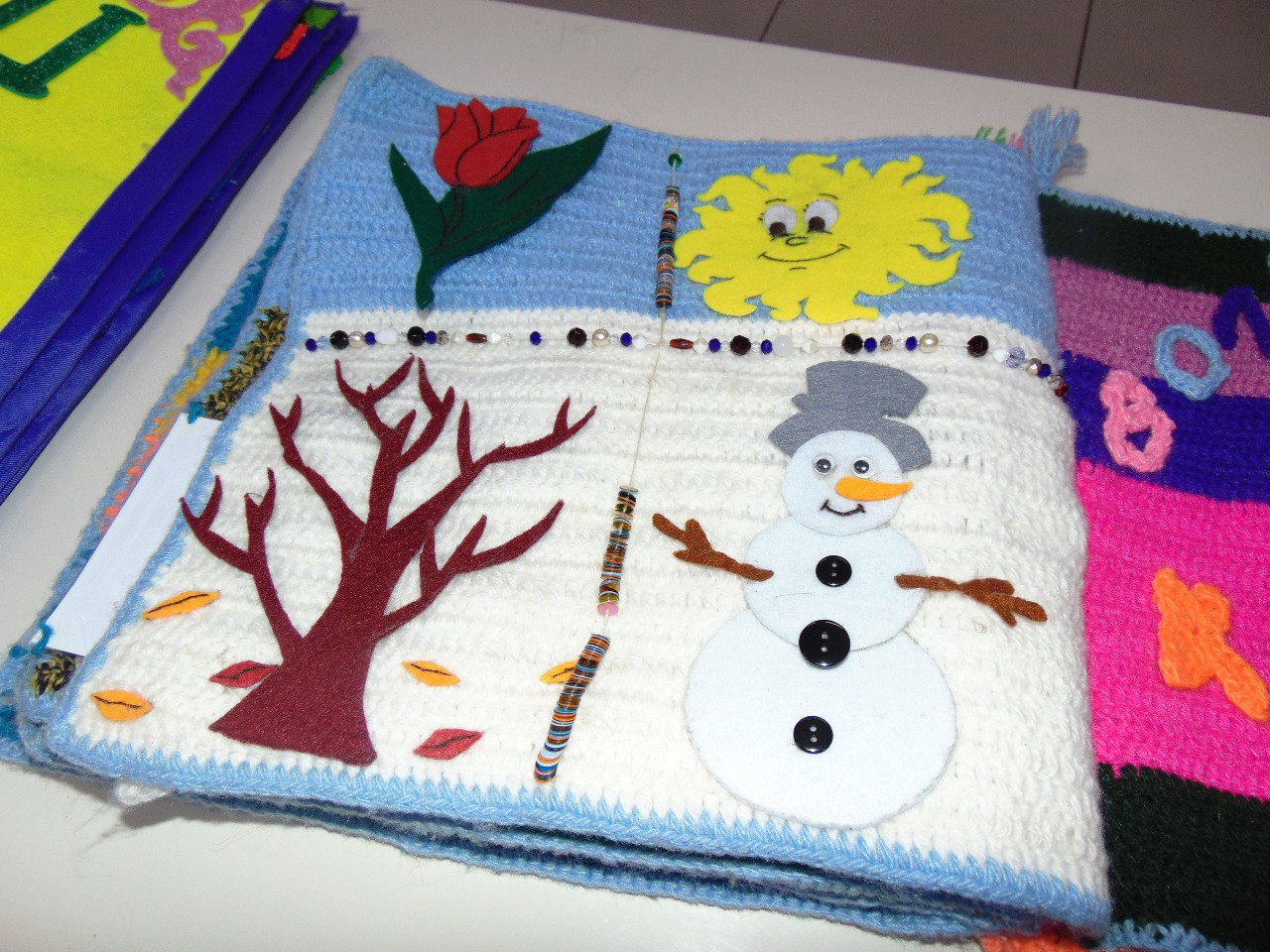
There’s even a trilingual crocheted edition of Abai’s The Seasons, in Kazakh, Russian, and English. Its pages include trees, snowflakes, flowers, and ladybugs, all detachable and fastened with buttons. Children can “switch” winter to spring, collect leaves, or “scatter” snow, transforming play into reading.
“This helps develop fine motor skills, imagination, and a love of books. The key is to keep it interesting,” notes Mergenbayeva.
Books You Won’t Find Anywhere Else
Each tactile book is handmade, with production times ranging from three weeks to six months. The entire library staff is involved, from brainstorming to material selection and testing books with children. Special editions are created for older students, including a large-format album commemorating Abai’s 175th anniversary, with sections titled “Abai the Writer,” “Abai the Philosopher,” and “Abai the Musician.”
“If a child remembers even one illustration, that’s a success. A book should leave an impression, visual, emotional, any kind,” says a librarian.
Each edition includes a QR code linking to a digital version in the library’s electronic collection.
When Children Bring Their Parents
At Pushkin Library, reading is a family affair. Every Saturday features shared reading sessions, reinforcing the tradition of reading together.
“The youngest children come with their parents, and later they’re the ones dragging them back. Kids literally pull their moms and dads to the library,” Mergenbayeva smiles.
For teenagers, there’s the Literary HUB, a space for poetry readings, book discussions, and literary debates. Teens choose a book, read it during the week, and then gather to exchange views and even recommend books to adults.
“You should hear the topics they raise! Sometimes adults could really learn from them,” she says.

@Yulia Chernyavskaya
Mergenbayeva believes one reason children lose interest in reading is the lack of modern Kazakh stories that reflect their own lives.
“Children need to recognize something familiar. Our teens live and think differently now but books don’t reflect that. We’re losing touch with their reality,” she says.
One exception is Yeraly’s Fairy Tales, written by nine-year-old Yeraly Pazybekuly. His stories depict life in his native village of Praporshchikovo, its courtyards, neighbors, and animals. The tales are simple, vivid, and remarkably sincere.
The library actively supports young authors. Recently, they celebrated 15-year-old Asyl Sungatkzy, who creates comics based on historical themes.
Reading as a Way of Life
The library’s mission is to make reading a natural and joyful part of children’s lives. Projects include Sham tübindegi ertegi (“Fairy Tales Under the Lamp”), which revives the oral storytelling tradition, and Tales and Legends of East Kazakhstan, introducing children to the region’s diverse cultures.
A new initiative, Super Balakai! (“Super Kid!”), showcases the stories of talented local children. Contests such as “Reading Leader,” “Read and Win!” and “Dedicated to Children” attract wide participation.
“We want books to become part of a child’s life again, not as an obligation, but as a joy,” says Mergenbayeva.
Today, the Pushkin Library is far more than a place where books are stored. It is a creative hub where reading becomes art, and fairy tales come alive through the work of hands, hearts, and imagination.