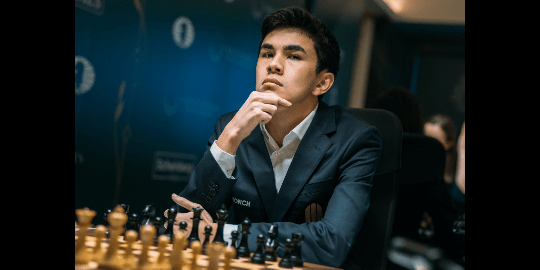
Nyshanbek Zhubanaev is a professional actor, a graduate of the T.K. Zhurgenov Kazakh National Academy of Arts, and a rising star of series such as Sheker, 1286, and Munai. His path into acting, however, did not begin with red carpets or casting calls, but at a phosphorus plant.
Taking a leap of faith to escape a life he describes as scripted by others, Zhubanaev pursued his childhood dream with persistence and conviction. In an interview with The Times of Central Asia, he reflects on his first steps in cinema, the role of faith, inner conflict, and why, for him, humanity matters more than talent.
TCA: Your popularity came with the web series Sheker 2, 1286, and Munai. Two of them are set in the 1990s. Why do you think this decade continues to fascinate directors?
Zhubanaev: It was a time of contrasts and complexity. When people say Munai romanticizes crime, I feel they’ve missed the point. It’s not about crime, it’s about the clash of personalities and how the oil business emerged in our country.
The 90s serve as a backdrop. And in cinema, atmosphere is half the battle. As an actor, I want to be part of projects where that atmosphere is palpable. Whether it’s the 90s or another era doesn’t matter. What matters is telling strong, vivid stories.
TCA: What themes do you feel are missing in Kazakh cinema today?
Zhubanaev: Our cinema is still developing, and there’s so much left to explore. People often say we lack films about love and relationships. We do have them, but not the kind you want to talk about seriously. And love is one of the hardest topics to portray, it leaves you no room to hide behind genre, action, or style. It demands talent.
I read a lot, and I’m constantly amazed by the richness of Kazakh literature and history, and how little of it we bring to the screen. Take Mukhtar Auezov’s Karash Okigas, it’s a ready-made screenplay. During Soviet times, Kyrgyz director Bolotbek Shamshiyev adapted it, but today it deserves a modern retelling.
TCA: You often cite literature as a source of cinematic inspiration.
Zhubanaev: Absolutely. Look at Remarque’s All Quiet on the Western Front. Its recent film adaptation won an Oscar, though I found the film debatable. We have our own counterpart, Kazakh Soldier by Gabit Musrepov. Why not adapt that with a modern cinematic language?
I also love the works of Beimbet Mailin. He’s an incredibly cinematic writer who remains relevant today. His Shuganyn Belgisi, written nearly a century ago, still speaks to issues like equality and the role of women in traditional society.
As far as I know, Akan Satayev is currently preparing a film adaptation of Mailin’s Kulpash, the story of a woman who takes a desperate step to save her family during a famine. It’s powerful, dramatic material.
The problem isn’t a lack of themes, it’s about who tells the story and how. You can create a visually perfect film and still fail to touch the audience’s heart.
TCA: Perhaps young directors are simply unfamiliar with national literature?
Zhubanaev: That’s no excuse. No one has canceled self-education.
I always say: the best education is the one you give yourself.
Yes, I was fortunate with my mentor. If I’d had a different teacher, I wouldn’t be who I am today. But what I read, watched, and studied on my own also shaped me.
TCA: You’re originally from Uzbekistan. Was it difficult moving to Kazakhstan?
Zhubanaev: It wasn’t easy. It was 2007. I was almost 20, an age when many people are finishing university and I was just dreaming of becoming an actor.
I had no relatives, no friends, and no money. I arrived in Almaty with a single bag and the wages I’d earned at the factory. What made it possible was, first of all, God, and secondly, my mentor Orazkhan Kenebaev. No one else wanted to take me on, but he said, “I’ll take you. You’ll study.”
TCA: You worked at a factory before becoming an actor?
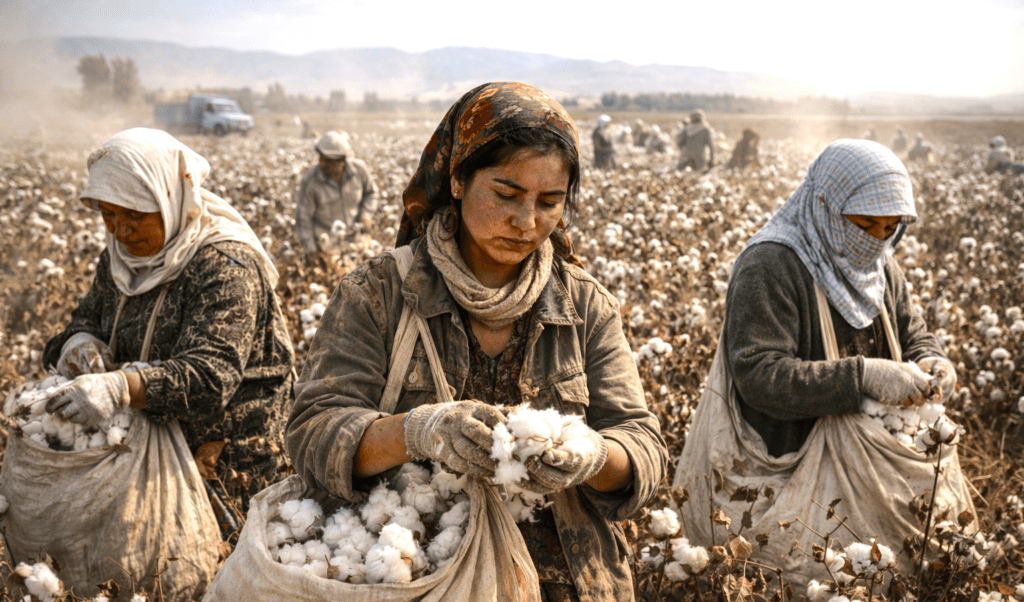
Zhubanaev: Yes, at a hydrometallurgical plant, GMZ-2, in workshop eight, where phosphorus was extracted. I worked as a kipovets, handling automation and process control.
Honestly, I didn’t understand why I was there. Every day I went to work and cried. It was completely alien to me. I went to college because my parents wanted me to. I got married, lived “as expected.” But the dream of acting never left me. And thank God I took the risk. If I hadn’t, I’d regret it my whole life.
TCA: You often portray negative characters. Does that conflict with your faith?
Zhubanaev: Why should it? God gave me the gift of transformation, and I must use it. I see myself as a conduit.
I’m not a deeply religious person, just someone who tries. I go to the mosque, I fast, I read the Quran, I pray, I love my family.
I have a dark side too. I accept it, I’m no angel. But the key is not to lose your humanity. For me, that’s more important than talent. If someone behaves despicably, I won’t work with them, no matter how brilliant they are, even if they’ve won three Oscars.
TCA: That’s not easy in the creative world.
Zhubanaev: There are no simple people, especially among the talented. Geniuses often carry inner turmoil. But regardless of your personality, you must remain human.
There are many temptations in cinema and show business. It’s easy to lose yourself. My faith and my family keep me grounded. When you’re the father of many children, you simply don’t have the right to fall apart.
TCA: Is “star syndrome” the biggest temptation?
Zhubanaev: It scares me. I never want to be the kind of person who believes he’s achieved everything alone. Fame and money came to me slowly, through hard work. That’s why I always ask God: no matter what happens, whether I become famous or wealthy, let my heart stay simple.
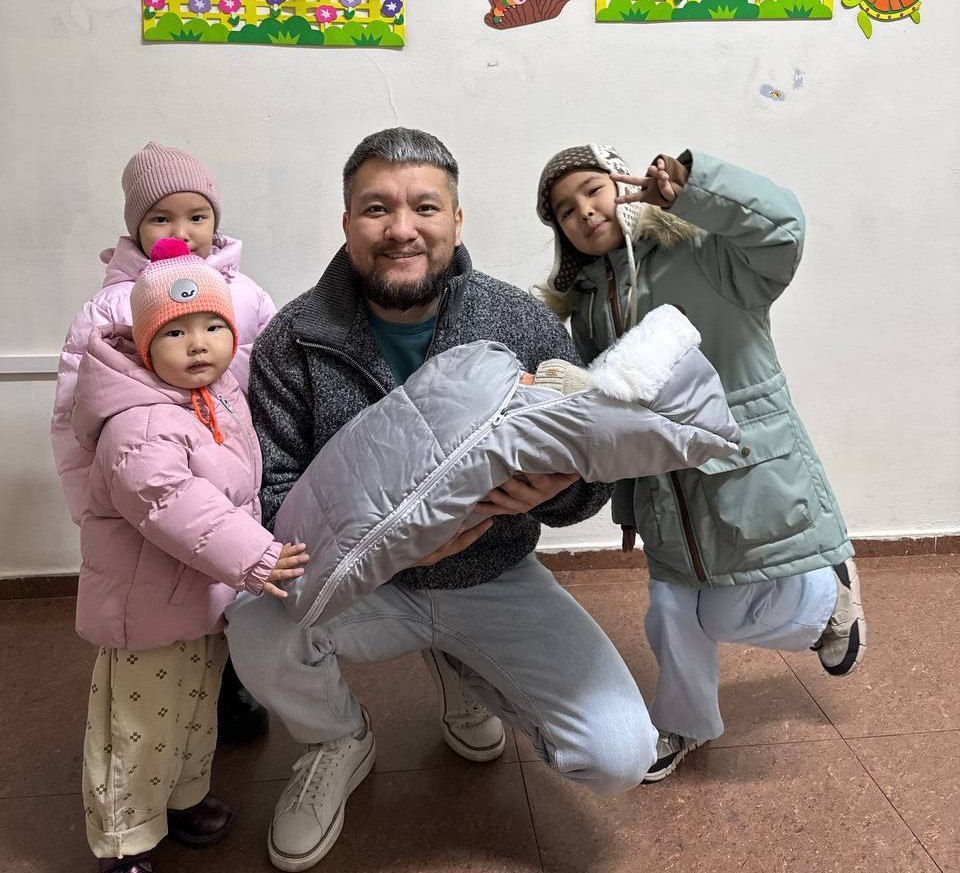
TCA: You recently welcomed your fourth daughter. What is it like being a father to four girls?
Zhubanaev: It’s a blessing. In Islam, it’s said that parents of three daughters are destined for paradise. Among Kazakhs, we say daughters are given to real men. I relate to both.
I always dreamed of having a daughter, and God gave me four. The oldest is seven; the youngest was just born. The gender doesn’t matter. It’s all a great gift.
TCA: Do you think any of them will follow in your footsteps?
Zhubanaev: I don’t know, but they’re all artists. We have a creative family my wife is a trained musician. We’ll raise our children with a love for books, music, and art. But what they choose to become is up to them.