Kazakhstan’s government is not considering the sale of its major oil refineries, despite their inclusion on a national privatization list proposed by the antitrust authority. Energy Minister Yerlan Akkenzhenov announced during a briefing in Astana.
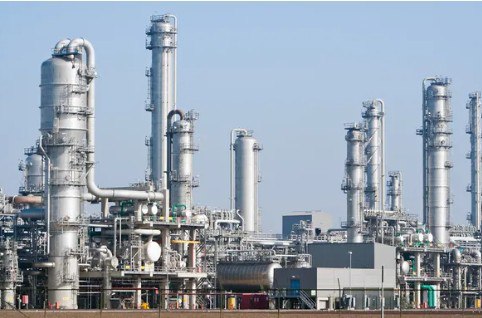
Kazakhstan has three large oil refineries: in Pavlodar, Atyrau, and Shymkent. The Pavlodar and Atyrau plants are fully state-owned through the national oil and gas company KazMunayGas and its subsidiaries. The Shymkent refinery operates as a 50-50 joint venture between KazMunayGas and the China National Petroleum Corporation (CNPC), through the PetroKazakhstan Group.
In March, the Agency for the Protection and Development of Competition (AZRK) proposed examining options for the partial privatization of the Pavlodar and Atyrau refineries, arguing that the Shymkent plant has benefited from greater efficiency through private sector involvement. In November, both state-owned refineries were listed among 473 entities marked for potential privatization, with a target date of 2028.
However, Akkenzhenov clarified that listing an asset on the privatization map does not imply any active plans for its sale.
“This is not true; there are no negotiations at the government level today,” he said. “The Agency for the Protection and Development of Competition is operating within its mandate to foster a competitive environment. But this does not mean the state intends to sell the refineries.”
He emphasized that the refineries are among the country’s most profitable strategic assets, and concerns that they might be sold “for a song” are unfounded. The minister noted that proper valuation methods, such as property value or EBITDA multipliers, would guide any assessment of the assets.
“For example, EBITDA multiplied by a factor of five. So, claims that these assets would be sold cheaply are incorrect. Overall, I want to confirm that we are not going to sell them,” he said.
As previously reported by The Times of Central Asia, Kazakhstan is exploring foreign investment opportunities for a planned fourth major oil refinery, a project aimed at increasing domestic processing capacity amid rising fuel demand.