Kazakhstan’s growing role in global critical-mineral supply chains came into sharp focus on Capitol Hill on September 2. During a nearly four-hour hearing of the full U.S. House Ways and Means Committee, lawmakers and expert witnesses repeatedly presented the country as a major resource producer, an established U.S. supplier and a strategically important partner in Central Asia.
The hearing, titled “Strategic Partnerships to Secure Critical Resources and Supply Chains,” covered a broad range of issues, including domestic mining, processing capacity, Africa and trade policy. Kazakhstan nevertheless emerged as one of the hearing’s most frequently cited country examples. Three of the five witnesses explicitly supported removing Jackson-Vanik Amendment restrictions from Kazakhstan and other qualifying Central Asian states, while another encouraged Congress to consider doing so. Their position was reinforced by members of both parties.
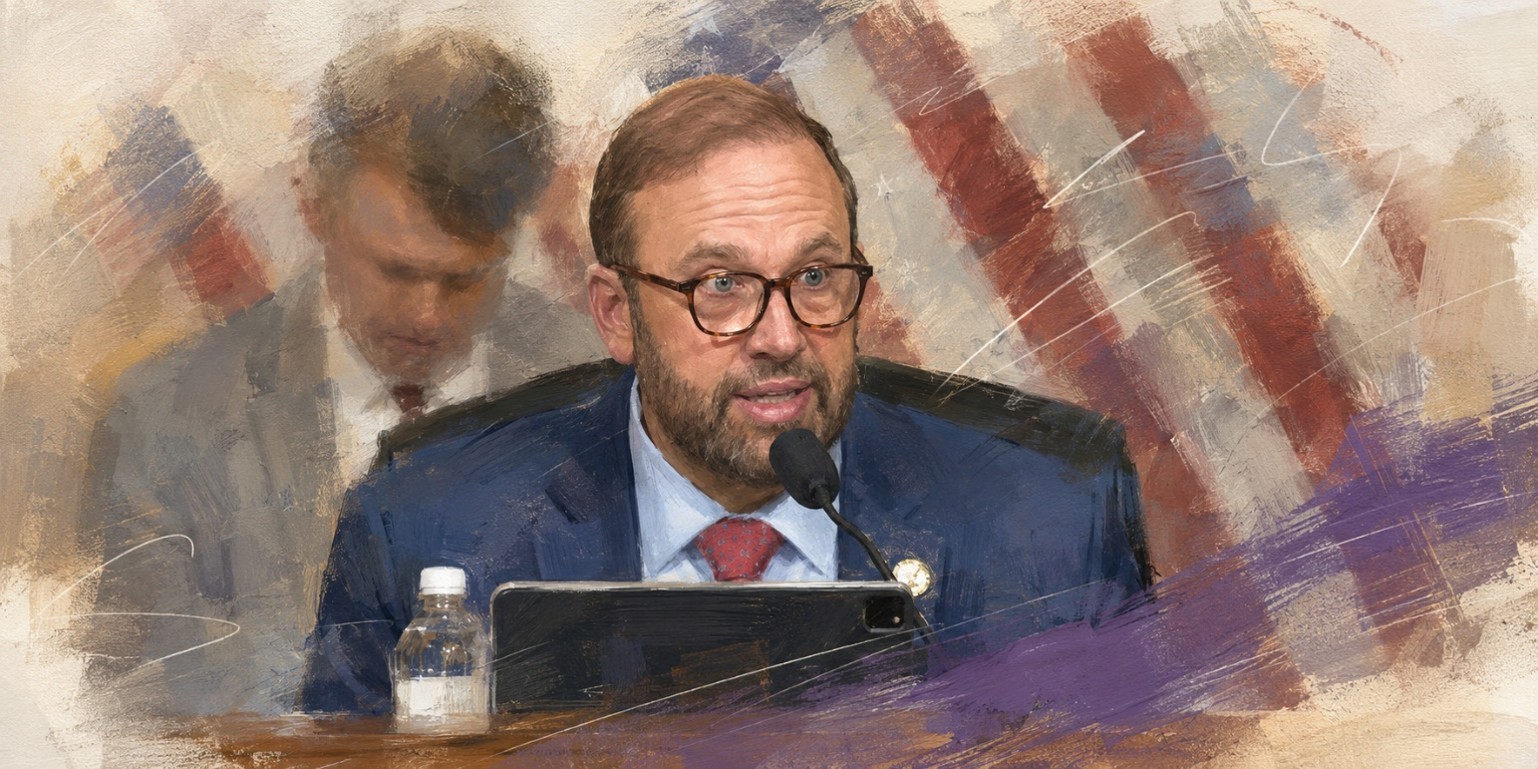
The discussion followed a congressional delegation to Uzbekistan, Kazakhstan and Mongolia led one week earlier by Committee Chairman Jason Smith. Opening the hearing, Smith said all three countries possess significant critical resources, operate amid a strong Chinese and Russian economic presence and are looking to the United States as a stronger trade and investment partner.
Kazakhstan entered the debate as an existing and reliable contributor to U.S. supply chains. Smith noted that the country already provides more than a quarter of U.S. uranium imports. Uzbekistan was discussed largely in terms of its plans to nearly double uranium production by 2030, while Kazakhstan’s importance rested on current production, established commercial ties and its capacity to support immediate diversification of American supplies.
Former U.S. Ambassador John Herbst, senior director of the Atlantic Council’s Eurasia Center, described Kazakhstan as the world’s largest uranium producer, the holder of the second-largest manganese reserves and one of the leading producers of titanium. He also pointed to its substantial copper, lithium and tungsten resources.
According to Herbst, the United States currently receives only about 2.1 percent of Central Asia’s mineral exports. That limited share, he argued, leaves considerable space for American companies to expand their presence in a region that is actively seeking investment, technology and alternatives to dependence on Russia and China.
Kazakhstan’s significance was also linked to its position at the heart of the Trans-Caspian, or Middle Corridor. Participants described the route as an increasingly important connection between Central Asia and Western markets. Combined with new transport links through the South Caucasus, the corridor could give Kazakhstan greater access to global markets while strengthening the resilience of supply chains serving the United States and its allies.
For Kazakhstan, the Jackson-Vanik Amendment became the hearing’s defining political issue. Smith said his recent meetings in Central Asia showed that regional partners regard the Soviet-era measure as an obstacle to deeper economic ties. Witnesses added that the continued application of Jackson-Vanik and the absence of permanent normal trade relations make the trade relationship less predictable and raise questions about the durability of Washington’s commitment.
Herbst called for Congress to remove the remaining Jackson-Vanik restrictions on Kazakhstan and other Central Asian countries. He acknowledged that reforms in the region remain incomplete, but emphasized the progress made in Kazakhstan and Uzbekistan in recent years. In his assessment, closer engagement with the United States would support further improvements while advancing American economic and national-security interests.
Daniel F. Runde, a non-resident senior adviser at the Center for Strategic and International Studies, urged Congress to grant permanent normal trade relations to Kazakhstan and Uzbekistan. He argued that Central Asian countries should not be forced to choose between Washington, Moscow and Beijing. The more effective approach, he said, is to give them meaningful alternatives and make cooperation with the United States commercially and strategically attractive.
Runde described Jackson-Vanik as an outdated framework governing relations with countries that have been independent for 35 years and have long complied with the amendment’s original freedom-of-emigration requirements. Removing it, he argued, would demonstrate that the United States is prepared to build a modern partnership with the region.
Morgan Bazilian, director of the Payne Institute at the Colorado School of Mines, placed the issue at the top of his recommendations to the Committee. He called for pending legislation granting permanent normal trade relations to Kazakhstan, Uzbekistan and Tajikistan to be approved, arguing that continued application of Cold War restrictions gives China and Russia an unnecessary advantage. He called for support for Middle Corridor routes and greater U.S. and allied enrichment capacity to reduce reliance on Russian conversion, enrichment and transport infrastructure.
Gracelin Baskaran, director of the Critical Minerals Security Program at the Center for Strategic and International Studies, also urged Congress to consider removing the restrictions. She argued that mining projects require capital commitments lasting decades and therefore need a permanent and predictable trade relationship.
In a bipartisan show of support, at least six committee members called for removing the restrictions. Congresswoman Carol Miller described the amendment as an outdated measure that sends the wrong signal, discourages American investors and leaves more room for Chinese and Russian economic influence. She referred to legislation introduced with Congressman Jimmy Panetta to remove the restrictions from the Central Asian countries.
Panetta presented the most detailed case for Kazakhstan. As the sponsor of the U.S.-Kazakhstan Trade Modernization Act, he described repeal as a low-cost step capable of producing substantial economic, strategic and diplomatic benefits for both countries. He also noted that Kazakhstan has remained subject to Jackson-Vanik despite consistently meeting the amendment’s freedom-of-emigration requirements since the 1990s. Runde confirmed that successive U.S. administrations have found Kazakhstan compliant with the amendment’s freedom-of-emigration requirements since 1997.
Panetta also highlighted Kazakhstan’s membership in the World Trade Organization and reforms undertaken under President Kassym-Jomart Tokayev, including changes to the justice and law-enforcement systems and the introduction of a single seven-year presidential term. He presented Kazakhstan as a country seeking closer relations with the United States despite the constraints created by its geography.
Congressman Tom Suozzi, an original cosponsor of the U.S.-Kazakhstan Trade Modernization Act, added another Democratic voice to the effort. He described Kazakhstan as a country with deep economic connections to Russia and China that nevertheless wants to move closer to the United States. He cited its reform agenda, religious openness and his own impressions from visiting the country.
Congresswoman Claudia Tenney, a cosponsor of the U.S.-Kazakhstan Trade Modernization Act, also supported repeal. Congressman Blake Moore described permanent normal trade relations as a way to give Central Asian countries more economic options, while Congressman Don Beyer called the removal of Jackson-Vanik restrictions from the region a strong idea despite his wider criticism of the administration’s trade policy.
Melinda St. Louis of Public Citizen cited reporting on the Cove Kaz tungsten project while calling for stronger transparency and conflict-of-interest safeguards, along with greater congressional scrutiny of federally supported critical-minerals deals.
The hearing also touched on broader global concerns surrounding transparency in U.S.-supported mineral projects, as well as regional concerns involving human rights and the possible movement of goods to Russia through Central Asia. In the Kazakhstan-focused discussion, however, these issues remained secondary to critical-mineral cooperation, transport links and Jackson-Vanik.
By the conclusion of the hearing, Kazakhstan had been presented as far more than a source of raw materials. It was portrayed as a leading Central Asian state, a major contributor to U.S. energy security, a key link in Trans-Caspian connectivity and a partner seeking greater economic independence and closer cooperation with Washington.
The hearing also underscored a shift in the political framing surrounding Jackson-Vanik. Rather than treating permanent normal trade relations as a concession to Kazakhstan, supporters framed the step as an American strategic interest. A bipartisan argument emerged: continuing to apply a Soviet-era trade restriction weakens U.S. efforts to compete for critical resources and build a durable partnership with Kazakhstan.