• KZT/USD = 0.00211
  • TJS/USD = 0.10810
  • UZS/USD = 0.00008
  • TMT/USD = 0.29760
  • KZT/USD = 0.00211
  • TJS/USD = 0.10810
  • UZS/USD = 0.00008
  • TMT/USD = 0.29760
  • KZT/USD = 0.00211
  • TJS/USD = 0.10810
  • UZS/USD = 0.00008
  • TMT/USD = 0.29760
  • KZT/USD = 0.00211
  • TJS/USD = 0.10810
  • UZS/USD = 0.00008
  • TMT/USD = 0.29760
  • KZT/USD = 0.00211
  • TJS/USD = 0.10810
  • UZS/USD = 0.00008
  • TMT/USD = 0.29760
  • KZT/USD = 0.00211
  • TJS/USD = 0.10810
  • UZS/USD = 0.00008
  • TMT/USD = 0.29760
  • KZT/USD = 0.00211
  • TJS/USD = 0.10810
  • UZS/USD = 0.00008
  • TMT/USD = 0.29760
  • KZT/USD = 0.00211
  • TJS/USD = 0.10810
  • UZS/USD = 0.00008
  • TMT/USD = 0.29760
01 August 2026

Our People > Lidia Savina

Lidia Savina's Avatar

Articles

Kyrgyzstan: green activists sound alarm over air pollution in Bishkek

BISHKEK (TCA) — Environmentalists are asking the President of Kyrgyzstan to declare 2019 the year of ecology. This was announced at the recent roundtable on air pollution problems in the capital Bishkek. Parliament members, representatives of the Achyk Asman (Clean Air) youth environmental movement, civil society, and the media took part in the discussions. It is encouraging that industrial production is developing in the country, mainly at small enterprises, but they often do not take into account environmental aspects. The State usually draws attention to the environment only when problems arise, Achyk Asman head Ermek Adylbekov said. Kyrgyzstan remains among the seldom countries in the world where nature is still relatively well preserved. It would be a big mistake of the Government and an irreparable loss for the nation if the environment deteriorates as a result of human negligence and mismanagement, MP Dastan Bekeshev said. Kyrgyzstan is an agrarian country. But even the development of agriculture leads to a deterioration of the ecological situation in the country. Incorrect cultivation of arable land, introduction of pesticides, outdated irrigation and drainage systems, which have not been updated since Soviet times – all this negatively affects the ecological situation in Kyrgyzstan, Bekeshev said. The MP also expressed outrage at the way the country uses clean water. "We mindlessly use drinking water spending it for washing cars and other things," he said. Cutting trees The Bishkek authorities are massively cutting trees, which leads to environmental degradation in the city, said the head of the Green Party movement Erkin Bulekbaev. In 2017, about three thousand trees were cut down for the expansion of roads, which caused discontent from environmentalists and local residents. Bishkek authorities explained that the firewood was given to poor families, as well as the felled trees were sold and the money has been spent for the city’s needs. Last year, 2,938 trees were felled in Bishkek, of which 840 trees were in emergency, the city administration clarified. However, residents and activists suspected city officials of corrupt sales of timber for their own benefit. Environmentalists believe that mass tree cutting will affect the ecology and health of Bishkek residents. According to the city administration, instead of cut down trees they planted more than 10,000 seedlings. However, most of those seedlings did not take root. No matter how many trees are planted, this will not change anything, because the problem is in the competence and professionalism of the city officials, well-known environmental scientist Emil Shukurov said. Landscapers kill the environment, primarily by their incompetence, he added. Many of the imported seedlings could not accommodate to local natural conditions, because they are designed for another environment, he explained. The trees bought by the city administration are dozens of times more expensive than local trees, so they cannot afford to landscape the whole city, but some specific areas only. All trees in the city grew out of ordinary seedlings. This means that previous landscapers knew how to grow them, while the current ones do not cope...

8 years ago

Kyrgyzstan to focus on private sector development

BISHKEK (TCA) — The Caucasus and Central Asia region showed a positive 4.1% GDP growth in 2017 which exceeded the expectations of the IMF, the recently published IMF report on prospects for the regional economy development says. As the forecast shows, this rate will not last long, therefore, the region needs to focus on developing a dynamic private sector and diversifying the economy. Guarantee Fund To assist entrepreneurs in finance access, the Kyrgyz Government established the Guarantee Fund in 2016. The Fund's capital is 282 million soms, of which 72 million soms were allocated from the state budget. Since its launch in November 2016, the Fund has approved 426 guarantees for 390.4 million soms. Entrepreneurs received loans in partner banks under the Fund’s guarantees. The Guarantee Fund recently introduced a program to create the machine-building and automobile industries in the country. The machine-building enterprises stopped production in the early 1990s. Since then, the trade balance has a negative index, and imports of many types of machinery and equipment prevail. According to another ambitious project, creation of electric vehicles will be a good response to the requirements of environmental friendliness and technological adaptability of transport. The first Kyrgyz electric vehicle will be presented by the end of May 2018, the Guarantee Fund said. Imported auto parts will be used to assemble electric cars. Microcredits Microcredit companies provided 380 thousand people across the country with loans worth 17 billion soms, the National Statistics Committee reported. The largest number of recipients and the greatest volume of issued microcredits were registered in Bishkek and the Chui, Osh and Jalal-Abad oblasts. Women received most of the loans (over 61% of borrowers). According to creditors, 36% (6 billion soms) of all loans were directed for consumer purposes, 29% (5 billion soms) – in agriculture, and 17% (2.8 billion soms) in trade and public catering. Private entities dominate There are 98 state enterprises in Kyrgyzstan, of which more than 30 are loss-making ones. As of the beginning of this year, 1,130 state enterprises were registered but most of them did not function. The Government assessed the non-operating enterprises and liquidated most of them. As a result, 98 state enterprises currently operate but some unprofitable ones will be liquidated, and others will be merged. In Kyrgyzstan, 690,300 economic entities are registered, both legal entities and individuals. Among them, private entities dominate (98.2%) and 63% of them are operating in agriculture, forestry and fisheries, the National Statistics Committee reports. The Government creates preferences for the development of industrial production. Newly established enterprises will be exempt from property tax, land tax, profit tax, and sales tax for five years. The state policy is currently aimed at the development of the regions. More than 70% of the country's population lives in the regions, and most of the villages and towns are subsidized and do not have developed infrastructure and favorable business environment. Considering these circumstances, Kyrgyz President Sooronbai Jeenbekov declared 2018 the Year of Regional Development. The Economy Ministry proposes to...

8 years ago

Kyrgyzstan: labor migrants need social protection, investment incentives

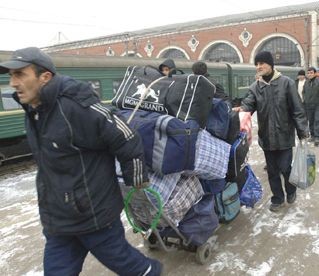
BISHKEK (TCA) — There are about 100 thousand Kyrgyz labor migrants in Kazakhstan, Kyrgyzstan’s State Migration Service says. Some of them work legally in the regions closer to Kyrgyzstan — the South-Kazakhstan, Karaganda and Almaty oblasts and Almaty city. Host state for migrants The problems faced by labor migrants in Kazakhstan including the absence of labor contracts and difficulties with the registration and obtaining of permits were discussed during a teleconference in Bishkek earlier this month. Citizens of Kyrgyzstan can stay in Kazakhstan for a month without registration. Within a pilot project, migration services of the two countries established a Migration Services Center in Astana which showed good results, and such centers will be created in all regional centers of Kazakhstan by the end of the year. When it comes to migration, Central Asian states are traditionally known as donor countries, whose migrants mainly look for jobs in Russia. The exception is Kazakhstan, which in recent years has become a host state for migrants, changing the economic balance in the region. In 2016, the influx of labor migrants to Kazakhstan doubled compared to 2000 and continues to grow. Many labor migrants from neighboring Central Asian states consider Kazakhstan more attractive than Russia. According to the International Organization for Migration in Almaty, the total amount of labor migrants in Kazakhstan in 2017 was two million people, mainly from neighboring countries. As a result, Kazakhstan is increasing its economic influence in the region. However, the situation may change when the Russian economy improves. At the same time, the economies of Kyrgyzstan and Tajikistan are dependent on remittances from labor migrants. According to the latest data, the amount of remittances from Russia is almost 37% of Tajikistan's GDP. Vulnerable migrants Women and children are still the most vulnerable migrants, says a report that monitored the implementation of the law of the Kyrgyz Republic on state support of compatriots abroad, which was recently discussed by the Kyrgyz Parliament. Women migrants experience serious difficulties with reproductive health. Women who have given birth to a child in a foreign state experience much more difficulties than their compatriots who gave birth to children in their homeland. Their children are also vulnerable, the report says. The legal status of migrants is important in obtaining access to medical services. If migrants have not entered into labor contracts with their employers and accordingly do not have social protection, they do not have access to medical services. Authorities of Kyrgyzstan should provide support to socially unprotected categories of compatriots on the basis of international treaties and in accordance with the legislation of the country. However, control over the implementation of the law showed that the Ministry of Labor and Social Development of Kyrgyzstan does not consider compatriots abroad to be beneficiaries of social protection services, the report says. Law execution The Law "On state policy to support compatriots abroad", adopted five years ago, remains valid but its legal regulation is outdated and requires improvement, MPs told a press conference in Bishkek....

8 years ago

Kyrgyzstan marks 25th anniversary of national currency

BISHKEK (TCA) — A quarter of a century ago, on May 10, 1993, Kyrgyzstan was among the first CIS countries to introduce its own currency. The correctness of this historic decision has been confirmed by time. The Kyrgyz som has proved its independence and consistency despite the periodic shocks of the economy, Chairman of the National Bank of the Kyrgyz Republic (NBKR) Tolkunbek Abdygulov said on May 7 at a meeting commemorating the 25th anniversary of the national currency. A stable national currency is among the most important economic indicators, Abdygulov said. The Kyrgyz som is also the most stable currency providing for a low level of inflation, said Marat Sultanov, who headed the National Bank in 1993. “When we were going to introduce our own currency, no one believed that it would be stable, and many predicted a failure,” Sultanov said. On May 10, Kyrgyzstan annually celebrates the National Currency Day. Best regional banknote A 2000-som commemorative banknote won a prestigious international competition "The Best Regional Banknote of 2018" among the countries of Central and Eastern Europe and the CIS. The banknote issued last November was dedicated to the 25th anniversary of Kyrgyzstan’s independence and the 25th anniversary of its National Bank. The banknote was awarded “for outstanding achievements in design, the use of modern protective elements in decoration, technological equipment and security of the banknote”. Developing banking system NBKR Chair Abdygulov spoke about the development of the banking system in the country. For a relatively short period since independence, the domestic banking system has proved its sustainability. The activity of banks is constantly improving, and they introduce innovative technologies and expand the range of services offered. The reserves of the National Bank exceed $2.18 billion, and this allows us to look confidently into the future, Abdygulov said earlier this year at a news conference in Bishkek. International currency reserves of Kyrgyzstan consist of more than ten types of currency, including SDR (special drawing rights of the IMF) and gold. They can be used for international settlements and payments, covering the balance of payments deficit and stabilizing the exchange rate of the national currency. The NBKR uses foreign exchange interventions to smooth sharp fluctuations in the exchange rate. Bank deposits of Kyrgyz citizens amounted to 121.6 billion soms at the end of 2017, the NBKR said. Back in 2012, the population kept 53.2 billion soms in banks, 71.1 billion soms in 2013, 85.9 billion in 2014, 109.4 billion in 2015, and 107 billion in 2016. The population now keeps 63.8 billion soms in the national currency and 57.8 billion soms in foreign currency. Innovative payments The analysis shows the annual growth of both the amount of taxes paid and the number of payments by innovative methods. The amount of payments to the state budget through peripheral devices has almost tripled and the number of payments has doubled over the first three months of 2018 compared to the same period in 2017. According to the NBKR, taxpayers carried out 65.14...

8 years ago

Kyrgyzstan searching for ways to get out of debts

BISHKEK (TCA) — Kyrgyzstan’s public debt has amounted to $4.4 billion (58% of GDP) of which $3.885 billion is the state's external debt. $320 million Kyrgyzstan will have to pay off by 2023. Continue reading

8 years ago

Central Asia countries to increase exports of halal products

BISHKEK (TCA) — Kyrgyzstan is preparing to launch a pilot project of voluntary certification and labeling of products and services for compliance with halal standards. "Kyrgyzstan has a high potential to increase exports of ecologically clean and quality halal products to the countries of the Eurasian Economic Union, the EU and Arab countries. The halal industry could make a significant contribution to the development of Kyrgyzstan’s economy,” then Kyrgyz Economy Minister Artem Novikov said last month at a roundtable to discuss the voluntary certification of goods and services for compliance with halal standards. Deputy Mufti of Kyrgyzstan Zamir Ajymkul, business people and religious figures took part in the discussions. Not all the products labeled as halal comply with Islamic standards in Kyrgyzstan, and consumers often complain about that, said Almaz Kaiyrbekov, head of the halal industry production department at the Economy Ministry. According to international certification, halal products should not contain ingredients that contain animal blood, pork, alcohol, meat of carnivores, and animals slaughtered without meeting the requirements of the Sharia. The product certification will be double-checked, Kaiyrbekov said. The Economy Ministry will check for compliance with quality standards, and the Spiritual Administration of Muslims of Kyrgyzstan (SAMK) will control compliance with Sharia rules. Kyrgyzstan wants to enter the $1.1 trillion market of halal products, Novikov said. For instance, Russia ranks sixth in the consumption of such products, Kazakhstan purchases a lot of halal products, and Tajikistan decided to refuse from the import of meat products not meeting the halal standards. “Kyrgyzstan cannot stand aside, it is necessary to enter these markets and promote our products. A project for the delivery of 500 tons of lamb according to halal standards was signed with Iran, and 56 tons have already been exported. In total, 12 enterprises have the appropriate certificates in Kyrgyzstan," the Minister said. All necessary documents have been adopted and Kyrgyzstan is ready to launch a pilot project of voluntary certification and labeling of products and services for compliance with halal standards. "The system of marking will make it possible to find out what products are made of, and what path they have made to buyers," Novikov said. “In the future, consumers and exporters can choose either the product marked as halal or the one that has marks indicating the producer and raw products from which the final product was manufactured. It is the issue of relations between buyers and sellers," Economy Minister concluded. The Center for Standardization and Metrology at the Economy Ministry will deal with the halal certification. Currently, the Ministry and the SAMK implement this work on a pilot basis. "Halal certification and labeling is voluntary for entrepreneurs, and entails no barriers to the sale of goods to the EEU countries," Novikov said. It is expected that by 2020, the world’s halal food market will grow to $1.585 trillion and amount to 16.9% of global food expenditures. Russia Russia ranks sixth among the top countries for halal food products in the amount of $35 billion. Kyrgyzstan’s...

8 years ago

Kyrgyzstan building effective partnerships with international donors

BISHKEK (TCA) — Effective approach to cooperation and partnership of Kyrgyzstan with international financial organizations, introduction of innovative business models, exchange of available online resources and financing opportunities were discussed recently at the International Cooperation and Development Forum in Bishkek. The forum, held by the international DevelopmentAid platform, involved representatives of international and donor organizations, financial institutions, NGOs, and private sector who are planning to expand their activities in Kyrgyzstan or to find regional or international partners in the implementation of projects. Since Kyrgyzstan’s independence, donor organizations have been helping the country carry out economic reforms to improve the investment climate, support private enterprises and financial institutions, strengthen the financial sector, ensure food security, reform the energy sector, and conduct legal reforms. Donor organizations such as the European Union, Organization for Security and Cooperation in Europe (OSCE), British Department for International Development (DFID), International Monetary Fund, International Finance Corporation (IFC), European Bank for Reconstruction and Development (EBRD), Development Bank KfW and German Society for International Cooperation (GIZ), United States Agency for International Development (USAID), Japan International Cooperation Agency (JICA), Russian-Kyrgyz Development Fund, and others successfully operate in Kyrgyzstan. Business offers On behalf of the business community, Executive Director of the International Business Council (IBC) based in Bishkek, Askar Sydykov, suggested international donors to support Kyrgyzstan in carrying out reforms in the judicial system, as well as in key sectors of the country's economy including tourism, mining, and banking. The dialogue between the state and business associations can be improved through trainings and targeted researches, as well as the development of youth entrepreneurship. "Local entrepreneurs have many ideas but they cannot properly formulate and compose them, and consultations of international experts could help them," the IBC head said. Donors' assistance is also needed in improving legislation regulating the activities of the mining sector in Kyrgyzstan. Currently, the fiscal regime for mining is extremely burdensome. The changes introduced into the legislation of Kyrgyzstan since 2012 have negatively affected the financial model of mining enterprises, Sydykov said. The legislation regulating the activity of the banks also needs improvement. It is necessary to remove restrictions on the issuance of foreign investment loans, as well to solve problems related to benefits provided for by the legislation on investments (after Kyrgyzstan joined the Eurasian Economic Union, benefits cannot be applied to representatives of the banking sector with foreign participation). The business community proposed to establish relations between the banking institutions of Kyrgyzstan and the United States. Currently, customers of Kyrgyzstan’s banks use the US dollar for settlements with foreign counterparts for export-import transactions, but commercial banks of Kyrgyzstan do not have direct dollar correspondent accounts in the US banking institutions. Local banks are forced to use correspondent accounts outside the US, and this affects the quality and speed of customer service. The insurance system of Kyrgyzstan also requires improvement. The business community offered to provide equal access for all private insurance companies in the implementation of compulsory home insurance. In addition, it is necessary to solve...

8 years ago

Kyrgyzstan has 30th cabinet for 26 years of independence

BISHKEK (TCA) — On April 20, the Kyrgyz Parliament elected Mukhammedkaly Abylgaziev the new Prime Minister of Kyrgyzstan, and President Sooronbai Jeenbekov signed a decree for his appointment. 115 out of the 120 Parliament members voted for the new PM. Continue reading

8 years ago

Kyrgyzstan: China demands to protect investor after locals burnt gold-processing plant

BISHKEK (TCA) — The Embassy of China in Kyrgyzstan has asked the Kyrgyz Foreign Affairs and Internal Affairs Ministries to conduct a fair investigation and protect Chinese investors, after hundreds of residents of the country’s Toguz-Torou district set several buildings of the Kyrgyz-Chinese joint venture Makmal GL Developing ablaze on April 11, 24.kg news agency reported. On April 11, locals broke into the territory of Makmal GL Developing and set a gold-processing plant on fire near the town of Kazarman in the Toguz-Torou district of the Jalal-Abad province in the south of Kyrgyzstan. They did not allow the firefighters to extinguish the fire. According to official reports, protesters burned two large KamAZ trucks, excavators, a mobile crane, containers, and an administrative building of the company. Three policemen were injured in the riots. According to the company, $5 million worth of equipment was burnt. Violent protest The main reason for the protest was the fear of the environment violation if the plant starts operating. The protesters said that the company's management has not fulfilled their demands, and began to set fire to the buildings. According to some estimates, about one thousand protesters participated in the riot. The protesters also threw stones at policemen and members of the Commission of the State Inspectorate for Environmental and Technical Safety, who arrived in Toguz-Torou to conduct outreach work with the local population. After the incident, Prime Minister Sapar Isakov fired akim (head of administration) of the Toguz-Torou district Tilek Idrisov. Next to the new plant, there is a Makmalzoloto plant which uses cyanide to extract gold. The new plant in Kazarman planned to extract gold using modern ecologically friendly technologies without cyanides. The commission was to study the impact of the plant on the environment and then give its conclusion whether the plant will work or not. However, the commission could not complete its work due to the riot. Prime Minister Isakov ordered the Ministry of Internal Affairs to conduct a thorough investigation into the arson of the gold-processing plant, stressing the inadmissibility of such actions of spoiling of private property. The Ministry has instituted criminal proceedings for disorderly conduct, deliberate destruction or damage to others’ property by arson, and mass riots. The police fully control the situation in the region, the Interior Ministry reported. Construction permitted According to the State Inspectorate for Environmental and Technical Safety, Makmal GL Developing has permission to build a gold-processing plant, and only the environmental issue hindered the launch of the plant. The company has not yet submitted the results of the environmental assessment, said Ulan Ryskulov, Chairman of the State Committee for Industry, Energy and Subsoil Resources. After the assessment, the Committee planned to inform the local population whether the enterprise meets the environmental requirements or not. However, local residents, not waiting for the results, began to destroy the company’s property. It is not yet known who initiated the riots, but it looked like a preplanned action, because people came out with posters. The relevant authorities should...

8 years ago

Kyrgyzstan: high-profile dismissals, arrests in the energy sector

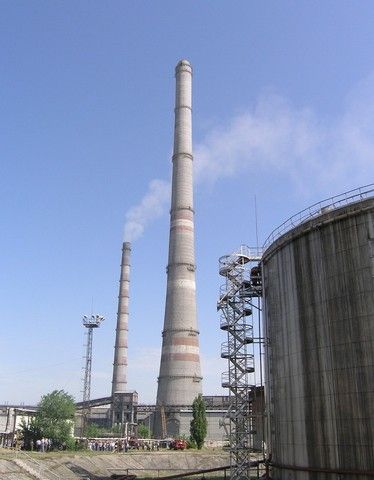
BISHKEK (TCA) — The investigation into this past winter’s accident at the Bishkek thermal power plant (TPP) has been completed in Kyrgyzstan, revealing corruption schemes in the country’s energy sector. Several high-profile dismissals, criminal cases and arrests give hope that authorities in Kyrgyzstan are serious about the elimination of corruption in the energy sector. ‘Immense negligence’ "I have got acquainted with the Commission’s opinion and concluded that the situation at the Bishkek TPP was the result of an immense negligence that led to such consequences when the whole city remained without heating in the winter time [the air temperature outside was minus 20 degrees Celsius]. Therefore, it is impossible to forgive this. On this fact, according to my request […], the Prosecutor General's Office instituted criminal proceedings, and investigative measures are currently underway," Prime Minister of Kyrgyzstan Sapar Isakov said on April 10 at the Government’s meeting discussing the results of the work of the Interdepartmental Commission investigating the causes of the accident at the Bishkek TPP on January 26, 2018. Isakov supported the Commission’s conclusion that the actions of the TPP personnel violated the instructions for liquidation of accidents, and ordered to take disciplinary measures against the persons in charge indicated by the Commission. "It is necessary to review the disciplinary measures against ordinary employees of the Bishkek TPP, who followed the instructions of their chiefs, and whose fault is insignificant. Ordinary employees should not be punished for those who headed the process," Isakov said. He stressed the need to strengthen the human resources and create conditions for attracting highly qualified specialists to the energy sector. Energy Holding head fired The Prime Minister ordered to fire Aibek Kaliev, Chairman of the National Energy Holding Company, and Uzak Kydyrbaev, General Director of the Electric Stations OJSC. "I decided to dismiss Aibek Kaliev, who, as the head of the National Energy Holding, was responsible for the preparation of companies for the autumn and winter heating season. I was waiting for the results of the investigation which revealed that the National Energy Holding could not even clearly explain to the parliament and the general public the main facts on the TPP modernization,” Isakov said. Later on April 10, the State Property Management Fund fired Kaliev from his post. According to Prime Minister, the Government will also take into account the results of the Parliamentary Commission that looked into the causes of the accident at the Bishkek TPP and the use of the $386 million loan received for its modernization. Officials detained On April 3, Uzak Kadyrbaev, General Director of Electric Stations, and Temirlan Brimkulov, Director for Modernization of the Bishkek TPP, were detained by the State Committee of National Security over the case. On March 3, Berdibek Borkoyev, first Deputy General Director of the Electric Stations JSC, was detained for two months. He was charged with large-scale misappropriation of property and violation of procedures for holding public auctions and tenders. On March 7, Almaz Jusupbekov, technical director of Electric Stations, was detained....

8 years ago