• KGS/USD = 0.01144 0%
  • KZT/USD = 0.00212 0%
  • TJS/USD = 0.10432 -0.29%
  • UZS/USD = 0.00008 0%
  • TMT/USD = 0.28490 0%
  • KGS/USD = 0.01144 0%
  • KZT/USD = 0.00212 0%
  • TJS/USD = 0.10432 -0.29%
  • UZS/USD = 0.00008 0%
  • TMT/USD = 0.28490 0%
  • KGS/USD = 0.01144 0%
  • KZT/USD = 0.00212 0%
  • TJS/USD = 0.10432 -0.29%
  • UZS/USD = 0.00008 0%
  • TMT/USD = 0.28490 0%
  • KGS/USD = 0.01144 0%
  • KZT/USD = 0.00212 0%
  • TJS/USD = 0.10432 -0.29%
  • UZS/USD = 0.00008 0%
  • TMT/USD = 0.28490 0%
  • KGS/USD = 0.01144 0%
  • KZT/USD = 0.00212 0%
  • TJS/USD = 0.10432 -0.29%
  • UZS/USD = 0.00008 0%
  • TMT/USD = 0.28490 0%
  • KGS/USD = 0.01144 0%
  • KZT/USD = 0.00212 0%
  • TJS/USD = 0.10432 -0.29%
  • UZS/USD = 0.00008 0%
  • TMT/USD = 0.28490 0%
  • KGS/USD = 0.01144 0%
  • KZT/USD = 0.00212 0%
  • TJS/USD = 0.10432 -0.29%
  • UZS/USD = 0.00008 0%
  • TMT/USD = 0.28490 0%
  • KGS/USD = 0.01144 0%
  • KZT/USD = 0.00212 0%
  • TJS/USD = 0.10432 -0.29%
  • UZS/USD = 0.00008 0%
  • TMT/USD = 0.28490 0%

Global Ecological Connectivity Partnership Launches in Uzbekistan

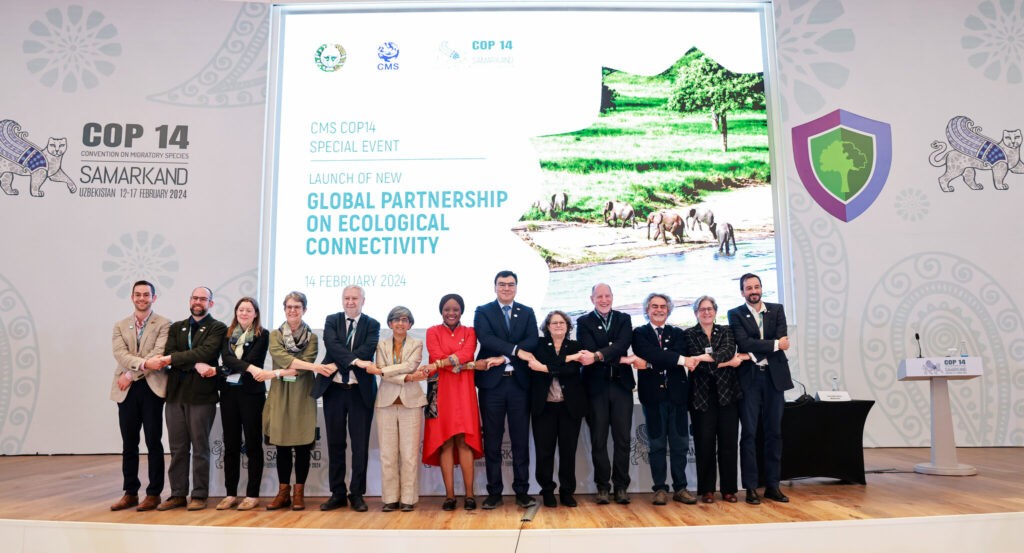
The Global Partnership on Ecological Connectivity (GPEC) — a major new initiative to ensure that areas that are important to migratory animals are identified, protected and connected — was launched on February 14th on the margins of the 14th Meeting of the Conference of the Parties to the Convention on the Conservation of Migratory Species of Wild Animals in Samarkand, Uzbekistan. 

The Convention on Migratory Species (CMS) is an environmental treaty of the United Nations that provides a global platform for the conservation and sustainable use of terrestrial, aquatic and avian migratory animals and their habitats.  

Amy Fraenkel, the executive secretary for the CMS, commented: “The launch of this new global partnership is a direct and immediate response to some of the key recommendations of the flagship CMS report, the State of the World’s Migratory Species, released just two days ago at the opening of the conference. The report calls for increased actions to identify, protect, connect and effectively manage important sites for migratory species. This is exactly what this alliance is about, as it will ensure that actions to address ecological connectivity are mobilized around the world. GPEC’s objective is to ensure that ecological connectivity is maintained, enhanced, and restored in places of importance for migratory species of wild animals. But ecological connectivity is not just relevant to migratory species. It also plays a major role in addressing effective biodiversity conservation, land restoration and climate change mitigation and adaptation across terrestrial, freshwater, and marine ecosystems”. 

Aziz Abdukhakimov, the minister of ecology, environmental protection, and climate change of Uzbekistan, added: “Nature does not recognize man-made boundaries. Uzbekistan is acutely aware of this fact, as evidenced by the devastating effects of the Aral Sea’s depletion on humans and wildlife across Central Asia and beyond. By contributing to the CMS Global Ecological Connectivity program, Uzbekistan is participating in a worldwide effort to protect migratory species. This collaboration underscores Uzbekistan’s belief in the power of nature to unite nations, necessitating a collective effort to protect it.”

EBRD Acquires Stake in Air Astana

The European Bank for Reconstruction and Development (EBRD) on February 14th said it has invested $41.1m (€39m) into shares of Kazakhstan’s flagship carrier, Air Astana, supporting the country’s first partial privatization through an initial public offering (IPO). The EBRD’s investment represents a 5% shareholding in Air Astana.

The shares will be listed on both the London Stock Exchange and the Kazakhstan Stock Exchange. The IPO is a significant privatization benchmark for Kazakhstan’s economy, which is predominantly controlled by the state. 

The IPO funds, including the EBRD’s investment, will be used to support Air Astana’s fleet expansion and renewal program, the construction of an aircraft maintenance facility and the acquisition of a flight simulator, the EBRD press service said.

Air Astana plans to expand its current fleet to 80 aircraft by 2029 by acquiring new fuel-efficient planes.

The EBRD said it will be working with Air Astana towards achieving its target of becoming carbon neutral by 2050. The bank will also use this opportunity to play a greater role in the decarbonization of aviation and to assist in setting up the sustainable aviation fuels industry in Central Asia.

One Health Nature Conservation Project Launches in Central Asia

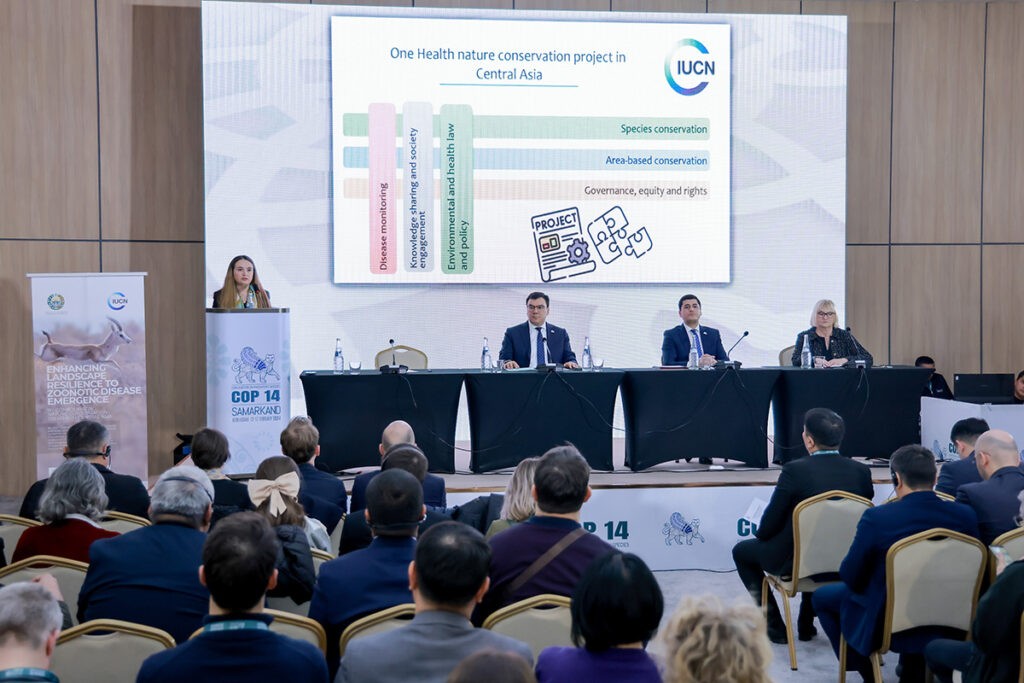
The International Union for Conservation of Nature (IUCN) and its international partners have launched the One Health Central Asia project, aiming to mitigate the risk of zoonoses – diseases that are naturally transmissible from animals to humans – in Central Asia. The new initiative was announced on February 13th at the 14th Conference of the Parties to the Convention on Migratory Species of Wild Animals (CMS COP14) in Samarkand, Uzbekistan. 

The risk of zoonotic diseases in Central Asia is exacerbated by biodiversity loss and changes in human-wildlife interactions. As part of the new initiative, IUCN and national and international partners, including all five Central Asian countries, will implement actions to prevent the emergence and spread of zoonotic diseases, IUCN reported on its website. 

The experts will work to consolidate a fair and effective regional network of protected and conserved areas, strengthen conservation measures and wildlife management for disease risk mitigation, and promote the latest advancements in zoonosis research and technology. 

Speaking at the launch ceremony, IUCN’s director general, Dr Grethel Aguilar, said that nature conservation can contribute to mitigating the risk of zoonotic disease outbreaks, and this important new initiative will strengthen the resilience of Central Asian landscapes, bringing numerous benefits to communities. “We will continue to support the governments here to build regional capacity to apply IUCN’s tools and standards, including the IUCN Green List, best practices in species management, and the latest advancements in zoonosis research.” 

Aziz Abdukhakimov, the minister of ecology, environmental protection, and climate change of Uzbekistan, commented that: “Over the past few years we have observed how the spread of zoonotic diseases like COVID-19 can have a global impact. This has resulted in entire countries being demobilized, transportation connections being disrupted, an increase in food security issues, and massive socio-economic consequences. We are committed to expanding regional cooperation for sustainable management of protected natural areas, preserving unique biological diversity, and contributing to the environmental balance in the Central Asian region, which will receive a significant boost through this project on One Health in nature conservation.” 

Supported by a €11m contribution from the German Ministry for Environment, Nature Conservation, Nuclear Safety and Consumer Protection via the International Climate Initiative, this major regional initiative will spearhead the One Health approach in Central Asia over the next six years. The initiative, entitled Enhancing landscape resilience to zoonotic disease emergence by consolidating nature conservation systems in Central Asia, will focus on the interconnectedness of human, animal, and environmental health.

“Obstacles to migration reduce the habitat available to migratory species. This phenomenon has been observed across Central Asia with species such as the Saiga, Wild Ass, and even those with relatively small ranges, like the Bukhara Deer,” said Amy Fraenkel, the executive secretary of the Convention on the Conservation of Migratory Species of Wild Animals (CMS), one of the international partners of the One Health Central Asia initiative. “In the diminished and fragmented habitats, migratory species of wild animals often find themselves in contact and competition with livestock for pasture and water which heightens the risk of transmission of disease between these sectors to the detriment of both. Therefore, preserving habitat connectivity not only helps in mitigating the risk of disease outbreaks in wildlife but also reduces the transmission of diseases between wildlife and livestock, and decreases the risk of zoonotic diseases i.e. those affecting humans.” 

Coordinated by IUCN, the One Health Central Asia initiative gathers international partners, including the Michael Succow Foundation, the Secretariat of the Convention of Migratory Species (CMS), UNEP World Conservation Monitoring Centre (WCMC), and the Zoological Society of London (ZSL). They will collaborate closely with national authorities and expert organizations across the region, such as CAMP Alatoo in Kyrgyzstan, the Institute of Zoology of Kazakhstan, the Institute of Zoology of the Uzbek Academy of Sciences, and the Tajikistan Nature Foundation.

Air Astana: LSE’s largest IPO of 2024 Set to Test Appetite of Investors

Shares of Central Asia’s largest airline Air Astana are now for sale to the public in London, with the company’s global depositary receipts (GDRs) trading on the London Stock Exchange (LSE). The GDRs were priced for this month’s IPO at $9.50 a piece last week when conditional dealings in began on the LSE and Kazakhstan’s Astana International Exchange (AIX). Today, Air Astana’s local shares trading on the Almaty’s KASE bourse are up 6.1% to 1,241 tenge, whilst dollar-priced GDRs trading on Astana’s AIX are down 1.1% to $10.08 at an intra-day volume of just under 30,000 GDRs.

The LSE’s largest IPO of 2024 to date is set to gauge the demand of frontier and emerging market equity investors for exposure to Central Asian stocks in the aftermath of Russia’s 2022 attack on Ukraine. Companies like Air Astana, and notably its low-cost carrier unit Fly Arystan, have in some ways benefited from the disruptions caused by the war and its consequent matrix of international sanctions as people and goods are re-routed through Kazakhstan. Conversely, the threat of more instability in the region and the risks of higher inflation, fuel and operating costs will undoubtedly remain on the minds of potential investors.

The IPO in London and Kazakhstan represents a meaningful step for the latter’s sovereign wealth fund, Samruk Kazyna, which plans to continue putting the shares of state companies on public markets.

According to one former IPO manager from a European bank who declined to be named as the IPO process was underway, Air Astana’s offering is the “clearest test in the IPO market to date of investor belief in Kazakhstan’s continued economic development.” He also noted that it’s “positive to see that four of the nine directors are independent, with three of those independent directors being from outside Kazakhstan” in terms of corporate governance.

Air Astana’s results for the first nine months of 2023, which were published on December 12th, showed positive top-line growth in revenue, operating profit, and passenger-kilometers flown metrics versus 2022, though the carrier did see a 1% dip in EBITDAR margin (operating profit as a percentage of its revenue) to 28% which investors may focus on going forward.

Doha Hosts Kazakhstan–Qatar Investment Roundtable

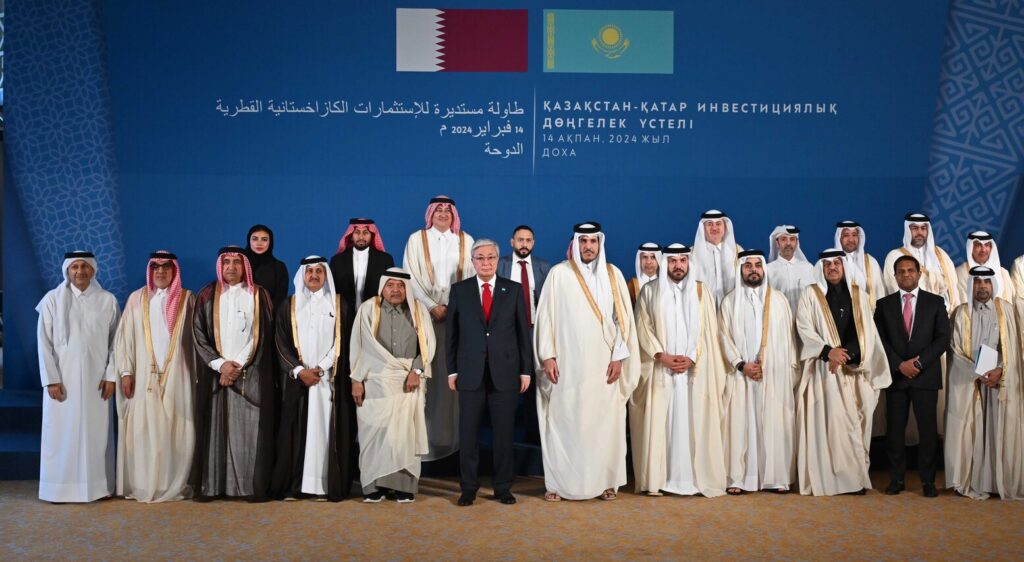
During his visit to Qatar on February 14th, Kazakhstan’s president Kassym-Jomart Tokayev took part in the Kazakhstan–Qatar Investment Roundtable in Doha. 

Mr Tokayev invited Qatari companies to invest in the Kazakh economy and explore new business opportunities, mentioning that his government is ready to provide tax and customs preferences, project co-financing, partial guarantees and export support mechanisms, the president’s press office reported.

Mr Tokayev also suggested expanding the work of the Kazakhstan-Qatar Joint High-Level Commission and Business Council.

The Kazakh president said that during his meeting with the Amir of Qatar, Sheikh Tamim bin Hamad Al Thani, earlier in the day, he proposed to increase bilateral trade up to $500m as a first step. “We can offer the Qatari market high-quality goods such as machinery, iron, steel, and agricultural products. Our market also offers access to the Eurasian Economic Union market with a total GDP of $2.6tn. We have a common border with China as well, which gives good opportunities to make trade with this juggernaut using the Belt and Road project,” Tokayev said. 

Today Kazakhstan and Qatar are more closely connected than ever before, due to a visa-free regime and several direct flights per week. 

Mr Tokayev invited Qatari energy companies to cooperate with their Kazakh counterparts in geological exploration, petrochemicals, transportation, and oil and gas processing projects. 

He emphasized that Kazakhstan’s renewable energy potential, estimated at one trillion kilowatt-hours, has attracted the attention of global players who have committed to projects with a capacity of 43 gigawatts. “We welcome Nebras Power’s intentions to implement a 350 megawatt hydroelectric power plant and Pearl Overseas’ plans to construct a 1.1 gigawatt combined-cycle plant in Kazakhstan,” he said. 

The Kazakh president also encouraged Qatari companies to participate in the extraction and processing of critical raw materials such as cobalt and lithium. 

In the agricultural sector, Kazakhstan can supply halal and organic agricultural products to the Qatari market, Tokayev said, adding that Kazakhstan is also interested in developing the production of meat, fruit, vegetable, grain, flour and other products with further direct supply to Qatar.

Kazakhstan’s Proposed Nuclear Power Plant: a Geopolitical Tightrope amid Environmental Concerns

Renowned for its abundant uranium reserves and expansive mining ventures, Kazakhstan is making substantial progress in the realm of nuclear power. Currently, approximately 60 nuclear reactors are under construction worldwide in 17 countries, and with more in the pipeline, demand for uranium has skyrocketed. Kazakhstan is by far the world’s largest producer of nuclear fuel, mining 21,227 tons in 2022, which equates to 43% of global production. Kazatomprom, the national atomic company, is the world’s largest uranium producer, with its subsidiaries, affiliates, and joint ventures developing 26 deposits. Russia, Japan, China, Canada, and France are all heavily invested, whilst international agreements exist with a plethora of other nations.

Kazakhstan’s inaugural venture into the nuclear field was marked by the BN-350 fast-neutron reactor in Aktau, which ran from 1973 to 1999 before being decommissioned. Now, President Tokayev has announced a referendum will be held to decide whether to build the nation’s first fully-fledged nuclear power plant. “On the one hand, Kazakhstan, as the world’s biggest uranium producer, should have its own nuclear power capacity,” Tokayev stated. “On the other hand, many citizens and some experts have concerns about the safety of nuclear power plants.”

The Proving Ground

With Kazakhstan having endured the most contamination of all the former Soviet Republics, anything nuclear is a contentious issue. Between 1949 and 1989, the authorities executed more than 750 nuclear tests in Kazakhstan, the bulk of these, including the USSR’s first successful atomic explosion – codenamed Joe-1 – taking place in the Semipalatinsk Polygon (proving ground) in the north-east of the country. By far the hardest hit area, Semipalatinsk saw 456 tests, which affected two million people across 300 square kilometers.

Eager to know what to expect in the event of a nuclear war, in 1957 the Soviets secretly opened Dispensary Number Four in Semipalatinsk. Shipping in spectators – teachers were instructed to have their pupils watch explosions – the facility observed and analyzed the effects of radiation on the populous and reported their findings back to Moscow.

In this post-apocalyptic land, elevated levels of cancer, tuberculosis and mental illness persist. Today, people swim in crater lakes left by blasts which dot the steppe, though animals won’t go near the water. With all agriculture banned, a vast swathe of land still remains off-limits. Pregnancies are still screened for possible termination, with 6% of babies born “polygon.” Even in inhabited areas, Geiger counters read over 250; the normal level is just fifteen.

In their headlong rush to abandon the empire upon the collapse of the USSR, the Russians left more than an undetonated payload in the mines of Semipalatinsk. As soldiers rioted over conditions and unpaid wages, upon its independence Kazakhstan inherited the fourth largest nuclear arsenal in the world. With Libya’s Colonel Gaddafi sniffing around, it was widely rumored that the Iranians, who the CIA publicly alleged to be “actively shopping,” had offered $300 million for weapons-grade uranium.

Arriving in Kazakhstan post-haste, through a combination of threats, the promise of a seat at the international table and hard cash, U.S. Secretary of State James Baker persuaded President Nazarbayev to give up Kazakhstan’s cache, which the Americans duly dismantled and disposed of.

“Fierce Disputes”

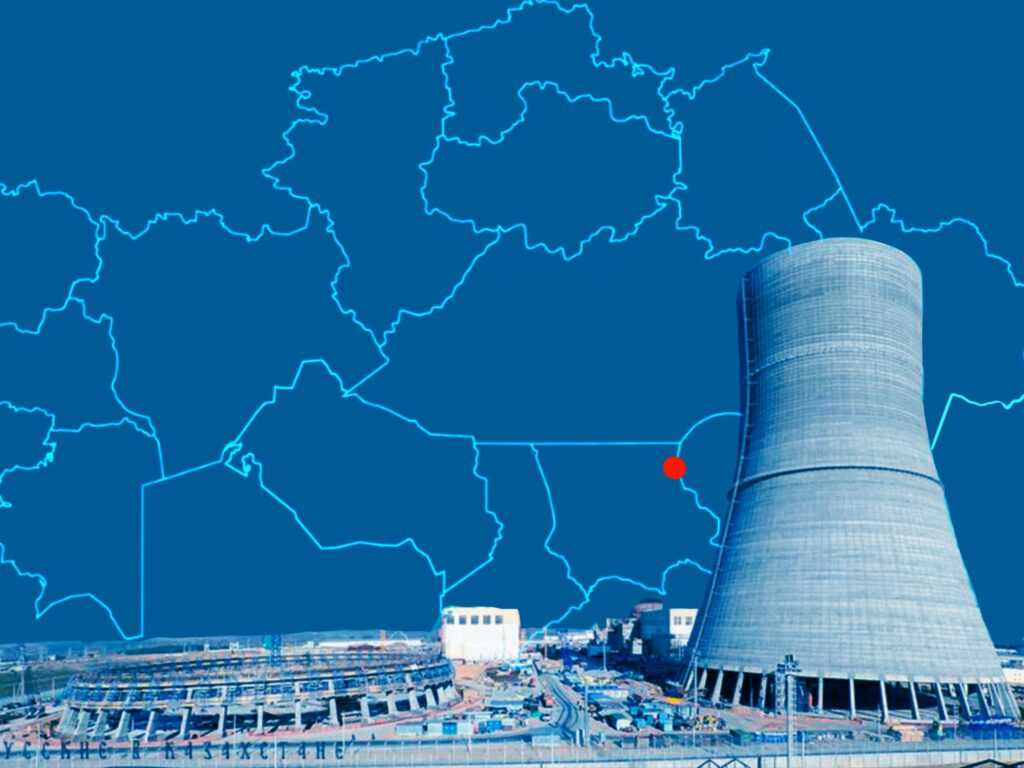
With provisional plans for the new facility to be operational by 2035 to cater to the country’s escalating energy needs, the proposed nuclear power plant is expected to house two reactors, each with a capacity ranging from 1,000 to 1,400 megawatts. An optimal location has also been identified in the village of Ulken on the shores of Lake Balkhash, just over 200 miles due north-west of the nation’s most populous city, Almaty. However, a public hearing held in Ulken in August saw “fierce disputes” between supporters and opponents of the project.

The fifteenth largest lake in the world, Lake Balkhash is already in decline, and a nuclear power plant would likely use its dwindling supplies as a coolant. As recently as the 1960s, fishermen were netting a catch of over 30,000 tons annually, but by the 1990s, this had fallen to 6,600 tons. Between 1970 and 1987 alone, the water level fell by 2.2 meters, impacting biodiversity, with 12 types of bird and 22 vertebrates indigenous to the region listed in the Red Book of Kazakhstan as endangered, whilst the Caspian tiger is, in all likelihood, extinct.

“The ‘successful’ completion of a nuclear power station in Ulken is, at best, a distant and problematic proposition,” Dr. Kristopher White, an Economic Geographer and associate Professor at KIMEP University in Almaty told TCA. “Under no circumstances will this improve the ecological situation for the lake or its entire basin – which includes the city of Almaty. A power station at this location would also increase the geopolitical significance of the lake and expand the power and influence of Chinese actors. Increased Ili River water withdrawals, to say nothing of a complete blockage, could force a shutdown of the power station. Being even more reliant on decisions from the Chinese side of the border might also lead to significantly more apprehension here in Kazakhstan.”

Should the referendum return a positive result, another contentious issue is the choice of potential partners in the project. Currently, the contenders include the China National Nuclear Corporation (CNNC), South Korea’s Korea Hydro and Nuclear Power (KHNP), France’s Électricité de France (EDF), and Russia’s state corporation, Rosatom. Given the fraught state of international affairs, this decision itself represents a geopolitical tightrope act.

Divergent Views

On the streets of Almaty, opinions vis-à-vis the project are mixed, with many complaining they feel ill-informed. “to be honest, I don’t know much about this topic, but I do know that such projects have a negative impact on the environment,” a 25-year-old resident of Almaty who preferred to remain anonymous told TCA. “Of course, I realize the huge potential for stable electricity, but I’m frightened by the possibility of a nuclear power plant being built. Since Kazakhstan is often negligent about the environment, I’d rather slow this down in favor of saving nature.”

“Nuclear power plants provide a reliable energy supply, but their impact on the environment raises concerns,” another resident of Almaty, 45-year-old Raushan told TCA. “Given the context of the unstable environmental situation in Kazakhstan, the use of nuclear power may lead to negative consequences. I believe that before establishing such projects, the potential risks should be studied thoroughly.”

Others, though, point to the potential for job creation. Almost 18,000 people are already employed in the peaceful use of nuclear energy in Kazakhstan, and construction of the plant would see this figure rise substantially. Nuclear power could also help Kazakhstan realize its goal of achieving carbon neutrality by 2060; as of 2022, coal accounted for over 70% of the nation’s electricity generation. With these factors in mind, local experts expect the referendum to return a favorable result.

James Walker, the CEO of Nano Nuclear Energy, a U.S.-based microreactor company agrees that sentiments towards nuclear energy are changing. “Even countries like Kazakhstan, who experienced the dismal hardships from weapons tests conducted during the Cold War, are realizing that nuclear energy is uniquely positioned to provide the power necessary to advance the country and improve the lives of its citizens,” he told TCA. “Kazakhstan is poised to be a major player in both the supply chain of this change and a major beneficiary of this energy transformation.”

Further consultations and a feasibility study lie ahead.