• KGS/USD = 0.01144 0%
  • KZT/USD = 0.00212 0%
  • TJS/USD = 0.10456 0.19%
  • UZS/USD = 0.00008 0%
  • TMT/USD = 0.28490 0%
  • KGS/USD = 0.01144 0%
  • KZT/USD = 0.00212 0%
  • TJS/USD = 0.10456 0.19%
  • UZS/USD = 0.00008 0%
  • TMT/USD = 0.28490 0%
  • KGS/USD = 0.01144 0%
  • KZT/USD = 0.00212 0%
  • TJS/USD = 0.10456 0.19%
  • UZS/USD = 0.00008 0%
  • TMT/USD = 0.28490 0%
  • KGS/USD = 0.01144 0%
  • KZT/USD = 0.00212 0%
  • TJS/USD = 0.10456 0.19%
  • UZS/USD = 0.00008 0%
  • TMT/USD = 0.28490 0%
  • KGS/USD = 0.01144 0%
  • KZT/USD = 0.00212 0%
  • TJS/USD = 0.10456 0.19%
  • UZS/USD = 0.00008 0%
  • TMT/USD = 0.28490 0%
  • KGS/USD = 0.01144 0%
  • KZT/USD = 0.00212 0%
  • TJS/USD = 0.10456 0.19%
  • UZS/USD = 0.00008 0%
  • TMT/USD = 0.28490 0%
  • KGS/USD = 0.01144 0%
  • KZT/USD = 0.00212 0%
  • TJS/USD = 0.10456 0.19%
  • UZS/USD = 0.00008 0%
  • TMT/USD = 0.28490 0%
  • KGS/USD = 0.01144 0%
  • KZT/USD = 0.00212 0%
  • TJS/USD = 0.10456 0.19%
  • UZS/USD = 0.00008 0%
  • TMT/USD = 0.28490 0%

Uzbekistan to Drill Deeper for Natural Gas

Uzbekistan to Drill Deeper for Natural Gas

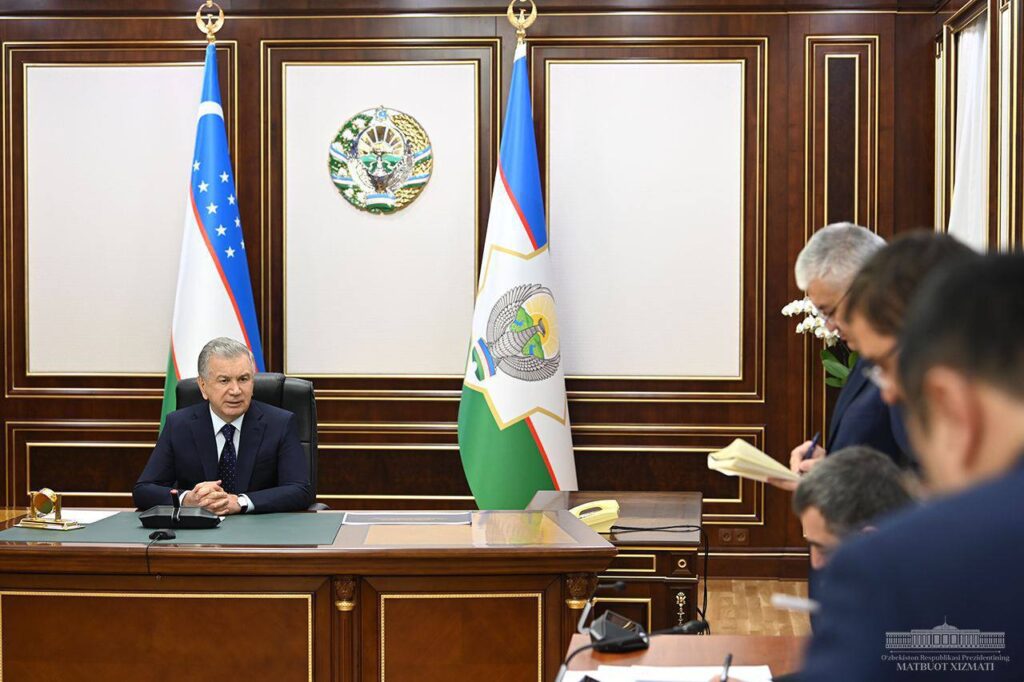
A government meeting chaired by President Shavkat Mirziyoyev on December 18th discussed the country’s geological exploration program for 2024. At the meeting, it was stated that work is being carried out in two directions: maintaining natural gas production volumes at existing fields and discovering new reserves. In recent years, the depth of geological exploration has been increased from 2-3 kilometers to 4-5 kilometers. As a result, new gas reserves were discovered and an additional 4.4 billion cubic meters were produced.

An international consulting company was also involved in this work, which helped to identify many promising areas. Next year, it is planned to carry out seismic work on an area of 3,500 square kilometers and drill new exploratory wells.

The meeting considered the ways to transition geological drilling to a depth of 6-7 kilometers using advanced technologies. The issue of attracting foreign investment in the sector was also discussed.

In recent years, Uzbekistan’s natural gas industry has experienced problems due to the depletion of reserves at existing fields. This year, Uzbekistan started importing natural gas from Russia through Kazakhstan.
Uzbekistan Provides Incentives for Households to Install Solar Panels

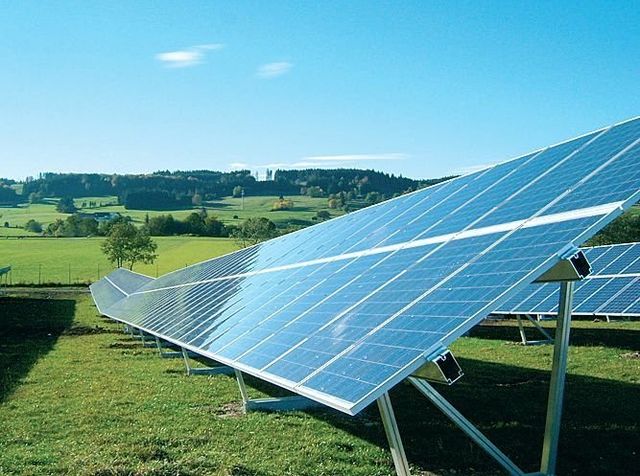
As part of a government program to encourage the installation of low-power solar panels (up to 50 kW) in households in regions of Uzbekistan, citizens are to be provided with a subsidy for electrical energy produced by solar panels. For electricity produced by solar panels installed on properties and facilities owned by individuals, a subsidy of 1,000 Uzbek som (0.081U$) is to be allocated for every kilowatt-hour of surplus electrical energy transferred to the national power grid, the Uzbek Energy Ministry said.

Persons who have installed renewable energy sources are also exempt from land tax and property tax. Individuals and legal entities who have installed renewable energy sources with a total capacity of up to 100 kW are exempt from paying the property tax from such devices, land tax on plots occupied by devices, and profit tax for electricity sold by legal entities to the national power grid for a period of three years from the date of their commissioning and when installing electricity storage systems with a capacity of at least 25% of the installed capacity of solar panels for ten years.

In recent years, Uzbekistan has experienced increasing electricity shortages, especially in the cold winter months, as the country’s population grows and natural gas reserves are depleting. This has prompted the Uzbek government to embark on a large-scale program to introduce renewable energy sources (wind and solar power plants).

Government Reports Steady Economic Growth

Government Reports Steady Economic Growth

The economy of Kazakhstan has successfully adapted to external conditions and has entered a trajectory of sustainable growth this year. From January-November, economic growth reached 4.9%, compared to 2.7% in the same period last year. Overall, Kazakhstan’s GDP per capita increased from $11,500 to $13,300, the official website of the Prime Minister (primeminister.kz) reported.

Inflation in annual terms slowed to 10.3% in November, down from 20.3% in December 2022.

During the first six months of this year, $13.3 billion of foreign direct investment was attracted, which is a very high figure and guarantees support for economic growth in the medium term. By the end of the year, it is planned to reach approximately $27 billion.

A total of 210 new investment projects were put into operation in all sectors of the economy, creating 19,500 jobs. In total, 291 projects are expected to be put into operation by the end of the year.

Production in mechanical engineering is growing at a record pace of 26.8%. At the same time, in the automotive industry and the production of electrical equipment the figures are even higher – 41% and 32%, respectively.

This year, Kazakhstan exported goods worth $65 billion. At the same time, exports of processed goods reached $21 billion.

Chinese Automaker Chery to Build Auto-Industrial Park in Almaty

Chinese Automaker Chery to Build Auto-Industrial Park in Almaty

On December 16th, First Deputy Prime Minister of Kazakhstan, Roman Sklyar paid a working visit to the city of Hefei in China’s Anhui Province. During the visit, Sklyar held negotiations with the Secretary of the Party Committee of Anhui Province and the Chairman of the People’s Government of Anhui Province, wherein the parties discussed further deepening trade, economic, investment, industrial, cultural and humanitarian cooperation between the regions of Kazakhstan and Anhui Province.

As a result, a ceremony was held to sign a Memorandum of Cooperation between Kazakhstan’s Astana Motors and the Chinese automobile manufacturing company, Chery International Co., Ltd. The document provides for the development of strategic cooperation between the above-mentioned enterprises of Kazakhstan and the People’s Republic of China in the field of joint construction of an automobile industrial park in the Almaty Industrial Zone in Kazakhstan.

President Japarov: Kyrgyzstan Should Provide Irrigation Water to Kazakhstan

A UN resolution obliges upstream countries, including Kyrgyzstan, to provide water to downstream states, Kyrgyz President Sadyr Japarov said on December 16th at the second People’s Kurultai (Congress) in Bishkek.

Answering questions from the Kurultai delegates, the president said that the water problem would be solved through the construction of so-called ten-day and daily regulation pools. Such reservoirs will allow for the accumulation of water in winter and for it to be freely shared with neighbors downstream.

The president said that Kyrgyzstan does not have a sufficient number of reservoirs, and, therefore, this year there was not enough water to supply to Kazakhstan.

This past summer, the southern regions of Kazakhstan experienced a severe shortage of irrigation water for their fields.

The construction of such reservoirs, the president explained, will meet the needs of Kyrgyzstan and, in addition, there will also be enough water to supply to downstream neighbors.

The president also announced plans to build reservoirs. The reservoir construction program will last until 2027, he said.

EBRD to Allocate €200 Million for Development of Youth Businesses in Central Asia

EBRD to Allocate €200 Million for Development of Youth Businesses in Central Asia

The European Bank for Reconstruction and Development (EBRD) has launched a program aimed at developing youth businesses in Central Asia and Mongolia, and will allocate $218 million over seven years to ensure access to financing and training for young entrepreneurs. The program is aimed at the development of micro, small and medium-sized businesses under the guidance of young people aged 18 to 35 years.

Companies will receive financing through 20 partner financial institutions, whilst participants will also be able to receive trainings, access various events, and use consulting services. The investments is set to be complemented by a package of up to €30 million in grants and concessional co-financing.

The EBRD notes that many young people in Central Asia have entrepreneurial skills, but do not have economic opportunities. According to the bank’s estimates, only 10% of young people have the necessary education and work skills.

“Solving this problem is important for Central Asia, where small and medium—sized enterprises account for almost half of total employment and almost 40% of regional GDP,” the EBRD emphasized.

The program is funded by the Government of Kazakhstan, the Small Business Foundation, and the European Union.