In an exclusive two-part interview with The Times of Central Asia, Elena Nechaeva, Head of Communications at the High Technology Park of the Kyrgyz Republic (HTP), offers a rare and detailed look into one of Central Asia’s most underreported digital ecosystems.
While much attention has been given to the tech potential of Uzbekistan and Kazakhstan, Kyrgyzstan is quietly and deliberately attempting to build a globally connected digital economy, and, in recent years, it has gone from strength to strength. With deepening links to Silicon Valley and a new generation of ambitious startups and entrepreneurs, the country’s tech talent is emerging as some of the most competitive in the region.
In this special series, The Times of Central Asia reveals the start-ups, entrepreneurs, and trends shaping Kyrgyzstan’s regional innovation space and why international investors should start paying attention.
TCA: Can you briefly describe the mission and strategic goals of the High Technology Park (HTP)?
Elena Nechaeva: The High Technology Park of the Kyrgyz Republic is built on a simple belief: the internet is our ocean.
For a landlocked country, digital technologies open limitless space, a borderless world where geography no longer defines opportunity. The High Technology Park was created to help Kyrgyz companies export their talent and products and integrate into the wider global technology economy.
As a government-backed organization, our mission is to accelerate the country’s economic growth through IT and to create global opportunities for local talent whilst developing the Kyrgyz Republic as an emerging hub for innovation.
In the long term, our strategy is focused on three clear priorities. Firstly, we want to reach $1 billion in annual revenue generated by HTP resident companies. We aim to scale Kyrgyz IT exports by supporting companies with a favorable tax regime. This means 0% VAT, 0% corporate income tax, 0% sales tax, 5% personal income tax, to help them grow internationally.
Then, we want to enable the first unicorn startup founded in the Kyrgyz Republic. The High Technology Park supports startups through international programs, accelerators, and a number of global partnerships, allowing them to access networks in Silicon Valley, Europe, and Asia.
We have also set an ambitious target to train and empower 50,000 software developers. Developing these skills is perhaps the most important thing that we do. We are working closely with universities, schools, bootcamps, and private EdTech companies to cultivate a new generation of engineers and digitally savvy professionals.

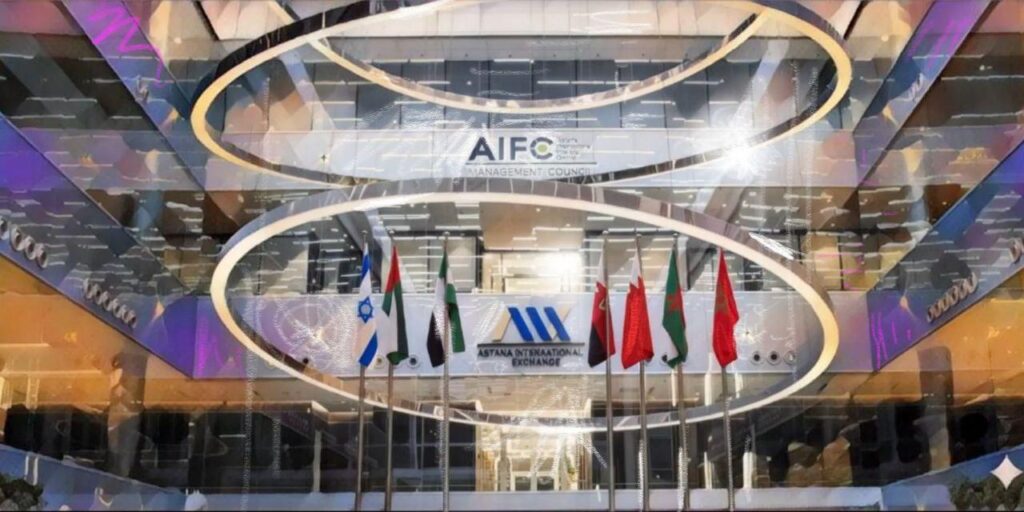
Image courtesy of The High Technology Park, Kyrgyz Republic @ the 2025 Gitex Expo in Dubai
TCA: How has the High Technology Park evolved since its inception? What have been the most significant milestones to date?
Nechaeva: Since its inception, the High Technology Park has evolved from a small initiative into a fast-growing IT hub.
The Kyrgyz tech ecosystem began developing in 2008, originally with the founding of the Kyrgyz Association of Software and Service Developers – the first professional organization uniting the country’s tech companies. This laid the foundation for a specialized IT regime.
The High Technology Park was then formally established in 2011, when the Kyrgyz Parliament adopted the Law “On the High Technology Park of the Kyrgyz Republic” and introduced a unique tax regime designed to stimulate IT export.
A further major milestone came in 2022, when the HTP tax regime was made perpetual. This significantly strengthened investor confidence in the long-term opportunities and allowed companies to plan for the future more effectively.
Today, the High Technology Park is the most established IT hub in Central Asia, shaping the region’s digital future.
TCA: What role does the High Technology Park play in the broader economic development strategy of the Kyrgyz Republic? How supportive is the Kyrgyz government?
Nechaeva: The High Technology Park plays a central role in the Kyrgyz Republic’s economic strategy by driving growth through IT exports. In 2024, Kyrgyz IT specialists exported services to more than 63 countries, reaching $130 million.
Government support is strong. From making the HTP tax regime perpetual to initiating collaborative programs and public endorsements, the Kyrgyz government has shown consistent backing. President Sadyr Japarov recently reaffirmed that the digital economy is a national priority and reiterated the HTP slogan: “Live in the Kyrgyz Republic, work with the world.”
TCA: Which startups or resident companies within HTP are currently the most promising or disruptive?
Nechaeva: The High Technology Park now brings together more than 500 resident companies, along with dozens of startups supported through various programs. Many are doing impressive work across software development, AI, gaming, logistics tech, and digital media. A few have particularly stood out this year for their global traction.
NineNineSix is a fantastic example. Their real-time open-source Text To Speech (TTS) model – Kani TTS – already supports eight languages, with quality competitive to international peers. Thousands of developers worldwide have downloaded and tested it. For a team from the Kyrgyz Republic to contribute at this level to the global AI ecosystem is a major milestone.
Another fantastic start-up is Loadex AI. This also represents a great success story. They raised over $1 million this year and are already working with clients in the United States. Their product automates dispatch operations for trucking companies and is scaling quickly, an example of HTP companies building for global markets from day one.
In gaming, 4Tale Production had a breakthrough year. Their studio now employs over 120 people, and the trailer for their new game, Steel Ark, received tens of thousands of views within days on major gaming platforms. It’s a clear sign that creative tech and game development can become strong export industries for the Kyrgyz Republic.
And then there’s DBillions, one of the world’s most successful kids’ content creators. Their videos collect billions of views, and the channel has millions of global subscribers.
TCA: Can you name a few recent success stories coming out of the park that exemplify the HTP’s impact?
Nechaeva: A recent standout is ArtSkin, a startup developing artificial skin for prosthetic limbs. Launched in 2024 by CEO Iliias Dzheentaev, who spent three years studying human skin, receptors, and the nervous system, ArtSkin is creating a prototype that allows real tactile sensations.
Dzheentaev’s journey with HTP began through the Dive into Silicon Valley program and the Unicorn from KG pre-accelerator. In 2025, the company received a $50,000 grant from HTP to build a technical laboratory. By early 2026, they plan to develop a flexible prototype with 16 sensors capable of transmitting both temperature and touch pressure, with a patent application targeted for summer 2026.
ArtSkin recently ranked 4th out of 400 startups in the TechCrunch Disrupt 2025 regional selection by Silkroad Innovation Hub and will now pitch on the global stage at TechCrunch Disrupt in Silicon Valley, one of the world’s most prestigious tech conferences.
TCA: Are there specific sectors (e.g., fintech, AI, ed-tech, agri-tech) where Kyrgyz startups are gaining traction?
Nechaeva: SaaS is currently one of the strongest sectors. Growave is a prime example, a Kyrgyz-built product used by over 8,000 clients in more than 100 countries. It demonstrates that teams from the region can develop scalable global B2B products.
AI is growing rapidly as well. Enji AI is a standout team that analyzes developer productivity using code and task-tracking data and has already gained recognition from international accelerators.
Logistics and fintech are also gaining traction. Loadex AI, for instance, raised $1.5 million after joining a leading U.S. accelerator, a major achievement for a Kyrgyz B2B startup working directly with the American market.
In summary, SaaS, AI, and logistics-fintech are currently the most dynamic sectors for Kyrgyz startups.
TCA: How does the park support early-stage versus growth-stage startups differently?
Nechaeva: For early-stage founders, HTP focuses on education, mentoring, and early validation. Teams like ArtSkin began their journey by participating in the Dive into Silicon Valley program and local bootcamps to test their ideas and build initial prototypes.
For more advanced and deep-tech teams, HTP offers programs like the MIT & Kuo Sharper Center Deep Tech initiative and Unicorn from KG. These are tailored for startups that already have market traction or a scalable product and now need expert guidance to grow.
For later-stage companies, HTP supports international expansion, helping them enter global accelerators, pitch to investors, and, crucially, participate in major tech exhibitions and conferences where they can meet partners, clients, and VCs.
TCA: What kinds of resources and services does HTP provide to its resident companies (e.g., tax incentives, mentoring, funding access, international partnerships)?
Nechaeva: HTP offers resident companies much more than its well-known tax incentives, though the tax regime is one of the most competitive in the region.
Beyond tax benefits, companies gain access to international exhibitions and tech conferences, where we connect them with investors, partners, and clients. They also benefit from active networking and community support.
Residents can host their own events, join events organized by other HTP companies, and use the broader community as a platform for faster growth. Our doors are always open, and we support teams with all kinds of requests, including the unexpected. This is a key part of the culture we’ve built: a place where founders can come at any stage and receive real, practical help.
TCA: How does the park collaborate with local universities, research institutions, or international partners?
Nechaeva: HTP works actively with local universities and international partners because talent and research are essential to a strong tech ecosystem.
Locally, HTP has formal MoUs (Memorandums of Understanding) with several universities, collaborating on events, hackathons, and workshops. We regularly host student tours and run hands-on programs where young developers learn how real products are built.
HTP also signed a cooperation agreement with the CAEDMI Institute to collaborate on engineering, R&D, and STEM education. We work closely with international organizations like UNDP to support digital skills and STEM initiatives for youth.
Internationally, HTP partners with global institutions, including deep-tech programs like MIT Deep Tech, creating a direct bridge to the Massachusetts Institute of Technology, one of the world’s top engineering and AI research centers. And this is just the beginning. HTP is actively preparing to expand partnerships with other leading global universities.
TCA: Are there incubation or acceleration programs currently running or in development?
Nechaeva: Yes, HTP runs several programs tailored to different stages of a startup’s development.
Dive into Silicon Valley is our early-stage exposure program. Twice a year, we take founders to Silicon Valley, connect them with the local tech community, and provide access to mentors, startup visits, and real market insights. It’s ideal for teams that are shaping their product and seeking early validation and a global perspective.
Unicorn from KG is based on the Draper Hero Training platform, developed by Tim Draper, an iconic Silicon Valley investor known for early bets on Tesla, SpaceX, Hotmail, and Skype. This program trains advanced startups using Draper’s methods to prepare for fundraising, improve their pitch, and learn to scale globally.
The MIT + Kuo Sharper Center Deep Tech Program is our most specialized track, aimed at science-driven, engineering-heavy startups. It connects founders with MIT-linked experts and deep-tech mentors in fields like robotics, AI, biotech, and advanced hardware.
TCA: What are the biggest challenges currently facing Kyrgyz tech entrepreneurs?
Nechaeva: From an entrepreneur’s perspective, the main challenges include:
Talent and senior leadership. The Kyrgyz Republic has a population of just seven million, and the IT education system is still developing. The biggest bottleneck is a shortage of experienced specialists and managers.
A small domestic market. Most serious tech companies must focus on exports from the outset. The internal market is too limited to sustain large-scale products, so founders must compete globally from day one, requiring English proficiency, technical depth, speed, competitive pricing, and robust support systems.
Lack of local capital. There’s minimal startup investment within the country. Angel investors are rare, and true venture funds are almost non-existent. Prize money from hackathons can’t sustain company growth. Without capital across all stages, from pre-seed to scale, it’s difficult for major startup successes to emerge.
Scale-up and management expertise. Managing a team of 5-10 developers is very different from leading 100-200 people across multiple teams and products. Many founders are strong engineers, but the ecosystem is still learning how to build effective management structures, product organizations, and sales operations.
Regulatory environment. Venture legislation, state support instruments, and long-term digital policy are still catching up, which complicates the lives of founders.
TCA: How is HTP addressing brain drain or attracting skilled professionals back to the Kyrgyz Republic?
Nechaeva: HTP takes a different view on brain drain. We don’t aim to stop people from leaving; in fact, we’re proud when Kyrgyz professionals succeed at global tech companies. Many of them eventually return home with valuable experience and begin building locally.
There are already strong examples:
Tilek Mamutov was the first engineer from the Kyrgyz Republic to join Google. After years abroad, he returned home, founded his own startup, and now mentors local founders and supports the broader ecosystem.
Kainar Kamalov worked at top global institutions, including MIT and Microsoft, but chose to return to the Kyrgyz Republic to launch his startup and contribute to the local engineering community.
These are just two among many Kyrgyz professionals who have returned to support the growing ecosystem.
HTP is also creating an environment where people don’t have to choose between a global career and staying home. Our philosophy is simple: “Live in the Kyrgyz Republic, and work with the world.”
And it’s already working. With 500 HTP resident companies exporting to 63 countries, founders and engineers can enjoy a high quality of life, low living costs, and a strong community, while earning global-level salaries and building international products.
In short, the best solution to brain drain is opportunity. If people can build global careers from the Kyrgyz Republic, many will stay, and many who have left will return.
TCA: Thank you, Elena, for such an in-depth behind-the-scenes look at one of Central Asia’s most innovative start-up ecosystems. Next week, we will bring you the second part of our deep dive into Kyrgyzstan’s innovative High Technology Park.
In the meantime, you can find out more about the HTP, the companies and entrepreneurs featured in this interview at: https://htp.kg/