• KGS/USD = 0.01144 0%
  • KZT/USD = 0.00213 0%
  • TJS/USD = 0.10456 0.19%
  • UZS/USD = 0.00008 0%
  • TMT/USD = 0.28490 0%
  • KGS/USD = 0.01144 0%
  • KZT/USD = 0.00213 0%
  • TJS/USD = 0.10456 0.19%
  • UZS/USD = 0.00008 0%
  • TMT/USD = 0.28490 0%
  • KGS/USD = 0.01144 0%
  • KZT/USD = 0.00213 0%
  • TJS/USD = 0.10456 0.19%
  • UZS/USD = 0.00008 0%
  • TMT/USD = 0.28490 0%
  • KGS/USD = 0.01144 0%
  • KZT/USD = 0.00213 0%
  • TJS/USD = 0.10456 0.19%
  • UZS/USD = 0.00008 0%
  • TMT/USD = 0.28490 0%
  • KGS/USD = 0.01144 0%
  • KZT/USD = 0.00213 0%
  • TJS/USD = 0.10456 0.19%
  • UZS/USD = 0.00008 0%
  • TMT/USD = 0.28490 0%
  • KGS/USD = 0.01144 0%
  • KZT/USD = 0.00213 0%
  • TJS/USD = 0.10456 0.19%
  • UZS/USD = 0.00008 0%
  • TMT/USD = 0.28490 0%
  • KGS/USD = 0.01144 0%
  • KZT/USD = 0.00213 0%
  • TJS/USD = 0.10456 0.19%
  • UZS/USD = 0.00008 0%
  • TMT/USD = 0.28490 0%
  • KGS/USD = 0.01144 0%
  • KZT/USD = 0.00213 0%
  • TJS/USD = 0.10456 0.19%
  • UZS/USD = 0.00008 0%
  • TMT/USD = 0.28490 0%

Uzbekistan Explores Gas-Chemical Cooperation with South Africa’s Sasol

Uzbekistan is considering involving South Africa’s Sasol Limited in the development of its gas-chemical sector following talks held in Tashkent on March 15, according to the Ministry of Investment, Industry and Trade.

The meeting brought together Uzbekistan’s Minister of Investment, Industry and Trade, Laziz Kudratov, and Sasol Executive Vice President Dr. Sarushen Pillay. Discussions focused on expanding cooperation in gas-chemical and coal-chemical industries, with both sides expressing interest in joint projects based on the deep processing of natural gas and coal.

According to the ministry, particular attention was given to Sasol’s potential participation in a coal-to-olefins (CTO) project aimed at converting coal into higher-value chemical products. The parties also explored opportunities for technological cooperation in further developing Uzbekistan’s existing gas-to-liquids (GTL) complex, including the possible expansion of production capacity and the introduction of advanced processing technologies.

Officials noted that the dialogue builds on earlier discussions held in Cape Town in February, indicating continued engagement between the two sides.

Founded in 1950, Sasol is an international energy and chemical company operating in more than 20 countries. The company reported revenues of approximately $16.6 billion in 2024 and employs more than 28,000 people worldwide.

As previously reported by The Times of Central Asia, Kazakhstan has also been expanding economic ties with African countries. Trade turnover increased by 15% in 2024 to reach $783 million. Regional officials have highlighted the importance of building partnerships based on mutual economic interests, particularly in sectors such as energy, industry, and technology.

Kyrgyz Retailers Prepare for Gradual Phase-Out of Plastic

Pressure is increasing on businesses in Kyrgyzstan to reduce their use of plastic. However, judging by the government’s latest initiatives, the transition to new environmental standards is expected to be gradual and shaped by compromise.

The Ministry of Natural Resources, Ecology, and Technical Supervision has announced the launch of the “Green Entrepreneur” platform, through which companies willing to phase out plastic can obtain official recognition. The initiative comes alongside preparations for large-scale restrictions on the use of plastic bags, scheduled to take effect on January 1, 2027.

Although a full ban has not yet been introduced, several major retailers have already begun reducing their use of plastic bags and bottles. Both domestic companies and international brands are participating in the process.

According to the ministry, the government and the business community have agreed on a series of joint measures that are expected to reshape the packaging market in the coming years.

First Deputy Minister of Natural Resources Zhenish Seydaliev described plastic pollution as a global challenge, stressing that Kyrgyzstan has the potential to take a leading role in addressing the issue at the regional level.

“Only joint cooperation will lead to sustainable business development that incorporates environmental responsibility and high standards of corporate governance,” he said.

One of the key instruments under discussion is the introduction of separate waste collection systems. Authorities are encouraging businesses to incentivize consumers to return plastic bottles and aluminum cans by installing reverse vending machines, automated devices that offer bonuses or refunds. Such machines are expected to appear in retail chains, markets, fuel stations, food courts, and educational institutions. At the same time, companies are being urged to switch to biodegradable packaging, a move that would require significant adjustments to logistics and operational processes.

The ministry emphasizes that the reforms are not limited to banning specific products but are aimed at a broader transformation of consumption patterns.

At the same time, the final regulatory framework remains under discussion. Earlier proposals from the Cabinet of Ministers suggested abandoning a complete ban on plastic products from 2027.

Under a draft law currently undergoing public consultation, certain plastic products may continue to be permitted provided they comply with the Eurasian Economic Union’s technical regulation on packaging safety. This approach reflects an effort to balance environmental objectives with economic considerations.

Some restrictions are already being implemented at the regional level. The Issyk-Kul region has introduced a ban on plastic bags, which is being treated as a pilot project for potential nationwide reforms.

Nevertheless, significant structural challenges remain. Plastic is estimated to account for up to one quarter of all waste in Kyrgyzstan’s landfills. Domestic production meets only around 15% of demand, with the remainder imported primarily from China, Iran, and Kazakhstan.

How Kazakhstan Is Seeking to Attract Global Capital to Critical Mineral Extraction

In March 2026, Kazakhstan moved into the spotlight of the global mining industry. Against the backdrop of an accelerating energy transition and a growing shortage of critical minerals, the government has launched a large-scale geological exploration program. Its strategic objective is to position the country as a key supplier of copper and rare earth elements (REEs) to global markets.

For Western investors, this represents an important signal. A significant, relatively underexplored resource base is emerging, supported by regulatory reforms designed to facilitate access.

The state assumes early-stage risks

The new investment cycle was officially presented at PDAC 2026, one of the world’s largest mining conventions held in Toronto. Unlike previous initiatives that were largely declarative, Kazakhstan has backed its strategy with direct funding: approximately $81 million has been allocated from the state budget for geological exploration.

The funds are intended to support a comprehensive assessment of mineral resources in 11 regions of the country.

The central rationale is to lower entry barriers for private capital. The government is financing early-stage geological work, including mapping, airborne geophysical surveys, and preliminary resource evaluations. Investors are expected to receive access to “pre-qualified” sites with confirmed potential, an approach commonly used in established mining jurisdictions.

This is particularly important because early exploration has historically been the riskiest and most capital-intensive phase of mining projects.

The energy transition reshapes demand

Growing interest from Western investors is driven by both domestic reforms and global market dynamics.

Forecasts by the International Energy Agency indicate that demand for key minerals such as copper, lithium, and cobalt is likely to rise substantially by 2040. Existing mining and processing capacities may prove insufficient to meet projected needs.

At the same time, geopolitical tensions are increasing. Processing of rare earth elements remains concentrated in a limited number of countries, making global supply chains vulnerable to disruption.

In response, the United States and the European Union have introduced policies aimed at diversifying sources of critical raw materials. The EU’s Critical Raw Materials Act seeks to encourage investment in alternative supply chains.

Against this backdrop, Kazakhstan, whose mineral exploration has historically focused on oil and uranium, is emerging as a potential contributor to global diversification efforts.

Focus on junior mining companies and regulatory transparency

One of the government’s key tools for attracting investment is the development of an ecosystem of junior mining companies specializing in early-stage exploration.

Unlike large corporations, junior firms are often willing to assume the risks associated with drilling and initial geological assessments. If commercially viable deposits are identified, these companies typically sell their assets to strategic investors, helping to create a venture-capital-style market within the extractive sector.

To support this model, Kazakhstan has reformed its Subsoil Code, introducing a “first come, first served” licensing principle. Digital platforms are now used to allocate exploration rights, reducing processing times and limiting opportunities for corruption. In effect, the country is adopting regulatory practices similar to those used in Australia, widely regarded as one of the world’s most investor-friendly mining jurisdictions.

$1.1 billion project signals growing investor interest

Investor engagement is already moving beyond preliminary discussions. In mid-March 2026, Minister of Industry and Construction Yersain Nagaspayev held talks with the U.S.-based company Cove Kaz Capital Group regarding a potential $1.1 billion project.

The discussions focus on developing the North Katpar and Upper Kairakty deposits, believed to contain significant tungsten reserves.

A notable feature of the proposed agreement is the emphasis on downstream processing. The investor is expected to construct two processing plants, establish metallurgical production, and limit exports of unprocessed raw materials.

This reflects a broader policy shift. Kazakhstan is seeking to move from a predominantly resource-export model toward industrial development. Linking access to mineral deposits with commitments to domestic processing could help generate added value within the country, create around 1,000 jobs, and stimulate the development of local supply chains.

Infrastructure constraints remain a key challenge

Despite improving investment conditions, systemic risks persist.

The most significant constraint is the energy sector. Mining operations require large volumes of reliable and affordable electricity, while Kazakhstan is already experiencing power-generation shortages. In addition, environmental, social, and governance (ESG) requirements are placing growing pressure on project developers, as international investors increasingly demand access to low-carbon energy sources.

Logistics present another major constraint. Exporting minerals from the center of Eurasia requires further modernization of transport infrastructure, particularly along the Trans-Caspian International Transport Route, also known as the Middle Corridor.

Without substantial infrastructure investment, the pace of project implementation could slow.

Allocating tens of billions of tenge to geological exploration is therefore not a short-term measure but part of a broader strategy to diversify Kazakhstan’s economy and reduce its dependence on oil revenues. Critical minerals offer the country an opportunity to integrate into emerging global value chains linked to renewable energy, electric vehicles, and advanced technologies.

Kyrgyzstan Sees No Grounds for Restricting Potato Imports from China

Kyrgyzstan’s Ministry of Water Resources, Agriculture, and Processing Industry has stated that there are no grounds for restricting potato imports from China.

The announcement follows reports that the domestic market has been flooded with Chinese potatoes allegedly being sold as locally produced goods.

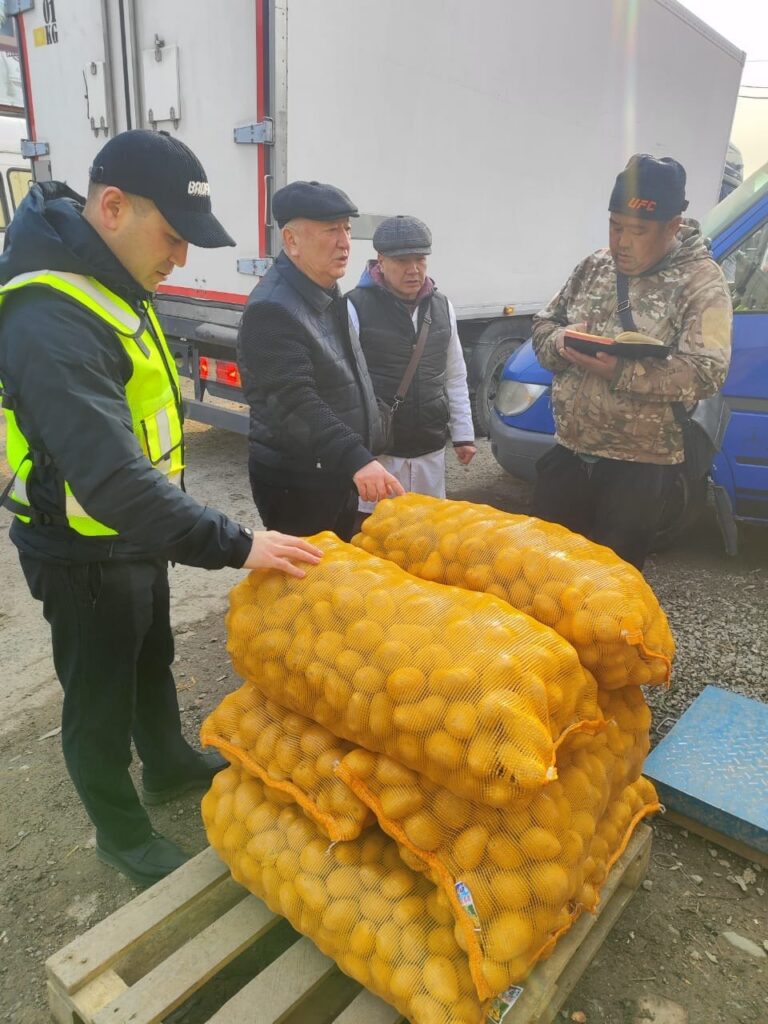
In response, the ministry’s Veterinary and Phytosanitary Control Service conducted monitoring of potato sales in Bishkek and Osh. According to officials, imported Chinese potatoes are present on the market, but no confirmed cases were identified in which such products were falsely labeled as local produce.

Currently, the average retail price of imported Chinese potatoes ranges from 38 to 40 soms per kilogram, while locally grown potatoes are sold at prices of around 42 to 44 soms per kilogram.

The ministry also noted that Kyrgyzstan’s obligations under the World Trade Organization framework limit the scope for imposing unilateral import restrictions. Officials emphasized that agricultural trade between Kyrgyzstan and China is mutual, with Kyrgyz products also being exported to the Chinese market.

In addition, the Veterinary and Phytosanitary Control Service has advised domestic potato farmers to accelerate sales of stored produce. Some producers are reportedly holding stocks in warehouses in anticipation of higher prices. However, the service believes that price increases are unlikely as the arrival of the new harvest is expected to boost supply. Officials warned that prolonged storage may lead to spoilage and financial losses.

In related developments, the Ministry of Agriculture has announced the start of corn exports to China. The first shipment, totaling 25 tons, departed on March 16.

The export became possible following the signing of a protocol on phytosanitary requirements for corn exports from Kyrgyzstan to China between the Kyrgyz Ministry of Agriculture and China’s General Administration of Customs. To date, two Kyrgyz enterprises have been authorized to export corn under this framework.

Trade between Kyrgyzstan and China continues to expand. According to Chinese Ambassador to Kyrgyzstan Liu Jiangping, bilateral trade turnover reached $27.2 billion, representing a 20% increase and a record high. He also noted that China’s imports from Kyrgyzstan grew by 86%.

Internet Outages Reported Across Turkmenistan Since February

Since February, widespread internet disruptions across Turkmenistan have affected both business operations and daily life.

According to reports by the independent outlet turkmen.news, the issue is not limited to routine website blocking but involves broader interference with data transmission.

Sources cited by the outlet suggest that a mechanism described as “network degradation” is being used. This reportedly involves the intentional reduction of data transfer reliability rather than simply restricting access to specific online resources. The Cybersecurity Agency and the telecommunications company Ykjam Aragatnaşyk have been mentioned in this context.

According to these accounts, a significant share of internet traffic may fail to reach its destination. Estimates cited by sources indicate that packet loss could range from 30% to as much as 70% in some cases.

“If, instead of the advertised 6 Mbps, subscribers simply experienced a reduction in speed, the inconvenience might be manageable. However, when data packets are lost during transmission, connectivity becomes unstable, making effective internet use extremely difficult,” one source told the outlet.

In practice, users report that web pages often fail to load fully or display error messages, requiring multiple refresh attempts. Tasks that previously took seconds can now take minutes or longer. Services that depend on stable connections, including video conferencing platforms such as Zoom, are reportedly among the most affected.

Although the reported restrictions are said to target external internet traffic, their impact has also been felt within domestic infrastructure. On March 10, banking services across the country were reportedly disrupted, with users experiencing difficulties withdrawing cash or making card payments.

Communication has also been affected. Users report delays in sending messages through mobile applications, while some areas have experienced disruptions to mobile services. Businesses are said to be incurring additional costs, communication with foreign partners has become more difficult, online classes have been canceled, and access to essential online resources has been limited.

Almaty Launches Startup Program to Attract Investment

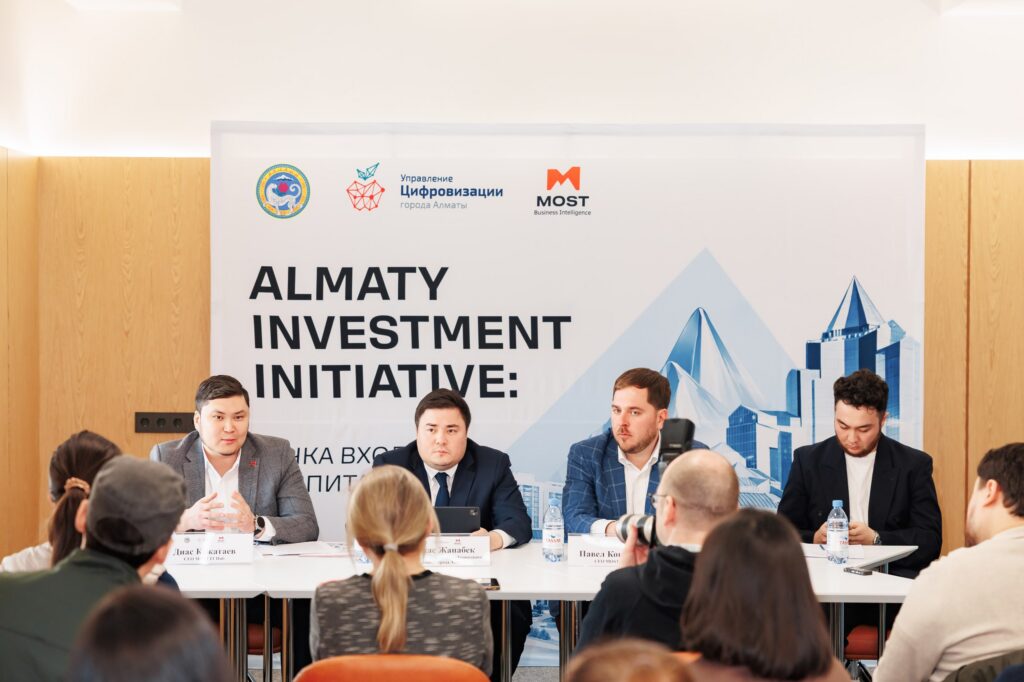
Almaty has hosted the Almaty Investment Initiative, where city officials and private-sector representatives unveiled a new program aimed at fostering technology entrepreneurship. The initiative, implemented jointly by MOST Holding and the city administration’s Digitalization Department, seeks to attract international capital and develop a sustainable startup ecosystem.

The program’s launch comes amid intensifying competition among regional urban centers for investment in the technology sector. Almaty aims to position itself as a gateway for projects targeting both the domestic market and export-oriented growth.

The acceleration program is designed to run for two years and will include nine thematic tracks supporting up to 250 startups. Organizers plan to use a range of formats. These include the Investment Readiness Accelerator (IRA), which focuses on helping startups secure funding during the program, as well as an international off-site track in Shanghai intended for 10 startups planning to enter the Chinese market.

Another component is the Soft Landing program, designed for foreign companies considering Kazakhstan as a base for regional expansion.

Within the initiative, city authorities are expected to act as both regulators and potential customers for innovative solutions. Priority sectors include transportation, tourism, environmental technologies, energy, education, and healthcare.

According to Olzhas Zhanabek, head of Almaty’s Digitalization Department, support for startups is seen as a tool for modernizing the city’s economic structure.

“Our task is to create conditions for the growth of projects that can enter international markets and bring practical benefits to the city,” he told The Times of Central Asia.

MOST Holding will serve as the program operator, facilitating connections between entrepreneurs, investors, and government agencies. Particular emphasis will be placed on solutions that can be integrated into the city’s infrastructure.

Organizers say the initiative aims to attract around $60 million in investment for participating startups. In addition, approximately 45 projects are expected to enter foreign markets, while up to 15 startups may pilot and implement their solutions in Almaty.

Pavel Koktyshev, co-founder and CEO of MOST Holding, said the program is intended to support startup development while ensuring practical implementation.

“We want to bring together the city, businesses, and investors on a single platform. This is not just about preparing projects, but also about implementing solutions in the real economy,” he said.

The event also addressed issues related to attracting foreign capital. Participants discussed opportunities linked to the infrastructure of the Astana International Financial Centre (AIFC), as well as strategies for Kazakhstani companies seeking to enter global markets.