• KGS/USD = 0.01144 0%
  • KZT/USD = 0.00212 0%
  • TJS/USD = 0.10456 0.19%
  • UZS/USD = 0.00008 0%
  • TMT/USD = 0.28490 0%
  • KGS/USD = 0.01144 0%
  • KZT/USD = 0.00212 0%
  • TJS/USD = 0.10456 0.19%
  • UZS/USD = 0.00008 0%
  • TMT/USD = 0.28490 0%
  • KGS/USD = 0.01144 0%
  • KZT/USD = 0.00212 0%
  • TJS/USD = 0.10456 0.19%
  • UZS/USD = 0.00008 0%
  • TMT/USD = 0.28490 0%
  • KGS/USD = 0.01144 0%
  • KZT/USD = 0.00212 0%
  • TJS/USD = 0.10456 0.19%
  • UZS/USD = 0.00008 0%
  • TMT/USD = 0.28490 0%
  • KGS/USD = 0.01144 0%
  • KZT/USD = 0.00212 0%
  • TJS/USD = 0.10456 0.19%
  • UZS/USD = 0.00008 0%
  • TMT/USD = 0.28490 0%
  • KGS/USD = 0.01144 0%
  • KZT/USD = 0.00212 0%
  • TJS/USD = 0.10456 0.19%
  • UZS/USD = 0.00008 0%
  • TMT/USD = 0.28490 0%
  • KGS/USD = 0.01144 0%
  • KZT/USD = 0.00212 0%
  • TJS/USD = 0.10456 0.19%
  • UZS/USD = 0.00008 0%
  • TMT/USD = 0.28490 0%
  • KGS/USD = 0.01144 0%
  • KZT/USD = 0.00212 0%
  • TJS/USD = 0.10456 0.19%
  • UZS/USD = 0.00008 0%
  • TMT/USD = 0.28490 0%

How Nauryz Was Celebrated in Astana: Traditions, Sports, and the Spirit of Spring

Spring in Astana traditionally begins with one of the country’s most beloved holidays, Nauryz. In 2026, citywide celebrations once again brought together thousands of residents and visitors to open-air venues, where ancient traditions, national games, crafts, and family activities combined to create a vibrant festive atmosphere.

In recent years, Nauryz has also taken on a broader role in Kazakhstan’s public life, reflecting efforts to reinforce national identity and cultural continuity in a rapidly modernizing society. In Astana, where public space and national imagery are carefully curated, the holiday takes on a particularly structured and representative form.

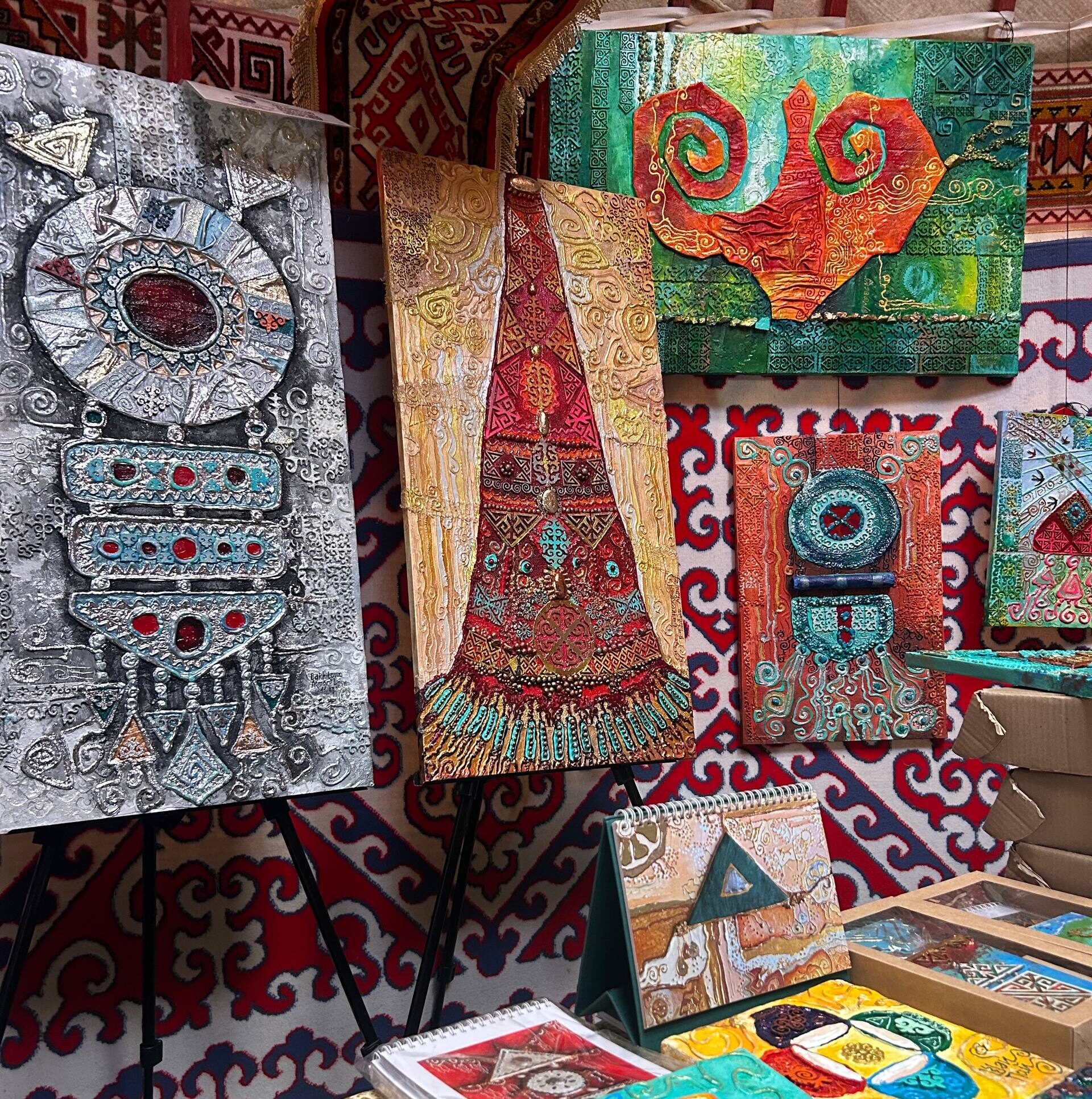
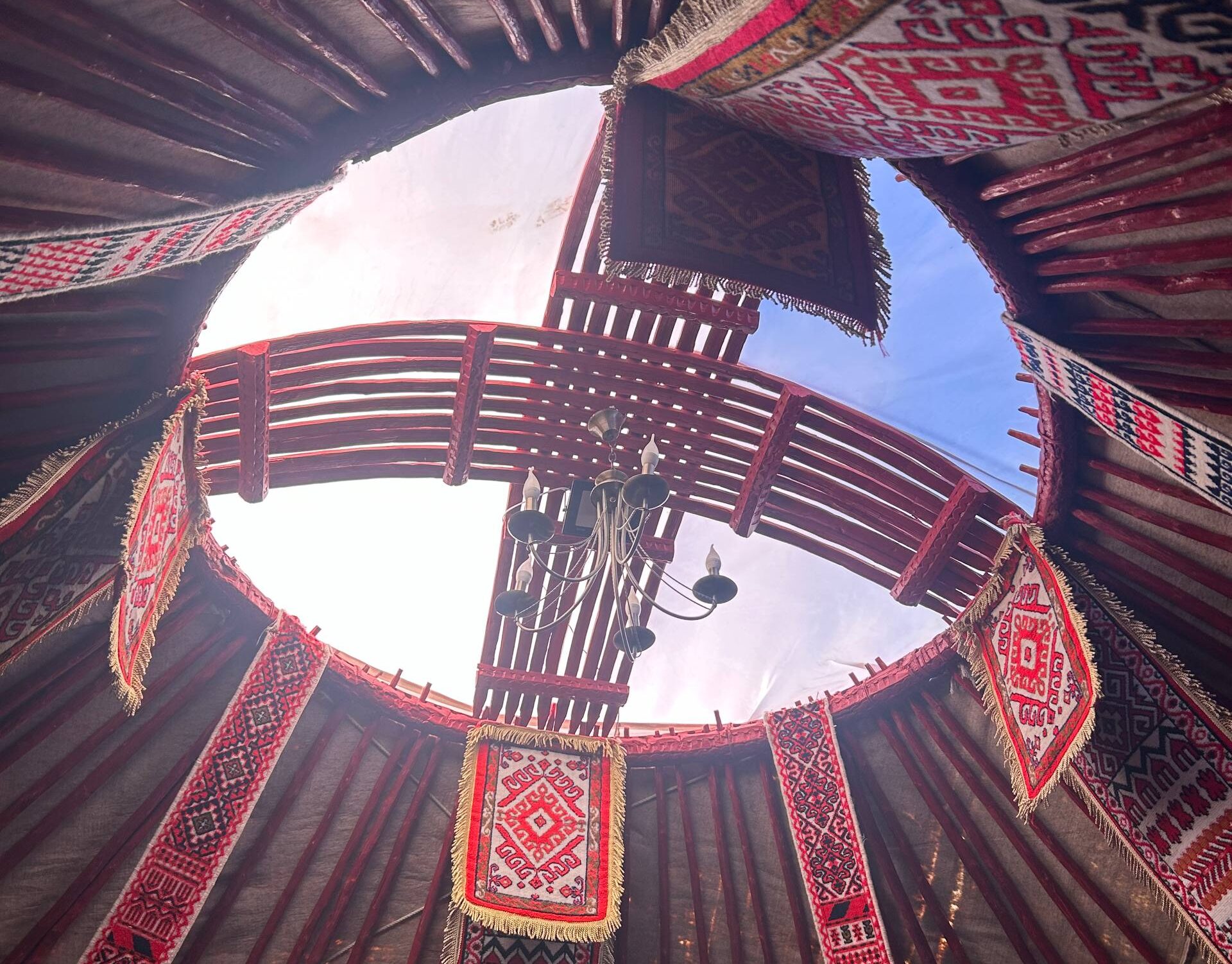
This year, the city’s central squares were transformed into a large ethno-village. Traditional yurts were set up throughout the area, decorated with national carpets, ornaments, and objects reflecting nomadic culture. Inside, visitors could explore elements of the traditional Kazakh way of life. Wooden tableware, textiles with ornamental patterns, fur decorations, and historical weapons created a strong sense of cultural heritage. The air carried the sounds of traditional music and the smell of freshly prepared dishes, adding to the immersive atmosphere.

Craft exhibitions attracted particular attention. Artists and artisans presented paintings and decorative panels inspired by Kazakh ornaments and steppe symbolism. Bright compositions, created using techniques ranging from textured painting to decorative ceramics, showed how these patterns continue to find expression in contemporary art.

Image: TCA

Image: TCA

Traditional games are an integral part of Nauryz.

One of the most notable competitions was asyk atu, an ancient Kazakh game in which players use skill and precision to knock down asyks (sheep knucklebones) from a distance. Spectators gathered around the playing area, watching the precise throws of experienced participants.

Strength contests were also a major draw. On stages and sports grounds, athletes demonstrated their power and endurance in kettlebell lifting, attracting large crowds. Such competitions have long symbolized the resilience and physical strength associated with steppe traditions.

As Nauryz is a family-centered holiday, special attention was given to activities for children. In designated play zones, young visitors could learn about folk customs, take part in workshops, and try on national costumes, alongside more modern раstimes, including digital games and interactive exhibits.

Many residents attended with their extended families. Across the festival grounds, elderly people in traditional headwear, parents with children, and groups of young people gathered together, creating a sense of unity tied to the arrival of spring.

Image: TCA

Image: TCA

Nauryz celebrations in Astana in 2026 showed that the holiday is more than a date on the calendar. It remains a marker of renewal and continuity, with traditions passed down through generations still visible in the modern capital, where people of different ages and backgrounds come together to celebrate.

In Astana, Nauryz continues to evolve without losing its core meaning, balancing carefully staged tradition with everyday participation. In a city defined by its future-facing architecture, the holiday offers a reminder that renewal is rooted as much in continuity as in change.

Kazakhstan’s Trade with China Is Growing, but the Deficit Is Widening

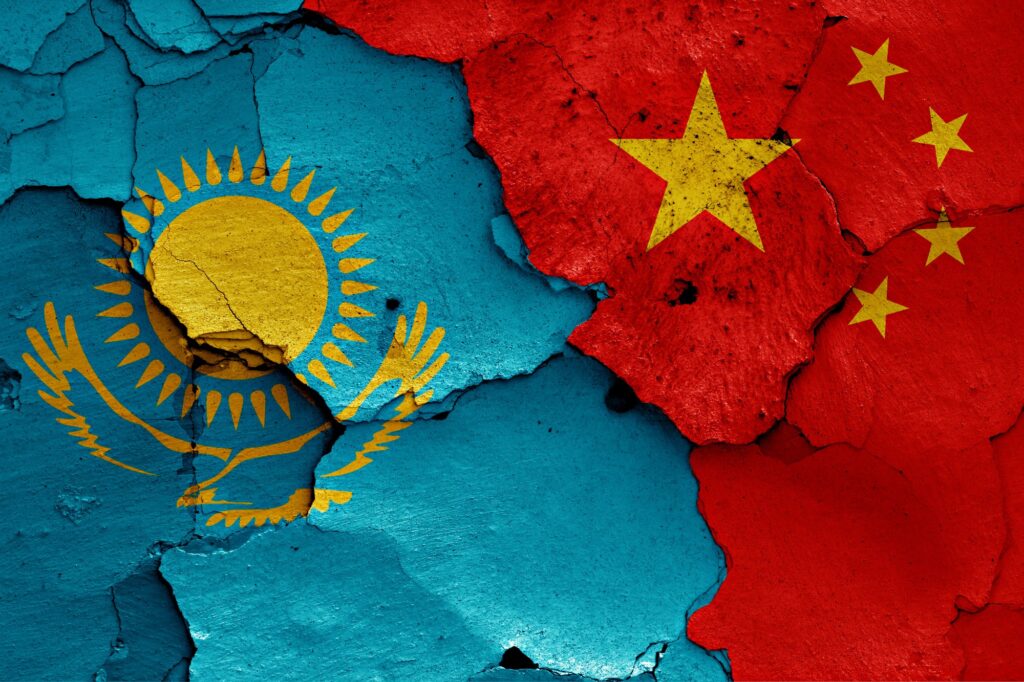
Kazakhstan’s trade and economic ties with China continue to deepen, yet the expansion in bilateral trade is accompanied by a widening imbalance. By the end of 2025, China had consolidated its position as one of the country’s key trading partners, accounting for nearly a quarter of total foreign trade turnover.

According to data from the analytical centre of the Association of Financiers of Kazakhstan (AFK), bilateral trade reached $34.1 billion, an increase of 13.2% compared with the previous year.

China’s share in Kazakhstan’s foreign trade rose to 23.7% from 21.2% a year earlier. Growth in trade was driven primarily by an increase in imports of Chinese goods. In 2025, imports from China reached $18.9 billion, 23.6% higher than the previous year. China accounted for 29.2% of all imports into the country. The structure of imports indicates growth in shipments of both consumer goods and industrial products. The largest increases were recorded in vehicles (+$3.4 billion), metals (+$645 million), and chemical products (+$412 million).

According to analysts, this reflects expanding investment activity, infrastructure projects, and domestic demand.

In contrast to imports, Kazakhstan’s exports to China showed only moderate growth, rising by 2.1% to $15.2 billion. At the same time, the export structure changed. Shipments of agricultural and chemical products increased, while exports of traditional raw materials declined.

Experts attribute this to cooling industrial demand in China, lower global commodity prices, and growth in domestic production within China itself.

Faster growth in imports led to a sharp deterioration in the trade balance. According to AFK data, the bilateral trade deficit with China increased tenfold, from $370 million to $3.7 billion.

At the same time, price trends for goods imported from China remained largely downward. Declining prices for a number of items are linked to low inflation in China and increased competition from Chinese manufacturers in foreign markets.

This, in turn, is exerting a restraining effect on inflation in Kazakhstan, partially offsetting price increases driven by domestic factors such as tariffs, demand, and budget spending.

In the short term, analysts expect imports from China to remain the main driver of bilateral trade. Kazakhstan’s exports, meanwhile, will depend on commodity prices and the level of industrial demand in China.

High oil prices (above $100 per barrel) could temporarily reduce the deficit by boosting export revenues. However, this effect would be largely price-driven and is unlikely to change the overall structure of trade.

Prototype Driverless Taxi Unveiled in Astana

As part of the Nauryz celebrations in Astana, a demonstration run of a driverless vehicle developed at the Daulet Serikbayev East Kazakhstan Technical University (EKTU) was held. In the future, this prototype could become part of the city’s driverless taxi system.

The presentation took the form of a public demonstration for residents and visitors to Kazakhstan’s capital. According to the Astana City Administration, the vehicle’s software and test route were developed by specialists from the Luban Workshop, which opened at EKTU in Ust-Kamenogorsk in late 2023 with support from China’s Tianjin Vocational Institute.

The project is being implemented as part of an initiative to develop engineering competencies and introduce new technologies, ranging from alternative fuels to AI systems in the transport sector.

At the same time, an agreement was signed to establish the Kazakhstan Engineering Center for the Application and Development of Intelligent Automotive Technologies.

The demonstration run was organised by the Ministry of Artificial Intelligence and Digital Development in collaboration with the capital’s city administration and the IT company Astana Innovations.

The test took place at one of the city’s festive venues. Visitors were able to observe the autonomous vehicle in real time and assess its potential for use in an urban environment.

According to the organisers, the prototype demonstrated the potential for integrating AI technologies into Smart City systems, including navigation, data processing, and interaction with infrastructure.

Authorities view driverless transport as one of the key areas in the development of urban mobility. In the future, such solutions may be integrated into Astana’s infrastructure, including the launch of autonomous taxis.

It was previously reported that Kazakhstan plans to launch pilot projects for driverless taxis in the capital as early as 2026.

At the same time, work is under way to prepare road infrastructure. Digital “passports” for highways are being developed, which are expected to enable the future use of driverless trucks.

Tajikistan’s Reliance on External Funding for State Investment Projects Is Growing

Tajikistan continues to implement a large-scale state investment programme. International financial institutions play a key role in financing these projects, however, while the government’s own contribution remains limited.

According to data from the State Committee on Investment and State Property Management, 82 state investment projects are currently under way in the country

The total value of ongoing initiatives is estimated at approximately $4.67 billion. Of these, 55 projects are being implemented on a grant basis, five through loans, and another 22 have mixed financing.

About $3 billion has already been allocated for procurement, works, and services related to the implementation of these projects. However, more than 70% of the funding is provided by just three international institutions. The World Bank remains the largest donor, contributing $1.725 billion (36.9%). It is followed by the Asian Development Bank with $914.7 million (19.5%) and the European Bank for Reconstruction and Development (EBRD) with $658.1 million (14.1%).

Other investors include the Islamic Development Bank ($207.9 million), the Chinese government ($194.9 million), the Asian Infrastructure Investment Bank ($142.5 million), the German Development Bank ($129.3 million), and the European Investment Bank ($114.8 million).

Against the backdrop of extensive external financing, Tajikistan’s own contribution remains small. The state is investing approximately $151.2 million, accounting for only 3.2% of the total. This means that the implementation of key infrastructure and social projects largely depends on international donors and lenders.

At the same time, in 2025 Tajikistan managed to significantly increase capital inflows. Foreign investment reached approximately $7 billion, rising by nearly $2 billion (35.1%) compared with the previous year.

The authorities hope to sustain this momentum by improving the investment climate, including through legislative updates.

A key step was the adoption on May 14, 2025, of a new version of the law “On Investments and the Promotion of Investment Activity,” aimed at increasing the country’s attractiveness to international partners.

The current development model allows Tajikistan to implement large-scale projects that would be difficult to carry out relying solely on domestic resources. However, this financing structure also increases dependence on external sources, making the economy more sensitive to the conditions set by international institutions and the global financial environment.

Over Half of People in Kyrgyzstan Use Russian Information Sources – New Survey

The Russian Eurasian Center for Sociology and Analytics has conducted a survey examining which information sources are used by citizens of Kyrgyzstan. The study involved face-to-face interviews with 1,900 residents aged over 18.

The survey found that 52% of respondents use Russian or Russian-language information sources. One third use Kyrgyz and Russian or Russian-language sources equally, while 43% use Kyrgyz sources more often.

Young people were identified as the main audience consuming information in Russian.

The primary sources of information for residents of Kyrgyzstan are public pages and groups on social media (63%). YouTube ranks second (47%). Respondents also cited conversations with friends (41%) and group chats on WhatsApp, Viber, and other messaging platforms (37%) as common sources of news and information. For 40%, television remains a relevant source. Only 10% mentioned Telegram channels.

Among men, the most popular sources of information are YouTube, television, and radio, while women tend to use social media more frequently.

The main social media and online platforms used regularly (at least three to four times a week) are YouTube (71%) and Instagram (67%), followed by Facebook (23%) and TikTok (22%). Russian social networks such as VKontakte (5%) and Odnoklassniki are less popular. Seven percent of respondents said they do not use social media or online platforms at all.

YouTube is the most popular platform across almost all age groups up to 64 years old.

Online audiences show the greatest interest in political (48%) and entertainment (45%) content. Other areas of significant interest include leisure programmes (38%), sports (37%), social issues (34%), and economic news (33%). Political news is more likely to attract residents of the country’s north (55%) than those in the south (44%).

Russian remains widely spoken in Kyrgyzstan, particularly in the north and in the capital, Bishkek. Under the Constitution, Russian has official status, while Kyrgyz is the state language.

How the Container Hub in Aktau Is Changing the Game on the Trans-Caspian Route

The Trans-Caspian International Transport Route (TITR) is experiencing rapid growth. Against the backdrop of geopolitical shifts and the restructuring of global supply chains, it is increasingly seen as a reliable alternative to traditional maritime routes.

The next major step in its development will be the launch in 2026 of Kazakhstan’s first container hub in the port city of Aktau. The project is expected to accelerate cargo handling, create a full container infrastructure, and strengthen the competitiveness of the route as a whole.

But will it be enough to elevate the corridor to the level of the world’s key transport routes? The Times of Central Asia sat down to discuss these important regional developments with Damir Kozhakhmetov, CEO of KTZ Express, the transportation and logistics subsidiary of Kazakhstan Railways (KTZ).

TCA: The launch of the container hub at the Port of Aktau is scheduled for 2026. What stage is the project currently at? Are there already forecasts for handling volumes?

DK: Construction of the container hub is proceeding according to schedule. The first phase of the project has already been completed: on December 25, 2025, the facility entered pilot industrial operation.

The design capacity of the first phase is 140,000 twenty-foot equivalent units (TEUs) per year. As part of the project, a rail-track complex approximately three kilometers long has been built, a container yard covering 19,300 square meters has been created, and two modern rail-mounted gantry cranes with a lifting capacity of 41 tons each have been installed. The main loading and transport equipment has also been procured and commissioned.

At the same time, supporting infrastructure has been developed, including roads, administrative and auxiliary buildings, engineering and utility networks, lighting systems, and perimeter security.

Comprehensive testing of the process equipment is currently underway, and the terminal’s digital control systems are being configured. At the same time, the hub’s IT systems are being integrated with the digital infrastructure of the Port of Aktau to ensure operational transparency and reduce container processing times.

Staff training and the refinement of production processes are also continuing during the trial-operation phase. Overall, the facility is steadily moving toward commercial operation, with commissioning work scheduled for completion by the end of March 2026.

As for throughput, a phased ramp-up to design capacity is expected in 2026, with utilization increasing gradually.

TCA: How will the launch of the container hub affect capacity utilization at Aktau itself?

DK: We expect a significant synergistic effect. The project is primarily aimed at attracting additional container traffic, particularly within the TITR framework. This will allow for fuller and more efficient use of the port’s infrastructure.

It is important to note that the development of port capacity is already aligned with projected cargo growth. Dredging work is underway in the port basin, while additional berths are being reconstructed and developed. Combined with the modernization of transshipment equipment, this creates the infrastructure reserve needed in advance.

The container hub will operate in close cooperation with existing terminals, expanding the port’s logistics capabilities. This will enhance its appeal as a transit hub and increase the regularity of vessel calls. As a result, both capacity utilization and operational efficiency should improve.

TCA: The project will serve as a key link between maritime and land transport. What technologies will enable faster cargo handling?

DK: The hub is equipped with modern handling equipment, including 41-ton RMG cranes manufactured by ZPMC, a global leader in port equipment. For Kazakhstan, these are unique solutions in terms of automation, productivity, and technical specifications.

The infrastructure also includes reach stackers, forklifts, rail sidings, container yards, and warehouse space.

Digitalization plays a key role. The hub has implemented an automated container tracking and control system, digital document management integrated with government agencies, and a real-time container tracking system.

This allows for the simultaneous processing of multiple trains, reduces cargo dwell time at the terminal, speeds up multimodal operations, and ensures transparency in logistics processes between maritime and land transport.

TCA: Is further expansion of the hub under consideration?

DK: Yes. We are currently working with our Chinese partner, the Port of Lianyungang, on the second phase of the project.

This phase involves increasing throughput capacity to 240,000 TEUs per year by expanding container yards, increasing warehouse space, and developing access infrastructure.

TCA: You mentioned staff training. Could you elaborate on the staffing plans for the hub?

DK: The organizational structure and staffing levels have already been approved. The model is designed to integrate related functions, optimize processes, and reduce redundant management layers, which is especially important during the launch phase.

Initially, the staff will consist of about 100 people, taking shift work into account. The structure includes an engineering and technical unit, production and operations personnel, crane operators, reach stacker operators, container truck drivers, stevedores, riggers, and dispatchers, as well as administrative departments and occupational safety and environmental services.

Systematic staff training is being carried out in parallel. Training covers work with modern transshipment equipment, digital systems, including the terminal operating system, container-handling procedures, equipment maintenance, industrial safety requirements, and interaction with customs authorities.

Both specialized training centers and practical sessions involving equipment manufacturers are being used. If necessary, international experts will be brought in. Priority is being given to Kazakhstani specialists.

TCA: What measures are being taken to develop container transport along the TITR?

DK: Today we are seeing steady growth in container transport along the route. At the same time, a comprehensive roadmap is being implemented to improve service efficiency and eliminate bottlenecks.

One of the key results is a reduction in delivery times. Whereas in 2023 transport between Xi’an and Poti, Georgia, took about 30 days, by 2025 that figure had fallen to 15 to 18 days.

On the infrastructure side, plans include dredging operations in the Caspian Sea on both the Kazakh and Azerbaijani sides, fleet expansion, and the development of the railway network in Georgia. This will increase the capacity of the maritime segments of the route.

TCA: What role does digitalization play?

DK: It delivers one of the most tangible benefits. We are developing a Single Digital Window platform that integrates document management, access to services, and cross-border data exchange.

Integration with the railways of Azerbaijan and Georgia has already been completed. In Georgia, for example, the time required for customs inspection of container trains has been reduced from eight to nine hours to about 40 minutes.

Integration has also been carried out with Chinese partners, including the Xi’an Free Trade Port Group and the Yiwu trading platform. This has reduced the time required to process transit declarations at the Altynkol crossing from 24 hours to about 30 minutes. Integration with China Railway Container Transport Corp. is planned for 2026, which should further improve the synchronization of operations on the Chinese section of the route.

TCA: How is cooperation with other market participants structured?

DK: The effective operation of the TITR is impossible without coordination among all participants. The container hub in Aktau was designed from the outset as part of a single logistics ecosystem. The main areas of focus are synchronizing vessel-call and container-train schedules, exchanging data, and introducing unified standards for container handling.

We are also working on the compatibility of information systems, the implementation of end-to-end container tracking, and the exchange of advance information. This helps reduce the risk of delays and improve planning accuracy.

TCA: When will the hub reach full capacity, and what KPIs have been set?

DK: Reaching design capacity will be a phased process, likely taking around two to three years after commissioning.

The key KPIs include container throughput, average processing time, capacity utilization, the degree of digitalization, and financial efficiency.

But our goal is broader: to create a sustainable, predictable, and competitive container logistics model that will be in demand internationally.