• KGS/USD = 0.01144 0%
  • KZT/USD = 0.00193 -0%
  • TJS/USD = 0.10811 -0.28%
  • UZS/USD = 0.00008 0%
  • TMT/USD = 0.28490 0%
  • KGS/USD = 0.01144 0%
  • KZT/USD = 0.00193 -0%
  • TJS/USD = 0.10811 -0.28%
  • UZS/USD = 0.00008 0%
  • TMT/USD = 0.28490 0%
  • KGS/USD = 0.01144 0%
  • KZT/USD = 0.00193 -0%
  • TJS/USD = 0.10811 -0.28%
  • UZS/USD = 0.00008 0%
  • TMT/USD = 0.28490 0%
  • KGS/USD = 0.01144 0%
  • KZT/USD = 0.00193 -0%
  • TJS/USD = 0.10811 -0.28%
  • UZS/USD = 0.00008 0%
  • TMT/USD = 0.28490 0%
  • KGS/USD = 0.01144 0%
  • KZT/USD = 0.00193 -0%
  • TJS/USD = 0.10811 -0.28%
  • UZS/USD = 0.00008 0%
  • TMT/USD = 0.28490 0%
  • KGS/USD = 0.01144 0%
  • KZT/USD = 0.00193 -0%
  • TJS/USD = 0.10811 -0.28%
  • UZS/USD = 0.00008 0%
  • TMT/USD = 0.28490 0%
  • KGS/USD = 0.01144 0%
  • KZT/USD = 0.00193 -0%
  • TJS/USD = 0.10811 -0.28%
  • UZS/USD = 0.00008 0%
  • TMT/USD = 0.28490 0%
  • KGS/USD = 0.01144 0%
  • KZT/USD = 0.00193 -0%
  • TJS/USD = 0.10811 -0.28%
  • UZS/USD = 0.00008 0%
  • TMT/USD = 0.28490 0%
10 December 2025

Tajikistan-Kyrgyzstan Trade Soars More Than 15-Fold in 2025

Trade between Tajikistan and Kyrgyzstan has surged dramatically in 2025, increasing more than fifteenfold compared to the same period last year, according to the Customs Service of Tajikistan, as reported by Asia-Plus. From January to May, total bilateral trade reached $6.35 million, up from just $405,100 during the same period in 2024.

Tajik exports to Kyrgyzstan amounted to $1.59 million, while imports from Kyrgyzstan totaled $4.76 million. Analysts attribute the sharp rise to improving political relations and the state visit of Kyrgyz President Sadyr Japarov to Dushanbe on July 8-9, at the invitation of Tajik President Emomali Rahmon.

Bilateral trade has experienced fluctuations over the past decade. Peak volumes were recorded in 2018-2019, when annual trade neared $60 million, with more than $48 million in Kyrgyz exports to Tajikistan and over $14 million in Tajik exports. Since 2020, however, trade had been in decline, dropping to $26.2 million in 2021, $15 million in 2022, and just $11.4 million in 2023. Figures for 2024 remained low at approximately $11.6 million.

The strong recovery in 2025 is largely credited to progress on border delimitation, the opening of two new border checkpoints, and renewed political dialogue. Experts also cite a series of new intergovernmental agreements as contributing factors.

On June 30, during the visit of Tajikistan’s Foreign Minister Sirojiddin Muhriddin to Cholpon-Ata, both sides reaffirmed their commitment to expand trade and economic cooperation. A new target has been set: increasing annual trade to $500 million.

Since the beginning of the year, the two countries have signed 15 agreements, including border-related protocols and measures to strengthen both political and humanitarian ties.

Tajikistan Seeks to Join China-Kyrgyzstan-Uzbekistan Railway Project

Tajikistan has officially expressed interest in joining the China-Kyrgyzstan-Uzbekistan (CKU) railway construction project, an ambitious regional transport initiative designed to enhance connectivity across Central and South Asia. The proposal was raised during a meeting between Tajik Minister of Transport Azim Ibrahim and Chinese Minister of Transport Liu Wei on July 2 in Tianjin, on the sidelines of the 12th Meeting of Transport Ministers of the Shanghai Cooperation Organization (SCO) Member States.

According to the Tajik Ministry of Transport, the two sides discussed potential Chinese support for Tajikistan’s accession to the CKU railway project, as well as participation in the development of a broader multimodal corridor linking China, Tajikistan, Uzbekistan, Turkmenistan, Iran, Turkey, and Europe.

The CKU railway, a strategically vital infrastructure project, spans 523 kilometers. Construction officially began on December 27, 2024, in Jalal-Abad, Kyrgyzstan. Once completed, the route will connect Kashgar in China with Torugart, Makmal, and Jalal-Abad in Kyrgyzstan, and Andijan in Uzbekistan. The railway is projected to handle up to 15 million tons of cargo annually. Currently, neither Kyrgyzstan nor Uzbekistan has a direct rail link with China, the only such connection in Central Asia runs through Kazakhstan.

At the SCO ministerial meeting, Minister Ibrahim noted that the SCO region already functions as a strategic bridge between East and West, North and South. He also outlined key emerging challenges, including the need to strengthen transport chain resilience, accelerate digitalization, reduce carbon emissions, and promote green logistics solutions.

To that end, Ibrahim proposed the establishment of a Unified SCO Digital Platform for managing multimodal transportation. This platform would harmonize customs, border, and transport procedures, enable real-time cargo tracking, streamline documentation, and enhance operational transparency.

The minister further emphasized the need to advance and integrate several major international corridors:

  • China – Kyrgyzstan – Tajikistan – Afghanistan – Pakistan – Indian Ocean
  • China – Tajikistan – Uzbekistan – Turkmenistan – Iran – Turkey – Europe
  • Trans-Caspian International Transport Route (TITR)

He also underscored the importance of attracting international partners to help restore and expand transport infrastructure through Afghanistan, describing it as key to unlocking new regional trade routes.

Tajikistan’s Irrigation Plans Require Major Upgrades

Tajikistan has the potential to become the irrigation center of Central Asia but only if it undergoes extensive modernization. This conclusion comes from a joint report by the Eurasian Development Bank (EDB) and the United Nations Industrial Development Organization (UNIDO).

Industrial and Economic Potential

The report highlights Tajikistan’s capacity to develop into a regional production and maintenance hub for irrigation equipment. Key advantages include affordable electricity, a readily available labor force, and a strategic geographic location. These factors position the country to play a central role in an emerging regional irrigation cluster.

The southern provinces of Khatlon and Sughd are identified as particularly promising for industrial development. Proposed projects include manufacturing facilities for plastic pipes and components for drip and sprinkler systems, alongside service centers for pump repair. Investment requirements for such facilities range from $3-5 million, with a projected payback period of just 2-3 years.

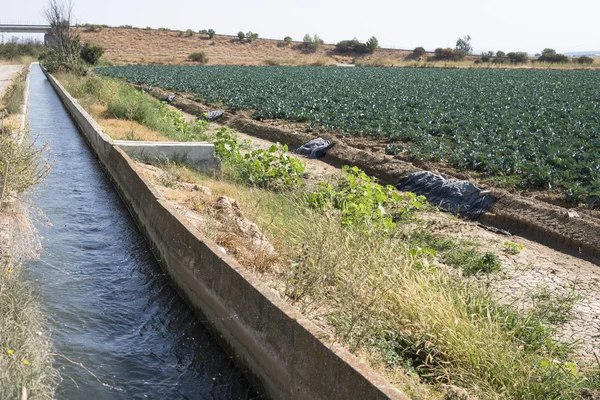
However, the report underscores the pressing need to overhaul the existing infrastructure. Approximately 77% of Tajikistan’s irrigation systems require reconstruction. Of the country’s 720,000 hectares of irrigated farmland, nearly 60% must be restored. Additionally, 80% of pumping stations are considered outdated, and water losses due to technical inefficiencies reach 45%. Without significant upgrades, the system will likely struggle to meet growing climatic and demographic pressures.

To support the irrigation sector’s long-term viability, the report calls for the annual training of at least 3,000 specialists. Training one professional to international standards costs between $1,200 and $1,800. The authors stress the importance of state investment in vocational education and greater collaboration between educational institutions and industry.

Tajikistan as a Regional Logistics Bridge

Tajikistan also has the potential to serve as a strategic logistics hub. Its southern regions could facilitate transport between Central Asia, Afghanistan, Iran, and Pakistan, cutting shipping costs and improving equipment access in remote areas.

Realizing this vision will require a strong state role, including tax incentives, subsidies, and streamlined investment procedures. International donor participation is equally vital. Currently, nearly 90% of irrigation equipment used in the region is imported, adding up to 30% in logistics costs.

While cluster-based industrial development has proven effective in other Central Asian countries, boosting enterprise productivity by 15-20% within two to three years, Tajikistan still trails behind. In contrast to Uzbekistan, which has over 90 cotton and textile clusters, much of Tajikistan’s agricultural output undergoes minimal processing.

Regional Water Reform Needs $50 Billion

The report concludes by emphasizing that water supply issues extend beyond Tajikistan. Across Central Asia, agriculture accounts for up to 80% of water usage. Losses from open canals reach 50%, and over 30% of irrigated land is affected by salinization.

To address these challenges by 2040, the region will require $40-50 billion in investment for infrastructure upgrades, digitization, and a transition to closed irrigation systems.

“Without urgent modernization of the irrigation system, the region risks facing serious water shortages, lower crop yields, and increased social instability,” the authors warn.

Trump Confirms New U.S. Tariffs on Kazakhstan Starting August 1

Starting August 1, 2025, the United States will impose a 25 percent customs duty on exports from Kazakhstan. The decision was announced by U.S. Secretary of Commerce Wilbur Ross and later confirmed in an official letter from President Donald Trump to Kazakh President Kassym-Jomart Tokayev. The move has prompted mixed reactions, although analysts say the actual economic impact is likely to be limited.

Tariffs and Diplomacy

In a letter published on Truth Social, President Trump stated that the United States was “forced to correct years of distortions caused by Kazakhstan’s tariff and non-tariff policies.” He added that the 25 percent tariff remains “significantly less than what is needed” to address the ongoing trade imbalance between the two countries.

Commerce Secretary Wilbur Ross clarified that the tariffs were originally scheduled to take effect on July 9 but have been postponed to August 1. Official notifications are already being sent to affected countries, with Kazakhstan’s notice  scheduled for delivery on July 7 at 12 p.m. Eastern Time.

President Trump also outlined a possible exemption: Kazakhstani companies that relocate production to the United States would not be subject to the new tariffs.

Impact on Kazakhstan

Earlier this year, Washington announced a 27% tariff on Kazakhstani goods, which was quickly suspended for 90 days pending negotiations. The revised 25% duty now stands as the highest imposed on any Central Asian country.

Despite this, Kazakh political analyst Gaziz Abishev points out that the overwhelming majority of Kazakhstan’s exports to the U.S., including oil, uranium, ferroalloys, and silver, are excluded from the new measures. “These commodities represent more than 95% of total shipments and are included in the list of exemptions,” he said. As a result, the tariffs are unlikely to significantly impact trade volumes or foreign investment.

Economist Eldar Shamsutdinov added that similar letters were sent to other nations, including Vietnam (40%), Malaysia (25%), Myanmar (40%), and South Africa (30%), framing the move as a continuation of existing trade policy rather than a new set of sanctions.

Geopolitical Context

The tariffs are part of a sweeping review of trade agreements under Trump’s administration. In April 2025, tariffs were applied to goods from 185 countries, and formal notices began rolling out in July. The administration has prioritized correcting what it deems “unfair trade imbalances.”

In 2024, Kazakhstan exported $2.3 billion worth of goods to the U.S., while U.S. exports to Kazakhstan totaled $1.1 billion. Trump has cited this trade deficit as justification for the increased duties.

Countries receiving similar letters include Japan, South Korea, Laos, Serbia, Tunisia, Bangladesh, and Indonesia, with tariffs reaching as high as 40%, underscoring the strategic and systematic nature of the U.S. policy shift.

Kazakhstan’s Response

Kazakhstan’s Ministry of Trade and Integration has announced plans to issue an official response but ruled out reciprocal measures.

“In connection with the introduction of a 25% duty on goods from Kazakhstan by the U.S., the Ministry of Trade and Integration is preparing an official response. There is no question of retaliatory measures,” the ministry stated.

Minister of Agriculture Aidarbek Saparov also addressed the issue, stating that the tariff would have a limited impact on Kazakhstani farmers. Speaking at a press conference, Saparov said, “We are studying which goods are supplied to the U.S., in what volumes, and under what terms, as well as potential support mechanisms on our side.” He noted that Kazakhstan exports small quantities of starch and gluten to the U.S., not enough to threaten the sector.

According to analysts, Kazakhstan is likely to adopt a cautious, non-confrontational stance. “It’s important not to rush into mirror measures and to assess how the new tariffs will affect supply chains and the U.S. domestic economy,” said Abishev.

Some experts suggest that Washington’s decision is part of a broader reshaping of global trade norms, pressuring developing economies to accommodate major powers. Given its reliance on raw material exports, Kazakhstan remains vulnerable. Politically, the tariffs could be a pre-emptive signal: Trump previously declared that countries aligned with, what he perceives to be, the anti-American policies of BRICS would face an additional 10% tariff. Kazakhstan became a BRICS partner country on January 1, 2025.

Experts Warn of Rights Violations in Kyrgyzstan’s Language Reform Push

The Jogorku Kenesh, Kyrgyzstan’s parliament, has adopted a sweeping package of 18 bills that overhaul the country’s language policy. The new measures significantly curtail the use of Russian, the official language, across key sectors including education, healthcare, the judiciary, and administrative processes. The legislation has drawn sharp criticism from both experts and the wider public.

According to the government, the changes are necessary to align existing laws with the constitutional provisions on the state language, Kyrgyz. All 18 bills passed through parliament in a single session comprising three readings. They now await the signature of President Sadyr Japarov.

Parliament Speaker Nurlanbek Turgunbek uulu emphasized the urgency of the reforms, warning that the Kyrgyz language is in a “dangerous” state.

“Many of us have children and grandchildren who do not speak Kyrgyz. This is shameful. If we continue to neglect our state language, we risk losing our national identity,” he said.

Sweeping Language Reforms

The adopted laws stipulate that individuals who do not speak Kyrgyz will be barred from holding a wide range of public positions, including parliamentary seats, government posts, judicial and prosecutorial roles, and employment at the National Bank.

The legislation mandates Kyrgyz-language proficiency exams for students at the point of admission and grade-level advancement in schools and kindergartens. Public signage, geographic names, and announcements must now appear in Kyrgyz first, with Russian and other languages allowed only as supplementary. All notarized contracts must be drafted in Kyrgyz, with translation into other languages permitted only when necessary. State institutions, including medical facilities, must maintain records exclusively in Kyrgyz.

Mounting Concerns

Some lawmakers have voiced concerns over the practicality of these reforms. The deputy Gulya Kozhokulova cautioned that insufficient development of medical terminology in Kyrgyz could jeopardize patient safety due to potential errors in diagnoses and prescriptions.

MP Dastan Bekeshev highlighted risks to citizens unfamiliar with Kyrgyz when handling legally binding documents, such as loan agreements. Under the new regulations, initial violations of language norms will result in warnings, with repeat offenses drawing fines of up to 17,000 KGS (approximately $200).

Public Backlash

The legislation has triggered a wave of criticism on social media and among civil society groups. At a roundtable hosted by the Oi Ordo Center for Expert Initiatives, participants asserted that the measures infringe on the rights of at least 1.5 million citizens. An open letter urging President Japarov to reject the legislation was submitted by members of the public, academia, and Bishkek City Council.

“Most of the amendments initiated by the National Commission on the State Language lack public backing and have sparked criticism for sharply limiting the use of Russian in socially vital sectors,” the letter stated.

Expert Commentary

Speaking to The Times of Central Asia, Igor Shestakov, director of the Oi Ordo Center, warned that the amendments contain internal contradictions and ultimately undermine the Kyrgyz language’s development.

“These measures primarily restrict the use of Russian. If implemented, they will have far-reaching consequences for banking, legal services, and education, affecting daily life and bureaucratic procedures. It’s unclear how signage and geographic naming will be handled, particularly given Kyrgyzstan’s tourism ambitions,” Shestakov said.

He also expressed concerns over migration, noting that foreign specialists seeking residence permits would need to prove Kyrgyz language proficiency.

“No one disputes the importance of promoting Kyrgyz, but these laws address symptoms rather than causes. Real support begins with quality education. Currently, there’s a shortage of teachers, poor salaries, and a lack of systemic investment. Instead, we’re seeing punitive measures,” he said.

Electoral and Ethnic Implications

A particularly contentious provision mandates the use of Kyrgyz in all political campaigning. According to Shestakov, this could disenfranchise ethnic minorities.

“Kyrgyzstan is home to more than 80 ethnic groups. These restrictions could undermine their political participation,” he noted.

Shestakov also alleged that commercial interests, particularly translation agencies, may have influenced the legislative process for profit.

“It appears these businesses played a key role in advancing the bill,” he claimed.

Multiple civil society organizations have called for the legislation to be revised and resubmitted for public consultation.

Diplomatic Discrepancies

The domestic debate contrasts starkly with recent diplomatic overtures. During a recent visit to Moscow, Japarov met with Russian President Vladimir Putin, who praised Kyrgyzstan for maintaining Russian’s official status and fostering educational collaboration.

“There are currently 200 Russian teachers working in 43 schools across Kyrgyzstan, with plans to expand this network,” Putin noted.

Under the Kyrgyz Constitution, Kyrgyz is the state language while Russian holds official status. In practice, Russian remains the dominant language of interethnic communication. Independent surveys indicate that 25-30% of citizens use Russian daily, with the percentage exceeding 50% in urban areas.

Urban Expansion in Astana: Strengths and Strains

July 6 marked Capital Day in Kazakhstan, a national holiday celebrating the country’s capital. To mark the occasion, Energyprom.kz released an in-depth analysis of Astana’s socio-economic standing, painting a mixed picture of rapid growth and persistent strain.

Competition with Almaty and Global Standing

In the 2025 Global City Ranking by Oxford Economics, Astana ranks 276th out of 1,000 cities worldwide. Almaty ranks slightly higher at 258th. While Astana outperforms Almaty in terms of ecological conditions and economic momentum, it lags behind in human capital and quality of life.

Both cities are considered national leaders, yet remain far behind the world’s top urban centers. According to the National Statistics Bureau, Almaty contributes 21.8% of Kazakhstan’s GDP (29.2 trillion KZT or approximately 56.2 billion USD), while Astana accounts for 11.5% (15.5 trillion KZT or around 29.8 billion USD). In terms of GDP per capita, Astana ranks fourth in the country, behind Atyrau, Ulytau, and Almaty. Its economy is heavily concentrated in services, which make up nearly 80% of its gross regional product.

A Magnet for Opportunity and Strain

Astana continues to attract internal migrants, particularly from rural regions, largely due to its relatively high wages. The average monthly salary in the capital is 538,000 KZT (around 1,035 USD). Higher salaries are found in resource-rich regions such as Atyrau (633,300 KZT) and Mangistau (580,900 KZT).

In Astana, the highest-earning sectors include finance and insurance (1.2 million KZT or 2,310 USD), mining (981,300 KZT or 1,890 USD), and IT (824,600 KZT or 1,587 USD). However, this economic pull has placed growing pressure on the city’s infrastructure. Astana faces ongoing issues related to water supply, sewage systems, disorganized construction, and environmental management. These problems have been highlighted by both President Kassym-Jomart Tokayev and the public.

The High Cost of Living

Astana leads the country in housing prices. In 2023, the average cost of a new apartment reached 595,500 KZT per square meter (approximately 1,146 USD). In the secondary market, the average price rose to 649,800 KZT (around 1,250 USD). A typical 50-square-meter two-bedroom apartment costs nearly 29.8 million KZT (about 57,370 USD). For a resident earning the city’s average wage, saving for such a home without loans would take 55 months, or over four and a half years. In comparison, it would take just 2.5 years in Atyrau.

Rental prices are also high. The average monthly rent for a 50 square meter apartment in Astana was 248,000 KZT in 2023 (around 477 USD), consuming over 46% of the average monthly wage. Only Almaty and Shymkent have higher rent-to-income ratios at 54.4% and 60.3% respectively.

Food costs place additional strain on household budgets. Food accounts for 52% of the average consumer budget in Astana, equivalent to 181,600 KZT (around 349 USD) per person per quarter. Prices for 14 of 19 socially significant food items, including chicken, milk, butter, and vegetables, exceed national averages. Food inflation in the capital remains among the highest in the country.

A Capital at a Crossroads

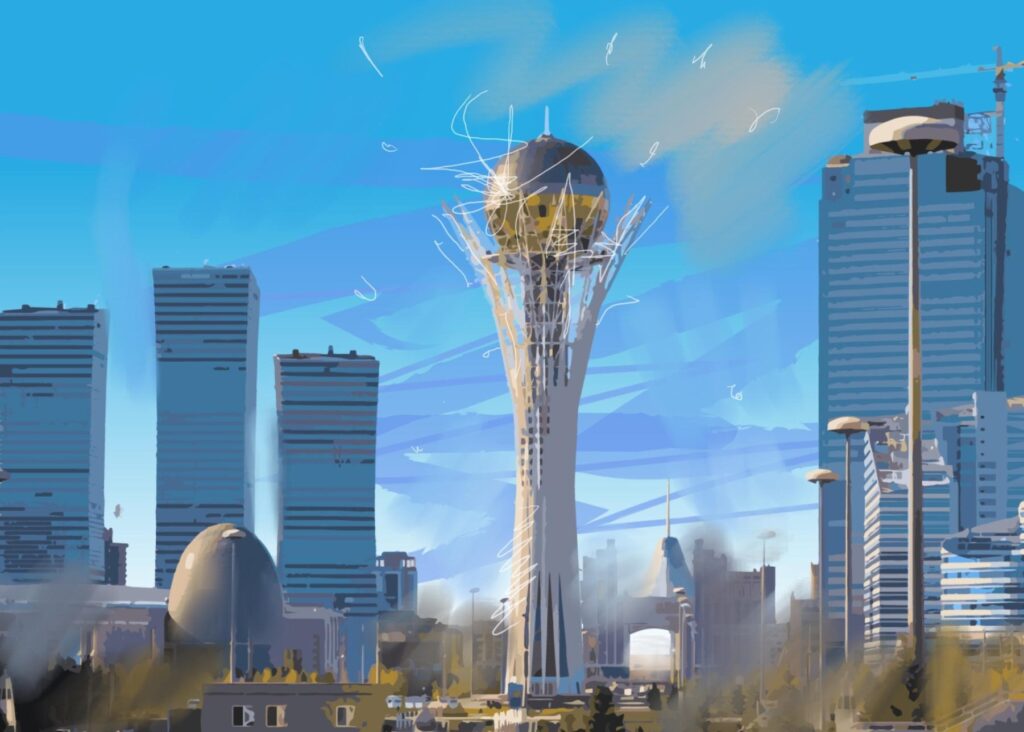
Astana remains the political and administrative center of Kazakhstan and an important economic driver. Its modern skyline and expanding sectors reflect ambition and investment. Yet the city faces critical challenges, from overstretched infrastructure to growing inequality in housing and basic living costs.

To remain competitive not only with Almaty but also with global urban centers, Astana must address these structural issues through long-term, coordinated policy planning. Its future will depend on how effectively it balances growth with quality of life for its residents.