• KGS/USD = 0.01144 0%
  • KZT/USD = 0.00213 0%
  • TJS/USD = 0.10456 0.19%
  • UZS/USD = 0.00008 0%
  • TMT/USD = 0.28490 0%
  • KGS/USD = 0.01144 0%
  • KZT/USD = 0.00213 0%
  • TJS/USD = 0.10456 0.19%
  • UZS/USD = 0.00008 0%
  • TMT/USD = 0.28490 0%
  • KGS/USD = 0.01144 0%
  • KZT/USD = 0.00213 0%
  • TJS/USD = 0.10456 0.19%
  • UZS/USD = 0.00008 0%
  • TMT/USD = 0.28490 0%
  • KGS/USD = 0.01144 0%
  • KZT/USD = 0.00213 0%
  • TJS/USD = 0.10456 0.19%
  • UZS/USD = 0.00008 0%
  • TMT/USD = 0.28490 0%
  • KGS/USD = 0.01144 0%
  • KZT/USD = 0.00213 0%
  • TJS/USD = 0.10456 0.19%
  • UZS/USD = 0.00008 0%
  • TMT/USD = 0.28490 0%
  • KGS/USD = 0.01144 0%
  • KZT/USD = 0.00213 0%
  • TJS/USD = 0.10456 0.19%
  • UZS/USD = 0.00008 0%
  • TMT/USD = 0.28490 0%
  • KGS/USD = 0.01144 0%
  • KZT/USD = 0.00213 0%
  • TJS/USD = 0.10456 0.19%
  • UZS/USD = 0.00008 0%
  • TMT/USD = 0.28490 0%
  • KGS/USD = 0.01144 0%
  • KZT/USD = 0.00213 0%
  • TJS/USD = 0.10456 0.19%
  • UZS/USD = 0.00008 0%
  • TMT/USD = 0.28490 0%

A Year After Olympic Gold, Uzbek Boxer Mullojonov Enmeshed in Doping Probe

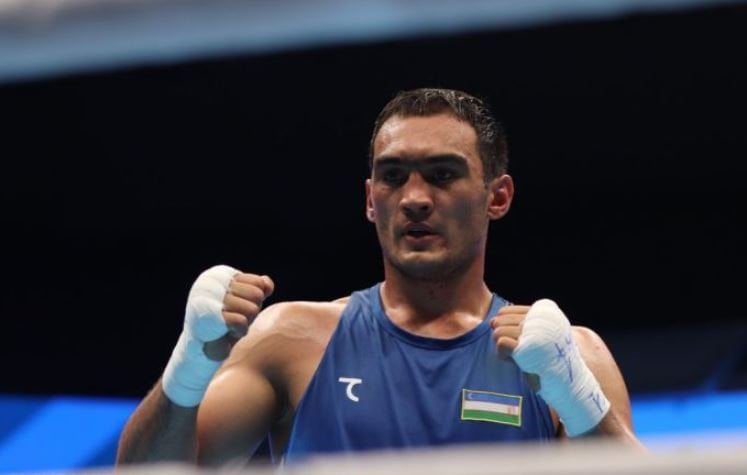
The Uzbekistan Boxing Federation is defending Olympic gold medalist Lazizbek Mullojonov after he tested positive for a banned steroid, saying he may have ingested “prohibited doping substances” during a hair transplant last year. 

The federation responded this week to online commentary about Mullojonov’s case, which threatens to tarnish his heavyweight victory at the Paris games last year. The boxer has been suspended under international anti-doping codes pending the outcome of the investigation. Some media reports have said he could lose his Olympic medal if a doping violation is confirmed, though Uzbek boxing officials say his Olympic result won’t be affected.

“On June 11 of this year, a doping test was taken from our athlete according to international doping rules, and an information letter was submitted to the International Testing Agency (ITA) indicating the presence of prohibited substances based on the test results,” said the federation, stating that Mullojonov had “always” complied with doping rules. 

“Our athlete underwent a hair transplant surgery on November 19, 2024, at a private clinic in Fergana city after the Paris 2024 Olympic Games. It is assumed that during the four-stage surgery and postoperative treatments, he took medications provided by the clinic for treatment, which may have contained some prohibited doping substances.” 

On July 29, the International Testing Agency said it informed Mullojonov that he had tested positive for methasterone, a steroid that can promote fast muscle growth and increased strength. It said he had the right to request an analysis of a second sample, which would confirm or contradict the first test, and that he can also provide explanations for a positive test. 

In line with the World Anti-Doping Code and World Boxing anti-doping rules, “a mandatory provisional suspension has been imposed on the athlete,” said the testing agency, which is based in Lausanne, Switzerland. Mullojonov can challenge the provisional suspension, it said. 

The boxer had reached the quarterfinals of the Boxing Grand Prix in Riyadh, Saudi Arabia, the tournament said on July 27. Two days ago, in an apparent reference to Mullojonov, it said that there was one “adverse finding” among 95 anti-doping tests that had been conducted in connection with the tournament and an investigation is ongoing. 

“The Tournament participant whose sample yielded the adverse finding had won his bouts in Phases 1 and 2. He will not participate in Phase 3,” said the tournament, which is organized by the World Boxing Council. Phase 3 is the quarterfinals stage.

 Mullojonov, 26, also won gold in the super-heavyweight category at the Asian Championships in 2022. Now he awaits a final decision on what the International Testing Agency called “an apparent anti-doping rule violation.”


Shanghai SpaceSail to Deliver Satellite Internet in Kazakhstan

Shanghai SpaceSail, a Chinese low Earth orbit (LEO) satellite operator, has conducted a successful test of the satellite internet service in Kazakhstan’s Almaty region. The test, observed by company specialists who traveled to the country, recorded connection speeds of up to 200 Mbps, according to the Kazakh Ministry of Digital Development, Innovation and Aerospace Industry.

The trial demonstrated the strong potential of Shanghai SpaceSail’s technology, which is designed to provide stable, high-speed internet access even in remote and hard-to-reach areas, regions where traditional fiber-optic infrastructure is not feasible due to economic or technical constraints.

Kazakhstan’s partnership with Shanghai SpaceSail aims to address digital inequality by connecting rural schools, healthcare facilities, and critical infrastructure to reliable broadband services. The initiative is expected to significantly expand access to telecommunications and improve the quality of life in underserved communities.

A Kazakh delegation recently visited Shanghai SpaceSail’s headquarters in Shanghai to observe the company’s technological solutions and satellite production process. Shanghai SpaceSail plans to officially begin operations in Kazakhstan in 2026.

The company is currently expanding its global footprint and is reportedly in negotiations with over 30 countries. It aims to have more than 648 satellites in orbit by the end of 2025 and 15,000 by 2030.

EDB Database Reveals How Crucial Central Asian Countries Are To Eurasian Transport Network

The Eurasian Development Bank (EDB) has unveiled the Eurasian Transport Network Observatory, a comprehensive database monitoring infrastructure development across 13 countries in the region: Azerbaijan, Armenia, Afghanistan, Belarus, Georgia, Iran, Kazakhstan, Kyrgyzstan, Mongolia, Russia, Tajikistan, Turkmenistan, and Uzbekistan.

As of July 1, 2025, the database includes 325 infrastructure projects both ongoing and planned, with a total estimated investment of $234 billion. Over 51% of these projects are in the road transport sector.

Russia accounts for seven of the ten largest infrastructure projects within the network. The Northern Eurasian Corridor is the most capital-intensive, requiring $78 billion, more than one-third of the network’s total projected investment.

Central Asia plays a pivotal role, representing over 22% of total investments in the Eurasian Transport Network. The region hosts or plans 90 infrastructure projects valued at approximately $53 billion. Kazakhstan alone accounts for roughly 44% of these initiatives.

Nearly two-thirds of Central Asian investments are allocated to highway infrastructure, underscoring the strategic priority placed on enhancing road connectivity to support regional trade and international integration.

Top 10 Transport Projects in Central Asia:

  • China-Kyrgyzstan-Uzbekistan Railway – $4.7 billion
  • Tashkent-Andijan Toll Highway (Uzbekistan) – $4.3 billion
  • Balykchy-Kochkor-Kara-Keche-Makmal-Jalal-Abad Railway (Kyrgyzstan) – $4.1 billion
  • North-South Railway (Tajikistan) – $3.9 billion
  • Center-West Highway (Kazakhstan) – $2.6 billion
  • Ashgabat-Turkmenabat Highway (Turkmenistan) – $2.4 billion
  • Serakhs-Mary-Serkhetabat Highway (Turkmenistan) – $2.2 billion
  • Dostyk-Moyinty Rail Section Modernization (Kazakhstan) – $2 billion
  • Sherkhan-Kunduz-Mazar-i-Sharif-Herat-Turgundi Railway (Tajikistan-Afghanistan-Turkmenistan) – $2 billion
  • Zhezkazgan-Arkalyk-Petropavlovsk Motorway Reconstruction (Kazakhstan)

The EDB notes that international development banks and other multilateral institutions are well-positioned to offer both technical and financial support, particularly in landlocked and mountainous countries where infrastructure gaps are most acute.

Kazakhtelecom CEO Confirms 2026 Launch of Caspian Submarine Cable Project

Kazakhstan and Azerbaijan have entered the active implementation phase of the long-anticipated submarine fiber-optic cable (SFOC) project across the Caspian Sea. According to Bagdat Mussin, CEO of Kazakhtelecom JSC, the underwater cable system is scheduled for completion and launch by the end of 2026.

First proposed in 2019, the project involves the construction of two parallel fiber-optic lines, spanning approximately 380 to 400 kilometers, to connect the digital infrastructures of Kazakhstan and Azerbaijan.

Originally, Kazakh telecom operators Transtelecom and KazTransCom participated alongside Azerbaijan’s AzerTelecom. However, by 2022, the Kazakh companies had exited the venture, and in 2023, Kazakhtelecom assumed the lead role on behalf of Astana.

On August 22, 2023, Kazakhtelecom and AzerTelecom formalized their partnership by signing a joint venture agreement in Amsterdam.

Mussin stated that national operators have now completed site surveys of the coastal infrastructure, identifying locations for both a beach manhole and a cable landing station. A specialized survey vessel, currently operating from the Kazakh port of Bautino, is mapping the seabed to assess depth, terrain, underwater currents, and geological conditions to finalize the cable route.

“The bridge’s capacity is designed to meet future demands and will support at least 400 Tbit/s. When the first byte of data travels through this artery, the Caspian will become a unique digital bridge between Asia and Europe,” Mussin said.

As previously reported by The Times of Central Asia, the total cost of the project is estimated at $50.6 million.

The cable is part of a wider regional initiative to advance digital transformation and sustainable connectivity across Eurasia.

Kyrgyzstan Secures €9 Million in EIB Funding for CASA-1000 Energy Project

The Kyrgyz Ministry of Finance has approved the signing of a €9 million financing agreement with the European Investment Bank (EIB) to support the ongoing implementation of the CASA-1000 regional energy project.

Under the terms of the agreement, the EIB will provide the Kyrgyz government with a 29-year loan, including an eight-year grace period, at an interest rate of 3.6% per annum. The funds will be used to complete infrastructure work under CASA-1000, a cross-border initiative aimed at exporting surplus summer electricity from Kyrgyzstan and Tajikistan to Afghanistan and Pakistan.

According to the Ministry of Finance, the funds will be re-lent to the state-owned National Electric Grid of Kyrgyzstan (NEGK), the country’s main electricity transmission operator and the contractor responsible for CASA-1000 infrastructure in Kyrgyzstan.

Officials stated that the loan will not place additional pressure on the state budget. Repayment will be made through revenue generated by NEGK from electricity exports to South Asia. In line with the Kyrgyz Constitution, the agreement requires parliamentary approval by the Jogorku Kenesh before the funds can be disbursed to a dedicated Ministry of Finance account.

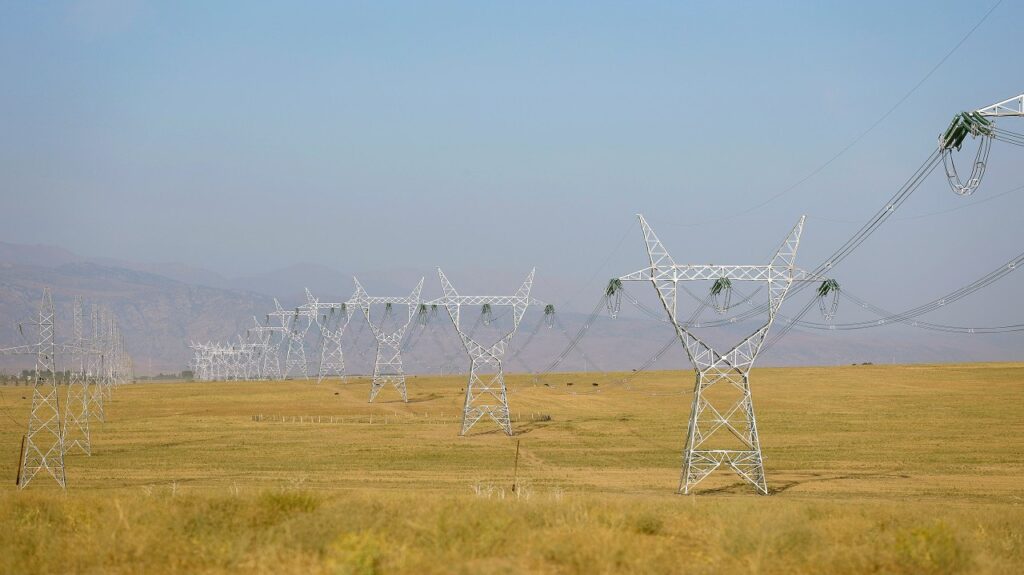
The CASA-1000 project is now in an advanced stage of implementation. Kyrgyz President Sadyr Japarov and Tajik President Emomali Rahmon recently attended the inauguration of the 480-kilometer Datka-Sughd high-voltage transmission line, which connects the two countries’ power systems. This event marked the completion of all CASA-1000 infrastructure in Kyrgyzstan.

Construction continues in southern Tajikistan, Afghanistan, and Pakistan. The full CASA-1000 corridor spans four countries, with a total transmission line length of 1,400 kilometers and an estimated total cost of $1.1 billion. Initial electricity deliveries to Afghanistan and Pakistan are scheduled for 2027.

Uzbekistan and Belarus Deepen Nuclear Energy Cooperation

Uzbekistan and Belarus are moving to strengthen bilateral cooperation in nuclear energy, following a high-level meeting in Minsk on August 5. The talks were hosted by Belarusian Energy Minister Denis Moroz and attended by a delegation from Uzbekistan’s Uzatom Atomic Energy Agency, led by Director Azim Akhmedkhadjaev.

Discussions covered a broad range of potential collaboration areas, including nuclear infrastructure development, specialist training, radioactive waste and spent fuel management, and integration of nuclear power into national energy systems.

“We welcome Uzbekistan’s decision to join the club of states using atomic energy for peaceful purposes and implementing a national nuclear program,” Moroz said, expressing Belarus’s readiness to share its experience.

The Uzbek delegation is expected to visit the Belarusian Nuclear Power Plant in Ostrovets, where technical teams from both countries will explore concrete areas for cooperation.

Moroz emphasized that the launch of the Belarusian plant has bolstered national energy security and driven innovation in sectors such as electric transport and housing electrification. “The nuclear power plant has become a springboard for Belarus to reach a new technological level,” he said, adding that the facility complies fully with international safety standards.

Uzatom Director Akhmedkhadjaev commended Belarus’s progress in the nuclear sector, calling it “advanced and highly successful.” He expressed interest in involving Belarusian experts in Uzbekistan’s nuclear development efforts.

The Uzbek delegation also visited the dispatch control center of Belenergo, Belarus’s national energy company, to observe nuclear grid integration in practice.

Uzbekistan signed a contract with Russia’s Atomstroyexport, a subsidiary of Rosatom, in May 2024 to build a small modular nuclear power plant in the Jizzakh Region. The design includes six 55 MW reactors with a combined capacity of 330 MW. In February 2025, Uzatom also formed an international consortium to expand its nuclear capacity, incorporating technologies from Russia, China, Europe, and the United States.