• KGS/USD = 0.01144 0%
  • KZT/USD = 0.00209 0%
  • TJS/USD = 0.10438 0%
  • UZS/USD = 0.00008 0%
  • TMT/USD = 0.28490 0%
  • KGS/USD = 0.01144 0%
  • KZT/USD = 0.00209 0%
  • TJS/USD = 0.10438 0%
  • UZS/USD = 0.00008 0%
  • TMT/USD = 0.28490 0%
  • KGS/USD = 0.01144 0%
  • KZT/USD = 0.00209 0%
  • TJS/USD = 0.10438 0%
  • UZS/USD = 0.00008 0%
  • TMT/USD = 0.28490 0%
  • KGS/USD = 0.01144 0%
  • KZT/USD = 0.00209 0%
  • TJS/USD = 0.10438 0%
  • UZS/USD = 0.00008 0%
  • TMT/USD = 0.28490 0%
  • KGS/USD = 0.01144 0%
  • KZT/USD = 0.00209 0%
  • TJS/USD = 0.10438 0%
  • UZS/USD = 0.00008 0%
  • TMT/USD = 0.28490 0%
  • KGS/USD = 0.01144 0%
  • KZT/USD = 0.00209 0%
  • TJS/USD = 0.10438 0%
  • UZS/USD = 0.00008 0%
  • TMT/USD = 0.28490 0%
  • KGS/USD = 0.01144 0%
  • KZT/USD = 0.00209 0%
  • TJS/USD = 0.10438 0%
  • UZS/USD = 0.00008 0%
  • TMT/USD = 0.28490 0%
  • KGS/USD = 0.01144 0%
  • KZT/USD = 0.00209 0%
  • TJS/USD = 0.10438 0%
  • UZS/USD = 0.00008 0%
  • TMT/USD = 0.28490 0%

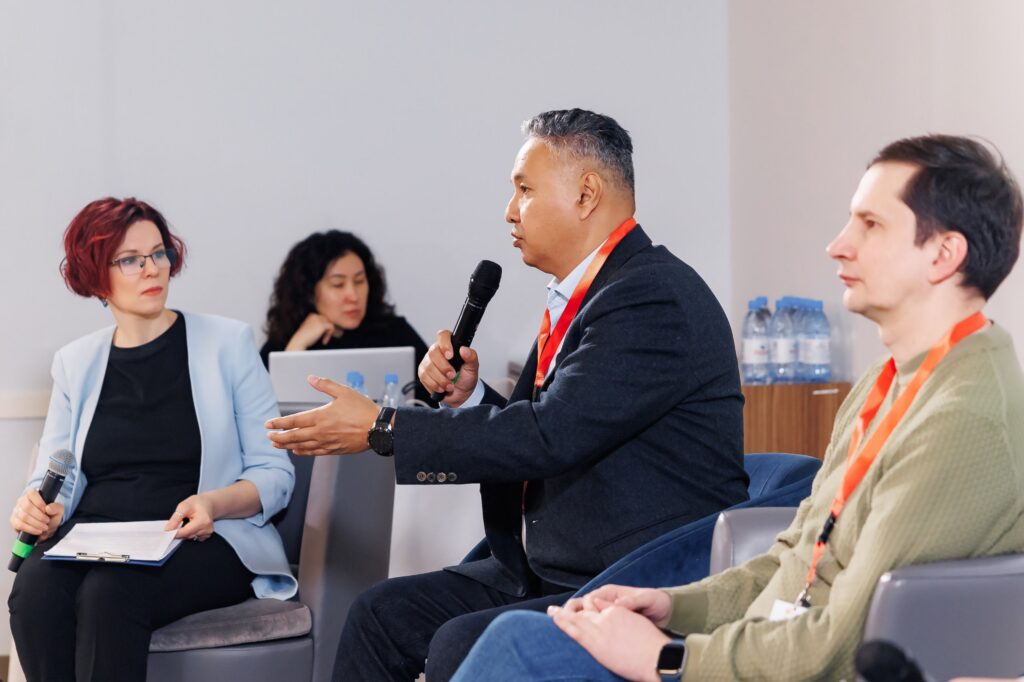
Almaty Hosts Ranking Business Day Discussion on Whether E-Commerce Could Become Kazakhstan’s “New Oil”

On February 26, Almaty hosted the first Ranking Business Day, an expert discussion in an open-talk format dedicated to the development of e-commerce in Kazakhstan. The event was organized by the analytical platform Ranking.kz and the communications agency 2BAgency.

The central question of the meeting was whether e-commerce could become a new driver of economic growth in Kazakhstan.

Sedred Asretov, CEO of Ranking.kz, presented the results of a study on the country’s e-commerce market.

According to the data, the volume of retail e-commerce in Kazakhstan reached $6.4 billion in 2024, an increase of 29% compared with the previous year.

“E-commerce today is not just a new sales channel. It is a full-fledged ecosystem that combines payments, logistics, marketing, and services,” Asretov said.

He emphasized that more than 90% of sales on marketplaces come from small and medium-sized businesses (SMBs), making e-commerce an important tool for supporting entrepreneurs across the country.

Small and medium-sized businesses currently account for about 40% of Kazakhstan’s GDP and 70% of investment in fixed capital.

Marketplaces have become a key sales channel for SMBs, allowing companies to reach broad audiences without major spending on IT infrastructure, marketing, or logistics. This is particularly important for entrepreneurs in regional areas where traditional sales channels are limited.

At the same time, electronic trading platforms make a significant contribution to the state budget.

According to the study, Kaspi.kz ranked first in tax payments, contributing approximately $276 million in 2025, a 3.5% increase from the previous year. Wildberries ranked second with $116 million in tax payments, followed by Ozon with approximately $30 million.

During two discussion sessions, experts and representatives of government agencies, the banking sector, and major e-commerce companies discussed key market challenges.

Among the main issues raised were:

  • unequal competition between local and foreign platforms;
  • the growing influence of foreign marketplaces;
  • the need for systematic regulation of the industry.

Particular attention was given to discussion of a new consumer protection law. Deputy Azat Peruashev of Kazakhstan’s lower house of parliament, the Mazhilis, said lawmakers had proposed requiring foreign marketplaces not only to pay VAT but also to cooperate with Kazakhstani manufacturers.

“We approached the Ministry of Trade and Integration with a proposal to oblige foreign marketplaces to cooperate with Kazakhstani manufacturers. However, we were told that such conditions cannot be imposed. But this is a negotiation process, and the state should take a stronger position,” he said.

Experts also discussed potential future changes in the market.

Damir Meyrambekov, managing director for e-commerce at Kazpost, said a new trading platform created in partnership with one of the largest Chinese marketplaces may appear in Kazakhstan in the near future.

Evgenia Savenkova-Petrichenko, head of the Wildberries commerce department in Kazakhstan, also commented on reports that the company may purchase a Kazakh financial organization. She did not deny the possibility but said it was too early to make any official statements.

The organizers said they intend to make Ranking Business Day a regular platform for discussing key issues related to the digital economy.

Several leading business and technology publications, including The Times of Central Asia, Kursiv.Media, Tengrinews, and Profit.kz, served as information partners for the event.

Amid the rapid expansion of online retail, experts agreed that e-commerce has already become one of the key growth sectors of Kazakhstan’s economy and that its role is likely to increase in the coming years.


Kazakhstan Prepares Comprehensive Program for Light Industry Development

The Kazakh government has commissioned the development of a comprehensive program aimed at strengthening the country’s light industry sector, with the goal of creating new jobs and increasing production.

The instruction was issued by Deputy Prime Minister and Minister of National Economy Serik Zhumangarin to the Ministry of Industry and Construction during a meeting of the government headquarters responsible for ensuring economic growth.

“Light industry is very important for us in terms of providing employment,” Zhumangarin said. “For example, the Turkestan region, the most densely populated region of the country, has the largest number of light industry enterprises. Further development of the sector will make it possible to create jobs and provide decent wages for the local population.”

According to the Ministry of Industry and Construction, Kazakhstan’s light industry has demonstrated steady growth over the past five years. By the end of 2025, output in the sector had increased by 13.2%, well above the planned growth rate of 3%, reaching $522 million.

Despite these positive trends, the sector’s share of Kazakhstan’s manufacturing industry remains relatively small at around 0.8%. More than 60% of production comes from textiles, approximately 32% from clothing, and about 6.5% from footwear and leather goods. More than 97% of enterprises in the sector are small businesses.

Participants in the meeting also highlighted several systemic challenges that require comprehensive solutions. These include developing the domestic raw material base, modernizing production facilities, improving regulated procurement mechanisms, and expanding financial support for the industry.

As previously reported by The Times of Central Asia, Kazakhstan is also considering projects to cultivate and process industrial hemp for use in the textile sector.

Kazakh Politician Proposes Softer Punishment for Citizens Who Join Foreign Military Conflicts

Zharkynbek Amantaiuly, a member of the Mazhilis, the lower house of Kazakhstan’s parliament, has submitted a request to Prosecutor General Berik Asylov and Interior Minister Yerzhan Sadenov proposing that penalties be reconsidered for Kazakh citizens who participate in armed conflicts abroad.

According to the lawmaker, growing geopolitical tensions and the increasing number of armed conflicts worldwide are contributing to a rise in the number of Kazakh citizens involved in hostilities outside the country. He noted that groups recruiting foreign citizens often rely on deception and targeted recruitment campaigns to attract participants.

“Unfortunately, the number of our compatriots who have fallen under such influence is growing,” Amantaiuly said.

According to data cited by him, 23 criminal cases were opened in Kazakhstan in 2023 under Article 172 of the Criminal Code, which concerns participation in foreign armed conflicts. The number increased to 36 cases in 2024 and rose sharply to 141 in 2025.

Of the cases registered in 2025, 26 citizens have been convicted. The offense carries a prison sentence of between five and nine years.

Amantaiuly argued that many citizens end up in conflict zones due to social difficulties, misconceptions, or deception, often after being promised high-paying jobs.

“Of course, no one goes to an armed conflict zone without a reason. Many of those who find themselves in such situations say they hoped to obtain well-paid employment. When they realize they have been deceived, they become involved in bloody battles in a foreign country and understand that there is almost no way back. Their parents, families, and loved ones suffer as a result,” he said.

He also noted that in some countries, participation in hostilities as part of the official armed forces of a foreign state is not considered a criminal offense.

According to Amantaiuly, strict criminal liability is typically applied to individuals who join terrorist organizations, commit war crimes, or act against the national interests of their own country.

For this reason, the deputy proposed studying international legal practices and preparing amendments to Kazakhstan’s criminal legislation governing citizens’ participation in armed conflicts abroad.

In his view, the law should introduce a mechanism for differentiated legal assessment. Such a framework could allow for suspended sentences, restrictions on freedom, or probationary supervision for individuals who were not members of terrorist organizations, did not commit war crimes, and voluntarily returned to Kazakhstan.

The deputy also proposed developing a state program for the legal, psychological, and social rehabilitation of such citizens.

As previously reported by The Times of Central Asia, several Kazakh citizens who fought in Ukraine as part of the Wagner private military company have received prison sentences of up to six years.

At the same time, Kazakhstan’s National Security Committee is investigating stand-up comedian Nurlan Saburov. According to media reports, he allegedly transferred motorcycle equipment purchased with his own funds to the same Wagner unit.

Evacuation Through Turkmenistan: Dozens of Foreigners Leave Iran as Assistance Conditions Vary

Amid the ongoing military conflict involving Iran, foreign nationals have begun leaving the country by land. One of the main evacuation routes has been through neighboring Turkmenistan, although the conditions for departure and the level of assistance provided to citizens of different countries have varied.

Foreign citizens began leaving Iran after strikes were launched on its territory. With Iranian airspace closed, evacuation has only been possible by land.

According to diplomatic sources in Kazakhstan, Russia, Uzbekistan, and South Korea, about 60 foreign nationals have already left Iran via Turkmenistan.

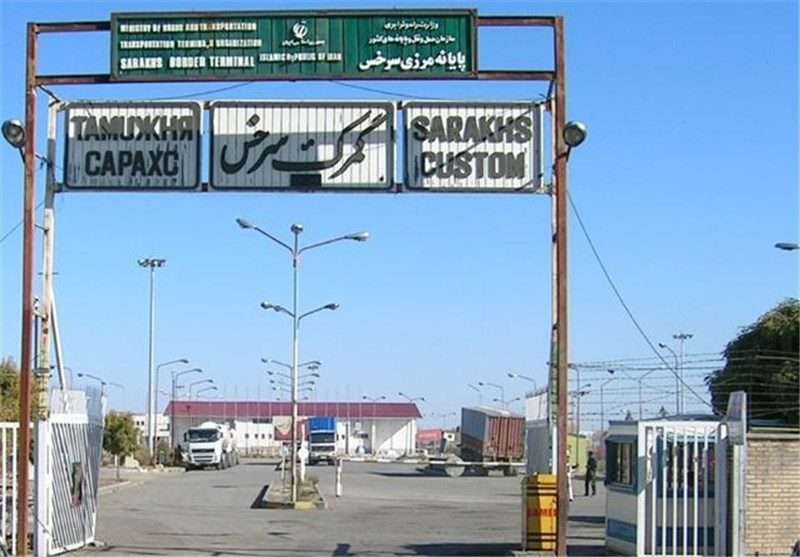
Kazakhstan’s Minister of Transport, Nurlan Sauranbayev, said that on March 2, 18 Kazakh citizens were successfully evacuated from the northern Iranian city of Gorgan. The closest available route was through the Turkmen border. According to the minister, Turkmen authorities granted permission for the group to cross the border, although the specific checkpoint used was not disclosed. Serakhs remains the main transit crossing in this direction, while other checkpoints remained closed until March 2.

On the same day, a group of eight Russian citizens crossed the border through the Serakhs checkpoint. According to Igor Samoshkin, head of the consular department of the Russian Embassy, Turkmen officials met the arrivals at the border and arranged transportation to Ashgabat as well as hotel accommodation. Russian diplomats later assisted the group with further travel arrangements. On March 3, the group flew home on an S7 Airlines flight.

On March 3, 13 citizens of Uzbekistan crossed the border in an organized manner through the same Serakhs checkpoint.

According to the Dunyo news agency, they were met by Uzbek embassy staff in official vehicles. After the Gaudan-Bajgiran crossing opened, diplomats also began meeting their citizens there. However, the subsequent route taken by the Uzbek nationals was not specified. There are currently no direct flights between Turkmenistan and Uzbekistan, and the distance from Serakhs to the nearest land crossing between the two countries, Farab-Alat, is about 460 kilometers.

On the same day, a group of 23 South Korean citizens entered Turkmenistan. According to The Korea Times, they were accompanied by South Korean diplomats throughout their transit in the country before departing from Ashgabat on individual flights. Representatives of the South Korean embassy noted the prompt response of Turkmenistan’s Ministry of Foreign Affairs, as well as assistance with immigration procedures, consular support, accommodation, and flight reservations.

Foreign citizens require a visa to transit through Turkmenistan, and this requirement has not been completely waived even during the evacuation.

As Russian diplomat Igor Samoshkin explained, those seeking to leave Iran through Turkmenistan must first contact their country’s embassy in Iran and submit documents for a visa. The diplomatic mission then sends a request to the Turkmen authorities, after which further coordination takes place between Ashgabat and the relevant embassies accredited in Turkmenistan.

Turkmen authorities directly accompanied only the Russian citizens. For other foreign nationals, their respective diplomatic missions were responsible for organizing further travel arrangements.

The reasons for the differences in the level of assistance have not been publicly explained. It is possible that some countries negotiated transit through Turkmenistan in advance, with support from local authorities limited mainly to expedited visa processing.

The Times of Central Asia previously reported that Turkmenistan had opened several additional checkpoints on the border with Iran to facilitate the evacuation of foreign nationals.

According to information from the Russian Embassy in Ashgabat, in addition to the Serakhs crossing, four more checkpoints have begun operating:

  • Artik – Lutfabad
  • Gaudan – Bajgiran
  • Akayla – Incheburun
  • Altyn-Asyr – Incheburun

These crossings are operating alongside the main Serakhs checkpoint and are allowing foreign citizens to leave Iran amid the ongoing hostilities in the Middle East.

Soft Power in Times of Geopolitical Turbulence: Kazakhstan’s Strategy as a Middle Power

For Kazakhstan, deeply embedded in global supply chains and international investment flows, soft power is evolving from an image-building asset into a strategic instrument of resilience. In an era of globalization, when even geographically distant conflicts can directly threaten national infrastructure and economic security, Astana’s ability to leverage institutional initiatives and investment interdependence as a form of diplomatic protection has become a decisive advantage.

Over the long term, stability tends to characterize states whose infrastructure and economic interests are deeply interconnected with those of major global centers of power.

A middle power and rational diplomacy

Kazakhstan’s status as a middle power is not a matter of ambition, but a deliberate choice in favor of rational diplomacy, where flexibility and institutional engagement serve as key resources.

Multilateral dialogue with the U.S., Russia, China, the EU, Turkey, and countries of the Middle East is being developed not as situational maneuvering but as a core strategy for minimizing external risks and preserving sovereignty.

It is precisely the combination of proactive soft power, political neutrality, and economic openness that allows Kazakhstan to transform geopolitical turbulence into a strategic advantage, positioning the country as an indispensable hub of international stability.

Ultimately, the rational diplomacy of a middle power transforms the country’s geographical position from a potential zone of conflict into a platform for dialogue, where pragmatism and institutional mediation become the principal guarantees of national sovereignty.

The Ukrainian case: infrastructure protection as an element of soft power

Developments surrounding Russia’s war in Ukraine illustrate how Kazakhstan’s soft power can function as a form of economic protection. The attacks on infrastructure in the Novorossiysk area, through which the Caspian Pipeline Consortium exports oil, highlighted a distinctive mechanism for safeguarding national interests through investment interdependence.

Strikes near the Black Sea hub posed a direct threat not only to logistics but also to the assets of major American investors in Kazakh energy projects, including Tengiz.

According to reports cited in public discussions, the U.S. urged Ukraine to take into account the interests of American investors in Kazakhstan. If confirmed, such a step would represent an important precedent: even amid an intense military conflict, global actors remain attentive to protecting the economic interests tied to Kazakhstan’s energy infrastructure.

For Astana, this episode illustrates how decades of building strategic relations with Western partners have created a significant layer of economic security. In this context, soft power manifests itself as a form of “investment protection,” discouraging actions that could damage oil production or transport infrastructure linked to global stakeholders.

Institutionalizing neutrality: why Kazakhstan needs a Board of Peace

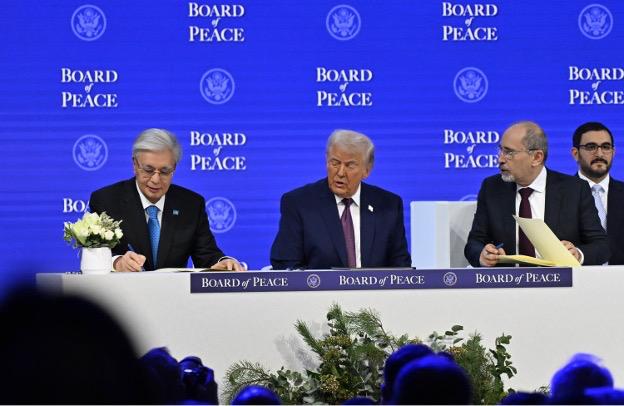
The creation of the Board of Peace by U.S. President Donald Trump and Kazakhstan’s active participation signals Kazakhstan’s transition from ad hoc mediation toward a more structured institutional architecture of soft power. The signing of the Board of Peace Charter by President Kassym-Jomart Tokayev formally embeds peacebuilding activities within the state’s foreign policy framework.

Kazakhstan’s developing participation in this initiative is also linked to its experience hosting the Congress of Leaders of World and Traditional Religions, which has been held in Astana since the early 2000s. The forum has gained international recognition as a platform for religious diplomacy that complements traditional political dialogue and often provides deeper insights into conflicts rooted in historical, cultural, and spiritual dynamics.

In the future, the forum could potentially evolve into a more institutionalized structure resembling a “spiritual security council.” Such a body could operate continuously rather than meeting once every three years, with a permanent secretariat, regional offices, missions in conflict zones, working groups, and mechanisms for sustained religious diplomacy.

In the context of the war in Gaza, and more broadly the history of the Israeli-Palestinian conflict, where religious dimensions are inseparable from political realities, Kazakhstan’s experience in convening such forums may prove particularly relevant. Religious dialogue can address aspects of conflicts that are often difficult to tackle through formal diplomatic channels, including questions of identity, historical memory, cultural narratives, and spiritual barriers to reconciliation.

Afghanistan: economy, education, and humanitarian sustainability

Afghanistan provides another example of Kazakhstan’s strategy, in which soft power operates through integration rather than isolation.

In 2025, this approach entered a phase of deeper economic engagement. Agreements worth approximately $303 million were signed in areas including trade, logistics, and infrastructure, reinforcing Afghanistan’s potential role in Eurasian connectivity and as a transit link to South Asian markets. 

Astana’s pragmatic policy is complemented by a significant humanitarian and educational component. The decision to expand quotas for Afghan students at Kazakh universities represents a long-term investment in human capital, fostering a generation of specialists oriented toward constructive international engagement. Regular humanitarian aid, including large deliveries of food and medical supplies, also contributes to stabilizing the social situation in Afghanistan, while reinforcing Kazakhstan’s reputation as a responsible regional actor.

In this way, Kazakhstan is building a distinctive framework of influence in Afghanistan, where economic cooperation, educational diplomacy, and humanitarian support combine into a broader effort to integrate the country into the regional security and economic architecture.

A strategy for sustainability

In conditions of geopolitical turbulence, Kazakhstan’s soft power is evolving from a secondary diplomatic tool into a central pillar of its long-term sustainability strategy. It serves as a mechanism for protecting infrastructure and maintaining investment attractiveness, while enabling the country to balance relations among major global powers and avoid being drawn into geopolitical confrontation.

The institutionalization of peacebuilding initiatives through the Board of Peace gives this strategy a longer-term framework. In an era of rising mistrust in international politics, Kazakhstan’s capacity to act as a platform for dialogue and a provider of pragmatic solutions may become a significant strategic advantage for a middle power.

Azerbaijan Accuses Iran of Drone Attack on Nakhchivan

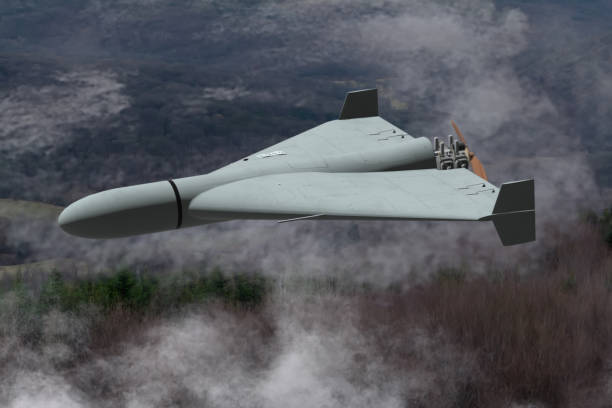
Drones allegedly launched from Iranian territory struck Azerbaijan’s Nakhchivan Autonomous Republic around noon on March 5, Azerbaijan’s Foreign Ministry has said. According to the ministry, one drone fell on the terminal building of Nakhchivan International Airport, while another crashed near a school in the village of Shekerabad.

Azerbaijan’s Foreign Ministry issued a statement following the incident, “strongly condemn[ing] these drone attacks carried out from Iranian territory, which caused damage to the airport building and injured two civilians,” the ministry said in a statement. The ministry added that the strike on Azerbaijani territory violates the norms and principles of international law and risks escalating tensions in the region.

Baku has demanded that Tehran promptly clarify the circumstances of the incident, provide official explanations, and take immediate steps to prevent similar events from occurring in the future. “The Azerbaijani side reserves the right to take appropriate retaliatory measures,” the statement said.

Following the incident, Iran’s ambassador, Mujtaba Demirchilu, was summoned to the Azerbaijani Foreign Ministry, where he is expected to receive a formal protest note.

The strikes coincided with an appeal by Iranian President Masoud Pezeshkian to neighboring countries. According to Pezeshkian, Iran has sought to prevent conflict through diplomatic means but ultimately had no choice but to defend itself.

“We respect your sovereignty and believe that the security and stability of the region must be achieved through the collective efforts of its countries,” Pezeshkian wrote on X.

Earlier reports indicated that the Azerbaijani authorities were assisting citizens of Central Asian countries in leaving Iran through the Julfa border crossing in Nakhchivan following the start of military operations involving the Islamic Republic.

Iran’s military denied launching the drone attack, instead accusing Israel of attempting to provoke tensions between Muslim countries.