• KGS/USD = 0.01144 0%
  • KZT/USD = 0.00196 -0%
  • TJS/USD = 0.10899 -0%
  • UZS/USD = 0.00008 -0%
  • TMT/USD = 0.28490 0%
  • KGS/USD = 0.01144 0%
  • KZT/USD = 0.00196 -0%
  • TJS/USD = 0.10899 -0%
  • UZS/USD = 0.00008 -0%
  • TMT/USD = 0.28490 0%
  • KGS/USD = 0.01144 0%
  • KZT/USD = 0.00196 -0%
  • TJS/USD = 0.10899 -0%
  • UZS/USD = 0.00008 -0%
  • TMT/USD = 0.28490 0%
  • KGS/USD = 0.01144 0%
  • KZT/USD = 0.00196 -0%
  • TJS/USD = 0.10899 -0%
  • UZS/USD = 0.00008 -0%
  • TMT/USD = 0.28490 0%
  • KGS/USD = 0.01144 0%
  • KZT/USD = 0.00196 -0%
  • TJS/USD = 0.10899 -0%
  • UZS/USD = 0.00008 -0%
  • TMT/USD = 0.28490 0%
  • KGS/USD = 0.01144 0%
  • KZT/USD = 0.00196 -0%
  • TJS/USD = 0.10899 -0%
  • UZS/USD = 0.00008 -0%
  • TMT/USD = 0.28490 0%
  • KGS/USD = 0.01144 0%
  • KZT/USD = 0.00196 -0%
  • TJS/USD = 0.10899 -0%
  • UZS/USD = 0.00008 -0%
  • TMT/USD = 0.28490 0%
  • KGS/USD = 0.01144 0%
  • KZT/USD = 0.00196 -0%
  • TJS/USD = 0.10899 -0%
  • UZS/USD = 0.00008 -0%
  • TMT/USD = 0.28490 0%
08 December 2025

Putin Apologizes for Azerbaijan Airlines Plane Crash in Kazakhstan

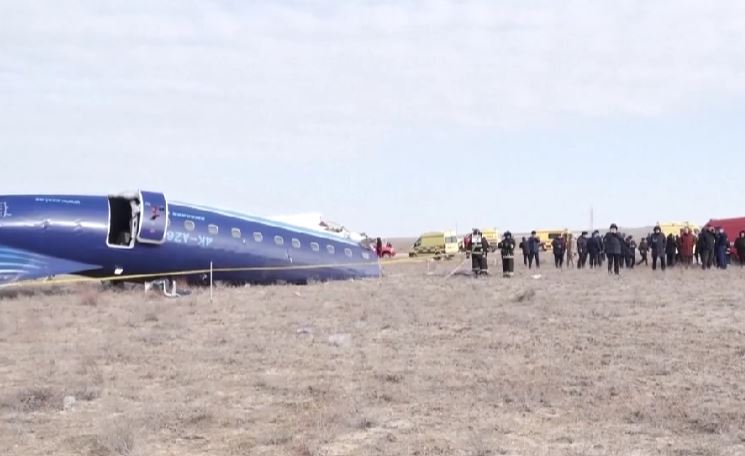
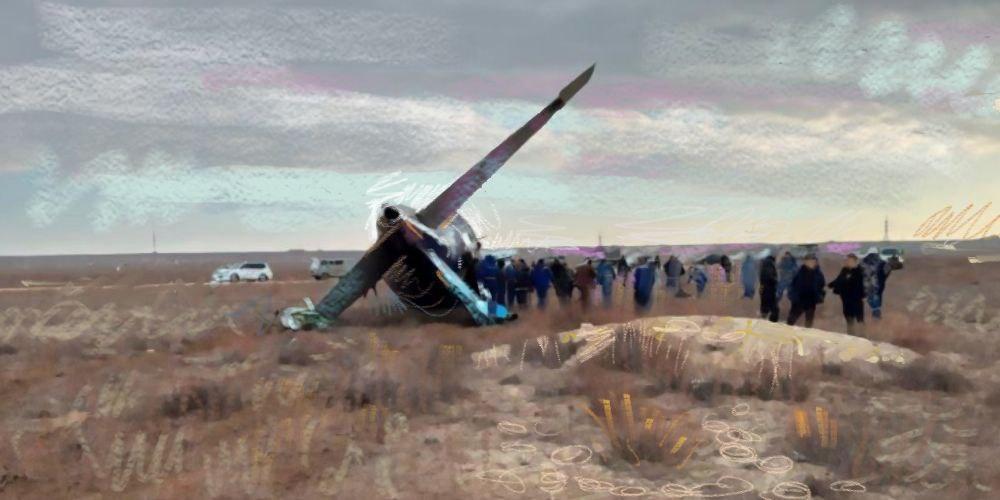
Russian President Vladimir Putin has apologized for the crash of an Azerbaijan Airlines passenger plane that diverted from its Russian destination to Kazakhstan, the Kremlin said on Saturday, as investigators focused on the possibility that Russian air defenses had mistaken the plane for a Ukrainian drone and fired on it.

Putin made the apology in a telephone conversation with President Ilham Aliyev of Azerbaijan, according to a Kremlin statement.

“During the conversation, it was noted that the Azerbaijani passenger aircraft, which was strictly on schedule, repeatedly attempted to land at the Grozny airport. At that time, Grozny, Mozdok and Vladikavkaz were attacked by Ukrainian combat unmanned aerial vehicles, and Russian air defense systems repelled these attacks,” the statement said.

Putin did not offer further detail about what exactly caused the plane to crash. In an account of the conversation, Aliyev’s office gave more detail to support the contention that Russian air defenses and communications jamming targeted the plane when it tried to land as scheduled in Grozny in Russia-controlled Chechnya, saying the aircraft “was subjected to physical and technical external interference in Russian airspace.”

In the call with Putin, Aliyev “emphasized that the presence of numerous holes in the fuselage of the plane, the injuries of passengers and crew members by foreign particles that penetrated the deck of the plane while still in the air, and in this regard, the statements of the surviving flight attendants and passengers establish the fact of external physical and technical interference,” the Azerbaijani president’s office said.

“During the conversation, the heads of state discussed a serious and thorough investigation of all the details of this tragedy and bringing the perpetrators to justice,” the office said.

The Embraer 190 plane was flying on the Baku-Grozny route but diverted and crashed near the Caspian Sea city of Aktau, Kazakhstan, on Wednesday killed 38 people, according to Kazakh and Azerbaijani officials. A total of 67 people, including five crewmembers, had been on board.

Kazakhstan is leading the investigation and its prosecutors have opened a criminal case.

The Kremlin said two employees from the office of Azerbaijan’s prosecutor general are in Grozny and are working with Russian counterparts on the investigation.

With Russia Under Scrutiny, Kazakhstan Promises Thorough Investigation into AZAL Crash

The investigation of the fatal crash of an Azerbaijan Airlines plane in Kazakhstan after it diverted from Russia is a major international test for Kazakh authorities, who have promised a full and impartial inquiry even as the theory that Russian air defenses had fired on the aircraft gains traction.

Kazakhstan, which is in charge of the probe of the crash that killed 38 people near the Caspian Sea city of Aktau on Wednesday, has cautioned against a rush to judgment before all the evidence has been assessed. But it must navigate emerging tensions between Azerbaijan and Russia, which have put forth conflicting narratives about what happened, as well as the possible challenge of collecting evidence from the plane’s original destination of Grozny, the capital of Russian Chechnya. 

Azerbaijan and Russia say they are collaborating with the investigation by Kazakhstan, which comes amid geopolitical rifts over Russia’s full-scale invasion of Ukraine and the efforts of countries in Central Asia to balance their interests among major trading partners and rival powers. 

In a sign of the growing international complexity of the crash inquiry, Turkish Transport Minister Abdulkadir Uraloğlu said Friday that his ministry was dispatching an eight-person team to Baku, Azerbaijan’s capital, “to examine all aspects of the incident” at the request of Azerbaijan’s civil aviation authorities. Also, a team from the Brazilian company that produced the Embraer 190 plane has arrived in Kazakhstan to help with the investigation.  

On Friday, Kazakh President Kassym-Jomart Tokayev updated his Azerbaijani counterpart, Ilham Aliyev, on the investigation and and “assured that the Kazakh side will make every effort to ensure a comprehensive and objective clarification of all the circumstances of the air crash,” Tokayev’s office said. The two leaders agreed that their governments will stay in close contact during the investigation. 

Azerbaijan Airlines, meanwhile, said on Friday that preliminary results of the investigation showed that the Brazil-produced Embraer 190 plane on the Baku-Grozny route had crashed because of “physical and technical external interference,” a possible reference to an attack by the city’s air defenses and alleged communications jamming at a time when Russian authorities said there was a threat from Ukrainian military drones. 

The airline, also known by the acronym AZAL, said it had suspended flights from Baku to a total of 10 Russian cities because of concerns about flight safety. 

Also Friday, Dmitry Yadrov, head of Russia’s Federal Air Transport Agency, gave an account of the circumstances surrounding the crash that did not address the airline’s version. 

Yadrov said the plane was unable to land in Grozny because of a restriction requiring all aircraft to leave the area due to alleged Ukrainian attempts to attack civilian infrastructure there, according to Russia’s state-run news agency RIA Novosti. There was dense fog around the airport and the Azerbaijan Airlines plane tried to land twice before deciding to proceed across the Caspian Sea to Aktau, he said. 

Some commentators in Azerbaijan have expressed frustration with varying initial accounts from Russian official sources of what caused the crash, including a collision with birds and an oxygen cylinder explosion inside the cabin. Some aviation and security specialists have said scattered puncture marks on the outside of a piece of the wrecked fuselage are consistent with shrapnel from an air defense strike.  

There were 62 passengers on the flight, including 37 people from Azerbaijan, 16 from Russia, six from Kazakhstan and three from Kyrgyzstan, according to the airline. There were five crewmembers. Of the 67 in total on the plane, 38 died, according to Kazakh officials.

Kyrgyz Journalists Reject Japarov Criticism of Foreign Funding in the Media

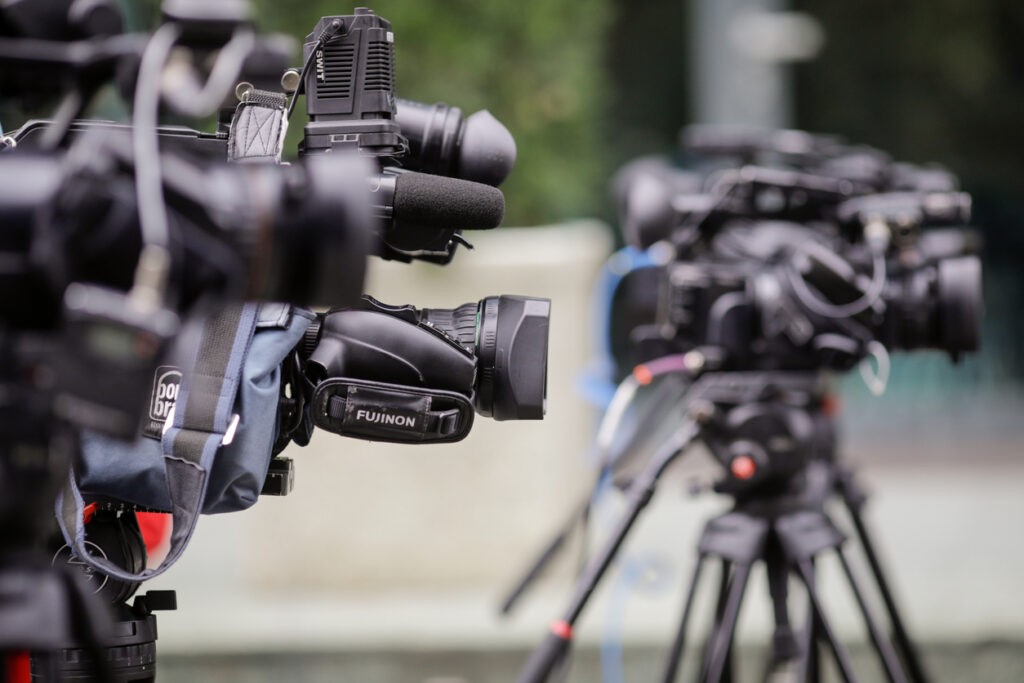
Kyrgyzstan’s President Sadyr Japarov has criticized the country’s media for its willingness to accept foreign funding. American diplomats disagree with the government’s “accusations,” while local journalists pointed out that Kyrgyz media operates with the help of advertising and grants.

Speaking at the recent People’s Kurultai (Congress) in Bishkek, Japarov criticized several Kyrgyz media outlets for receiving foreign funding, accusing journalists of spreading false information. According to him, most Kyrgyz publications have foreign sponsors.

Japarov claimed that journalists obey their “masters” and are therefore deprived of freedom of speech. The president also shared data on foreign funding received by some opposition media outlets and NGOs.

“These funds are accounted for in reports only superficially. Their foreign sponsors say, ‘Yes, they are doing a good job.’ But what’s really happening? Here, they spread false information, look for negativity, and undermine the reputation of others. And when lawsuits are filed against them, they immediately claim it’s an attack on freedom of speech,” Japarov said.

The president addressed the leadership of the U.S. State Department, stating that funds should be directed directly to Kyrgyz authorities.

“We will ensure their effective use. Do you want to raise the level of journalism? We can do it. Do you want complete freedom of speech? We guarantee it,” Japarov emphasized.

A few days later, the U.S. Embassy in Bishkek responded to the criticism.

“In the field of journalism, our assistance is aimed at funding fact-checking programs, supporting Kyrgyz-language journalism, and assisting investigative journalists in uncovering violations, including corruption,” the diplomats said in a statement.

The embassy emphasized its belief that independent media, which performs a watchdog role in society, is crucial for any government.

In an interview with The Times of Central Asia, journalist Chynara Sydykova shared that grant support enabled her to implement several socio-cultural projects.

“These projects helped us grow and become independent professionals in directing, producing, and project management. Finally, it allowed us to simply become journalists capable of working honestly, objectively, and professionally, covering topics of public interest,” Sydykova said.

The investigative journalist noted that none of the grant providers interfered with the work process. However, Sydykova admitted that manipulations could occasionally occur.

“Journalists shouldn’t cling to every visible opportunity to get funding. They need to build a reputation so that no one would even think of using them as an agent of influence. Thanks to my television projects, I provided real help to respondents in the areas of health and social injustice,” Sydykova added.

Public figure and journalist Alisher Tashmatov told The Times of Central Asia that he takes a neutral stance on grants. According to him, the most important thing is that grants allocated by foreign institutions should not threaten Kyrgyzstan’s national security.

“In Kyrgyzstan, media survives through advertising and grants. Only a few receive funding from the state. Moreover, even state-owned media occasionally receives financial assistance from foreign institutions and companies,” he noted, adding that criticism of the authorities should be well-founded.

Old Projects Now Part of Kyrgyzstan’s Near Future

Two projects that successive governments in Kyrgyzstan over the course of more than three decades have promoted as key to the country’s long-term success appear to finally be making progress.

The idea for the China-Kyrgyzstan-Uzbekistan (CKU) railway dates back to the early days of Kyrgyzstan’s independence, and plans for construction of the massive Kambar-Ata-1 hydropower plant (HPP) go back even further, to the Soviet-era.

After all these years, these aspirations that have almost faded into dreams are set to be realized.


All Aboard

On December 27, Kyrgyz President Sadyr Japarov took part in a ceremony near the southern city of Jalal-Abad to launch construction of Kyrgyzstan’s section of the CKU railway.

The idea of a trans-Asian railway that would run from China into Kyrgyzstan and on to points further west goes back to the first meeting on Central Asian presidents in December 1991 in Ashgabat, Turkmenistan.

It was a lofty ambition from five leaders whose countries had been independent for barely three months, but then-Kyrgyz President Askar Akayev followed up on the proposal, discussing the railway project with Chinese leaders when he visited Beijing in May 1992. That was more than one year before the first road border crossing opened between the two countries.

By the end of the 1990s, the scope of the project had narrowed to a railway connecting China, Kyrgyzstan, and Uzbekistan, though it was often vaguely mentioned the line could be part of a longer railway connecting China to Europe through Central Asia. The topic of the CKU railway was always part of the agenda for every Kyrgyz president whenever they met with Chinese leaders.

In June 2001, then-Kyrgyz transport and communications minister Kubanychbek

Jumaliyev announced his country would sign an inter-governmental agreement with China and Uzbekistan on construction of the railway. At that time, Jumaliyev said some 250 kilometers of the line would pass through Kyrgyzstan and the cost of construction of the whole line would be about $2.3 billion.

According to the latest plans for the route, CKU railway will be 486 kilometers, from Kashgar in China’s western Xinjiang Uyghur Autonomous Region to Torugart on the Kyrgyz-China border, then through the Kyrgyz cities of Makmal and Jalal-Abad to Andijon in Uzbekistan.

The distance is not great, but the mountainous landscape of Kyrgyzstan through which the route will pass presents some formidable challenges. The 312 kilometers that will run through Kyrgyzstan requires construction of 81 bridges and 41 tunnels that will account for some 120 kilometers of the 312-kilometer Kyrgyz section of the railway.

According to some sources, including Akylbek Japarov, who until December 16 was chairman of Kyrgyzstan’s Cabinet of Ministers, the estimated cost of building the entire railway is now put at some $8 billion. Cash-strapped Kyrgyzstan is expected to pay some $4.7 billion of that, and has already agreed to accept a Chinese loan of some $2.35 billion.

The advantages for Kyrgyzstan will not come quickly, but they should come eventually.

Simply being better connected to markets in Europe and China (and from China to South Korea and Japan) would help Kyrgyzstan’s trade.

The transit fees will also one day benefit Kyrgyzstan, though former Cabinet Chairman Japarov said initially much of the money from transit fees will be used to pay off the Chinese loan for the Kyrgyz section of the railway.

In August 2019, then-Kyrgyz Transport Minister Janat Beyshenov said the railway would help open up 23 mining sites that would be along or near the route. Although the proposed route has changed several times since then, mineral deposits are abundant throughout Kyrgyzstan and the growing importance of critical minerals make developing these sites and having the means to ship minerals to markets more important than ever.

However, like transit fees, some of the revenue from mining operations will almost invariably be used to pay off the Chinese. Additionally, Chinese companies are among the most active foreign companies involved in mining operations in Kyrgyzstan.

It is not inconceivable that Kyrgyzstan might offer concessions in mining operations to China as part of repayment. Kyrgyz media outlets reported on this possibility back in January 2011, saying Kyrgyzstan was proposing granting Chinese companies concessions for aluminum, gold, and iron-ore mines.

The idea was unpopular in 2011 and no doubt would remain so with Kyrgyzstan’s people today, but it might be an unavoidable solution to repayment of the debt to China.


Electricity to Spare

Kyrgyz President Japarov announced on December 23 that construction of the Kambar-Ata-1 HPP would start, or better put, restart, in summer 2025. Work on the Kambar-Ata-1 HPP project began in 1986, but was halted when the Soviet Union collapsed in late 1991.

The HPP would generate some 1,860 megawatts (MW) of electricity, more than the Toktogul HPP that is undergoing repairs and upgrades after which its capacity should reach some 1440 MW. The Toktogul HPP currently generates about 40% of Kyrgyzstan’s electricity.

The cost of building Kambar-Ata-1 HPP is currently estimated to be some $3.6 billion.

Like the CKU railway, the Kambar-Ata-1 HPP is a project each of Kyrgyzstan’s five elected presidents has attempted to push forward.

In the first decade of the 21st Century, it looked like the Russian company Inter RAO UES would manage construction of Kambar-Ata-1, but after years of negotiations with little actual work being done, Kyrgyzstan’s parliament voted on January 20, 2016, to denounce agreements with Russia to build Kambar-Ata-1 (and the Naryn Cascade hydropower project).

Additionally, Uzbekistan’s then-President Islam Karimov was strongly opposed to construction of the massive Kyrgyz HPP and the even larger Rogun HPP in Tajikistan. The sites of both are located upstream on rivers that bring water to Uzbekistan, and Karimov said that water flows would be greatly reduced as the reservoirs for the two HPPs were filling.

Karimov died in late August 2016, and his successor, Shavkat Mirziyoyev, looked more favorably upon the massive hydropower plants in neighboring Kyrgyzstan and Tajikistan.

The Kyrgyz government had offered Uzbekistan an opportunity to take part in the Kambar-Ata-1 project several times when Karimov was in power. All those offers were rejected.

Mirziyoyev agreed, and so did Kazakhstan, another downstream country dependent on water from Kyrgyzstan. Both Kazakhstan and Uzbekistan signaled they would participate in the project with Kyrgyzstan, and in January 2023, representatives of the three countries signed a roadmap on construction of Kambar-Ata-1.

As is true of the CKU railway, Kyrgyzstan does not have enough money to pay for construction of the HPP, though the government did announce in February 2024 that it was allocating $500 million for the project.

Kazakhstan and Uzbekistan are funding their own domestic energy projects, so Kyrgyzstan will need other foreign investors to build Kambar-Ata-1. Fortunately, international financial organizations seem to have renewed interest in Central Asian hydropower projects.

The estimated cost of completing Tajikistan’s Rogun HPP is some $6.29 billion. Under agreements signed in the last two years, the Islamic Development Bank is providing $250 million for the Rogun project, the Saudi Development Fund $100 million, the World Bank $350 million, and the Asian Infrastructure Investment Bank $270 million. Other international financial organizations have expressed their interest in the Rogun HPP, so more funding might be coming.

Kyrgyzstan has reason to believe it could be a beneficiary of such financing also, especially since, like Rogun, Kambar-Ata-1 is meant to supply not only Kyrgyzstan’s electricity needs, but also allow for exporting extra electricity to meet the growing regional need for additional energy.


Part of a Bigger Picture

Kyrgyzstan has never lost hope that the CKU railway and Kambar-Ata-1 would be realized. However, it is changing geopolitics and the interests of outside parties that are now suddenly propelling the projects forward.

Sanctions on Russia for the full-scale invasion of Ukraine have made it difficult to ship goods between Europe and China through Russian territory, and have sparked a search for alternative routes.

An article in China’s Global Times from June 2, 2022, cited Uzbek officials as saying “the railway will be the shortest route to transport goods from China to Europe and the Middle East, cutting the freight journey by 900 kilometers and saving seven to eight days in shipping time.”

The proposed route at that time was 523 kilometers.

Kambar-Ata-1 is a clean, renewable energy source that promises to deliver electricity to Kazakhstan, Uzbekistan, and, as part of the CASA 1000 project, to Afghanistan and Pakistan.

The railway and the HPP were always important for Kyrgyzstan, but they are now possible because they have become essential to the interests of other countries.

Kazakhstan Considers Body Cameras for Ambulance Workers Amid Rising Violence

Kazakhstan’s Health Minister, Akmaral Alnazarova, has announced that her ministry is exploring the possibility of equipping ambulance doctors and paramedics with body-mounted video cameras to address the increasing aggression against medical workers. Over the past four years, more than 150 incidents of attacks on ambulance personnel have been reported in the country.

“We are considering equipping our employees with video tags, similar to the devices used by law enforcement agencies. This issue will be regulated normatively, and I believe it is not so difficult to implement,” Alnazarova told reporters during a parliamentary session.

Kazakhstani patrol officers have used body-mounted video recorders since 2017 to ensure accountability in law enforcement and to prevent corruption. For ambulance workers, the cameras aim to protect employees and document incidents of violence. According to the Ministry of Health, 158 medical workers were injured while performing their duties between 2019 and 2023.

The urgency of this measure was highlighted by a recent incident in the town of Kostanay, where a paramedic was assaulted by relatives of a deceased patient. The assailants, against whom a criminal case has been opened, allegedly obstructed resuscitation efforts. The paramedic suffered a concussion and required hospitalization.

Alnazarova previously stated on her Instagram page that her ministry, with the support of lawmakers, has initiated measures to introduce criminal liability for acts of violence against medical workers. “Such crimes must be met with fair punishment, including restrictions on freedom and condemnation by society. We must send a clear message: violence against medical workers is unacceptable and will not go unpunished.”

Kazakhstan Plans to Accelerate Construction of First Nuclear Power Plant

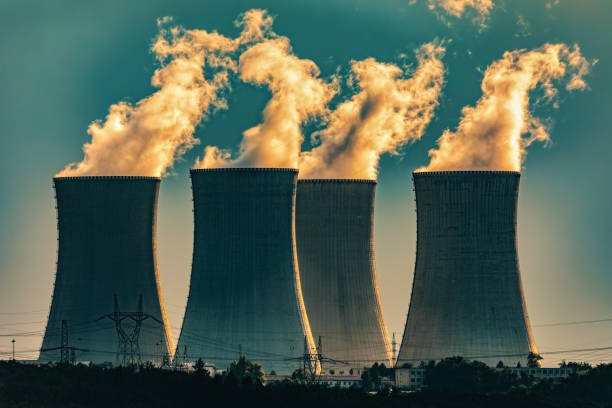
Kazakhstan’s Energy Minister, Almasadam Satkaliyev, has announced that the selection of a contractor for the country’s first nuclear power plant (NPP) will be finalized in the first half of 2025. The government is awaiting proposals from bidders that focus on shortening construction timelines and reducing project costs.

This follows President Kassym-Jomart Tokayev’s directive to expedite the implementation of the nuclear power plant project. “The commission will do everything possible to advance this process and make a decision on the contractor in the first half of 2025,” Satkaliyev told reporters.

The shortlist for the potential builders includes four companies: China’s CNNC, Russia’s Rosatom, South Korea’s KHNP, and France’s EDF. Kazakh authorities have also indicated that a consortium involving multiple countries might be formed to leverage diverse technological solutions. Deputy Prime Minister Roman Sklyar highlighted the benefits of such collaboration, where different countries could contribute specific components, such as nuclear islands, turbines, or distribution systems.

Satkaliyev emphasized the need for faster construction solutions, citing a precedent where China’s national nuclear company built a power unit in Pakistan in six years. “In today’s world, there are possibilities for expedited solutions,” he stated.

Kazakhstan previously projected a 10-year timeline for constructing the NPP. However, the country is expected to face a 2.4 gigawatt energy deficit by 2035, underscoring the urgency of completing the project. The energy minister noted that the process from construction to the launch of the first unit could take up to 14 years, making accelerated timelines crucial.

The Times of Central Asia previously reported on the results of a referendum held on October 6, which showed that 71.12% of voters approved the construction of a nuclear power plant in the Almaty region. The accelerated development of the NPP reflects Kazakhstan’s commitment to addressing its future energy needs while integrating advanced international technologies and solutions.