• KGS/USD = 0.01144 0%
  • KZT/USD = 0.00213 0%
  • TJS/USD = 0.10456 0.19%
  • UZS/USD = 0.00008 0%
  • TMT/USD = 0.28490 0%
  • KGS/USD = 0.01144 0%
  • KZT/USD = 0.00213 0%
  • TJS/USD = 0.10456 0.19%
  • UZS/USD = 0.00008 0%
  • TMT/USD = 0.28490 0%
  • KGS/USD = 0.01144 0%
  • KZT/USD = 0.00213 0%
  • TJS/USD = 0.10456 0.19%
  • UZS/USD = 0.00008 0%
  • TMT/USD = 0.28490 0%
  • KGS/USD = 0.01144 0%
  • KZT/USD = 0.00213 0%
  • TJS/USD = 0.10456 0.19%
  • UZS/USD = 0.00008 0%
  • TMT/USD = 0.28490 0%
  • KGS/USD = 0.01144 0%
  • KZT/USD = 0.00213 0%
  • TJS/USD = 0.10456 0.19%
  • UZS/USD = 0.00008 0%
  • TMT/USD = 0.28490 0%
  • KGS/USD = 0.01144 0%
  • KZT/USD = 0.00213 0%
  • TJS/USD = 0.10456 0.19%
  • UZS/USD = 0.00008 0%
  • TMT/USD = 0.28490 0%
  • KGS/USD = 0.01144 0%
  • KZT/USD = 0.00213 0%
  • TJS/USD = 0.10456 0.19%
  • UZS/USD = 0.00008 0%
  • TMT/USD = 0.28490 0%
  • KGS/USD = 0.01144 0%
  • KZT/USD = 0.00213 0%
  • TJS/USD = 0.10456 0.19%
  • UZS/USD = 0.00008 0%
  • TMT/USD = 0.28490 0%

Future Nostalgia: Alexander Ugay’s Parisian Debut at NIKA Project Space

Have you ever had that feeling of “Future Nostalgia” – as Dua Lipa would put it – when looking at old sci-fi movies that imagined a future that never came to pass? The fact that this future didn’t materialise might be as might be seen as both a blessing and a disappointment, as artist Alexander Ugay has us reflecting upon with his Parisian debut.

Born in Kazakhstan to a Korean family deported under Stalin’s regime, Ugay’s work is heavily inspired by his own experience and is layered with echoes of ancestral trauma, the faded promise of Soviet modernity, and the flickering ghost of a future once imagined but that never fully came to fruition.

A child of engineers and inventors, Ugay grew up among circuits and cyanotypes, and in his art, he uses materials such as 8mm film and VHS tape. With this vintage spirit, his body of work looks at the past to speak of the present, and posits a critique of the techno-utopianism of the Soviet 1970s, as much as today’s AI-driven image culture.

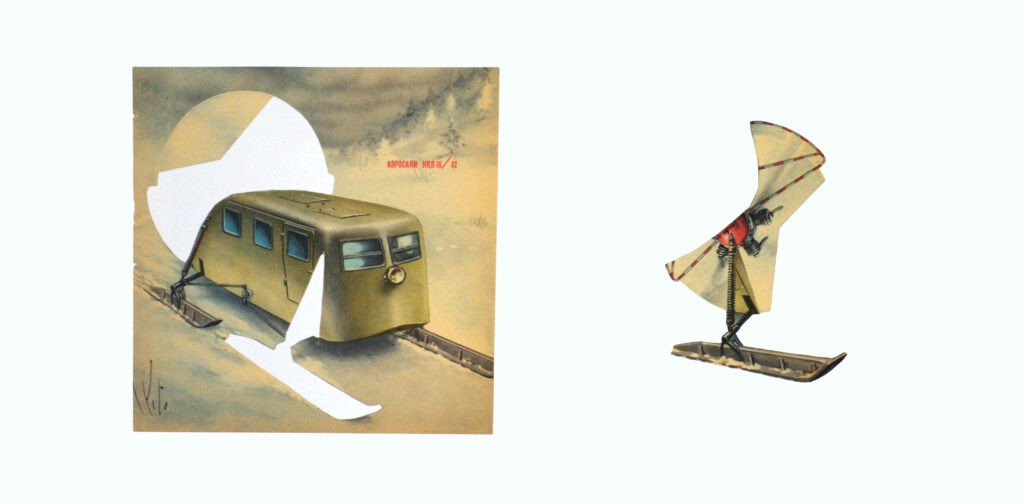
In his new show, More than Dreams, Less than Things, at NIKA Project Space Paris, Ugay looks at the origins of image-making both literally and philosophically. Inspired by Ibn al-Haytham’s Book of Optics, the artist reanimates the ancient camera obscura, letting light seep through the book’s pages to birth abstract images: faded records of a presence.

The exhibition, which opened on March 16, explores the tension between technological progress and the way this can be disrupted by the power of imagination and poetry – eminently human things – by looking at the intersection of photography, technology, and diasporic memory.

His show, curated by Elena Sorokina, situates an emergence of Central Asian narratives coming more and more to the forefront of the international art and cultural world of Europe. Through the lens of Soviet futurism, Ugay explores a broader vision of seeing in an age where so much remains invisible.

TCA spoke with Ugay about the way he approaches his art, his sources, and how he conceives images not as finished objects but as processes — mutable, unstable, and deeply human.
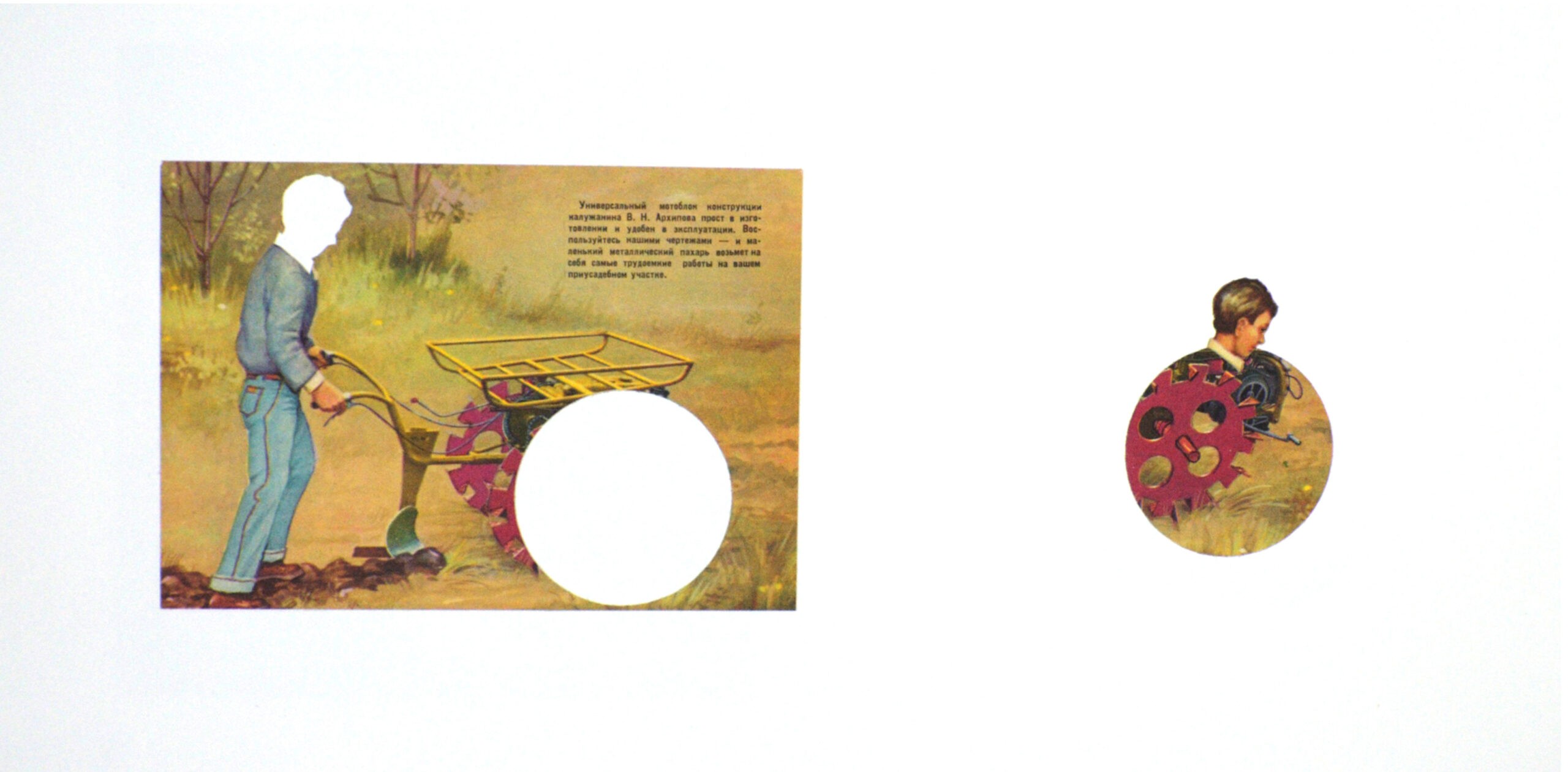
03_Alexander Ugay, More than Dreams, Less than Things. Courtesy of the artist

TCA: Where does the title for your new show, More than Dreams, Less than Things, come from?

The title came about after reading Henri Bergson’s book, Matter and Memory. I really liked the idea that an image is not only the relationship between absence and presence but also intensity and density. This idea made up for my dissatisfaction with the notion of resolution in photography.

The title, in this case, is not just a definition of the image but a key to understanding its substantive basis. The image is the surface of the ‘grand contract’ between necessity and freedom, memory and matter, entropy and being.

TCA: In More than Dreams, Less than Things, you use the camera obscura technique. How does this historical process relate to your exploration of the materiality of images in this exhibition?

Light and the way of its optical focusing remain unchanged; in this sense, the camera obscura differs little from modern optical systems. What is important is the corpuscular-wave dualism, which, in the language of computer technology, allows light to be both hardware energy and software information at the same time.

It softens binary oppositions of virtual and material through transition to states of forcefields, intensities, and intuition. The camera obscura, in this case, is not only a technical device but a field of tension. As hardware, it transforms energy into information. As software, the camera forms a certain quality of information, a unique ratio of the figurative, abstract, and symbolic.
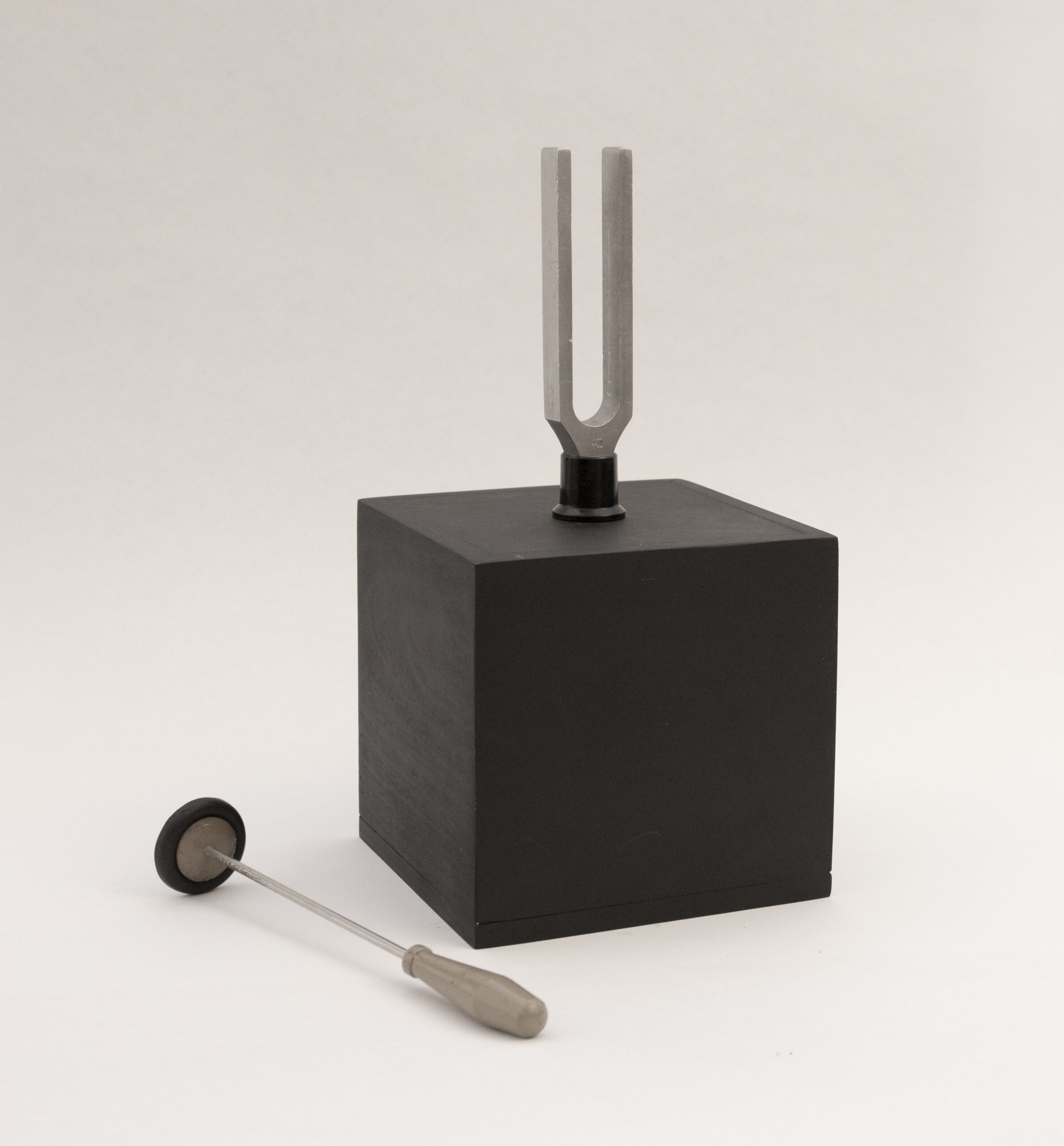
Alexander Ugay. Courtesy of the artist

TCA: Can you trace the beginning of your interest in antiquated futuristic machines, which you find mostly depicted in scientific magazines from the 1970s-80s?

The interest arose most naturally [as] my father was an engineer and inventor. From early childhood, I spent time in his workshop, where there were many interesting objects and constructions in addition to magazines.

It should be noted that the pretensions and intents were not nostalgic or futuristic. Most of the materials and technology were available in one way or another. All things invented or made were paired with practical applications and actually used in everyday life.

It seems to me that it was in that decade that ideology locked people into an unsettling present where the traumatic, uncomfortable past was pushed to the margins of history, and the future was determined by the inevitability of communism. Therefore, the phenomenon of mass interest in invention at that time can be seen as a symptom, as a reaction to the impossibility of working through the past and the lack of alternative spaces for the future.
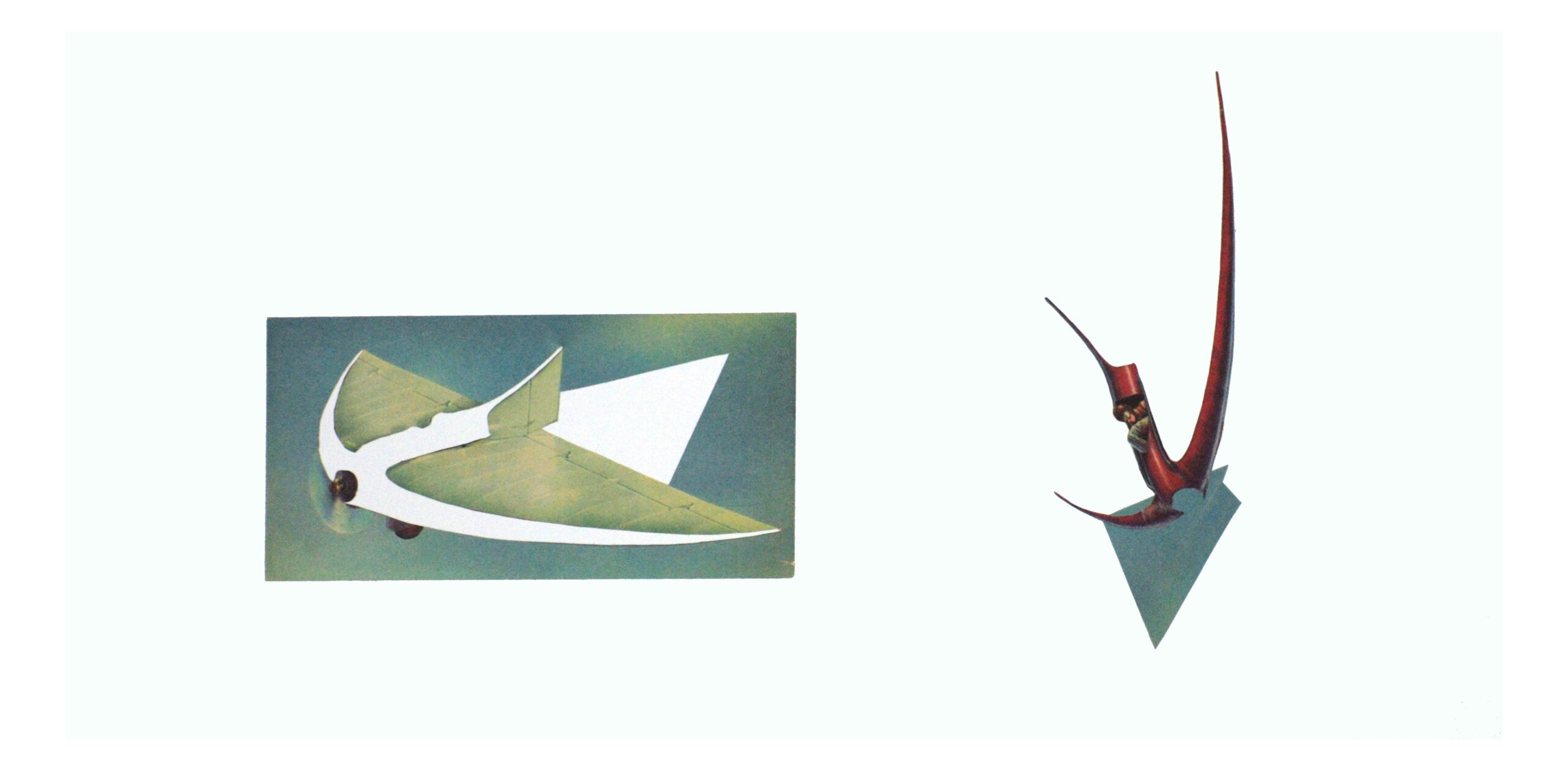
Alexander Ugay, More than Dreams, Less than Things. Courtesy of the artist

TCA: The exhibition draws on Ibn al-Haytham’s Book of Optics. How did this text inform your approach to combining light, geometry, and abstract imagery in your work?

Alhazen combined the extra-missionary concept of vision (the eye emits visual rays that probe reality) proposed by Euclid with the intra-missionary concept (reality is grasped by the eye through projection on the retina), thus creating the modern theory of vision. If the act of perception/interpretation changes reality itself, then indexical tactility and mimetic grasping is a process of computability and rendering.

Reality then appears as a kind of interface or informational surface of an inaccessible depth.

The Book of Optics established clarity, sharpness, and similarity as the principles that have guided the development of optics and optical media over the last thousand years. All these properties certainly remain relevant in our time, but often not as criteria of truth, but of computability.

Alexander Ugay. Book of Optics. Courtesy of NIKA Project Space

TCA: In your new works, you explore both the work of German theoretician Heisenberg – especially his uncertainty principle – and psychoanalyst Lacan’s theory of the signifier. How do these converge in your photographic practice?

According to the uncertainty principle, it is impossible to measure the position of a particle and its momentum at the same time. Similarly, in psychoanalysis, the object of desire (particle) never coincides with the desire itself (impulse).

Continuing the line of structural similarity, we can say that the unconscious, phantasm, thinking itself have a wave nature while the act of observation, interpretation or choice collapses all potentialities into one single possible option.

The photographic image is a collapsing of the wave function, given the fact that radical improvements in resolution, light sensitivity, and processing algorithms are ‘displacing’ the wave nature from optical media.

In this new project, I’m interested in photography not as a concept of a window or a mirror to memory but as a possible indication of a connection with the information lost after collapse.
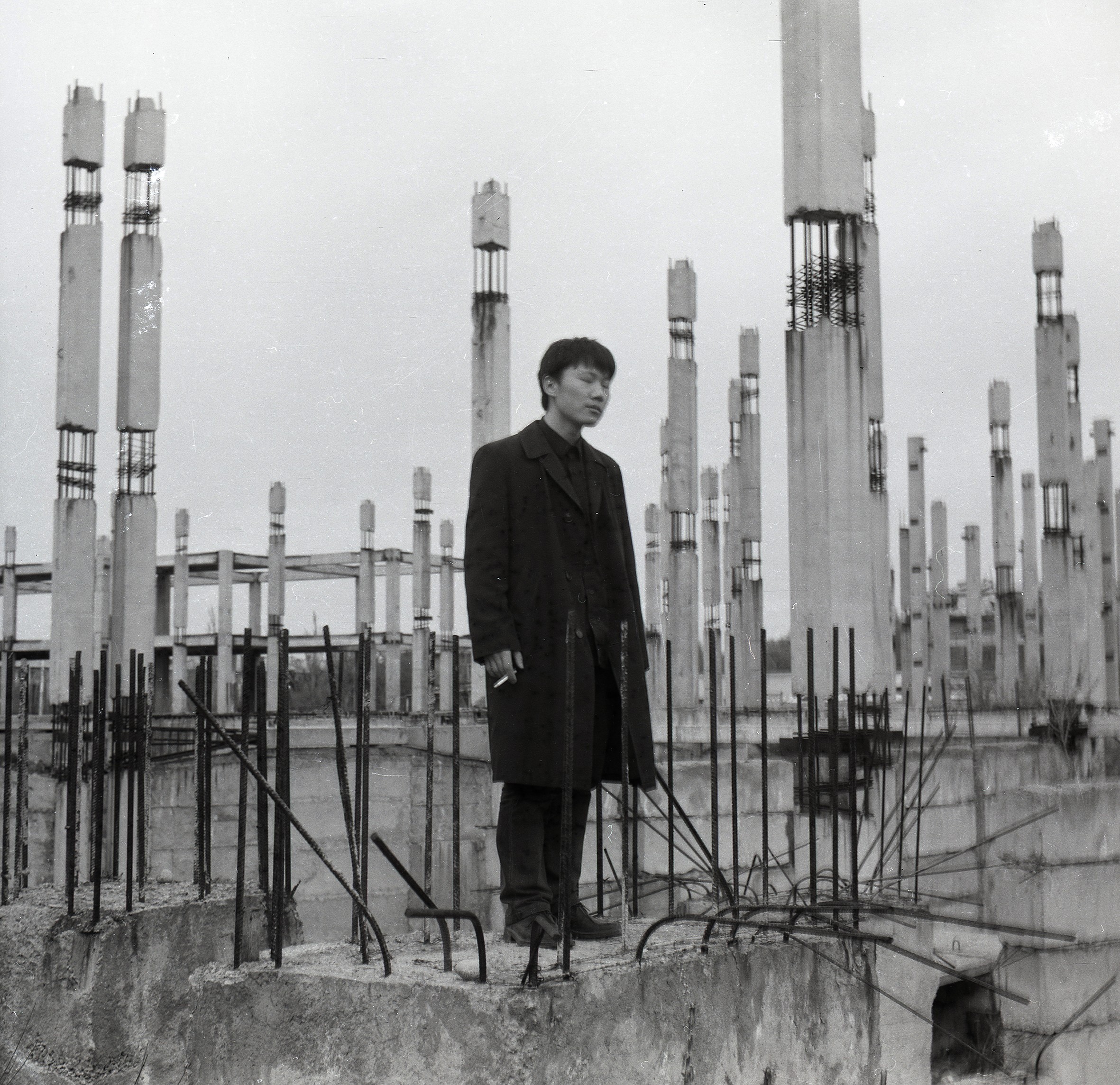
Alexander Ugay. Portrait, courtesy of the artist

TCA: The underpinning of the exhibition is heavily charged theoretically, but does your Korean-Kazakh background directly influence your approach to art as a tool for reflecting diasporic memory?

The 1937 deportation of Koreans from the Far East to Central Asia divided time into history and memory, while the collapse of the USSR split memory into accusatory and justificatory.

Since all key assembly points, such as language, tradition, land, and ideology have been alienated or lost, the diasporic memory of the post-Soviet is ambivalent about national identity.  It interrupts the silence of memory, usually not as a voice of the lost but as a defensive reaction in the form of resentment or imperial consciousness.

In my practice, I often turn to post-memory, reinvention, and generation.  This allows the lost to gain matter and the material to peel off perpendicular to the arrow of time. Materiality acts as a kind of conduit/invention. The silence of memory passes into the silence of the object, which releases images that lead us along the path of unknown return.


Alexander Ugay’s More than Dreams, Less than Things solo exhibition, curated by Elena Sorokina, will be on display at NIKA Project Space Paris until May 17, 2025.


Binance to Assist Kyrgyzstan in Developing Blockchain Infrastructure and Crypto Assets

Kyrgyzstan’s National Investment Agency has signed a Memorandum of Cooperation with Changpeng Zhao, founder of Binance, the world’s largest cryptocurrency exchange by trading volume. According to the agency, Binance will assist Kyrgyzstan in several key areas, including the development of blockchain infrastructure and the creation of a national cryptocurrency reserve.

The partnership will also focus on training young professionals, government employees, and specialists in blockchain technologies, virtual asset management, and cybersecurity. In addition, Binance will provide support in establishing a management system for virtual assets and blockchain technology in Kyrgyzstan source.

While public interest in cryptocurrencies continues to grow in Kyrgyzstan, the market remains poorly regulated. Earlier this year, the Ministry of Economy and Commerce proposed legislation to create licensed crypto banks that would offer regulated banking services related to digital assets. The ministry stressed the need to integrate crypto assets into the national financial system, citing the rapid advancement of digital technology and the economic potential of legalizing cryptocurrency transactions. The introduction of crypto banks is expected to increase transaction volumes, boost tax revenues, and create new jobs in the fintech sector, positioning Kyrgyzstan as a regional hub for financial innovation.

In a separate move to stabilize the sector, Kyrgyzstan’s Cabinet of Ministers significantly raised the minimum authorized capital required for crypto exchanges, from 100 million KGS to 10 billion KGS, a hundredfold increase. The Ministry of Economy and Commerce, which initiated the reform, stated that the measure is designed to ensure the financial stability of crypto platforms, safeguard user interests, and foster a transparent and secure virtual assets market. Existing exchanges have until January 1, 2026, to comply with the new capital requirements.

China’s Jiangsu Province and Soho Holding Group to Build Multifunctional Center in Astana

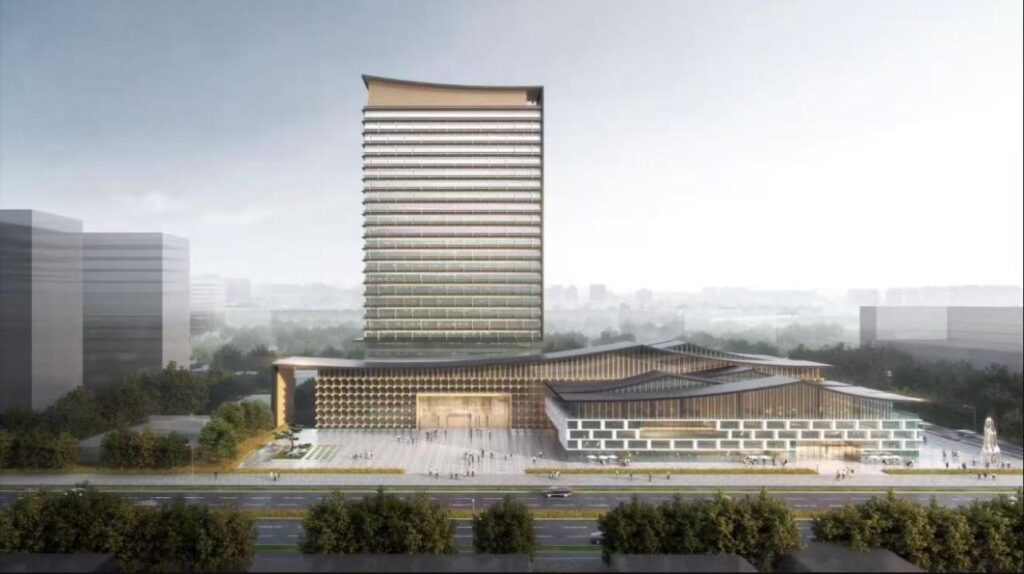
Kazakhstan’s Minister of Trade and Integration, Arman Shakkaliyev, visited China on April 3, where he met with officials from Jiangsu Province and representatives of Jiangsu Soho Holding Group in Nanjing, the province’s capital. During the meeting, the Chinese side presented design concepts for a planned multifunctional center to be built in Kazakhstan’s capital, Astana, in 2026.

According to the trade ministry, the future center will strengthen Kazakh-Chinese trade and business relations. It will serve as a venue for showcasing Chinese and Kazakh goods, hosting business negotiations, registering trade transactions, and providing consulting services. The complex will also include a trade pavilion, a cultural center, and an office for Jiangsu Soho Holding Group.

The sides also discussed plans to hold a Jiangsu Province goods exhibition in Astana from June 11 to 13, to coincide with the upcoming Central Asia-China summit. As part of his visit, Shakkaliyev toured the Central Asia-Jiangsu Trade Center and the National Pavilion of Kazakhstan in Nanjing, which opened in September 2024. The trade center is a multifunctional platform promoting exports from Kazakhstan, Uzbekistan, Tajikistan, and Turkmenistan, and is designed to increase Central Asian access to the Chinese market.

Shakkaliyev also held talks with Eurasia Construction Capital Co. Ltd, which is planning to launch an investment project in Kazakhstan’s Atyrau region to establish a private special economic zone (SEZ) or industrial park. The initial investment is estimated at $100 million. Seven major Chinese companies, specializing in petrochemical products, renewable energy, and construction materials, have expressed interest in participating in the SEZ. The minister affirmed the government’s full support for the initiative, highlighting its potential to develop high value-added production in Kazakhstan.

Thousands of Liters of Illegally Sold Fuel Uncovered in Southern Kyrgyzstan

Tax authorities in Kyrgyzstan have uncovered thousands of liters of unmarked fuel during a recent raid in the southern cities of Batken and Osh, the State Tax Service has announced. According to the agency, inspectors discovered 950 liters of unmarked diesel fuel at a gas station in Batken region and an additional 35,547 liters at an oil depot in Osh.

“The total volume of unmarked fuel amounted to 950 liters in Batken Region and 35,547 liters in Osh. The materials have been forwarded to supervisory authorities for appropriate legal action,” the service commented.

Mandatory fuel labeling was introduced in Kyrgyzstan on October 1, 2024, under legislation requiring both imported and domestically produced fuels to be marked with a molecular identifier. This molecular marker, provided by the State Tax Service, is added to fuel to confirm its legal origin. The system aims to combat fuel smuggling and ensure tax compliance across the oil and gas sector.

Kyrgyzstan receives most of its fuel and lubricants from Russia at domestic Russian prices and without export duties. This arrangement makes fuel in Kyrgyzstan considerably cheaper than in neighboring Uzbekistan and Tajikistan, a factor that has contributed to illicit fuel trade in the region. The government’s crackdown underscores its intent to enforce tighter regulatory oversight in a sector prone to tax evasion and smuggling.

Uzbekistan Launches $153 Million Forest Restoration Project with World Bank Support

Uzbekistan, in collaboration with the World Bank, has launched a major initiative to restore forests and rehabilitate degraded lands across the country. The Uzbekistan Resilient Landscapes Restoration Project (RESILAND) was officially announced during the Samarkand Climate Forum on April 5.

The World Bank will provide $153 million in funding, consisting of a combination of low-interest loans and grants. This initiative forms part of a broader regional strategy aimed at combating land degradation and enhancing climate resilience throughout Central Asia.

RESILAND will initially target six provinces: Samarkand, Surkhandarya, Syrdarya, Jizzakh, Namangan, and Kashkadarya. Its objectives include forest restoration, improved land management, and the creation of new jobs through afforestation and nature-based business ventures.

Uzbekistan’s Minister of Ecology, Aziz Abdukhakimov, emphasized that the project will play a critical role in helping the country achieve its goal of expanding forested areas to 6.1 million hectares by 2030. “The project will also support food systems, infrastructure, and nature tourism,” he said.

Currently, only 10.6% of Uzbekistan’s territory is forested. In recent years, the government has intensified efforts to increase forest cover, particularly on the desiccated seabed of the Aral Sea.

Tatiana Proskuryakova, World Bank Regional Director for Central Asia, welcomed the initiative, noting, “The World Bank values the opportunity to support the government of Uzbekistan in its efforts to restore degraded lands.”

As part of the project, Uzbekistan plans to rehabilitate forests on 176,000 hectares, improve pasture conditions, combat soil erosion in mountainous regions, and develop agroforestry and industrial forest sectors. An additional 5,000 hectares will be allocated for the cultivation of medicinal plants.

RESILAND will also provide support for small and medium-sized enterprises, offer training for local farmers, and promote eco-tourism in protected areas. The initiative includes plans to improve the infrastructure of the Forestry Agency and to launch Uzbekistan’s first National Forest Inventory.

A new partnership between the Forestry Agency and the Green University near Tashkent will further use grant funding to advance forestry education and research.

The project is part of the wider RESILAND CA+ program, which encompasses similar initiatives in Kazakhstan, Kyrgyzstan, Tajikistan, and Turkmenistan.

Kazakhstan Launches $20 Million Olive Cultivation and Oil Production Project

A major agricultural initiative valued at $20 million is underway in Kazakhstan, where the country’s first olive plantations have been established. By 2025, the total cultivated area is expected to reach 100 hectares.

Laying the Groundwork for Investment

Kazakhstan’s Minister of Agriculture, Aidarbek Saparov, recently met with George Svanidze, President of Global Olive Corporation, to discuss the ongoing implementation of the olive cultivation and olive oil production project.

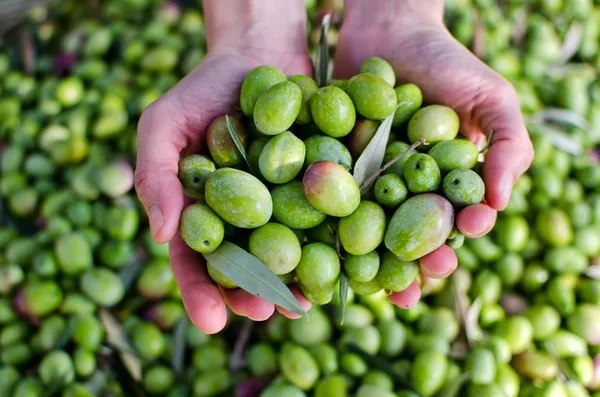
Launched in 2023, the project is a joint effort involving Kazakh companies QVM Technology, Ordabasy Group, and Ervira, in partnership with Georgia’s Olive Georgia. Initial pilot plantations were established in the Zhetysu, Turkestan, and Mangistau regions, where over 6,000 olive seedlings were planted, an effort that achieved a remarkable 99.7% survival rate.

From Pilot Plantings to Industrial Production

In spring 2024, the project expanded with new seedlings imported from Spain and Turkey. By the end of 2025, the cultivated area is expected to reach 100 hectares, with the first harvest anticipated within five years.

Saparov emphasized the strategic value of the initiative, which aligns with Kazakhstan’s broader efforts to expand its food processing industry:

“Our goal is to increase the share of processed agricultural products to 70%. The development of the olive industry is strategically important for the agro-industrial complex. We are committed to providing comprehensive support for this project,” Saparov said.

Target: One Million Trees and Domestic Oil Production

George Svanidze outlined ambitious plans to establish a sustainable olive industry in Kazakhstan, including planting up to one million olive trees, constructing a modern olive oil production facility, and setting up a nursery for seedling propagation.

“We are ready to bring in international experts, train Kazakhstani agronomists, and share advanced technologies,” said Svanidze.

According to preliminary estimates, annual yields could reach 150,000 tons of olives, enabling the production of up to 30,000 tons of olive oil.

Kazakh partner QVM Technology confirmed the Ministry of Agriculture’s active support for the project. The meeting concluded with the signing of a Memorandum of Understanding and the preparation of a Road Map outlining the key implementation stages.

Exotic Crops on Kazakh Soil

Kazakhstan has previously experimented with cultivating non-native crops. In Turkestan region, bananas are grown successfully on a five-hectare plantation, yielding around 1,000 tons. Local authorities are also supporting efforts to expand tropical fruit cultivation, including mangoes and avocados, on a planned 90-hectare site.

These initiatives reflect Kazakhstan’s commitment to modernizing its agricultural sector, diversifying crop production, and enhancing both food security and export potential.