• KGS/USD = 0.01144 0%
  • KZT/USD = 0.00196 -0%
  • TJS/USD = 0.10904 0%
  • UZS/USD = 0.00008 0%
  • TMT/USD = 0.28490 0%
  • KGS/USD = 0.01144 0%
  • KZT/USD = 0.00196 -0%
  • TJS/USD = 0.10904 0%
  • UZS/USD = 0.00008 0%
  • TMT/USD = 0.28490 0%
  • KGS/USD = 0.01144 0%
  • KZT/USD = 0.00196 -0%
  • TJS/USD = 0.10904 0%
  • UZS/USD = 0.00008 0%
  • TMT/USD = 0.28490 0%
  • KGS/USD = 0.01144 0%
  • KZT/USD = 0.00196 -0%
  • TJS/USD = 0.10904 0%
  • UZS/USD = 0.00008 0%
  • TMT/USD = 0.28490 0%
  • KGS/USD = 0.01144 0%
  • KZT/USD = 0.00196 -0%
  • TJS/USD = 0.10904 0%
  • UZS/USD = 0.00008 0%
  • TMT/USD = 0.28490 0%
  • KGS/USD = 0.01144 0%
  • KZT/USD = 0.00196 -0%
  • TJS/USD = 0.10904 0%
  • UZS/USD = 0.00008 0%
  • TMT/USD = 0.28490 0%
  • KGS/USD = 0.01144 0%
  • KZT/USD = 0.00196 -0%
  • TJS/USD = 0.10904 0%
  • UZS/USD = 0.00008 0%
  • TMT/USD = 0.28490 0%
  • KGS/USD = 0.01144 0%
  • KZT/USD = 0.00196 -0%
  • TJS/USD = 0.10904 0%
  • UZS/USD = 0.00008 0%
  • TMT/USD = 0.28490 0%
08 December 2025

Chinese Company to Invest in Uzbekistan’s Coal Mines

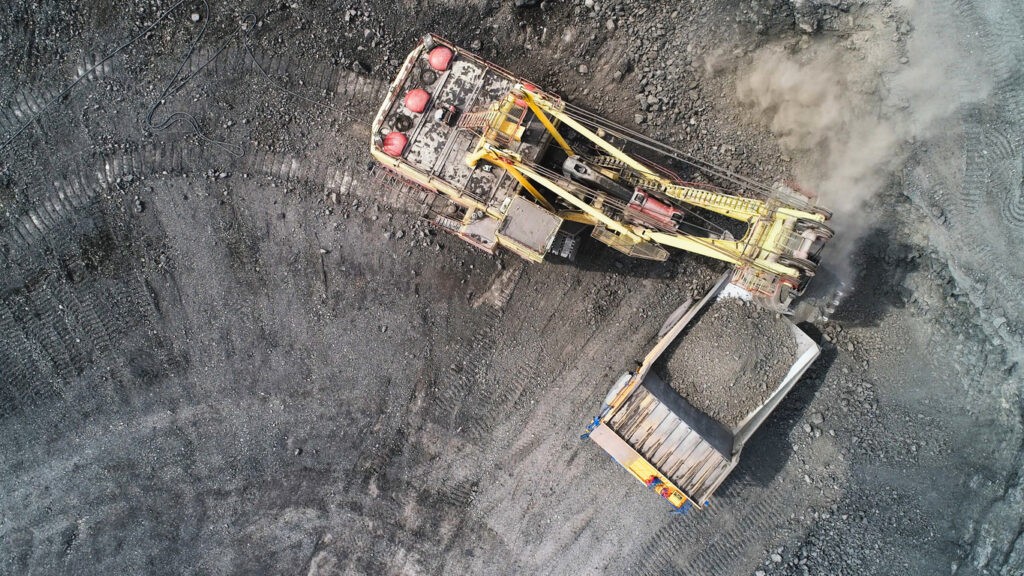
The Chinese company Henan intends to invest $400 million in developing coal deposits in Uzbekistan. There are also plans by the Turkish company Bab Energy ve Petrol Urunleri A.S. to establish facilities for the production of enriched kaolin.

On July 9th, President of Uzbekistan Shavkat Mirziyoyev received a report on the work and progress of investment projects in the field of geology. According to the provided data, almost 3 million tons of coal have been extracted in the country over the last six months. There are plans for the production of more than 5 million tons of coal in the second half of the year. Overall, coal production is expected to increase by 1.4 million tons this year compared to last year, while imports are expected to decrease significantly.

The coal industry is also implementing a number of investment projects. In particular, the Chinese company Henan plans to directly invest 400 million dollars towards the development of the Nishbash deposit. As a result of this project, up to 8 million tons of coal will be mined from underground and 5 million tons of coal per year will be enriched.

In addition, there are plans to produce enriched kaolin from the “Apartak-3” deposit in the Tashkent region jointly with the Turkish company Bab Energy ve Petrol Urunleri A.S. As a result of this joint venture, 40 new jobs will be created, and 70 thousand tons of enriched kaolin will be produced per year.

It Wasn’t Like This Under Nazarbayev: Kazakhstan’s Party Political Landscape

Speaking on June 27 on the eve of Media Workers Day at a reception where awards were presented to distinguished journalists, Kazakh President Kassym-Jomart Tokayev paid special attention to the powers of the head of state. Tokayev emphasized that the term of presidential powers approved in the referendum is a reality that will not be altered through amendments to the Constitution. This means that in 2029, Kazakhstan will see a new president, chosen through a legal expression of its citizens’ will.

This new president will not appear out of nowhere; they will likely be nominated by one of the existing political parties, which will enter the electoral battle for the Mazhilis deputy mandates in 2028. The party leading this significant two-year electoral race will have its nominee occupy the presidency of Kazakhstan.

The topic of the “problem-2029” is already a subject of discussion within the corridors of power. The current president’s team has a dual task – ensuring the continuity of democratic and liberal transformations while preventing a resurgence of the Old Kazakhstan. Having been unable to change the country’s leadership in 2022, Tokayev’s opponents will likely pursue an institutional route. Historically, former president Nursultan Nazarbayev used a similar strategy, having first elected democratically, then extending his powers via a referendum, and gradually amending the Constitution to consolidate his rule without seeking further public approval.

Could a current political party be used as a Trojan horse in such a scenario? Here are the players on the present political landscape.

Amanat

The most influential party in Kazakhstan, Amanat, which formerly supported Elbasy (Father of the Nation) Nursultan Nazarbayev, was founded in 1999 through the merger of several political organizations, with the largest being the Party of People’s Unity of Kazakhstan (PNUK). Known as Otan and then Nur Otan (“Radiant Fatherland”) until it was rebranded in 2022, although modern sources attribute this merger to Nazarbayev, he was reportedly not focused on party building at that time.

The Otan party, which resulted from the merger, emerged shortly after the early presidential election of 1999, where Nazarbayev won with a “modest” 80.97% of the vote. The runner-up in the election, Serikbolsyn Abdildin claimed that there had been widespread voter fraud and a failure to tally ballots properly, whilst the U.S. Department of State commented that the undemocratic nature of the election “cast a shadow on bilateral relations”.

In 2006, Otan held two congresses, during which three more political organizations joined: the Asar Party, founded by Nazarbayev’s eldest daughter Dariga and her then-husband Rakhat Aliyev, as well as the Civic and Agrarian Parties, previously part of the AIST pre-election bloc. Following these mergers, Otan was renamed Nur Otan. After Rakhat Aliyev was charged, initially with the kidnapping and then with the murder of two executives at a bank he controlled in 2007, Dariga and her son took over his stake, swelling her fortune. In 2013, Forbes named her one of the fifty richest Kazakhs with assets of US$595 million, including a vast media empire.

Under Nazarbayev’s rule, Nur Otan was seen as a puppet outfit for the use of the head of state. This theory was disproven, however, by Tokayev, who initiated accelerated democratization after the events of January 2022 events and quit the Nur Otan party, which was subsequently renamed Amanat. Historically, “amanats” referred to the children of high-ranking persons taken hostage for safekeeping, similar to the Turkish practice of the Janissaries.

Despite Tokayev’s departure, Amanat did not disintegrate. In fact, it became more active and remains the most influential party in the country. Currently, it holds 62 out of 98 seats in the Parliament of Kazakhstan and has a majority in almost all local representative bodies, the Maslikhats. The party is led by the speaker of the Mazhilis, Yerlan Koshanov, and holds 62 of the 98 seats in the Mazhilis.

Campaign posters, Astana, March 2023; image: TCA, Stephen M. Bland


The Democratic Party of Kazakhstan “Ak Zhol”

The Ak Zhol party was registered with the authorities in April 2002. Less than six months earlier, in November 2001, Kazakhstan had experienced its first serious political crisis as a result of a split within the ruling elite. The exact roots of the crisis remain unclear, but it appears to have stemmed from a conflict of interest among a group of reformist bureaucrats, including Galymzhan Zhakiyanov, the former akim of the Pavlodar region, Oraz Zhandosov, the former deputy premier, and Mukhtar Ablyazov. Today, none of the key figures from that revolt hold any significant power or business influence, with Ablyazov, a former banker turned blogger, being the most notable.

Ak Zhol was founded by the politicians Bulat Abilov, Oraz Zhandosov, and Alikhan Baimenov, who split from the core group involved in the Democratic Choice of Kazakhstan movement. The party’s name, Ak Zhol, meaning “The Bright Path,” is the battle cry of the Kazakh Argyn tribe.

The party later underwent many factional splits. Currently, Ak Zhol is headed by Azat Peruashev, former chairman of the Civic Party of Kazakhstan. Despite supporting Tokayev in the 2022 election, it positions itself as a parliamentary opposition, focusing on defending businesses from arbitrary state actions. Currently, Ak Zhol holds six of the 98 seats in the Mazhilis.


The People’s Party of Kazakhstan

The People’s Party of Kazakhstan originally emerged in 2004 as the People’s Communist Party of Kazakhstan (PCK) following a split in the Communist Party of Kazakhstan, led by former Supreme Soviet speaker Serikbolsyn Abdildin. As Communism waned, the party dropped the adjective from its name. Ermukhamet Ertisbaev, a former advisor to Nazarbayev and former Minister of Information, now leads the party. Ertisbaev has been at the center of multiple scandals, often involving the expulsion of party members. The PCK supported Tokayev in the 2022 election, and currently holds five of the 98 seats in the Mazhilis.


The People’s Democratic Patriotic Party, “Auyl”

Recently, the Auyl party revised its statutes to focus on the rural electorate, with its congress being convened in the village of Zerenda, Akmola region, to adopt a new, more specialized program focused entirely on the village and its inhabitants. Political scientist Marat Shibutov commented on this development: “The new program marks a crucial shift from generic promises to a targeted approach. The party needs its dedicated electorate to provide stable support, allowing it to send representatives to local authorities and parliament. The congress’s rural setting and emphasis on village development, agriculture, tourism, and conservative values signify this strategic pivot. We will see how voters respond to this.”

In the 2023 Kazakh legislative election, the Ayul party secured 10.90% of the vote, earning 8 seats. This marked the first time in the party’s history that it was able to enter the Mazhilis.


The Nationwide Social Democratic Party

There is a certain overlap between the creation of the Nationwide Social Democratic Party (NSDP) and the current trends voiced by Tokayev. The NSDP was formed in 2006 based on the movement “For a Just Kazakhstan,” which had previously nominated former Mazhilis speaker Zharmakhan Tuyakbay as a presidential candidate.

For a long time, the party positioned itself as an opposition force, occasionally boycotting elections citing a lack of change in the country. Currently, it has four representatives in the Mazhilis.


The Green Party “Baitak,” and Respublica

Two new parties emerged after the bloody events of January 2022. The Greens failed to get into the lower house of parliament, while Respublica – founded by Aidarbek Qojanazarov – has six representatives in the Mazhilis, making it the third largest faction. Created by entrepreneurs, Respublica rivals Ak Zhol in representing the pro-business sphere.

Azamathan Ämirtai, founder and Chairman of Baytaq (Green Party); image: TCA, Stephen M. Bland


In the shadows

Given the right circumstances, any of the above parties, including Amanat and Ak Zhol, could potentially be co-opted as vehicles for representatives of Old Kazakhstan to return to power. So far, there have been no indications of this happening. However, the same cannot be said for certain public figures or organizations that have not yet entered parliament.

Take, for instance, Sanzhar Bokayev, a Nazarbayev-era official whose attempt to register his party Namys (“honor”) in 2022 raised serious suspicions. Bokayev held the presentation of his organization—labeled a statutory congress despite not having the required number of delegates—at the Novotel hotel owned by Aliya Nazarbayeva. Simultaneously, Bokayev gained notoriety as a proponent of reducing or eradicating recycling fees, a sector which primarily benefits Aliya Nazarbayeva and her LLP, Operator ROP. According to OCCRP, the LLP received a billion dollars of government funding in three years, which illustrates how Old Kazakhstan can employ sophisticated tactics to disguise its long fingers.

Kyrgyzstan and Russia to Expand Cooperation Across the Board

On July 10, the 25th meeting of the Intergovernmental Kyrgyz-Russian Commission on Trade, Economic, Scientific, Technical and Humanitarian Cooperation, was held in the Russian city of Krasnoyarsk, co-chaired by the Chairman of the Cabinet of Ministers of the Kyrgyz Republic Akylbek Japarov and Deputy Prime Minister of the Russian Federation Alexey Overchuk.

Aimed at strengthening cooperation between Kyrgyzstan and Russia, the agenda focused on developing trade and economic relations, increasing bilateral trade turnover, and creating favourable conditions for investments and joint ventures.

The parties also discussed issues related to developing scientific and technical cooperation, expanding humanitarian ties, including in education, culture, and healthcare, as well as joint projects in tourism and transport.

Referencing the fact stated that in 2023, trade turnover between Kyrgyzstan and Russia reached $3 billion, and in the first four months of 2024, had already exceeded $1 billion, showing an increase of 30%, Akylbek Japarov announced the mutual goal to increase the Kyrgyz-Russian trade to up to $5 billion.

Given the two countries’ intention to increase the share of mutual settlements in national currencies, the head of the Kyrgyz Cabinet invited the largest state-owned banks of Russia, such as Sberbank, VTB, Vnesheconombank, and Gazprombank, to open branches in Kyrgyzstan.

On the same day, Akylbek Japarov also spoke at the meeting of the 11th Kyrgyz-Russian Interregional Conference in Krasnoyarsk.

Regarding Kyrgyz-Russian cultural and humanitarian interaction, Japarov said that the past three years had seen a “breakthrough in the education sector.” In particular, he noted an agreement concluded last year, on Russia’s construction of nine new schools in Kyrgyzstan; one in each of its seven regions and two in the cities.

Further to signing a Decree on the establishment of a branch of the Lomonosov Moscow State University in the Kyrgyz city of Karakol, the president expressed his appreciation of the increase in budget-paid places for Kyrgyzstan citizens studying in Russian universities to 1,000.

EDB to Finance Mountain Resort in Kyrgyzstan

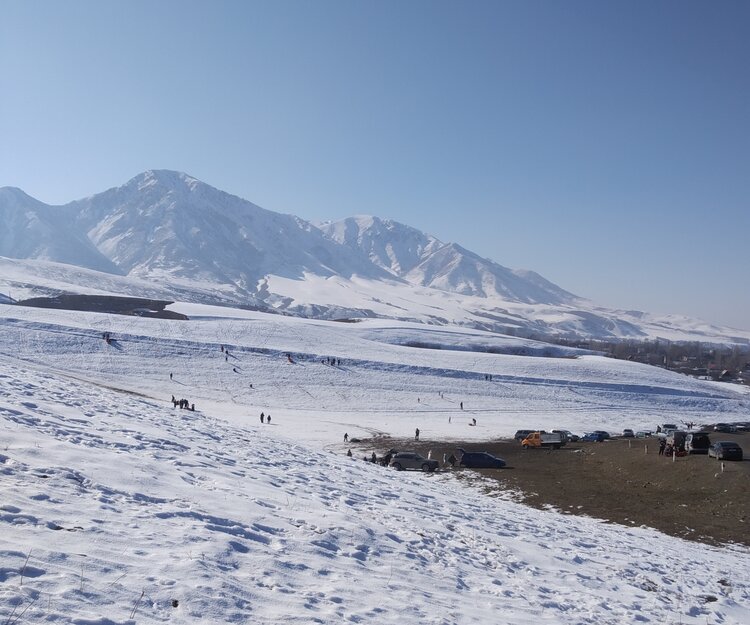
On July 10, the National Investment Agency under the President of the Kyrgyz Republic, Vasta Discovery LLC, and the Eurasian Development Bank (EDB) signed a trilateral Memorandum of Cooperation on the construction of the Baytik mountain resort, an all-season tourism cluster in Kyrgyzstan’s northern Chui region.

The EDB will act as the project’s creditor but the amount of the planned investment has yet to be declared.

Following the signing of the agreement, Sergey Ignatov, EDB’s Senior Managing Director stated, “As a multilateral development bank, the EDB performs its investment activities so as to contribute to the economic growth of its member countries, the expansion of trade and economic ties, and the development of integration processes in the Eurasian space. Apart from its obvious integration potential, the Baytik Mountain Resort project is also expected to contribute to the development of tourism, an important sector of the Kyrgyz economy, which will have a positive impact on related industries and cultural exchange in Eurasia, and will become a significant growth point in this region.”

Talantbek Imanov, Director of the National Investment Agency highlighted the fact that the Baytik Mountain Resort represents the first foray into cooperation in Kyrgyzstan’s  tourism infrastructure and outlining the project, announced: “The future resort includes 15 cable cars, 36 ski slopes exceeding 57 km, 4 tourist villages and a ski complex that meets the requirements of international top class competitions, including the Olympic Games and World Cup alpine skiing and snowboarding events.”

The Baytik Mountain Resort will be constructed and developed by Vasta Discovery, a company with extensive experience in implementing large-scale tourism infrastructure projects. Emphasizing his company’s firm commitment to the project, Sergey Bachin, CEO of Vasta Discovery confirmed, “We are confident that there will be domestic demand for the resort and its services and that it will also become an important attraction for foreign tourists and inspire them to visit Kyrgyzstan.”


Kazakhstan-EU Transport and Logistics Cooperation

Expansion and strengthening of trade, economic and investment cooperation, and joint projects in transport and logistics with a focus on the development of the Trans-Caspian International Transport Route (TITR), were the key issues of the 15th meeting of ‘Kazakhstan-EU’.  Participants in discussions held in Astana on 10 July included Kazakhstan Prime Minister Olzhas Bektenov, head of the Delegation of the European Union to Kazakhstan, Ambassador Kestutis Jankauskas, and heads of diplomatic missions of EU countries in Kazakhstan.

During the meeting it was stated that about 85% of goods exported by China to EU countries are transported through Kazakhstan, and TITR provides the most competitive cargo delivery time of 12-15 days.

Regarding their interest in unlocking the full potential of TITR, also known as the Middle Corridor, participants noted the establishment of the joint venture, Middle Corridor Multimodal, at the Astana International Financial Centre, and the significant role of the European initiative ‘Global Gateway’, which opens new prospects for investment in the transport industry.

To raise their strategic partnership to a new level, all confirmed their commitment to developing and strengthening Kazakhstan-EU trade and economic relations.

According to the Kazakh government, the European Union accounts for over 40% of Kazakhstan’s foreign investments and about 30% of foreign trade.

In 2019-2023, trade turnover between Kazakhstan and EU countries increased by 36.2%, amounting to $41.4 billion. Last year, EU countries invested $10.4 billion in Kazakhstan’s economy, and in the first quarter of 2024 alone, $2.8 billion.


A Rocky Romance in Kyrgyzstan: Boyfriend of President’s Niece is Arrested

The boyfriend of the niece of Kyrgyz President Sadyr Japarov has been arrested on suspicion of manufacturing illegal drugs, two weeks after a controversy over his use of a rented government helicopter to propose marriage. 

“We confirm that the boyfriend of the daughter of President Sadyr Japarov’s younger brother was detained by law enforcement agencies,” presidential spokesman Askat Alagozov said on Facebook on Wednesday. He said there is “every reason to believe” that the man, Aftandil Sabyrbekov, wanted to hide “his illegal activities” by developing relationships with people who could protect him from the law. 

Alagozov stressed that the president won’t hide illegal conduct. The spokesman did not specify the alleged crimes of the fiancé of Lazat Nurkozhoeva “and his accomplices,” but several media organizations in Kyrgyzstan reported that a district court in Bishkek ordered Sabyrbekov to be placed in pretrial detention until Aug. 3. 

Sabyrbekov is suspected of the “Illegal production of narcotic drugs, psychotropic substances and their alternatives for the purpose of sale in large quantities,” the Kloop outlet reported. It said he could face between 12 and 15 years in prison if convicted. 

Last month, Sabyrbekov asked Nurkozhoeva, a former beauty queen, to marry him after the pair traveled by helicopter to the mountains near Bishkek. The helicopter belonged to the Ministry of Emergency Situations, a revelation that prompted scorn on social networks and drew an apology from Japarov, who has campaigned against corruption.

The ministry said the aircraft was “legally leased” and Japarov said the government sometimes rents its helicopters for the benefit of the state’s coffers. But the ostentatious use of the government asset, flaunted in a slick video showing Japarov’s niece in the helicopter, was over the top for some critics. 

It wasn’t true love after all, the presidential spokesman, Alagozov, appeared to suggest. At the end of his Facebook message, he referred to Sabyrbekov as the “ex-boyfriend,” indicating that the romance with the president’s niece was over.