• KGS/USD = 0.01144 0%
  • KZT/USD = 0.00194 -0%
  • TJS/USD = 0.10833 -0.09%
  • UZS/USD = 0.00008 0%
  • TMT/USD = 0.28490 0%
  • KGS/USD = 0.01144 0%
  • KZT/USD = 0.00194 -0%
  • TJS/USD = 0.10833 -0.09%
  • UZS/USD = 0.00008 0%
  • TMT/USD = 0.28490 0%
  • KGS/USD = 0.01144 0%
  • KZT/USD = 0.00194 -0%
  • TJS/USD = 0.10833 -0.09%
  • UZS/USD = 0.00008 0%
  • TMT/USD = 0.28490 0%
  • KGS/USD = 0.01144 0%
  • KZT/USD = 0.00194 -0%
  • TJS/USD = 0.10833 -0.09%
  • UZS/USD = 0.00008 0%
  • TMT/USD = 0.28490 0%
  • KGS/USD = 0.01144 0%
  • KZT/USD = 0.00194 -0%
  • TJS/USD = 0.10833 -0.09%
  • UZS/USD = 0.00008 0%
  • TMT/USD = 0.28490 0%
  • KGS/USD = 0.01144 0%
  • KZT/USD = 0.00194 -0%
  • TJS/USD = 0.10833 -0.09%
  • UZS/USD = 0.00008 0%
  • TMT/USD = 0.28490 0%
  • KGS/USD = 0.01144 0%
  • KZT/USD = 0.00194 -0%
  • TJS/USD = 0.10833 -0.09%
  • UZS/USD = 0.00008 0%
  • TMT/USD = 0.28490 0%
  • KGS/USD = 0.01144 0%
  • KZT/USD = 0.00194 -0%
  • TJS/USD = 0.10833 -0.09%
  • UZS/USD = 0.00008 0%
  • TMT/USD = 0.28490 0%
10 December 2025

Uzbekistan: Bukhara Administration Denies Relocation of “Eternal Bukhara”

Previously, The Times of Central Asia reported in an article titled “Land Cleared for Tourism next to Old Bukhara; UNESCO Urges Pause” that the construction of “Eternal Bukhara,” a tourist facility in the Bukhara region of Uzbekistan, had sparked protests from locals and UNESCO alike.

Recently, rumors spread on social media claiming that the “Eternal Bukhara” project is proceeding on the city’s outskirts despite public objections. However, the Bukhara city administration has now provided official information to clarify the situation.

According to the regional administration, these reports are false. They assert that the construction of the cultural ethnographic park “Eternal Bukhara” is progressing systematically. Most of the old and dilapidated buildings in the area have been dismantled, and the construction site is now 90% ready.

Additionally, the Bukhara regional administration have stated that previous dismantling work was completed without affecting the population or surrounding structures, whilst adhering to technical safety regulations. Nearly 70% of the work has reportedly already been completed.

The administration also noted that the project documents for “Eternal Bukhara” are being finalized in collaboration with renowned historians, scientists, cultural heritage experts, and international project organizations.

Over 200 UNDP Projects Implemented in Kazakhstan

During a meeting between Kazakhstan’s Vice Prime Minister, Nurlan Baibazarov and Katarzhina Vaviernia, permanent representative of the United Nations Development Program (UNDP) in Kazakhstan, discussions focused on UNDP projects aimed to promote the economic development of UN member states.

To date, over  200 projects worth over $200 million have been implemented in the country with support from the government of Kazakhstan, public organizations, the business sector, UN agencies, and other partners.  Broad ranging, the initiatives include the development of small and medium businesses, green energy, agriculture, and ecotourism.

Nurlan Baibazarov  noted that Kazakhstan is ready to present the third Voluntary National Review on implementing the Sustainable Development Goals at the High-Level Political Forum in New York in 2025 and stated: “Achieving the Sustainable Development Goals is a national priority for Kazakhstan. We pay great attention to discussing the implementation of the goals at different platforms to find optimal solutions for our state’s sustainable development. The voluntary review will objectively reflect the country’s main achievements, challenges, and emerging problems.”

In addition, it was noted that Kazakhstan is interested in strengthening cooperation with UNDP, and in particular,  the successful implementation of the UNDP Country Program for 2021-2025.

UN’s Guterres and Turkmen President Berdimuhamedov Discuss Development, Security

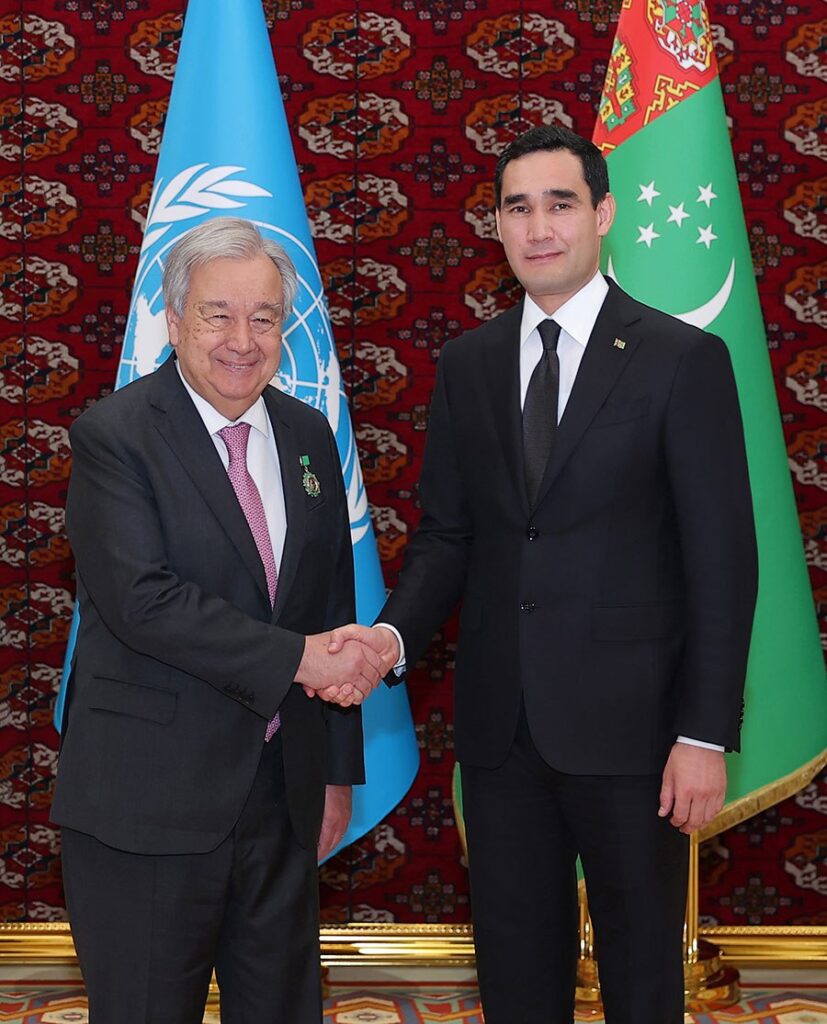
During his visit to Turkmenistan, the UN Secretary General António Guterres met President Serdar Berdimuhamedov to discuss strengthening cooperation in political, economic, environmental, cultural, and humanitarian spheres.

President Berdimuhamedov emphasized Turkmenistan’s aspiration to further develop relations with the UN. Noting the importance of the country’s permanent neutrality in strengthening peace and security in the region, he recalled that on Turkmenistan’s initiative, the UN General Assembly proclaimed 2025 the International Year of Peace and Trust.

Guterres praised Turkmenistan’s proactive approach to solving urgent problematic issues and remarked on the country’s important role in ensuring universal peace, security, and sustainable development. He also recognized Turkmenistan’s efforts to address the problem of statelessness, especially in Central Asia.

During the talks, both sides stressed the prolonged nature of the strategic dialogue between Turkmenistan and the UN, based on common ground regarding the organization’s goals and the country’s national interests.

Outlining the priorities of the Turkmenistan-UN strategic dialogue, the president highlighted ensuring  global security, resolving regional situations, sustainable development, and other humanitarian issues.

He also proposed to develop a Global Security Strategy based on preventive diplomacy for conflict prevention, expressing a readiness for close cooperation with all interested states and UN institutions.

In the context of regional cooperation, the parties noted the growing importance of Central Asia as a critical center of global energy, geopolitics, and transportation.

Turkish Vice President: Turkmen Gas Supplies Via Turkey Will Help Ensure Energy Security in Europe

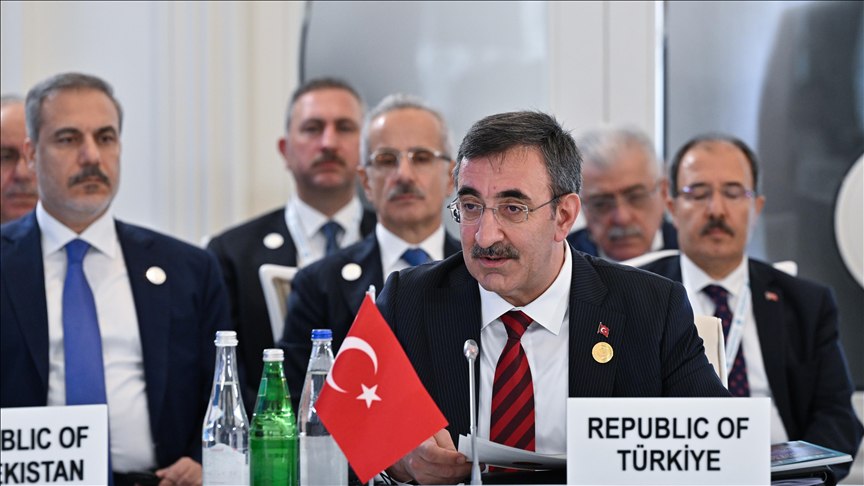
Turkish Vice President Cevdet Yilmaz has said that Turkmen gas supplies through Turkey will contribute to the country’s national welfare and ensure Europe’s energy security. This was said during his speech at the informal summit of member states of the Organization of Turkic States (OTS) in Azerbaijan.

“The transportation of trans-Caspian resources, especially Turkmen natural gas, to Turkey and Europe will contribute to our national welfare and security. We are pleased with establishing an energy mechanism within the framework of the OTG and the publication of contact projects,” Yılmaz said.

According to him, the Organization will further strengthen ties between Turkic states as the world’s economic centers of gravity change and the importance of Turkic geography increases.

“The work that will be done in our countries to develop the Middle Corridor will both strengthen our cooperation and show the global role of the Turkic world,” the Vice President emphasized.

World Bank Establishes Permanent Office in Tajikistan

The World Bank has opened a permanent representative office in Tajikistan this month. ASIA-Plus reports that Ozan Sevimli, who had been the bank’s country manager for Tajikistan since 2021, has been appointed the head of the office.

In Tajikistan the World Bank Group works to ensure reliable electricity and water supply, improve roads and transportation infrastructure, improve education and health care systems, increase food security, and create conditions for private sector growth and institutions of good governance and public administration.

As part of his role, Sevimli will manage programs in Tajikistan being run by the International Bank for Reconstruction and Development, International Development Association, International Finance Corporation, and the Multilateral Investment Guarantee Agency in Tajikistan. This will provide a single point of contact for access to the full range of World Bank Group products and services.

Upon his appointment, Sevimli commented: “Tajikistan faces challenges ranging from institutional challenges and constraints in human capital development to the negative impact of climate change on the economy and people’s livelihoods. The combined leadership of the WB Group will enable a more holistic approach to projects.”

Turkmen Watermelons Struggle to Compete with Iranian Imports

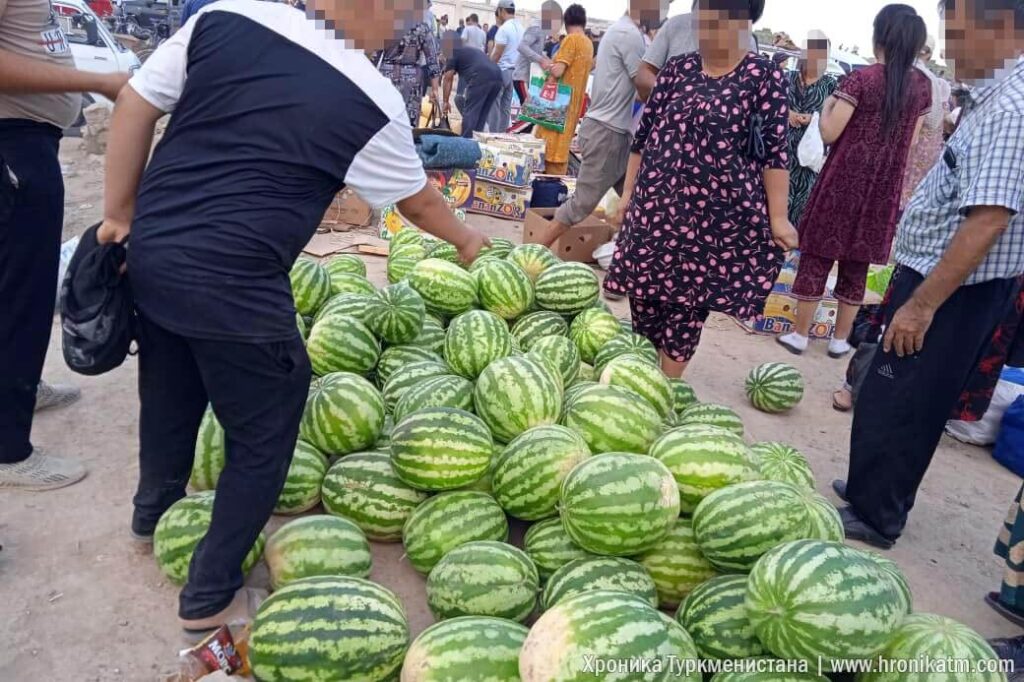
Chronicles Turkmenistan reports that Iranian watermelons are now cheaper than those produced locally.

Turkmen farmers were encouraged to plant watermelons on leased lands on the assurance that the crops would be irrigated at the state’s expense. However, given the high volume of water required to cultivate the fruit and the need for farmers to irrigate their crops twice per season, only those with the means, could afford to pay for their own pumps.

As stated in the publication’s report, “-That- was not enough to get a good harvest. Also, the cost of production, including irrigation and other costs, was higher than expected.”

The vast stocks watermelons imported from Iran to markets  in Meri and Lebap Velayats are significantly cheaper than local produce, selling at  4–5 manats (TMT) ($1.14–1.43) per 6 to 9 kilogram compared to  1.50 TMT ($0.43) per kilogram or an average of  7-8 TMT ($2– 2.29) per Turkmen melon.

As a result, Turkmen farmers struggle to sell their produce and are suffering significant losses.