• KGS/USD = 0.01144 0%
  • KZT/USD = 0.00212 0%
  • TJS/USD = 0.10456 0.19%
  • UZS/USD = 0.00008 0%
  • TMT/USD = 0.28490 0%
  • KGS/USD = 0.01144 0%
  • KZT/USD = 0.00212 0%
  • TJS/USD = 0.10456 0.19%
  • UZS/USD = 0.00008 0%
  • TMT/USD = 0.28490 0%
  • KGS/USD = 0.01144 0%
  • KZT/USD = 0.00212 0%
  • TJS/USD = 0.10456 0.19%
  • UZS/USD = 0.00008 0%
  • TMT/USD = 0.28490 0%
  • KGS/USD = 0.01144 0%
  • KZT/USD = 0.00212 0%
  • TJS/USD = 0.10456 0.19%
  • UZS/USD = 0.00008 0%
  • TMT/USD = 0.28490 0%
  • KGS/USD = 0.01144 0%
  • KZT/USD = 0.00212 0%
  • TJS/USD = 0.10456 0.19%
  • UZS/USD = 0.00008 0%
  • TMT/USD = 0.28490 0%
  • KGS/USD = 0.01144 0%
  • KZT/USD = 0.00212 0%
  • TJS/USD = 0.10456 0.19%
  • UZS/USD = 0.00008 0%
  • TMT/USD = 0.28490 0%
  • KGS/USD = 0.01144 0%
  • KZT/USD = 0.00212 0%
  • TJS/USD = 0.10456 0.19%
  • UZS/USD = 0.00008 0%
  • TMT/USD = 0.28490 0%
  • KGS/USD = 0.01144 0%
  • KZT/USD = 0.00212 0%
  • TJS/USD = 0.10456 0.19%
  • UZS/USD = 0.00008 0%
  • TMT/USD = 0.28490 0%

Kyrgyzstan Proposes Discounted Education to Those Who Have Served in the Army

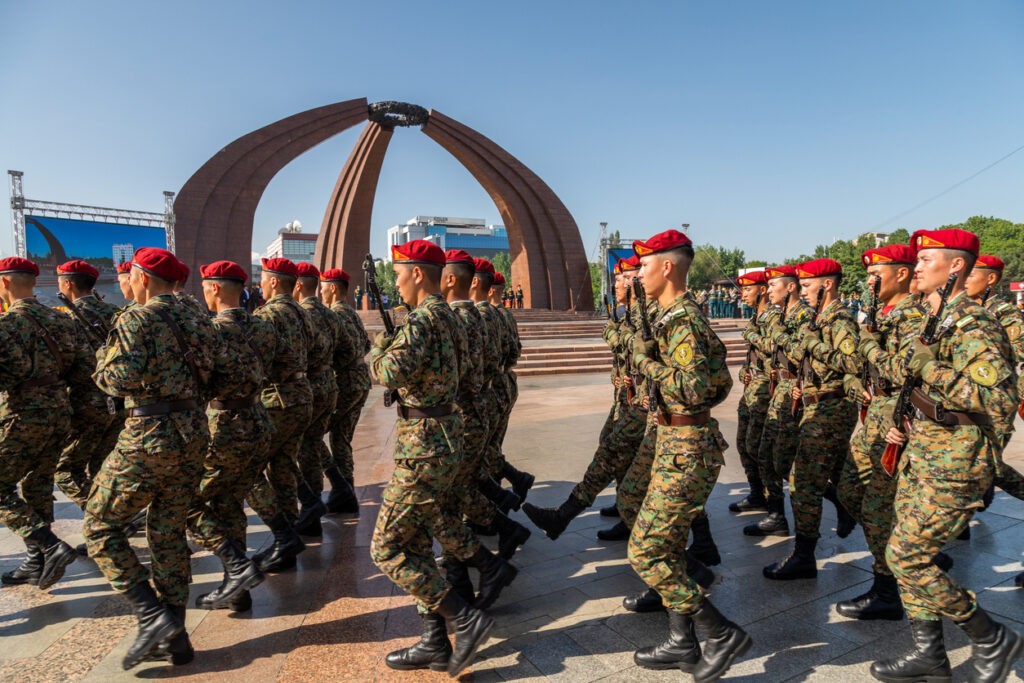
A draft law has been submitted for public discussion in Kyrgyzstan that would give citizens who have completed military service the right to preferential admission to primary, secondary, and higher education institutions, and a 50% discount on tuition fees. The document is published on the Jogorku Kenesh website.

The authors note that this project recognizes military personnel’s contribution to national security, and facilitates their successful adaptation to civilian life. The bill emphasizes that the educational benefits will help former soldiers make up for the time they could have spent on their studies.

In addition, the proposed measures are seen as an incentive for young people to enlist in the military, which, according to the authors, will increase the overall level of professionalism of soldiers.

After completing their service, many soldiers struggle to integrate into civilian life. The tuition discount will help them gain the necessary skills for successful employment, which will, in turn, positively impact the qualifications of the country’s workforce.

Similar laws on educational benefits for veterans are in place in several countries. The U.S. has a “GI Bill” program that assists veterans in paying university tuition and job training. The Philippines also provides benefits for veterans, including health care. In the U.K., veterans can receive discounts on tuition fees at several universities, especially in specialized programs.

Post-Soviet countries also have laws to provide educational benefits for those who have served in the military—for example, Russia’s program discounts university tuition for veterans and military personnel. Kazakhstan also benefits military personnel through tuition discounts and other educational opportunities. Moldova continues to improve its education legislation, and certain changes include support for veterans and their access to educational resources.
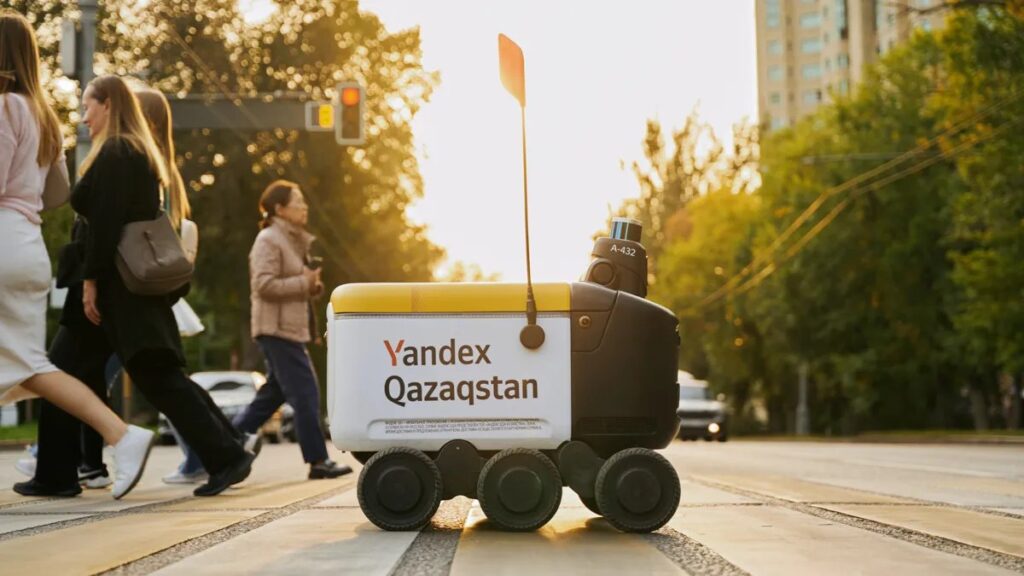
Start of Robot Deliveries in Almaty

Almaty is now  using Yandex Qazaqstan robots for home deliveries of orders from restaurants and cafes via its Yandex Go service.

Equipped with sensors, including lidar and cameras, which enable them to recognize objects and avoid obstacles and  pedestrians, as well as a neural network system capable of recognizing traffic lights and road signs, the robots move independently around the city. With a capacity of 60 liters, each robot’s cargo compartment can accommodate, for example, several pizzas and drinks, accessed by customers via the Yandex Go app.

During the first phase, the robots will operate within one city district but in time, travel further afield and expand connections between new cafes and restaurants.

Welcoming the initiative, Zhanabek Olzhas Nurzhanuly, head of Almaty’s digitalization department, said the use of the robots could help  make the city greener and more convenient for residents.

In addition to making deliveries, robots have also appeared in Yandex Maps, where they can replace the usual navigation cursor via a simple app. update.

Delivery robots are actively used in several countries. For example, Starship Technologies’ robots have already made over 5 million deliveries in Estonia, the UK, and U.S.  In the latter, in partnership with Grubhub, they mainly serve university campuses, and in Europe, robots deliver food and goods via apps such as Bolt Food,

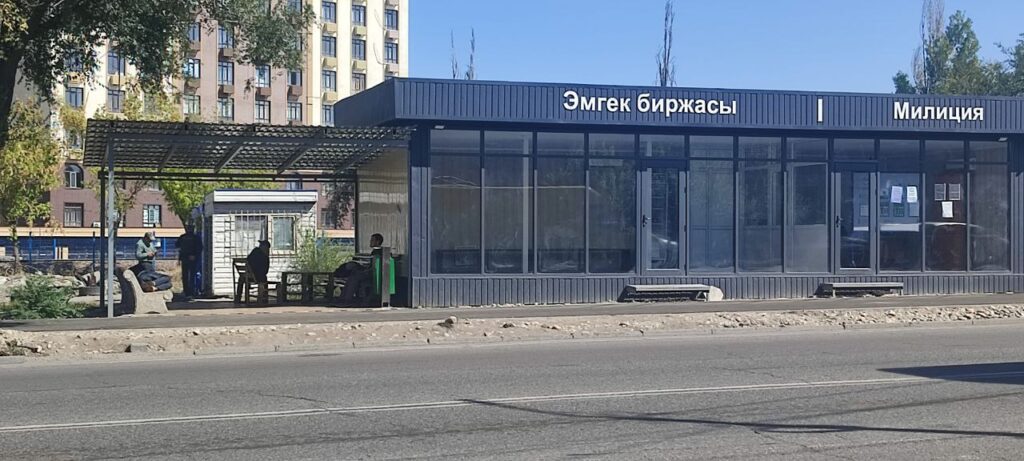
Kyrgyz Authorities Urge Migrants to Return Home From Russia

Kyrgyzstan’s presidential spokesperson Askat Alagozov has urged Kyrgyz citizens who have gone to work in Russia to return and work at home. However, only some people share the government’s position on the issue.

Alagozov noted that the country desperately needs construction and textile workers.

“Of course, the salary you expect will be the same as what you get in Russia. But, most importantly, it is better to work in your homeland and near your family. Come and work in your own country,” Alagozov wrote on social media.

Alagozov published the Ministry of Labor and Social Development hotline number, where citizens can get help with employment.

In comments to the post, citizens noted that salaries in Russia are higher than in Kyrgyzstan. A migrant in Russia receives an average of 80 to 200 thousand KGS ($950 – 2,350), while in Kyrgyzstan, the average salary is 30 to 50 thousand KGS ($350 – 600).

“90% of Kyrgyz migrate to buy an apartment. Working here [in Kyrgyzstan], it is impossible to buy a house. The most important factor is migrants’ need for housing,” one of Alagozov’s followers said.

As of August 1, 57,500 unemployed citizens were registered at the labor exchange. According to the National Statistical Committee, registered unemployment decreased by 21% over the past year.

The Ministry of Labor and Social Development also claims that more than 230,000 citizens across the country have been employed over the past few years, while 58,000 have received vocational training.

Meanwhile, workers registered at the labor exchange told The Times of Central Asia that the Kyrgyz labor market is not as good as the authorities make it out to be. To earn money, people have to take any job offered.

“We are standing here on Lev Tolstoy Street, and everyone in Bishkek knows you can find workers if you come here. People here take on any work: construction and landscaping, concrete work, unloading, and transport work,” said a construction worker named Ulukbek.
Permanent work is hard to find in the city, he said.

“I can earn 1,500-2,000 KGS (US $18) daily, but not always, and sometimes you don’t make any money. There is a mafia here; no one will give you a good job for nothing. There is massive competition in the warm seasons. In summer, people stand on both sides of the road, and there is more business to be had,” Ulukbek explained.

Talk of a shortage of qualified construction workers in Kyrgyzstan began during the recent construction boom.

Kyrgyzstan Seeks Crude Oil Supplies from Azerbaijan

At a meeting with Azerbaijan’s Energy Minister Parviz Shahbazov, his counterpart from Kyrgyzstan, Taalaibek Ibrayev, proposed signing a long-term contract to supply Azeri crude oil to Kyrgyzstan.

The bilateral meeting took place on September 16 in Bishkek, on the sidelines of the 4th meeting of energy ministers of the Organization of Turkic States (Azerbaijan, Kazakhstan, Kyrgyzstan, Turkey, and Uzbekistan). Representatives of Turkmenistan and Hungary attended as observers.

The Azeri Energy Minister expressed its readiness for cooperation, and proposed establishing a special working group to organize oil supplies.

Ibrayev also proposed that Azerbaijan participate in hydropower and renewable energy projects in Kyrgyzstan, and consider preferential financing of $2 million from the Azerbaijan-Kyrgyzstan Development Fund for the purchase and installation of charging devices for electric vehicles in Kyrgyzstan.

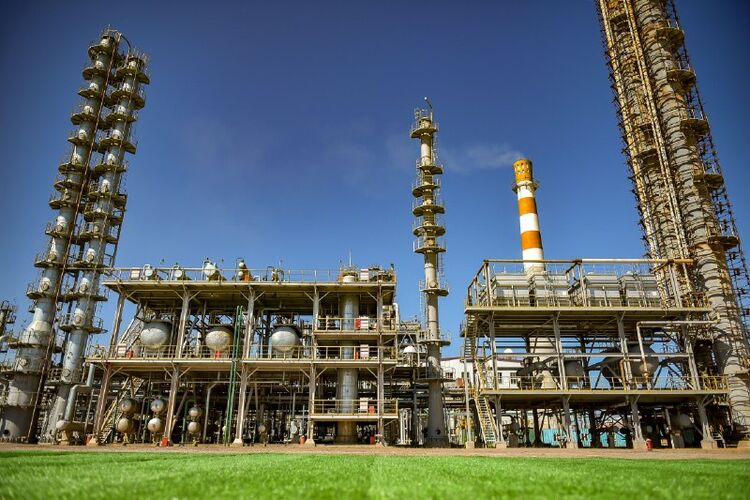
Today, Kyrgyzstan’s local capacity for refining crude oil and producing motor fuel covers about 5% of domestic demand, with the rest imported from Russia.

During Kyrgyz President Sadyr Japarov’s visit to oil-rich Azerbaijan earlier this year, negotiations were held with the Azeri state oil company, SOCAR, on Azerbaijani oil supplies to Kyrgyzstan’s Junda refinery.

Energy Minister Ibrayev commented that the Junda oil refinery requires more than 1 million tons of crude oil annually for refining.
On August 30, the refinery reopened in the town of Kara-Balta, about 100 kilometers west of Bishkek.

Late in March, the refinery completed a significant overhaul and plans to reach its total annual capacity of processing 800,000 tons of crude oil by the end of this year.

Turkmenistan to Build New High-Speed Highway

The private company “Ojar Asia” has signed a contract with the Eurasian representative office of China’s Sino Hydro Bureau 12 Co. Ltd., for the parties to jointly build the Serakhs-Mary-Serkhetabat highway in Turkmenistan.

This road will have a length of about 450 kilometers.

The highway will be an important element of the country’s transport infrastructure, and will improve conditions for foreign trade, including the export of Turkmenistan’s natural resources.

More than $2 billion in investment from Sino Hydro Bureau will finance it, and Ojar Asia will lead the construction.

Turkmenistan is developing road infrastructure to improve transportation links and stimulate its economy. Road projects are strategically important as the country plans to integrate the new highways into international East-West and North-South transportation corridors. This helps increase transit transportation and natural resource exports, which are vital in diversifying an economy traditionally dependent on hydrocarbon exports.

WHO and UNDP to Upgrade Kazakhstan’s Virological Labs

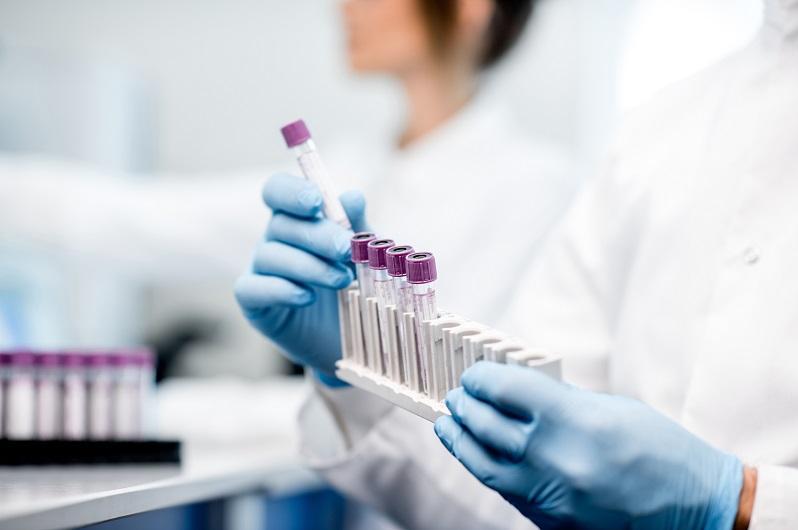
Kazakhstan’s Ministry of Healthcare, the World Health Organization (WHO) Office in Kazakhstan, and the United Nations Development Programme (UNDP) have announced a strategic partnership to upgrade the country’s critical health infrastructure, supported by a three-year grant from the Pandemic Fund.

As reported by UNDP in Kazakhstan, the collaboration will better prepare Kazakhstan for potential pandemics by enhancing its management of response to infectious diseases.
Key components of the initiative include renovating and modernizing Almaty’s virological laboratory and the construction of another in Turkestan. Both facilities will incorporate SMART (Self-Monitoring Analysis and Reporting Technology)  as well as “green” technologies to ensure sustainability and environmental responsibility.

The project also includes the renovation of the National Scientific Center of Especially Dangerous Infections in Almaty to improve the infrastructure, functionality, and safety standards of its virological and bacteriological laboratories, and the modernization of  sanitary and quarantine checkpoints across Kazakhstan.

Russia earlier reported on the alleged existence of US laboratories developing biological weapons in Kazakhstan. Issued by the Kremlin-controlled media in the wake of Russia’s invasion of Ukraine, the report’s claims have been staunchly denied by Zauresh Zhumadilova, Director General of the National Scientific Center of Especially Dangerous Infections under the Ministry of Health of Kazakhstan. According to Zhumadilova, all laboratories in Kazakhstan belong to the government and are controlled by the country’s Ministry of Health.

In June, Kazakhstan’s Deputy Minister of Culture and Information Kanat Iskakov, also commented on rumors concerning the alleged existence of foreign biological laboratories in Kazakhstan and reiterated,
“The [Kazakh] Ministry of Foreign Affairs and authorized bodies have several times stated that there are no biological laboratories run by the USA or any other country, in Kazakhstan.” He added that the  research center in Almaty, fully funded by the state, is run by local specialists.

Reuters has reported that artificial intelligence (AI) was behind the fake news, originated in China, about the existence of U.S. laboratories allegedly developing biological weapons in Kazakhstan.
Referencing the U.S. Department of Homeland Security (DHS) 2024 Homeland Threat Assessment, the agency stated that a Chinese government-controlled news site using a generative AI platform, had promoted a previously circulated false claim that the United States was running a lab in Kazakhstan to create biological weapons for use against China.

According to DHS, China and other adversaries are developing AI technologies that could undermine U.S. cyber defenses, including generative AI programs that support malware attacks.

In response, Reuters reports that the Biden administration is poised to launch a new front to safeguard the U.S. from AI technologies developed by China and Russia, and comments on the potential employment of AI by U.S. adversaries to wage aggressive cyberattacks or even create potent biological weapons.