• KGS/USD = 0.01144 0%
  • KZT/USD = 0.00193 -0%
  • TJS/USD = 0.10851 0.28%
  • UZS/USD = 0.00008 0%
  • TMT/USD = 0.28490 0%
  • KGS/USD = 0.01144 0%
  • KZT/USD = 0.00193 -0%
  • TJS/USD = 0.10851 0.28%
  • UZS/USD = 0.00008 0%
  • TMT/USD = 0.28490 0%
  • KGS/USD = 0.01144 0%
  • KZT/USD = 0.00193 -0%
  • TJS/USD = 0.10851 0.28%
  • UZS/USD = 0.00008 0%
  • TMT/USD = 0.28490 0%
  • KGS/USD = 0.01144 0%
  • KZT/USD = 0.00193 -0%
  • TJS/USD = 0.10851 0.28%
  • UZS/USD = 0.00008 0%
  • TMT/USD = 0.28490 0%
  • KGS/USD = 0.01144 0%
  • KZT/USD = 0.00193 -0%
  • TJS/USD = 0.10851 0.28%
  • UZS/USD = 0.00008 0%
  • TMT/USD = 0.28490 0%
  • KGS/USD = 0.01144 0%
  • KZT/USD = 0.00193 -0%
  • TJS/USD = 0.10851 0.28%
  • UZS/USD = 0.00008 0%
  • TMT/USD = 0.28490 0%
  • KGS/USD = 0.01144 0%
  • KZT/USD = 0.00193 -0%
  • TJS/USD = 0.10851 0.28%
  • UZS/USD = 0.00008 0%
  • TMT/USD = 0.28490 0%
  • KGS/USD = 0.01144 0%
  • KZT/USD = 0.00193 -0%
  • TJS/USD = 0.10851 0.28%
  • UZS/USD = 0.00008 0%
  • TMT/USD = 0.28490 0%
19 December 2025

Kuandyk Bishimbayev Pleads Guilty to Negligent Homicide


The judicial inquiry into the case of Kuandyk Bishimbayev concluded on April 24 in Astana. Aitbek Amangeldy, the brother of Saltanat Nukenova, announced that further court dates are scheduled for April 29, 30, and May 2-4. Bishimbayev, who formerly served as Kazakhstan’s National Economy Minister, faces allegations of murdering his partner Saltanat Nukenova in November 2023, at the Bau restaurant in Astana. He was detained on the day of the incident.

The trial commenced towards the end of March. Bishimbayev could receive a sentence ranging from 15 to 20 years to life imprisonment, depending on the severity of the crime as determined by the court. A jury will be instructed to reach a verdict regarding his culpability.


At the end of the session, Judge Aizhan Kulbaeva sought to clarify whether Bishimbayev has changed his position via-a-vis the charges – “In the main trial, when the prosecutor read out the indictment, brought charges and clarified your position on those charges, at that time your position was that you do not fully admit guilt on two episodes of the charges brought against you… Does your position remain the same?” the judge inquired.

“I do not plead guilty to the charge of torture. In the part of the charge of premeditated murder with particular cruelty, I admit that I inflicted beatings that led to the death of Nukenova. But I do not admit that I did it deliberately, that I wanted her dead and acted with particular cruelty,” replied Bishimbayev.

“Do you plead guilty to having inflicted grievous bodily harm, which caused Nukenova’s death through negligence?” the judge sought to clarify.

“Yes,” the ex-minister replied.

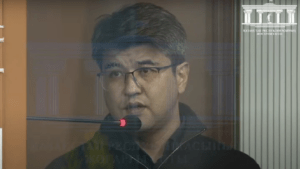
Photo screenshot from the broadcast of the trial; text reads “she is covered in blood and bruises.”


Meanwhile, the second defendant, Bykhytzhan Bayzhanov, stated before the court that he pleads not guilty to charges of under-reporting and concealment.

Britain’s Cameron Signs Strategic Partnership Agreement in Astana

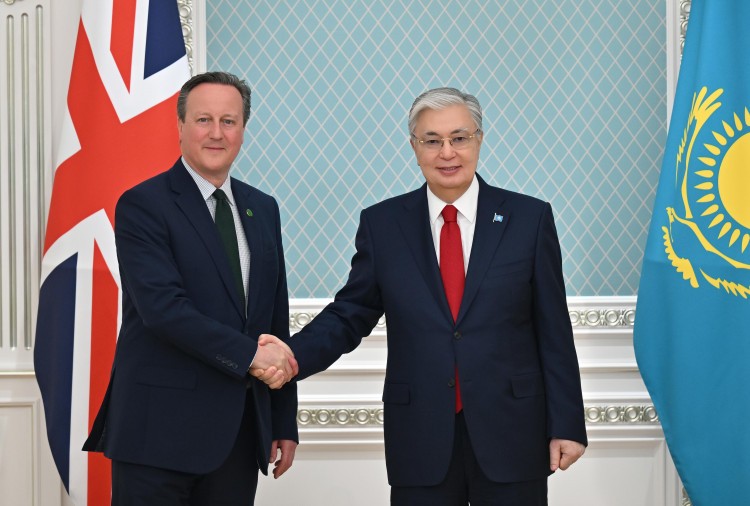
A strategic partnership and cooperation agreement between Kazakhstan and Great Britain was signed by the two countries’ foreign ministers, Murat Nurtleu and David Cameron, in Astana on 24 April.

The Kazakh Foreign Ministry has commented that the document aims to strengthen bilateral relations in a wide range of sectors including foreign policy and security, trade and investment, protection of intellectual property, partnerships in energy and raw materials, transportation, protection of the environment and climate change, banking and financial services, employment and social policy, science, and education.

Nurtleu added: “This comprehensive agreement will be a significant step in taking political, trade and investment relations between Astana and London to new horizons… We believe our strong and mutually beneficial strategic partnership will continue to strengthen all areas, from energy to rare metals, ecology to education.”

Cameron recalled that strategic dialogue between the countries had begun eleven years ago during his first visit to Kazakhstan as Britain’s prime minister and confirmed the UK’s commitment to developing cooperation with Kazakhstan as its key partner in Central Asia.

Memoranda of understanding on opening a branch of Queen’s University Belfast in Almaty and launching Kazakh language courses at Oxford University were also concluded during Cameron’s visit.

At a meeting with Cameron later that day, Kazakh president Kassym-Jomart Tokayev reiterated the importance of collaboration between the two countries and commending the strategic partnership and cooperation agreement, announced, “I am confident that this comprehensive document will definitely give a fresh boost to our multifaceted bilateral agenda.”

Great Britain is among the highest ten foreign investors in Kazakhstan. Since 2005, Kazakhstan’s economy has received $17 billion in FDI from the UK and last year alone, over $795 million .

Azerbaijan and Kyrgyzstan Expand Economic and Transport Cooperation

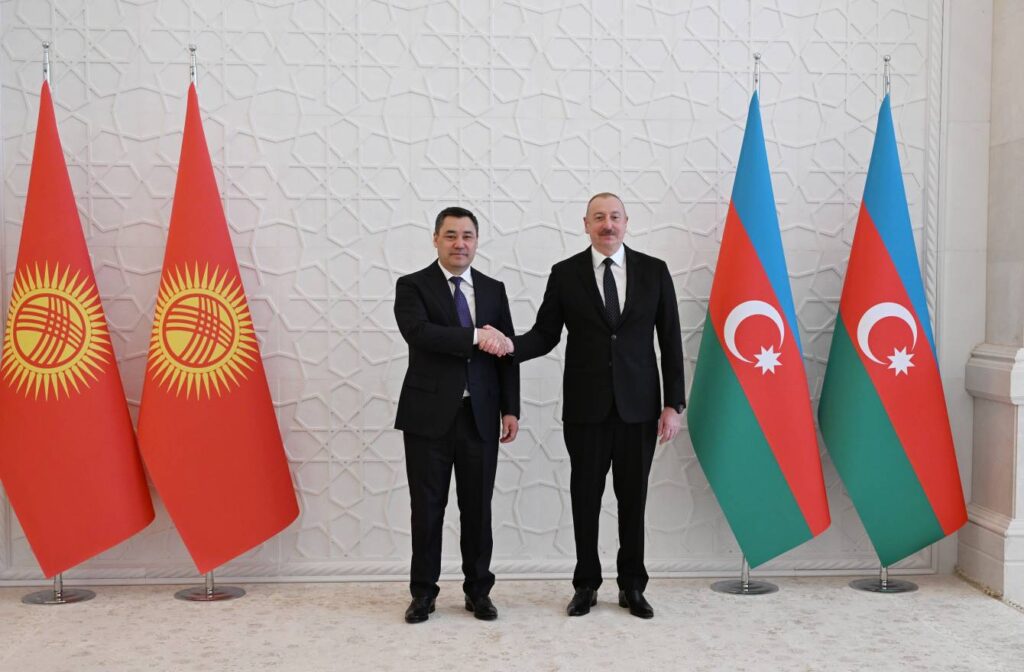
During a state visit to Azerbaijan on 24 April, Kyrgyzstan President Sadyr Japarov joined President Ilham Aliyev in bilateral talks at the 2nd gathering of the Interstate Council of Azerbaijan and Kyrgyzstan.

As a result of the meeting in Baku and in support of a joint declaration to deepen relations, the leaders signed a strategic partnership agreement between Azerbaijan and the Kyrgyz Republic.

In a statement to journalists, President Aliyev referred to centuries-old ties of cooperation, friendship and interaction enjoyed by Azerbaijan and Central Asia, and announced, “Today, the regions of Central Asia, the Caspian Sea and Azerbaijan are of great importance in terms of energy resources, transportation routes and trade. We are seeing great potential here and are strengthening interaction with our traditional partners from brotherly countries. Among them, cooperation with Kyrgyzstan is of particular importance.”

During the meeting, the two governments signed an addendum to the agreement on the authorized capital of the Azerbaijani-Kyrgyz Development Fund, to quadruple it from $25 million to $100 million.
To date, the Fund has received over 40 applications for investment projects in Kyrgyzstan and according to Aliyev, the construction of a five-star hotel financed by Azerbaijan already begun at Kyrgyzstan’s Lake Issyk-Kul, is due for completion by the end of next year.

The president commended the significant increase and potential for growth in trade between Azerbaijan and Kyrgyzstan and reported Azerbaijan’s interest in investing in renewable energy projects in Kyrgyzstan.

With reference to transport, he recommended that consultations proceed on coordination of transport routes in terms of digitalization and tariff policy, to make the route via the Caspian Sea and Central Asia to Europe both faster and more commercially viable.

President Japarov, in turn, referenced Kyrgyzstan’s construction of a secondary school in the Aghdam district of Azerbaijan, saying, “The construction of this school is Kyrgyzstan’s contribution to the restoration of peace in the regions affected by the [Azeri-Armenian] conflict.”

Uzbekistan and Afghanistan Shore Up Places in Eurasian Transit Corridor

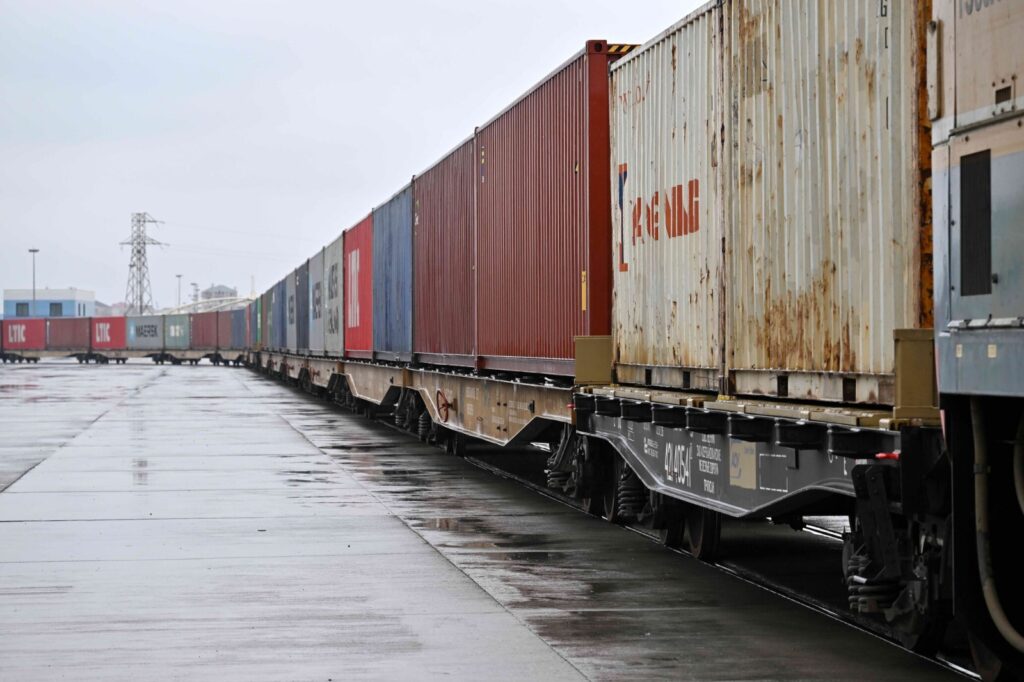
The first meeting of the working group on the development of the multimodal transport corridor Belarus–Russia–Kazakhstan–Uzbekistan–Afghanistan–Pakistan took place in Termez, Uzbekistan on 23 April. Attended by each of the countries’ ministers of transport, the meeting focused on connections between Central Asian states and the CIS through Uzbekistan with South Asia.

According to the Uzbek Transport Ministry, the resulting roadmap, signed by all parties, aims to increase transit cargo transportation through Uzbekistan, Afghanistan, and Pakistan through the introduction of digital documents to speed up and simplify processing.

In recent years, the volume of transit cargo through Afghanistan has increased by over 30%, reaching almost 1 million tons. Following a transit trade agreement between Uzbekistan and Pakistan in 2021, cargo volumes have increased significantly and in 2022, cargo transportation between the two countries through Afghanistan increased 2.5-fold. This year, Uzbekistan plans to transport more than 1 million tons of cargo through Afghanistan to Pakistan.

Kazakhstan Likely To Insist on Revisions to Kashagan Oil Contracts

Kazakhstan is demanding compensation for lost profits from the North Caspian Operating Company (NCOC), the consortium that manages the Kashagan oil field, and arbitration claims have risen to $150 billion. Sources close to Kashagan told The Times of Central Asia that this should send the message to western energy companies that Kazakhstan is looking to revise previously signed contracts.

While Bloomberg has reported the sum of the claims, citing people familiar with the matter, Kazakh government officials have declined to comment on the situation, claiming that it is a “commercial dispute.”

In April 2023, proceedings against the companies developing the Kashagan and Karachaganak fields began as part of a dispute over cost deductions from oil-sale proceeds of more than $13 billion and $3.5 billion, respectively. An additional $138 billion claim relates to the calculation of the cost of oil production “that was promised to the government but not delivered by the field developers,” according to Bloomberg.

The Ministry of Energy has not yet commented on the new claims. It states that the Kazakh authorities seek to maximize profits from their oil-production projects with the participation of foreign investors, but have been relatively flexible in previous disputes with oil corporations.

International sources note that Eni, Shell, Exxon and TotalEnergies have already invested around $55 billion in Kashagan, and currently the field produces about 400,000 barrels of oil per day. NCOC investors, led by Italy’s Eni, are convinced that production can be increased to 1.5 million barrels per day. NCOC has stated that it acts in strict compliance with the contract. Representatives of Eni confirmed that the Kazakh authorities have applied to the court for arbitration settlement, but did not disclose details.

Earlier, Kazakhstan won a lawsuit against the Kashagan consortium which required them to pay $5.1 billion for damage to the environment. Kashagan is developed by the NCOC consortium, which includes the national company KazMunayGas (KMG) and several foreign energy companies: Eni, Shell (Great Britain), ExxonMobil (USA), Total (France), Inpex (Japan), and CNPC (China).

Member of the Public Council of the Kazakh Ministry of Energy, Olzhas Baidildinov believes that the sharp increase in the amount of the lawsuit is a signal from the Kazakh side to the consortium to revise the contracts.

“In my opinion, it’s obvious that Kazakhstan wants to revise the terms of work on large consortia. At the same time, I have proposed many times to exchange the frozen assets of the Russian Federation for stakes in major projects: Tengiz, Karachaganak and Kashagan. There is a nuance here: for example, the shares in Karachaganak and Kashagan are managed by PSA LLP, which is determined by the authorized body, while the share in Tengiz is managed by KazMunayGas. As we see, on Kashagan and Karachaganak there are arbitration claims filed in international arbitration, there is an environmental issue – but on Tengiz they are silent for some reason. This is either KMG’s unprofessionalism, because the amount of investment expense is very high, or some other unknown issues that need to be addressed,” said Baidildinov.

According to him, the number of claims on Kashagan is notably large. “It can be understood that under the production sharing agreement, which is unknown to the general public, the republic received certain revenues depending on oil prices and in accordance with the output of the project compared to certain parameters of production. As we remember, the launch of Kashagan was repeatedly postponed, there were emergency works and [stoppages]. Apparently, having considered all this, Kazakhstan lodged such a claim. But I will emphasize that no Kazakhstani body has confirmed either the claims or the amount. This information has passed through foreign publications, we can’t say whether it’s true or not,” Baidildinov added.

Baidildinov believes that the Kazakh energy ministry isn’t involved in the making of compensatory claims against the international consortium. “The Ministry of Energy stated that it isn’t commenting on the situation, as it’s a corporate issue. I think the Ministry of Energy is not very involved because it is being handled by PSA LLP, a team headed by Beket Izbastin. I would like to emphasize that the new team that came to PSA is defending the interests of the country. Is it possible to fulfill such claims? Probably not, because today investments in the Kashagan project are estimated at $60 billion. In fact, the claim is 2.5 times larger. Naturally, such an amount will not be paid out. Most likely, we can predict that some terms of the contract will be revised: Kazakhstan’s share will be increased, or other parameters will be changed. In any case, this is a serious signal to international companies, which entered the country on very ‘sweet’ terms. Kazakhstan intends to revise these contracts,” he said.

An Almaty-based expert in distressed assets, Rasul Rysmambetov, in turn is sure that there is a certain amount of bargaining going on between the parties. “No one has confirmed anything yet, so it’s premature to discuss. The lawsuit is big, and apparently there is some bargaining going on between Kazakhstan and the operator of Kashagan. As they say, ask for a camel and they will give you a ram. Nobody really knows how much Kashagan is worth today, although we can say that it’s proven to be a rather overrated project, and there were a lot of expenses that were not fully understood. I do not think that the claims for $150 billion have a clear basis, but rather there is a process of bargaining. Including through the media,” Rysmambetov explained.

Rysmambetov believes that the public will not receive official information either way. He believes that the issue of monetary claims against NSOC will be resolved behind the scenes. “Most likely, the Ministry of Energy will not comment on anything now, everything is decided behind the scenes. But I would like to say that the lawsuits and other things will in no way affect investors and the business climate, as there are no confirmations yet. I do not think that claims for $150 billion will find any serious ground,” he said.

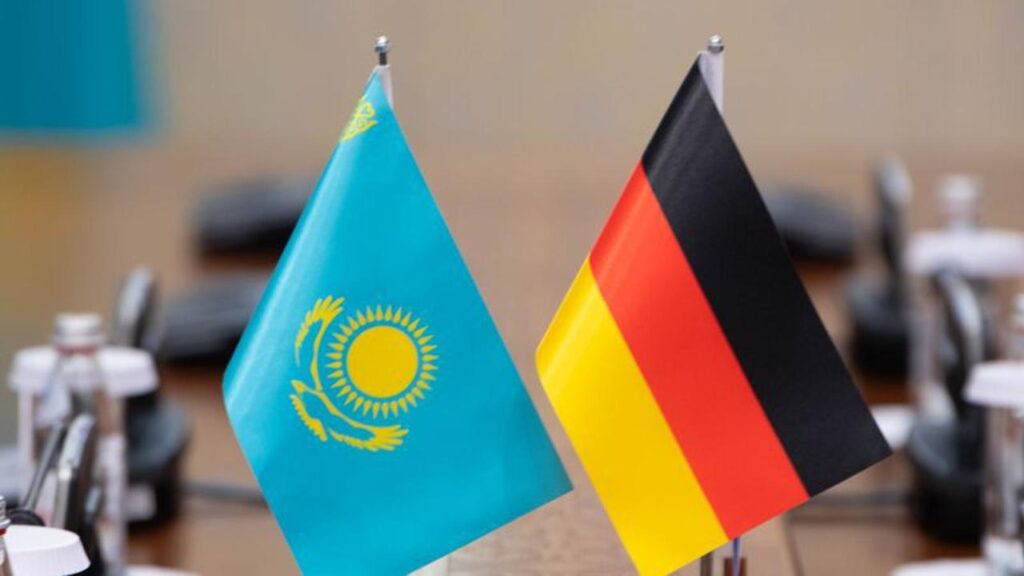
Germany Increases Investment and Trade in Kazakhstan

In a report on the implementation of Kazakh-German projects at a meeting of the Investment Promotion Council on 24 April, Kazakh Invest stated that investment from Germany in Kazakhstan reached an all-time high of $770 million in 2023.

To date, the pool of German initiatives planned for Kazakhstan includes 63 projects with a value of around $54.4 billion and the potential to create 14.7 thousand jobs. The 32 projects already in operation, have created some 6,000 permanent posts.

Bilateral trade turnover between Kazakhstan and Germany is also very positive , having leapt by 24.7% in 2022 and 41.3% in 2023.

Kazakhstan, as its key partner in Central Asia, currently ranks as one of Germany’s top 50 trading partners.