• KGS/USD = 0.01144 0%
  • KZT/USD = 0.00213 0%
  • TJS/USD = 0.10456 0.19%
  • UZS/USD = 0.00008 0%
  • TMT/USD = 0.28490 0%
  • KGS/USD = 0.01144 0%
  • KZT/USD = 0.00213 0%
  • TJS/USD = 0.10456 0.19%
  • UZS/USD = 0.00008 0%
  • TMT/USD = 0.28490 0%
  • KGS/USD = 0.01144 0%
  • KZT/USD = 0.00213 0%
  • TJS/USD = 0.10456 0.19%
  • UZS/USD = 0.00008 0%
  • TMT/USD = 0.28490 0%
  • KGS/USD = 0.01144 0%
  • KZT/USD = 0.00213 0%
  • TJS/USD = 0.10456 0.19%
  • UZS/USD = 0.00008 0%
  • TMT/USD = 0.28490 0%
  • KGS/USD = 0.01144 0%
  • KZT/USD = 0.00213 0%
  • TJS/USD = 0.10456 0.19%
  • UZS/USD = 0.00008 0%
  • TMT/USD = 0.28490 0%
  • KGS/USD = 0.01144 0%
  • KZT/USD = 0.00213 0%
  • TJS/USD = 0.10456 0.19%
  • UZS/USD = 0.00008 0%
  • TMT/USD = 0.28490 0%
  • KGS/USD = 0.01144 0%
  • KZT/USD = 0.00213 0%
  • TJS/USD = 0.10456 0.19%
  • UZS/USD = 0.00008 0%
  • TMT/USD = 0.28490 0%
  • KGS/USD = 0.01144 0%
  • KZT/USD = 0.00213 0%
  • TJS/USD = 0.10456 0.19%
  • UZS/USD = 0.00008 0%
  • TMT/USD = 0.28490 0%

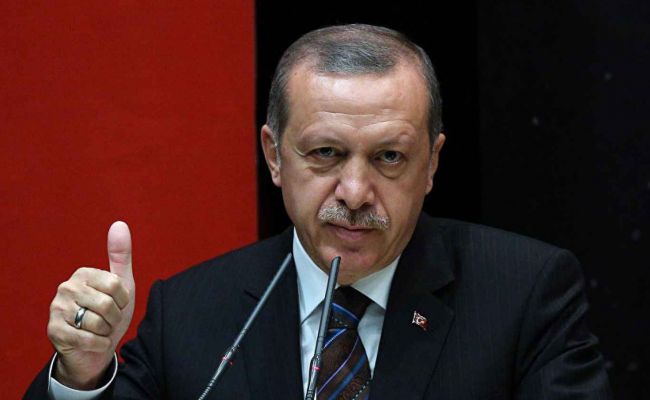
Erdogan: Turkey Wants to Become Full SCO Member

Turkish President Recep Tayyip Erdogan has announced his country’s aspiration to become a full member of the Shanghai Cooperation Organization (SCO), at a press conference in Washington after the conclusion of the NATO summit.

“Turkey’s goal, which is now an observer in the SCO, is full membership. Now, it should join the Shanghai Five,” Erdogan stated.

The Turkish president attended the SCO summit held in Astana on July 3-4. SCO Secretary-General Zhang Ming said that despite its membership of NATO, Turkey actively participates in the organization’s activities, which are not directed against other states. He emphasized that interaction with Ankara is based on the principles set out in the SCO charter and is in line with the “Shanghai spirit.”

Russian Securities Are Leaving Kazakhstan — Reports

The Central Securities Depository of Kazakhstan has urged those in the financial sector to send orders to withdraw Russian securities from their nominal holding by August 1.

These statements were reported by RBC, which referenced a notice letter by a Kazakhstani brokerage to its clients and a source within the financial sector, who confirmed the authenticity of the letter.

In the letter to clients, the broker informed them that he received a letter from the Kazakhstan depository notifying him about the necessity of completing deals with the National Settlement Depository by the end of the month.

Quoted by the broker, the message of the Kazakhstan depository states that, “The Central Securities Depository notifies you that you need to conduct transactions with the participation of National Settlement Depository JSC that are ordinary and necessary for the alienation of debt or shares in favor of non-U.S. persons and not included in the U.S. blocking sanctions list, by August 1, 2024. After this date, the possibility of executing orders by the Central Securities Depository on these financial instruments will be considered, taking into account the peculiarities of possible restrictions.”

In the letter, the Central Securities Depository informs clients in advance about possible restrictions and difficulties in executing orders on securities with the prefix RU before the ISIN after the specified date.

The Depository also added that when processing orders from clients, the Central Securities Depository will consider the possibility of their execution, considering the risks and consequences that may arise for itself.

“In essence, the letter says that they recommend finalizing all settlements and ridding Kazakhstan depository of securities with Russian ISINs. The Kazakhstan depository does not want to see these securities in portfolios,” – says Julia Khandoshko, CEO of European broker Mind Money.

In mid-June, the US Treasury Department’s Office of Foreign Assets Control (OFAC) included the Moscow Exchange, which owns 13.1% of KASE shares, in the Specially Designated Nationals requiring sanctions list. The exact volume of Russian securities held in Kazakhstan is still being determined. However, from March to December 1, 2022, Bloomberg estimates that Kazakh brokers conducted transactions with Russian federal loan bonds totaling $1.4 billion.

Afghanistan Ready to Implement TAPI Project

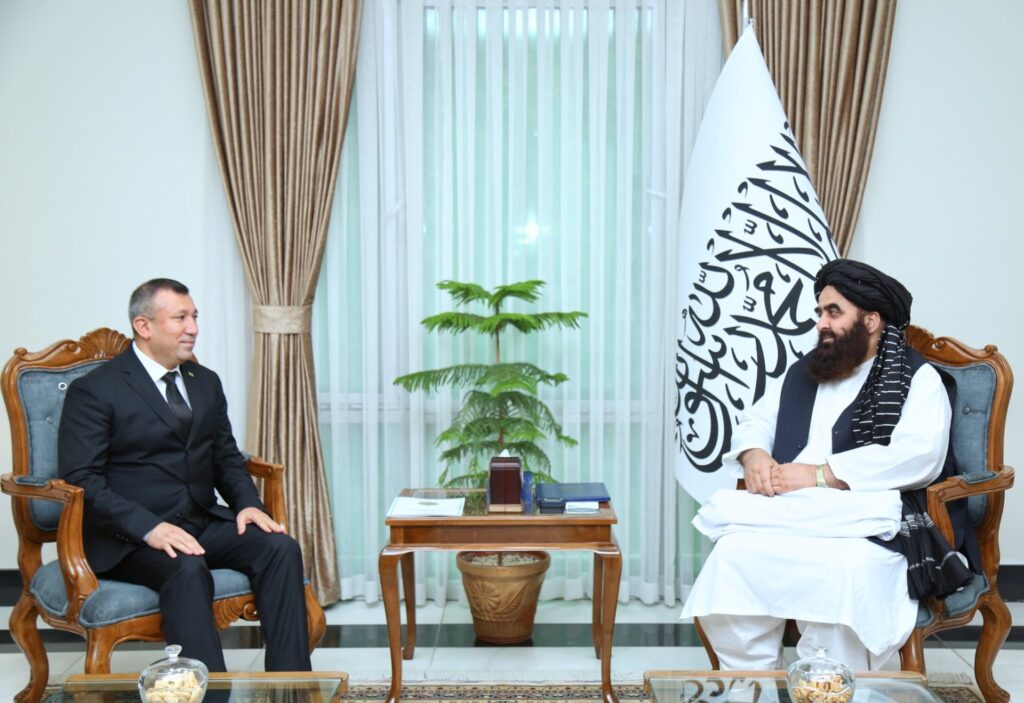
The meeting of Turkmenistan’s ambassador to Afghanistan, Khoji Ovezov, with Afghan Foreign Minister Amir Khan Muttaki in Kabul demonstrated specific dynamics in implementing the TAPI gas pipeline project.

The news agency Alemarah reported the talks centered on the TAPI project and its advancement in Afghanistan. Diplomats discussed the possibility of increasing the pipeline’s capacity, which could significantly increase the volume of Turkmen gas supplies to Pakistan and India.

In addition to TAPI, the sides considered expanding transit and transportation connections through the Turgundi station and the joint electric power project of the Nurul Jihad substation in Herat province.

The Afghan side assured determination to resolve the outstanding issues on the TAPI project and start actual work. “We are preparing all the necessary documents and starting preparations for construction,” Amir Khan Muttaki said.

The minister also noted the work being done to develop railroad facilities in the dry port of Turgundi and promised to update Turkmenistan soon.

Taliban official Zabihullah Mujahid recently announced Afghanistan’s readiness to develop the TAPI project further and cooperate with regional countries to create a North-South international transport corridor.

Kazakhstan Seeks to Increase Local Content in Oil and Gas Equipment Production

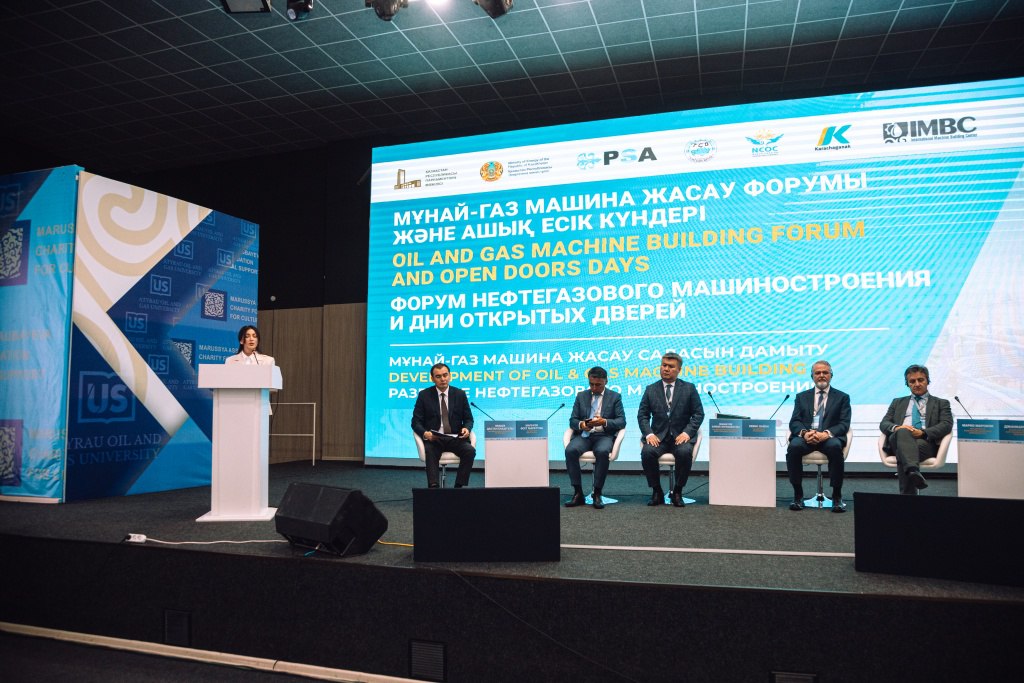
From July 10 to 12, the Kazakhstani city of Atyrau hosted the Oil and Gas Machine Building Forum. The Forum aimed to develop local content and support domestic manufacturers of oil and gas equipment and local suppliers of works and services for the sector.

The event also included Open Doors Days for three major oil and gas operators in Kazakhstan: Tengizchevroil, North Caspian Operating Company, and Karachaganak Petroleum Operating B.V.

As reported by the Kazakh Ministry of Energy, these three major subsoil users account for 70% of all oil and gas equipment purchases in Kazakhstan.

Speaking at the Forum, Vice Minister of Energy Alibek Zhamauov said that both Kazakhstan’s president and prime minister outlined several specific tasks aimed at developing local content in the oil and gas sector. Particular attention, they said, should be paid to increasing the share of Kazakhstani goods, works and services in the sector’s purchases, creating new as well as modernizing existing production facilities, localizing the production of the most popular products in Kazakhstan, as well as moving design offices to the country, with the mandatory involvement of local engineers and design companies.

Due to efforts of the Ministry of Energy, in May of this year contracts were signed between Tengizchevroil, North Caspian Operating Company, and Karachaganak Petroleum Operating B.V. and domestic manufacturers for the purchase of locally made oil and gas equipment worth $240 million.

Speaking at the Forum, Leyla Gimranova, Deputy Director of the Project Department at Kazakh Invest, emphasized that oil and gas engineering could become a new growth point in developing domestic added-value production and import substitution.

She said that last year, Kazakhstan produced oil and gas equipment for $72.7 million and imported such equipment for $1 billion. “This is a significant difference that needs to be reduced. Therefore, we are actively working to identify priority goods for import substitution, the production of which is possible based on existing domestic enterprises,” Gimranova said.

Uzbekistan’s Investment in Kazakhstan Reaches Record Levels

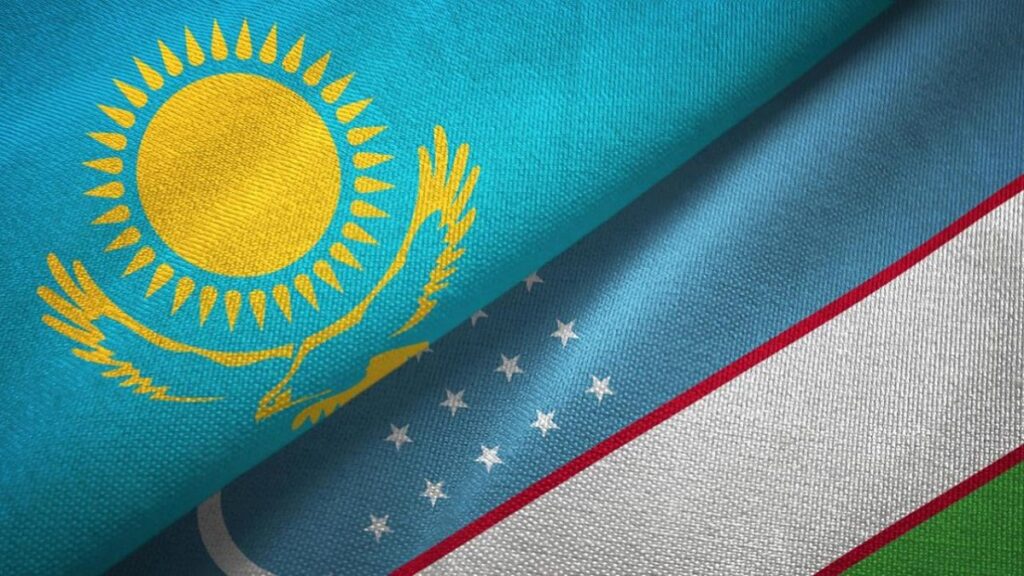
The volume of gross direct investment flow from Uzbekistan to Kazakhstan in 2023 was a record $22.2 million, as reported by Zakon.kz. This is the largest statistic recorded since the end of 2005.

Last year, Kazakhstan and Uzbekistan implemented several important investment projects. In particular, $71.2 million was invested into the production of Chevrolet Onix cars in the Kostanay region. A metal rolling plant was built in the Almaty region after a roughly $57 million investment. Lastly, a facility to produce various sterile pharmaceutical and hygiene products was established in Shymkent following an approximately $9.3 million investment.

The increase in investment offers from Uzbekistan is reported to be related to the positive business environment in Kazakhstan. The report notes that extremely favorable conditions have been created for business in the neighboring country. The current conditions in Kazakhstan effectively protect the rights of investors and thus encourage investments.

The governments of Tashkent and Astana recently signed a Treaty to enhance cooperation between the two countries. The countries agreed to increase the volume of mutual trade to $10 billion and expand business relations soon.

According to the Telegram channel “Data Hub,” Uzbekistan had become the third largest foreign investor, surpassing China, regarding the number of companies registered in Kazakhstan. These statistics show that Uzbekistan is increasingly becoming an important trade partner for Kazakhstan.

An Overview of Kazakhstan’s Comic Industry by Oraskhan Zhakup, CEO Khan Comics

TCA: What inspired you to create comics and get involved in the industry?

 My entry into the comic book industry was intuitive as opposed to a conscious decision.  I just followed my passion. It all started when aged 10-12 years old, my friends and I drew comic strips in school notebooks and sketchpads and then stapled them together to create homemade comic books.

Over time, this childhood hobby became more serious and we formed a club with several members. In 2003, Pavel Shein, Stas Misyurin and I decided to launch a newspaper titled ‘Comics’ which included three comic strips, each spanning around eight pages. The newspaper was black and white, with a circulation of about a thousand copies. Several issues were printed, providing our entry point into the industry.

We then started a comic book magazine. After a long hiatus, we organized a comic book exhibition in 2010, and with work amassed from the show, published our first anthology in 2011. Named ‘KZ Comics’ the 112-page publication, again in black and white, had a print run of 500 copies. It was in this magazine that the Khan Comics logo first appeared.

TCA: Tell us more about the Khan Comics Art Studio.

The Khan Comics Art Studio in Almaty was originally a place where a few people gathered to create comics and then, a couple of years ago, we extended our practice to include cartoons and animation. Over the last 5-6 years, I have also been experimenting with making toys based on our comics. All of this naturally requires considerable financial and human resources as well as time. But we keep working, making comics and everything related to them.

TCA: How has the comics culture developed in Kazakhstan since you entered the industry?

Unfortunately, there is no market for Kazakh comics in our country. Regular players are needed for such a market to exist, but there are none. Our studio has been publishing 5-6 books annually for 13 years. Occasionally new players enter the field, but after a year or two, disappear. The popularity of comics in Kazakhstan is not related to the local market, but to global trends spurred by the release of Hollywood movies based on comics, such as ‘The Avengers’ and ‘Spider-Man.’ The popularity of comic books in post-Soviet countries (CIS) is now in its third wave and we are its pioneers. The first began in the early 2000s with the arrival of comics from IDK Publishing, and the second, was associated with manga.

TCA: What key events or projects would you single out as the most significant for the development of Kazakh comics?

I would cite the ‘Erketay’ and ‘Jetysu’ comic series as our studio’s key projects. ‘Erketay,’ currently being adapted, is an ethno-fantasy based on Kazakh mythology, whilst ‘Jetysu’ is an urban fantasy. Both of these projects are important for us. Although I love 90% of what we produce, ‘Erketay’ stands out as number one.
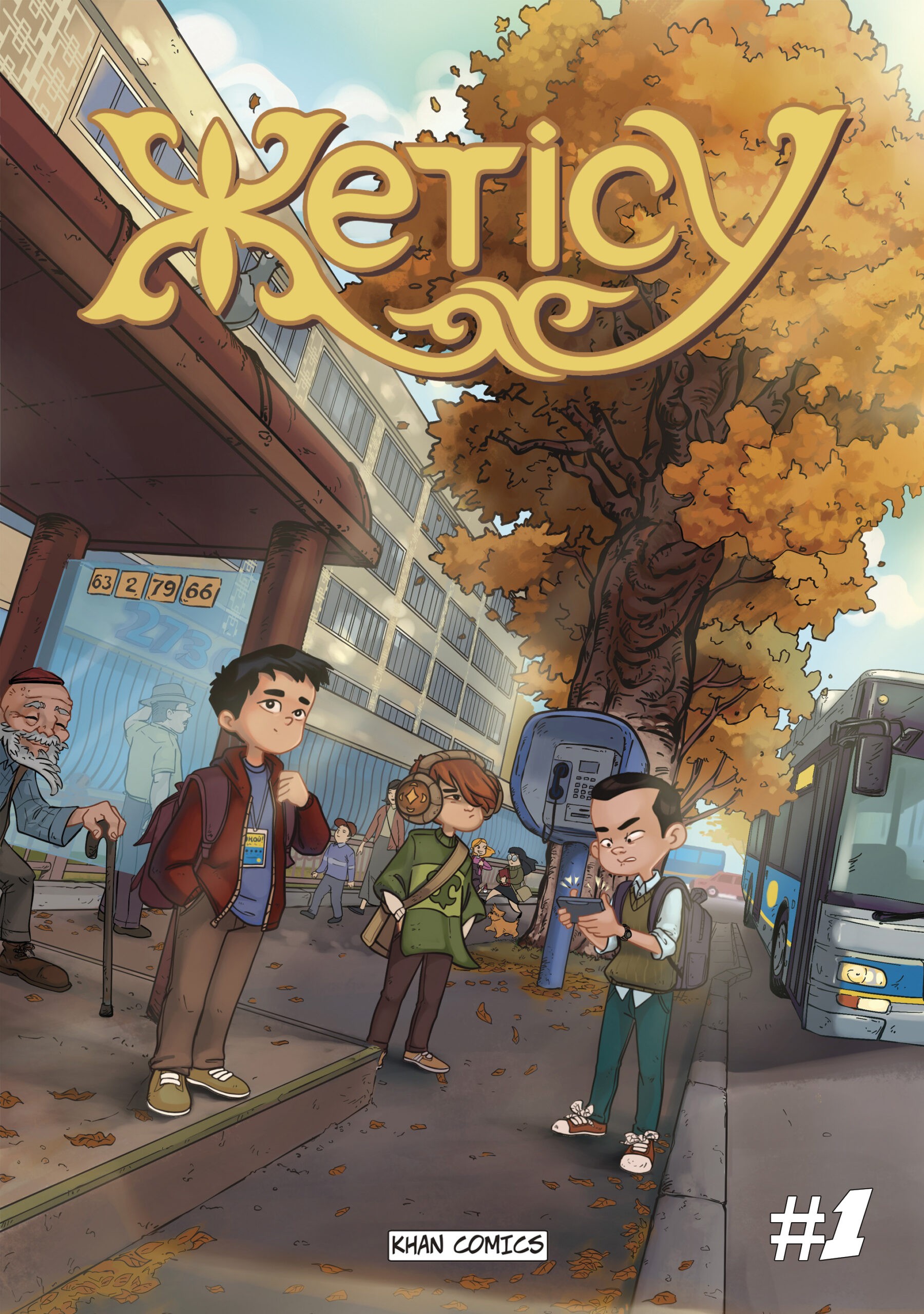


Jetysu
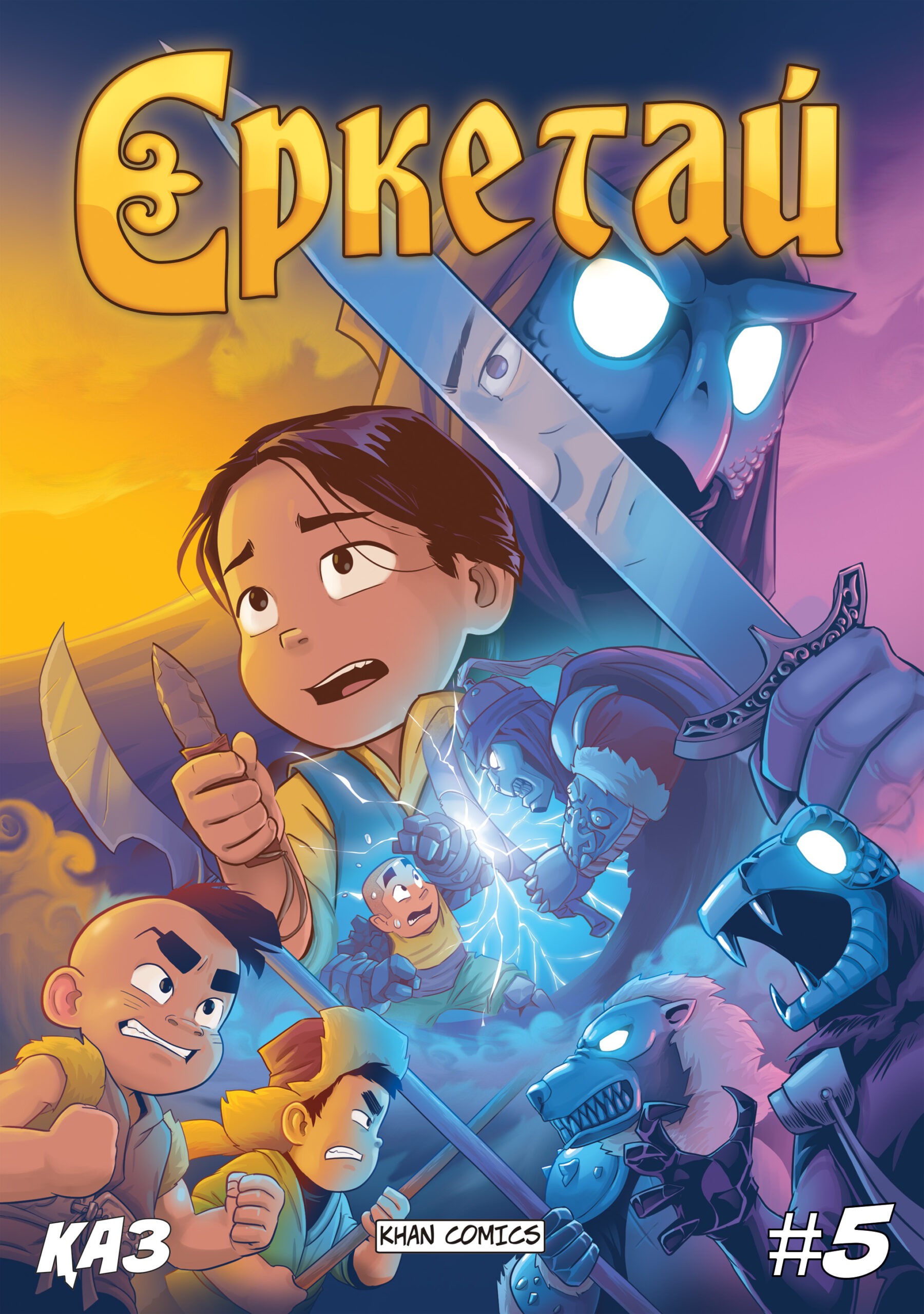
Erketay


TCA: What themes and stories do you explore in your comics and why?

Almost all of our comics are related to our culture and cultural code. ‘Erketay’ is an ethno-fantasy; ‘Horde,’ a post-apocalypse and cyberpunk on the territory of Kazakhstan; and ‘Jetysu,’ an urban fantasy based in Alma-Ata and a parallel world.

TCA: What are the challenges of creating and promoting comics in Kazakhstan?

The biggest problem is the lack of authors. The Internet has erased borders and artists from Kazakhstan can earn much more by working for foreign companies. We have had several instances where young talented people whom we’ve trained, have left to work abroad.

Creating a comic book requires a significant financial outlay. A 24-page comic book takes several people two months to produce and entails expenditure on salaries, printing, taxes, and logistics. As a result, comics become too expensive for widespread access.

TCA: How do you see Kazakh comics developing in the coming years?

The industry faces many difficulties, especially due to the lack of authors and high financial costs. However, we continue to work and believe in its development. We hope that Kazakhstan will find a hook in comics to export its culture, just as the Japanese did with samurai and ninjas.

TCA: What are your plans for future projects?

Work on our key projects such as ‘Erketay’ and ‘Jetysu’ is ongoing.  We are also busy uniting all our children’s comics in one big universe comprising seven worlds. ‘Jetysu’ will take place in world number one from which the main characters will move to parallel world number two. ‘Erketay’ is set in world number three. On completion of the storylines, the heroes will begin to move and interact with each other across seven worlds.
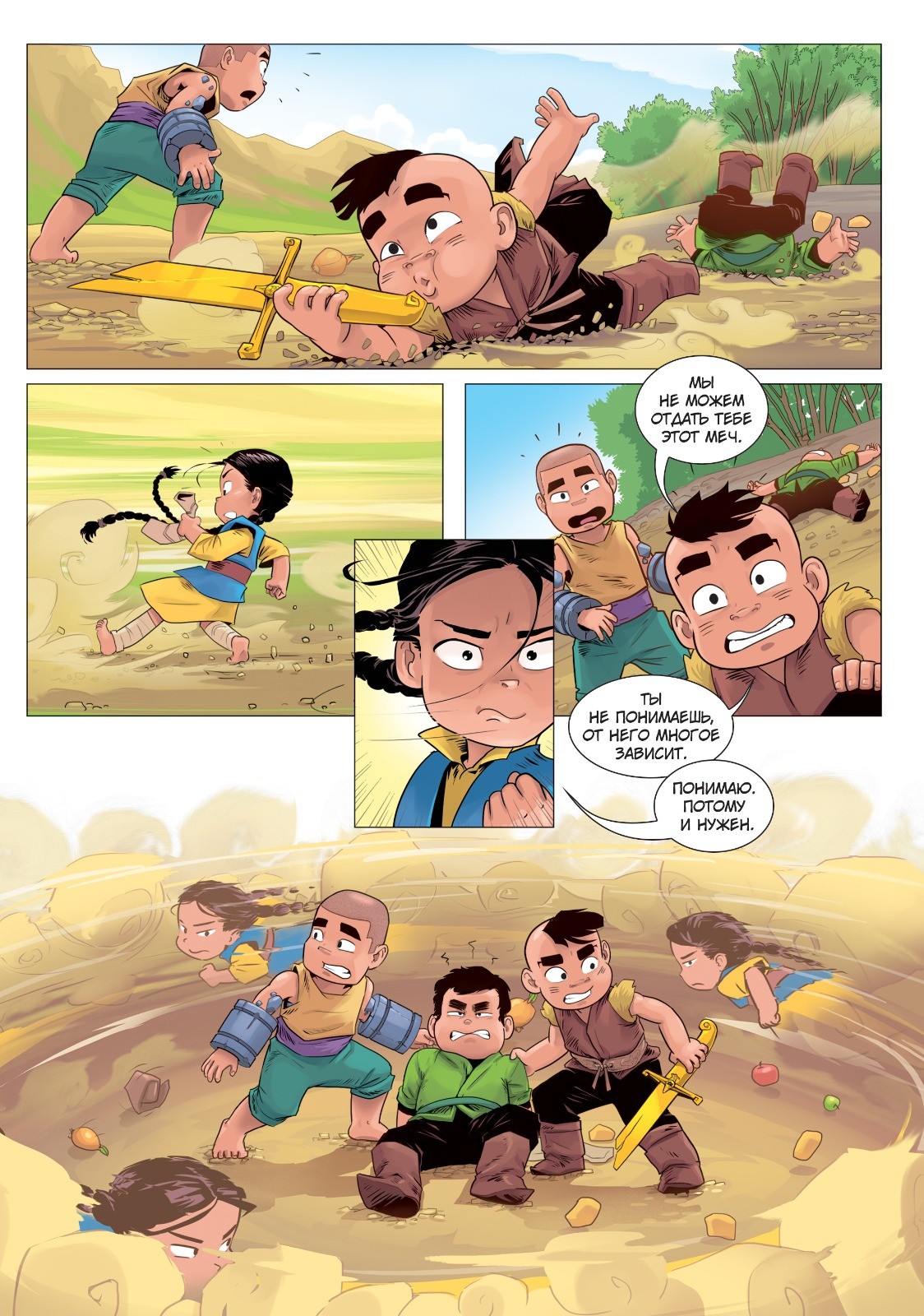


Erketay strip

TCA: Is the appeal of Kazakh comics limited to local audiences or do you have foreign readers?

Our comics are sold in stores and online. We have overseas buyers but they are mainly Kazakhs who have moved abroad and collectors. Within the framework of the Shanghai cooperation Organization (SCO) we presented our comics in China, but it was more of a political venture. Whilst our culture is of interest locally, we have yet to find a hook to broaden its appeal and export worldwide. We have no plans to date, to publish English translations.

TCA: What comics would you recommend to readers unfamiliar with the industry in Kazakhstan?

It is difficult. New projects appear regularly but quickly disappear. I am therefore hesitant to recommend anything specific and would prefer readers to choose for themselves.