• KGS/USD = 0.01144 0%
  • KZT/USD = 0.00211 0%
  • TJS/USD = 0.10460 0.19%
  • UZS/USD = 0.00008 0%
  • TMT/USD = 0.28490 0%
  • KGS/USD = 0.01144 0%
  • KZT/USD = 0.00211 0%
  • TJS/USD = 0.10460 0.19%
  • UZS/USD = 0.00008 0%
  • TMT/USD = 0.28490 0%
  • KGS/USD = 0.01144 0%
  • KZT/USD = 0.00211 0%
  • TJS/USD = 0.10460 0.19%
  • UZS/USD = 0.00008 0%
  • TMT/USD = 0.28490 0%
  • KGS/USD = 0.01144 0%
  • KZT/USD = 0.00211 0%
  • TJS/USD = 0.10460 0.19%
  • UZS/USD = 0.00008 0%
  • TMT/USD = 0.28490 0%
  • KGS/USD = 0.01144 0%
  • KZT/USD = 0.00211 0%
  • TJS/USD = 0.10460 0.19%
  • UZS/USD = 0.00008 0%
  • TMT/USD = 0.28490 0%
  • KGS/USD = 0.01144 0%
  • KZT/USD = 0.00211 0%
  • TJS/USD = 0.10460 0.19%
  • UZS/USD = 0.00008 0%
  • TMT/USD = 0.28490 0%
  • KGS/USD = 0.01144 0%
  • KZT/USD = 0.00211 0%
  • TJS/USD = 0.10460 0.19%
  • UZS/USD = 0.00008 0%
  • TMT/USD = 0.28490 0%
  • KGS/USD = 0.01144 0%
  • KZT/USD = 0.00211 0%
  • TJS/USD = 0.10460 0.19%
  • UZS/USD = 0.00008 0%
  • TMT/USD = 0.28490 0%

Remittances to Central Asia and Europe Down 10%

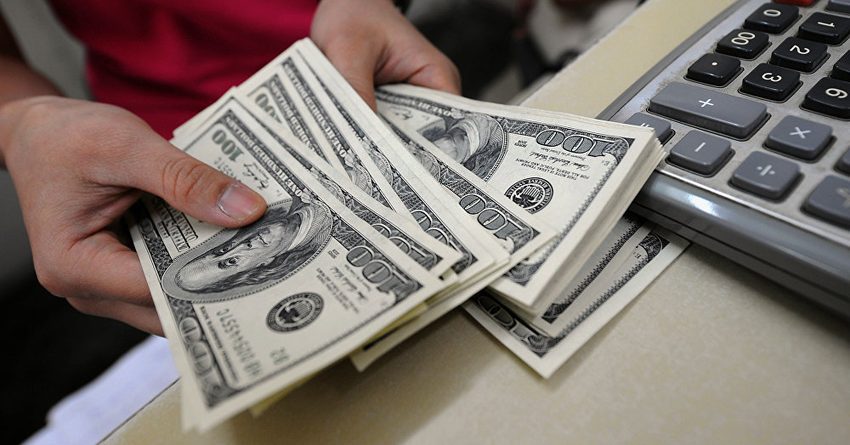
After significant growth of 18% in 2022, the inflow of remittances to Europe and Central Asia last year decreased by 10%, amounting to about $71 billion, according to an analytical review by the World Bank entitled “Migration and Development”. This reduction is due to a slowdown in remittances from Russia to neighboring countries, especially the Central Asian states. Among the reasons cited are the devaluation of the ruble against the dollar (39% in 2023), a decline in the number of remittances from Russia to Ukraine, and a slowdown in the outflow of migrants to Russia from neighboring states, many of whom have decided to return home after facing a wave of xenophobia following the Crocus City Hall attack. Financial institutions in some countries have also restricted transfers from Russia for fear of sanctions, which could divert remittance flows to unofficial channels.

According to the World Bank, in 2023, remittances from Russia fell significantly to Uzbekistan (from 87% to 78% of all remittances), Georgia (from 47% to 37%), Azerbaijan (from 82% to 63%), and Kyrgyzstan (from 95% to 94%). Remittances from the U.S. to these countries also declined. “In Armenia, Azerbaijan, and Kazakhstan, remittances fell by at least 29% in 2023. At the same time, remittances to Albania, Bulgaria, Kosovo, and Turkey doubled,” the report states.

According to the World Bank’s forecast, remittance flows to Europe and Central Asia will decline by another 2% in 2024, but grow by about 4% to about $72 billion in 2025. The average cost of sending remittances also increased.

Turkmenistan and Iran Sign Natural Gas Swap Deal

From 1-3 July, Turkmenistan and Iran engaged in negotiations on the supply of natural gas. Reporting on the meeting in Ashgabat, Turkmenistan’s Foreign Ministry announced that a contract had been signed for the purchase and sale of natural gas of up to 10 billion cubic meters per year, to be supplied by Turkmenistan to Iraq through the territory of Iran under a swap scheme.

According to the ministry’s statement, to accommodate increased supplies of gas, Iranian companies will also build a new 125-kilometer pipeline and three gas compressor stations in Turkmenistan.

Under the new contract, the volume of Turkmen gas supplied to Iran along the Dovletabad – Sarahs – Hangeran route and through the Chaloyuk gas measuring station, will rise to 40 billion cubic meters per year.

Despite being home to the world’s second-largest natural gas reserves, Iran has experienced chronic natural gas shortages during the winter months, and rising domestic demand has limited the country’s ability to export gas.

As a result of the gas swap with Turkmenistan, Iran will be able to meet its gas export commitments.

Turkmenistan has the world’s fourth-largest proven natural gas reserves, but due to its geographical location and geopolitical environment, has faced difficulties in finding export markets for its gas.

Today, China is the main buyer of Turkmen natural gas.


Hungarian Company to Develop Smart Parking for Tashkent

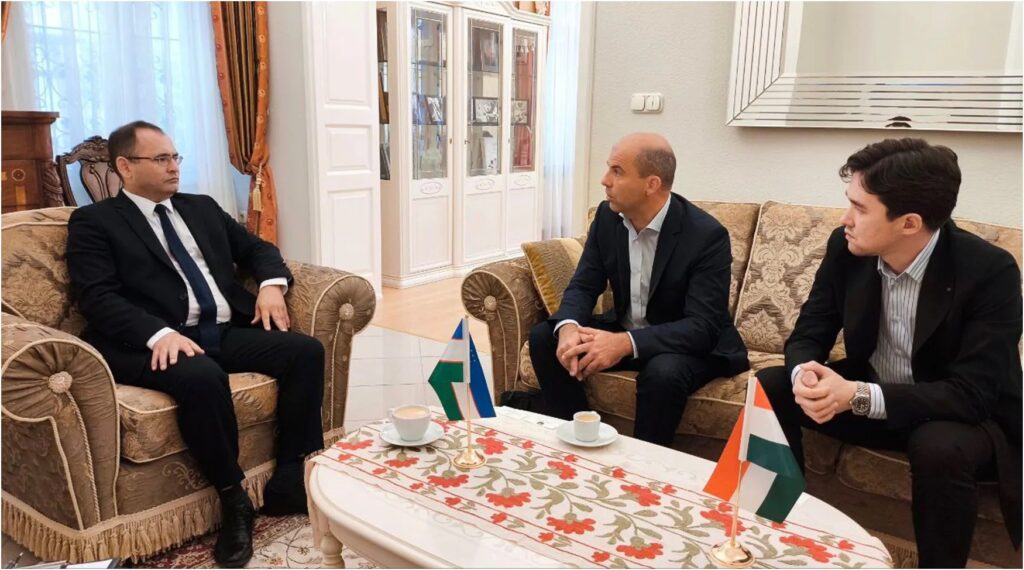
Specialists from Hungary will create an automated “smart” parking system in Tashkent. The issues of establishing cooperation and realizing investment projects in road and urban infrastructure were discussed at a meeting between Uzbekistan’s Ambassador to Hungary, Oybek Shakhavdinov, and Gabor Pusztai, Advisor to the General Director of the iCell company.

The parties conferred on the Hungarian group’s work on a project to help establish parking management within the fast-growing city of Tashkent. The system involves introducing and using high-tech sensors and mobile applications to find, reserve, and pay for parking spaces.

iCell’s specialists have been working for over a year on studying possible options for the effective implementation of the project and preparing a package based on the conditions and specifics of the capital of Uzbekistan. It was stated that an essential point in implementing the project is introducing changes to the republic’s current legislation regarding administrative sanctions for offenses and  articles which provide a clear understanding of the rights and obligations of road users.

iCell specializes in software development and services in various technological and telecommunication sectors. The company’s main activities and services include fleet management, intelligent parking solutions, IT services, energy and infrastructure management, and application development for various industries.

Uzbek Afghan Business Forum

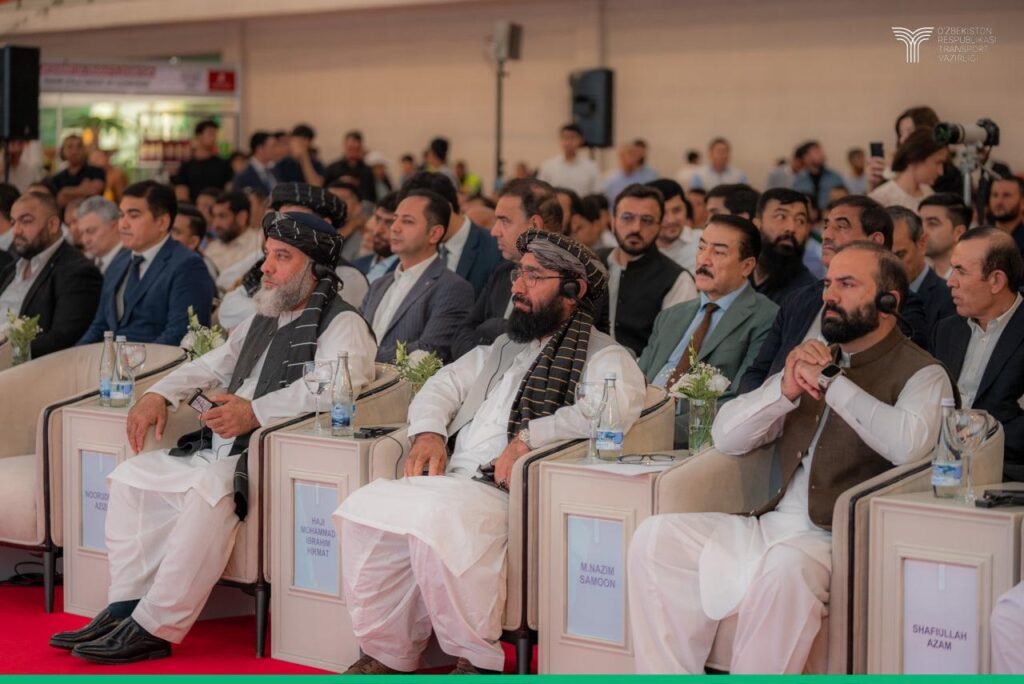
On July 3, an Uzbek-Afghan business forum was held in Tashkent to coincide with the visit  of an Afghan delegation headed by Minister of Industry and Trade Nuriddin Azizi. The major event, the forum was attended by heads of ministries and government agencies, industry, and over 1,000 business representatives from both countries.

As reported by the Uzbek Ministry of Investment, Industry and Trade, Afghanistan is Uzbekistan’s fifth-largest export market. In the last five years, trade between the two countries has increased almost 1.5-fold, reaching $866 million in 2023. Uzbekistan currently receives Afghan investment in 550 enterprises, 443 of which are wholly funded with Afghan capital.

In his welcoming speech, Laziz Kudratov, Minister of Investment, Industry and Trade of Uzbekistan, highlighted several promising areas of cooperation, including diversifying the range of goods traded, and bolstering cooperation between producers and exporters with support of both countries’ respective departments and industry associations.

The forum focused on initiatives to further develop mutual trade, such as the transition to round-the-clock border crossing operations, the establishment of trading houses, and the execution of major transport and infrastructure projects.

Attention was drawn to the significant impact of more proactive engagement at the International Trade Centre in Termez on the Uzbek-Afghan border, where the creation of business-friendly conditions include a 15-day visa-free regime and tax-free zone.

Nuriddin Azizi, Minister of Industry and Trade of Afghanistan, commended Uzbekistan’s efforts to foster an environment conducive to bilateral trade, economic and investment cooperation. He also encouraged more proactive engagement between Afghan and Uzbek entrepreneurs by offering assurance of both sides’ readiness to support new ventures and initiatives.

The forum was complemented by the  exhibition “Made in Afghanistan” which showcased the produce of 75 major Afghan companies from jewellery, textiles and food to electrical engineering, mining, transportation and logistics.

The event concluded with the signing of several trade agreements in the chemical and agricultural sectors, as well as an agreement to establish a logistics centre.

According to the Uzbek Ministry of Transport, Afghanistan is one of the key links in ensuring regional connectivity across Central and South Asia. In recent years, cargo transportation across Afghanistan has risen significantly and in 2023, the volume carried along the multimodal transport corridor Uzbekistan – Afghanistan – Pakistan increased 1.5-fold compared to 2021.


Chinese Power Plant for Western Kazakhstan

On July 2, Kazakhstan’s MAEK LLP and China Huadian Corporation Ltd., represented by Huadian Kazakhstan Energy, signed an agreement for the joint construction of a combined-cycle gas plant in Aktau.

The plant, aimed to meet the growing demand for electricity in Western Kazakhstan, is scheduled for commission in December 2026.

As reported by Kazakh Invest, the Chinese State Bank has pledged finance for the project for up to 15-25 years at a rate below 5%.

China Huadian Corporation is currently implementing the build of a combined-cycle gas plant in the Mangystau region of Kazakhstan. The $190 million project, which has the potential to integrate renewable energy sources,  will serve as the primary supplier of power and help regulate peak loads at a local level.


Uzbekistan’s Foreign Trade Turnover Reaches $62 Billion

EUROUZ member EastCham has published the “Market Outlook Uzbekistan 2024” reference guide. According to the report, Uzbekistan’s GDP per capita is lower than that of neighboring Kazakhstan, but higher than Kyrgyzstan and Tajikistan. Real GDP per capita may be higher than the official data suggests, however, as the volume of the national shadow economy is estimated at between 25 and 45% of Uzbekistan’s GDP. Per capita GDP is $2,510.1 (World Bank 2023), whilst the IMF forecasts $2,670 in 2024. GDP growth was 5.6% in 2023 (World Bank) and is expected to be 5.5% in 2024, and 5.6% in 2025.

“In 2022, Uzbekistan ranked 70th globally in gross GDP, 86th in total exports, and 75th in total imports, while placing 155th in GDP per capita,” the report states.

According to the report, Uzbekistan’s mining industry is one of the country’s most essential and internationally competitive industries, contributing up to around 30% of the country’s GDP. Uzbekistan is ranked 12th in the world in terms of mining. It is the world’s 5th-largest uranium, 8th-largest gold, and 11th-largest natural gas producer. Uzbekistan has the world’s 4th-largest gold, 7th-largest uranium, and 9th-largest copper reserves. In addition, metallurgy, the study of the physical and chemical behavior of metallic elements, is also one of the largest industries in Uzbekistan.

Natural gas dominates Uzbekistan’s energy complex. More than 85% of the country’s electricity is generated from natural gas, whilst coal generation is expected to increase from 3% to 10% in the coming years. Uzbekistan is one of the leading countries in the Eurasian region in terms of natural gas – it has large gas reserves and several small oil and coal resources.

“The Uzbek authorities established the green economy and renewable energy sources (solar, wind, hydropower) as the basis of sustainable economic development and plan to increase the share of renewable energy generation to 30% by 2030. One of the concrete steps towards this goal is to build 28 solar and wind power plants with a total capacity of 8000 GW and hydropower plants with a total capacity of 868 MW by 2027. The government also plans to build a large nuclear power plant by 2028,” the report states.

Last month, The Times of Central Asia published an interview with Neil McKain, the IFC regional manager for Uzbekistan, about the country’s potential to become a regional leader in renewable energy sources.

The report also emphasizes problems in the country’s electricity network, including Tashkent’s difficulties with heat and power supply systems in the last two years. Low temperatures have caused a decline in gas pipeline pressure (90% of power in Uzbekistan is produced by gas power plants). As a result, electrical heaters have gained popularity among residents of Tashkent, overwhelming the local power grid and leading to electricity shortages. President Mirziyoyev has acknowledged this problem, and Uzbekistan – Tashkent in particular – needs dramatic power and heat supply improvements.

Foreign trade turnover in Uzbekistan has surged in recent years. In 2022, it reached $50 billion (an 18.6% increase from 2021), while in 2023, it reached $62 billion, a 23.8% increase from 2022. Tashkent, the capital city, is responsible for 38% of all Uzbek foreign trade.
The share of CIS countries in foreign trade has begun gradually decreasing in the past few years: CIS member states accounted for 37.0% of Uzbekistan’s foreign trade in 2021, 35.7% in 2022, and 33.0% in 2023.

Imports into Uzbekistan reached $35.62 billion in 2022, while the period from January-June 2023 saw imports surge by 17% year-on-year. Exports from Uzbekistan reached $19.3 billion in 2022 (up 15.9% compared to 2021), and in the first half of 2023 (Jan-Jun), Uzbek exports saw a year-on-year increase of 1.1%. Furthermore, 80% of Uzbekistan’s foreign trade passes through Kazakhstan, Kyrgyzstan, and/or Russia, countries which combined represent 50% of total foreign trade in Uzbekistan. Other foreign trade, meanwhile, passes through Afghanistan and Iran, areas with high geopolitical risks.