• KGS/USD = 0.01144 0%
  • KZT/USD = 0.00193 -0%
  • TJS/USD = 0.10876 0.55%
  • UZS/USD = 0.00008 0%
  • TMT/USD = 0.28490 0%
  • KGS/USD = 0.01144 0%
  • KZT/USD = 0.00193 -0%
  • TJS/USD = 0.10876 0.55%
  • UZS/USD = 0.00008 0%
  • TMT/USD = 0.28490 0%
  • KGS/USD = 0.01144 0%
  • KZT/USD = 0.00193 -0%
  • TJS/USD = 0.10876 0.55%
  • UZS/USD = 0.00008 0%
  • TMT/USD = 0.28490 0%
  • KGS/USD = 0.01144 0%
  • KZT/USD = 0.00193 -0%
  • TJS/USD = 0.10876 0.55%
  • UZS/USD = 0.00008 0%
  • TMT/USD = 0.28490 0%
  • KGS/USD = 0.01144 0%
  • KZT/USD = 0.00193 -0%
  • TJS/USD = 0.10876 0.55%
  • UZS/USD = 0.00008 0%
  • TMT/USD = 0.28490 0%
  • KGS/USD = 0.01144 0%
  • KZT/USD = 0.00193 -0%
  • TJS/USD = 0.10876 0.55%
  • UZS/USD = 0.00008 0%
  • TMT/USD = 0.28490 0%
  • KGS/USD = 0.01144 0%
  • KZT/USD = 0.00193 -0%
  • TJS/USD = 0.10876 0.55%
  • UZS/USD = 0.00008 0%
  • TMT/USD = 0.28490 0%
  • KGS/USD = 0.01144 0%
  • KZT/USD = 0.00193 -0%
  • TJS/USD = 0.10876 0.55%
  • UZS/USD = 0.00008 0%
  • TMT/USD = 0.28490 0%
11 December 2025

Central Asian States Respond to Moscow Attacks

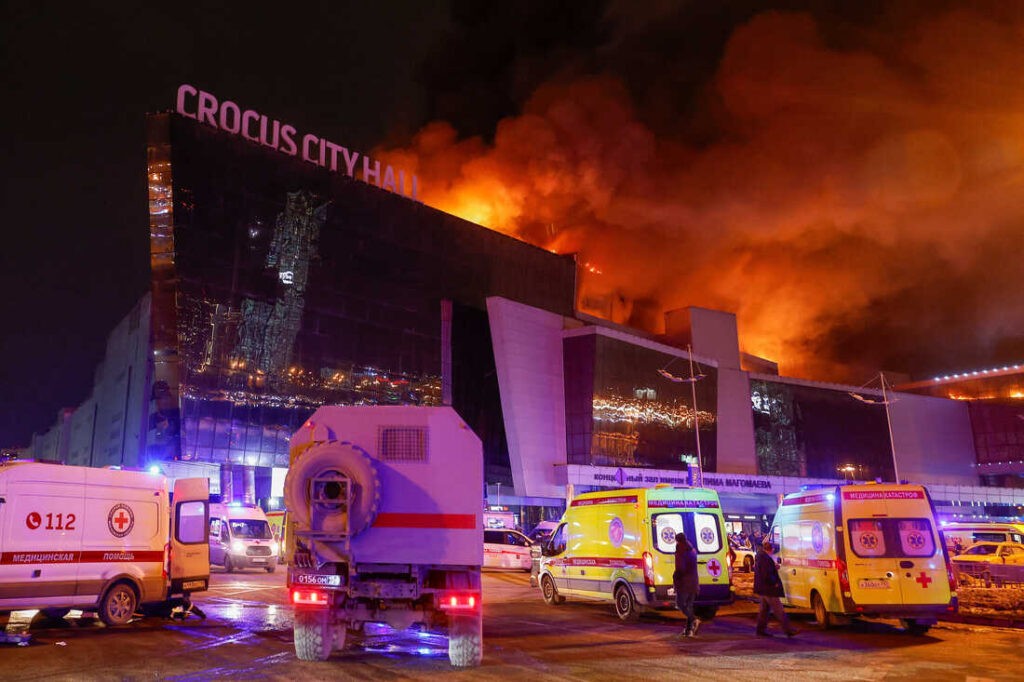
ALMATY, Kazakhstan – Central Asian countries have denounced the attack on a Moscow concert hall that killed more than 60 people, with Kazakhstan offering the help of its law enforcement agencies to Russia if needed. The Islamic State group claimed responsibility for the mass shooting on Friday night.

“Kazakhstan strongly condemns the terrorist act against civilians in Moscow,” Kazakh President Kassym-Jomart Tokayev said in a statement. He expressed condolences in a message to Russian President Vladimir Putin and urged United Nations member states to unanimously condemn the attack.

Uzbek President Shavkat Mirziyoyev also sent condolencesto relatives of the dead and wishes for the quick recovery of the injured. More than 140 people were injured, according to Russian authorities. Video recorded by witnesses showed several gunmen roaming the concert hall, opening fire on civilians. A large blaze also broke out at the building during the attack.

Uzbekistan “firmly condemns this act of terrorism directed against civilians, and the organizers and executors of this crime will be assured of the inevitability of punishment,” the president’s press service said.

The claim of responsibility could not be immediately confirmed, and it was unclear whether there was a link to Islamic State extremists in Afghanistan.

On Feb. 27, Russian Defense Minister Sergei Shoigu spoke of threats coming from extremists in Afghanistan and prioritized “ensuring military security in the Central Asian strategic area.”

Shoigu said the number of Islamic State militants in Afghanistan had increased by 15% in the past year. He said their key objectives were to spread radical ideology and to conduct subversive activities on the southern borders of the Collective Security Treaty Organization.

The organization, CSTO, is a Russian-led security alliance that includes Belarus, Kazakhstan, Kyrgyzstan, and Tajikistan.

Image above credit: Reuters

Kyrgyzstan to Start Producing Chevrolet, Isuzu Cars This Year

A joint Kyrgyz-Uzbek factory for the production of Chevrolet and Isuzu cars is currently under construction in Kyrgyzstan.

Several years ago the Kyrgyz and Uzbek governments agreed to build the plant, near Bishkek. Since then the authorities of both countries have been solving legal and investment issues related to the project. They also discussed taxation of the new enterprise and a grace period to allow the plant to get up and running.  As a result, at the beginning of 2023 Kyrgyz deputies approved the agreement and the builders started to erect production lines for the car assembly plant. The parties wanted to launch the plant last year, but the deadlines for completion of work were repeatedly pushed back.

Production of Chevrolet and Isuzu cars began in Uzbekistan in 2007 at a joint venture Daewoo plant. As representatives of the Uzbek company noted earlier, Kyrgyzstan is one of the priority markets for the expansion of production, as the China-Kyrgyzstan-Uzbekistan road corridor reduces the time it takes to deliver components, making car assembly cheaper.

According to the Kyrgyz government, the plant should begin operations in the second quarter of this year, and the first car should roll off the assembly line in late May. At the initial stage, Uzbekistan’s UzAuto Motors should invest $50 million and produce 10,000 cars in the first year — with the enterprise creating more than 1,000 permanent jobs. The first model produced at the plant will be the Chevrolet Nexia R3.

According to agreements between Bishkek and Tashkent, the first stage will include Uzbekistan bringing components in the form of large assemblies ready for installation into Kyrgyzstan. During the second stage, targeted to start in four years, the plant will produce automobile components independently — and produce about 20,000 cars a year. In the sixth year of operation, according to the plan, the Kyrgyz plant will perform a variety of technological operations, including body welding and painting, and should produce about 30,000 cars per year.

EU Looks to Help Uzbekistan Develop Vocational Education

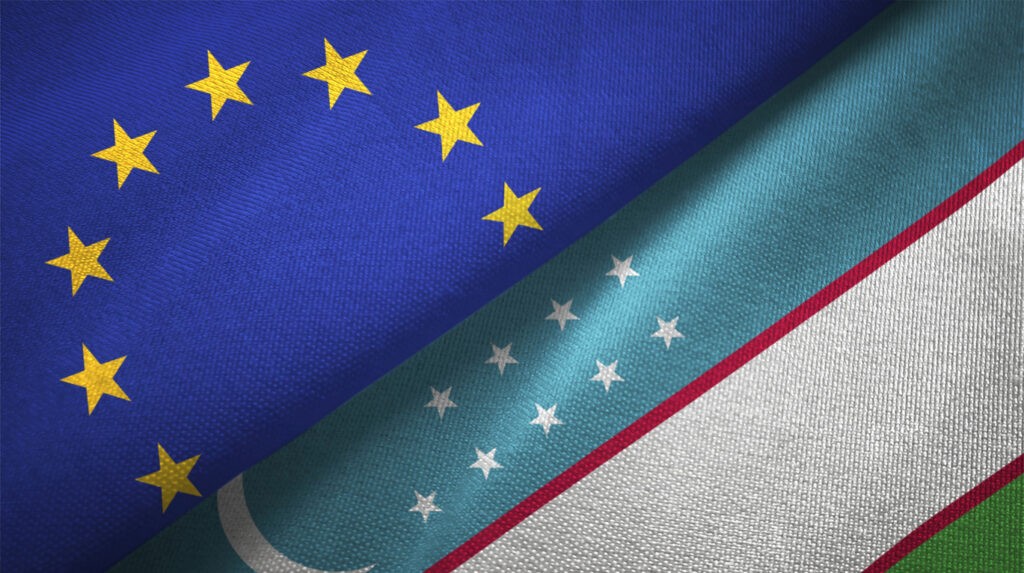
The UNESCO office in Uzbekistan participated in the opening ceremony of the renovated Karauzyak Agro-Economic Technical School in Karakalpakstan, which was renovated within the framework of the project, Skills Development for Rural Employment in Uzbekistan, funded by the EU. The renovation of the 1,423 square meter college included laying new floors, installing ceilings, and improving lighting to create a comfortable educational experience. The project also provided the college with the technical equipment necessary for various educational programs.

The EU Ambassador to Uzbekistan, Charlotte Adrian, UNESCO Representative in Uzbekistan, Sara Noshadi, as well as education officials, teachers and students of the college visited the renovated campus.

Utkir Alijanov, head of the Vocational Education Development Department at the Ministry of Higher Education, said that “within the framework of this project, we have not only revised material and technical aspects, but also updated educational and regulatory documents for specialties integral to agriculture, ensuring their compliance with European standards. The invaluable contribution of our foreign partners and cooperating experts played a key role in this endeavor.”

The Karauzyak Technical School of Agroeconomics was founded in 1988 and trains young people in 15 professional areas. This year, it has 155 students – twice as many as last year.

Sara Noshadi noted that UNESCO seeks to invest not only in immediate results, but at long-term, forward-looking support. Since 2020, UNESCO, with financial support from the EU, has been developing a strategy for technical and vocational education and training in Uzbekistan to provide the population, especially young people, with the necessary vocational skills to access better employment opportunities.

Earlier this year, President Mirziyoyev criticized the organization of secondary vocational education in the country, noting that the work of vocational education institutions is far from ideal. In this regard, the overwhelming majority of Uzbekistan’s labor migrants abroad are engaged in physically demanding, low-skilled and low-paid work.

Kazakhstan Ranked Among 50 Happiest Countries in the World

In the recently published UN and Gallup World Happiness Report 2024, Kazakhstan was ranked among the top 50 happiest countries in the world, ahead of Russia, Armenia and Georgia. However, the Baltic States and Uzbekistan returned higher happiness scores on the index.

This rating, presented on March 20, was developed on the basis of a three-year study conducted by UN experts, Gallup and other scientists. Citizens of different countries assessed their quality of life by taking into account a variety of factors, including economic status, GDP, life expectancy, major life challenges, sense of freedom, public responsiveness, and the level of corruption. These interdisciplinary studies help the understanding of how different aspects of life interact and influence the overall sense of happiness.

TCA asked citizens from across Kazakhstan about the their feelings regarding the level of happiness presented in the report, and met with mixed feelings.

“Frankly speaking, I don’t have such a feeling,” Alua, a 21-year-old pedagogical student from Taraz told TCA. “After all, food prices are rising almost daily, and wages are not growing as fast. Also, conditions in state institutions haven’t changed much, especially in healthcare and education.”

“I’ve seen this rating, but prices are rising so quickly that Almaty has become the most expensive city in Central Asia,” Sanzhar, a 22-year-old CMM specialist from Almaty commented.

“To be honest, I don’t think there have been any significant changes that mean we’re happier than before,” Merey, a 28-year-old singer from Astana told TCA. “The only thing maybe because the coronavirus pandemic was in full swing three years ago, so compared to that the situation is much better now, so people think they’ve become happier. However, the socio-economic situation in the country hasn’t changed that much, so it’s strange for me to hear that people in our country are happier than in Georgia, for example.”

Comments from others, however, suggest that life in Kazakhstan is improving year on year.

“Yes, I feel the changes,” Raushan, a 40-year-old Art Historian from Almaty stated. “There is less discrimination due to language barriers, and there’s a growing interest in traditional nomadic culture which leads to the creative development of young talents who are able to make a name for themselves internationally. All this strengthens their faith and motivation to move forward with creative ideas and learn ways to promote their creativity.”

“Thanks to the internet and social networks people are aware of the inhuman things happening in the world. With all that is known, I think people in Kazakhstan are just happy to have a peaceful sky above their heads.” Tair, a 25-year-old businessman from Taraz told TCA.

“I’ve definitely seen an increase in happiness among people. It’s like the confidence in our security has gotten higher for me personally,” Merey, a 20-year-old student from Kostanai commented.

Kazakh Musicians Turn to Old Instruments to Make New Music

The dombra, the kyu, the kobyz, the zhetigen…. The list of traditional instruments in Kazakh music goes on.

These aren’t dust-coated relics. The instruments are increasingly at the forefront of a lot of popular music in Kazakhstan today. They even get makeovers. The dombra is a long-necked, stringed instrument symbolizing Turkic culture. Now there is the electric dombra.

Merey Otan, also known as Mercury Cachalot, knows about all of this. She is a musician and graduate student at Nazarbayev University in Astana and co-author of a book about the transformation of traditional instruments in Kazakhstan.

In written responses to questions from The Times of Central Asia, Otan talked about contemporary Kazakh music and the role of the old instruments. After some replies, TCA includes brief explanations of her musical references.
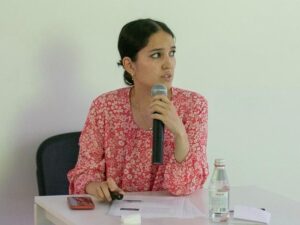
Researcher Merey Otan speaks last year at a launch for a book she co-authored about traditional instruments and contemporary music in Kazakhstan. Otan is a postgraduate student in the Eurasian Studies program at Nazarbayev University in Astana. Photo: Merey Otan


Merey, tell us how you first encountered Kazakh music and what attracted you to Kazakh instruments?


I have always been surrounded by Kazakh music. As long as I can remember we used to sing Kazakh folk songs at family gatherings, and various celebrations. My sister used to play dombra, a Kazakh traditional plucked two-stringed instrument, and when I started going to school I also started learning to play it. Unfortunately, I stopped taking lessons after a couple of years but I still remember how to play some compositions, kuys, and play it once in a while.


TCA: Kuys is a traditional instrumental piece of Kazakh, Nogai, Tatar and Kyrgyz musical cultures. It is performed on various folk instruments.


Which Kazakh instruments are considered the most popular among contemporary musicians, and why do they attract attention?


Dombra is probably the most popular traditional instrument among local musicians, including contemporary ones. It also has a sacred meaning for the people in terms of national identity. This is evident in the quote of a famous Kazakh poet Kadyr Myrza Ali “A true Kazakh is not a Kazakh but a dombra.” This shows that Kazakh people associate their identity with the instrument and incorporating its sound in contemporary songs allows them to situate their music in the local context. Apart from that, musicians also use instuments like qobyz, shanqobyz, zhetigen. Authenticity was always important for musicians and including traditional instruments is one of the popular strategies to demonstrate authenticity for Kazakhstan’s musicians. Among the most popular examples are songs by Yerbolat Kudaibergen, Irina Kairatovna, Aldaspan, The Buhars.
A dombra and a kobyz, traditional instruments used in Kazakhstan, are shown in a book that was co-authored by researcher Merey Otan. Photo: TCA


TCA: The kobyz is an ancient bowed instrument preserved among the peoples of Siberia, Central Asia, the Volga region, Transcaucasia and other regions. 

The shankobyz is an ancient Kazakh reed musical instrument, formerly used by shaman-worshipers to imitate the sounds of nature, such as wind, rain, and murmuring water. 

The zhetigen is an ancient multi-stringed plucked instrument, often seven-stringed, resembling a psaltery or laid harp, characteristic of Kazakh culture. 

Yerbolat Kudaibergenov is a Kazakh singer and author of hit songs such as “Zhigitter” and “Boijetken,” known for compositions filled with love for his homeland and a warlike spirit. 

Irina Kairatovna is a creative group from Kazakhstan that produces musical and humorous content. They are the authors of hits such as “Kok Tu,” “China” and “Ne Angime.”


What is the peculiarity of the sound of Kazakh instruments, and what technical and creative approaches do modern musicians use to give them a modern touch?


Kazakh traditional instruments differentiate the sound of local musicians from the vast amount of music in the world. Technological advancements provide opportunities for various creative and unique ways of enriching the sound. For example, musicians include riffs on traditional instrument into songs in hip-hop, R’n’B, rock genres. This makes the sound global and local at the same time. Other musicians went further by creating electric versions of traditional instruments like electric dombyra, electric zhetigen, electric qobyz. These instruments also started gaining popularity among contemporary musicians.


 How does the use of Kazakh instruments in contemporary music contribute to the preservation of cultural heritage and broaden its audience?


Definitely, the mentioned musicians play a part in preserving the cultural legacy and widening the audience of the music. First of all, mixing contemporary genres with traditional sounds creates positive associations with the Kazakh instruments for the listener. These instruments are not only thought of as memories of the past but something contemporary, authentic, cool, modern. It surely makes it popular among the youth who get to know these instruments and maybe want to learn to play the riffs from popular songs. It should be mentioned that local musicians are becoming popular in other countries as well. Therefore, we can assume that traditional instruments are becoming known in other regions too. A good example of this is Dimash Kudaibergen who became popular in China due to his incredible voice and now people from all around the world listen to him. However, he also helped popularize dombyra worldwide when he played the instrument on the most prestigious stage like Madison Square Garden in New York.


TCA: Dimash Kudaibergen is a Kazakh singer and multi-instrumentalist who has an international following and includes the use of traditional Kazakh instruments in his performances.
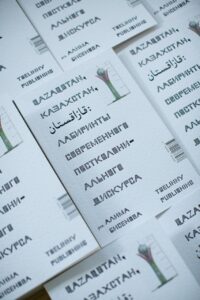
Copies of the book co-authored by Otan lie in a table at a book launch last year. The book is titled “Kazakhstan: Labyrinths of contemporary postcolonial discourse” and is published by the publishing house Tselinniy. Photo: TCA


What challenges do musicians face when integrating Kazakh instruments into contemporary compositions, and how do they overcome them?


The sacred importance of traditional instruments, especially dombra, of course caused some backlash from the conservative part of the population when contemporary musicians included it in their songs or created electric versions of them. This is a common situation not only in Kazakhstan. Back in the day, famous jazz musicians had similar concerns about the creation of electric bass guitar. For instance, ethnic rock band Aldaspan was accused of spoiling dombra by traditional musicians. Nevertheless, these “purist” attitudes did not stop musicians from continuing their work and creating further instruments like electric zhetigen. Moreover, musicians’ audience is increasing and the younger generation is more open to these kinds of creative choices and more liberal in their views. Therefore, I think these musicians no longer face significant struggles.


Can you share examples of successful projects where Kazakh instruments are successfully combined with modern genres of music?


As I mentioned previously, such performers as Yerbolat Kudaibergen with songs “Men qazaqpyn,” “Bizdin Zhigitter” is one of the prominent examples. Pretty much every song of the band Aldaspan and Sharapat and the incredible sound of electric dombyra and electric zhetigen can be considered successful. More popular examples are Irina Kairatovna and their song “Kok tu” where also the outro has riff played on both acoustic dombyra and electric dombyra. The Buhars released a mini album with songs specifically to demonstrate the beauty of traditional Kazakh instruments. Apart from that, OYU is a great platform to find good new music where I found out about the collaboration of DJ Puza and Mira de Leon with the song “Jiber” which also beautifully mixes qobyz sound with electric music.


TCA: OYU is a musical project from Kazakhstan, specializing in live performances of local and foreign artists of various musical genres.


What is your view on the balance between traditional elements of Kazakh music and modern audience requirements?


In my opinion, digital technologies and the vast amount of music from all over the world pushes the audience to find new, unique, interesting sounds and drives musicians to find ways to differentiate them from others. Today, it might be hard to surprise and intrigue a listener, who is constantly exposed to popular music from all over the world. This creates an incredible challenge but at the same time a great foundation for musicians to continue experimenting with the sound, creating new music, making groundbreaking work. And one of the possible strategies is to include traditional Kazakh instruments. This might be a good opportunity not only to gain an audience from the local population but also from other parts of the world.


What advice would you offer to young musicians who want to introduce Kazakh instruments into their creative work?


The most important advice I would give is to not be afraid to make something new. You can’t escape the criticism, especially in the era of social media but this should not stop people from their creative process. Be open to everything, challenge yourself, and challenge the listener.

Kazakhstanis Keeping Less Foreign Currency, Buying More Gold

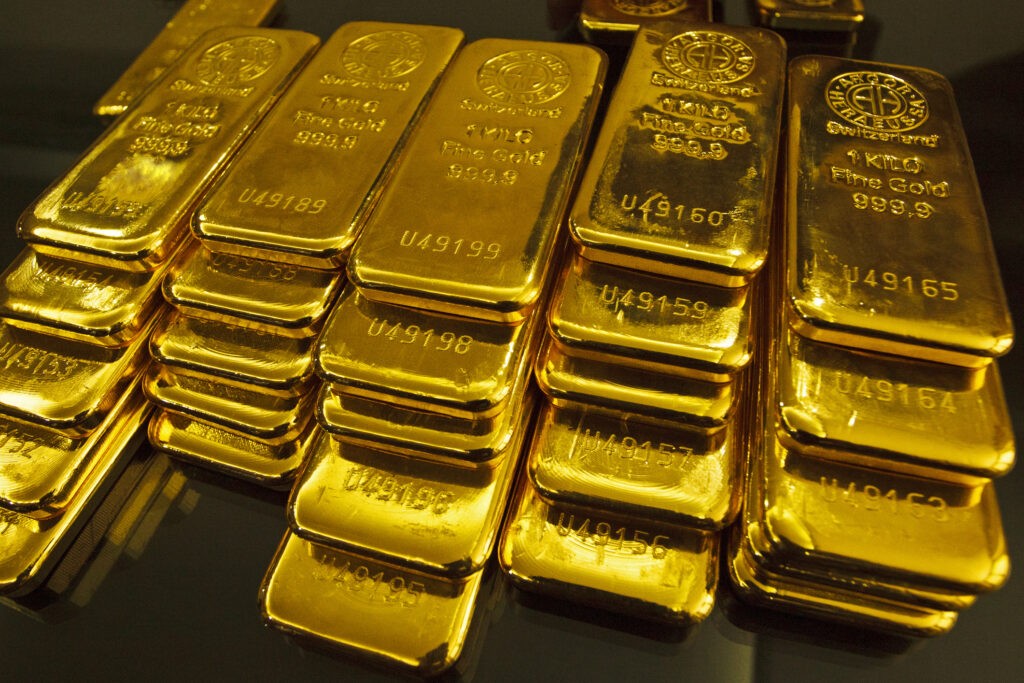
The National Bank of Kazakhstan counts the country’s gold and foreign exchange reserves in February 2024 at $36.1 billion, financial news outlet LS reports. In 2014 this indicator was at $26.05 billion, meaning that over the past 10 years the volume of gross international reserves has increased by $10 billion (+38.6%).

Over the past decade the mix of the gold and foreign exchange reserves has changed markedly. The foreign currency assets in Kazakhstan decreased by $4 billion, but gold reserves are up a surprising 3.2 times. In February 2014 the volume of the reserve in bullion was $6.3 billion, and in February of this year this figure reached $20.01 billion. At the same time, the reserves of precious metals in the country in this month increased to 300.4 tons.

The volume of assets in freely convertible currency decreased to $16.1 billion from $19.8 billion (-18.7%) over 10 years. The National Fund is itself down by 16.1% since 2014 — to $60.1 billion from $71.6 billion. At the end of last month, the chairman of the National Bank of Kazakhstan Timur Suleimenov said that the investment income of the National Fund was $870 million. “The amount of income to the fund since the beginning of the year amounted to $2 billion, including $408.8 million in national currency. The volume of transfers from the National Fund to the republican budget amounted to one tenge, or $0.0022,” said Suleimenov.

In Kazakhstan following the events of January 2022, work began on the repatriation and return of assets that were illegally withdrawn. Over the past two years more than $2.2 billion in cash and real estate were returned to the state. In September last year the total banking sector assets of Kazakhstan reached a record $106.6 billion.