• KGS/USD = 0.01144 0%
  • KZT/USD = 0.00196 -0%
  • TJS/USD = 0.10899 -0%
  • UZS/USD = 0.00008 -0%
  • TMT/USD = 0.28490 0%
  • KGS/USD = 0.01144 0%
  • KZT/USD = 0.00196 -0%
  • TJS/USD = 0.10899 -0%
  • UZS/USD = 0.00008 -0%
  • TMT/USD = 0.28490 0%
  • KGS/USD = 0.01144 0%
  • KZT/USD = 0.00196 -0%
  • TJS/USD = 0.10899 -0%
  • UZS/USD = 0.00008 -0%
  • TMT/USD = 0.28490 0%
  • KGS/USD = 0.01144 0%
  • KZT/USD = 0.00196 -0%
  • TJS/USD = 0.10899 -0%
  • UZS/USD = 0.00008 -0%
  • TMT/USD = 0.28490 0%
  • KGS/USD = 0.01144 0%
  • KZT/USD = 0.00196 -0%
  • TJS/USD = 0.10899 -0%
  • UZS/USD = 0.00008 -0%
  • TMT/USD = 0.28490 0%
  • KGS/USD = 0.01144 0%
  • KZT/USD = 0.00196 -0%
  • TJS/USD = 0.10899 -0%
  • UZS/USD = 0.00008 -0%
  • TMT/USD = 0.28490 0%
  • KGS/USD = 0.01144 0%
  • KZT/USD = 0.00196 -0%
  • TJS/USD = 0.10899 -0%
  • UZS/USD = 0.00008 -0%
  • TMT/USD = 0.28490 0%
  • KGS/USD = 0.01144 0%
  • KZT/USD = 0.00196 -0%
  • TJS/USD = 0.10899 -0%
  • UZS/USD = 0.00008 -0%
  • TMT/USD = 0.28490 0%
08 December 2025

EU and UNICEF Help Kazakhstan Reintegrate Children Returned from Syria and Iraq

When the so-called Islamic State established a self-declared ‘caliphate’ in 2014, thousands of nationals of Central Asian countries, including Kazakhstan, travelled to Iraq and Syria to join IS ranks. Many moved with their families and subsequently, many children were born in IS controlled conflict zones between 2014-2019.

Kazakhstan has so far evacuated 526 of these children and with aid from the European Union (EU) funded programme “EU-UN Support to the States in Central Asia for their Citizens Returned from Conflict Zones, Primarily Syria, and Iraq,” offered comprehensive support for their adaptation to life back home.

The programme aims to assist returnee women, children, and families by encouraging their reintegration into local communities and ensuring they receive protection, access to social services, and education. During the first phase, Kazakhstan in collaboration with UNICEF, established a National Resource Center to train and equip specialists working with returned children and provide psychosocial services and professional guidance to returnees. “Our common goal is to ensure that all returnee children continue to receive the necessary support to recover from their experiences as well as the opportunity to learn, develop, and adapt to Kazakhstani culture and tradition,” said Laetitia Bazzi-Vale, acting UNICEF Representative in Kazakhstan.

Kazakhstan’s First Deputy Minister of Foreign Affairs, Kairat Umarov noted that whilst significant progress has been made in the gradual reintegration of returnees into society, “our children still need psychological and social support.”

The Delegation of the European Union to Kazakhstan reported that on February 23rd, representatives of the EU, UNICEF, and the Kazakh Ministry of Foreign Affairs met in Astana to discuss the implementation of the second phase of reintegrating further returnee children and their families. Initiatives discussed included a program of activities designed to assist local executive bodies and schools working in this sensitive field.

Kestutis Jankauskas, the EU Ambassador to Kazakhstan, stated: “We have been supporting an important programme to reintegrate returnee children in Kazakhstan for several years now. The cooperation of UNICEF, the European Union, and the Kazakhstani authorities aims to create conditions for the children’s successful social adaptation, and we are pleased to see positive results.”

Kazakhstan Set to Drill World’s Deepest Well

Kazakhstan plans to become the country to set a new record for the deepest well in the world. Details regarding the project were revealed by Kazakhstan’s Ministry of Industry and Construction of Kazakhstan, reports lsm.kz

The specialized department said that the project called Eurasia is divided into three stages. The first was completed in 2022, at an expense of $5.9 million to the federal budget. Specialists then analyzed and revised all available geological and geophysical interpretations. Based on the results of the first phase, experts identified the most promising zones for further development.

According to the Ministry, about $500-550 million more is needed to execute the next two stages of work. The second phase of drilling will last about three years and will be financed by investor capital.

The third phase of the project will also last three years, and will be realized at the expense of private investors. At the same time, the specialized department reported that today they have not yet found an investor for the project.

“Various options for attracting funds are being considered. So far, there are no specific options and amounts of funding for 2024,” reported the Ministry.

The Eurasia well will be 15 km deep, allowing for a more detailed study of geological sections, and assessment of the undiscovered resource potential of the Caspian Depression in the search for hydrocarbons. Currently, the world’s deepest circular mine is considered to be a well in Russia at a depth of about 13 km, which is equal to the height of 15 Burj Khalifas, the Dubai skyscraper which considered to be the tallest in the world.

Second place in terms of well depth is occupied by OP-11, which is also located in Russia. The depth of this is 12.3 kilometers. It was drilled in just two months and opened in January 2011, becoming the deepeat in the world at the time. In third-place is the BD-04A well in Qatar, which was drilled in May 2008 at the Al-Shaheen oil field in just 36 days.

One other well worthy of mentioning is also located in Russia – the Kola ultra-deep well at 12.2 km, which was drilled back in 1970, in the days of the USSR. Initially, it was planned that the well would reach a depth of 15 km, but due to high temperatures of up to 230°C, drilling had to be stopped. Thanks to the Kola well, many pieces of unique scientific data were obtained, and the two-layer model of the Earth’s crust structure was questioned. Now, the Kola ultra-deep was mothballed in 1995 due to a lack of funding.

Kazakhstan, Russia and Turkmenistan to Develop North-South Transport Corridor

On 26th February, Kazakhstan’s Deputy Minister of Transport, Maksat Kaliakparov reported that the railway administrations of Kazakhstan, Russia, and Turkmenistan are planning a joint venture to improve services and reduce cargo delivery time along the International North–South Transport Corridor (INSTC).

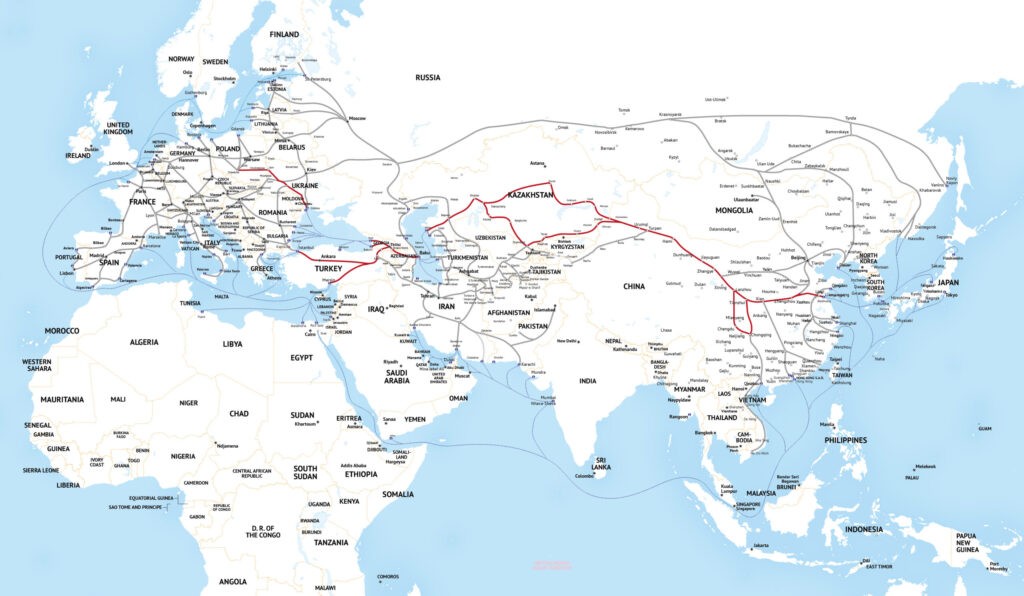
The North–South Transport Corridor is a key element of the Eurasian transport network, expanding opportunities for logistics and supply chains between Eurasian Economic Union (EAEU) countries, Europe, Asia, and the Middle East. The INSTC has three routes: the Western route (via Azerbaijan), the Eastern route (via Kazakhstan and Turkmenistan), and the Trans-Caspian route (via Caspian seaports).
The Eastern route runs through Kazakhstan’s western Mangystau region and connects the Kazakh port of Aktau and the northern ports of Iran.

According to Kaliakparov, in 2023, the volume of cargo transported by rail along the North-South corridor alone amounted to 2.1 million tons, 4% more than the previous year. By 2027, the transport potential of the entire corridor will be increased from 6 million to 10 million tons per year.

In an effort to become a regional transit hub and avoid geopolitical bottlenecks associated with transit through Russia and Iran, Kazakhstan is now actively engaged in the development of the Trans-Caspian International Transport Route – also known as the Middle Corridor – that will ensure a flow of transport between Europe, Central Asia, and China, without passing through Russia.

Smog in Bishkek Decreases by 10-15%

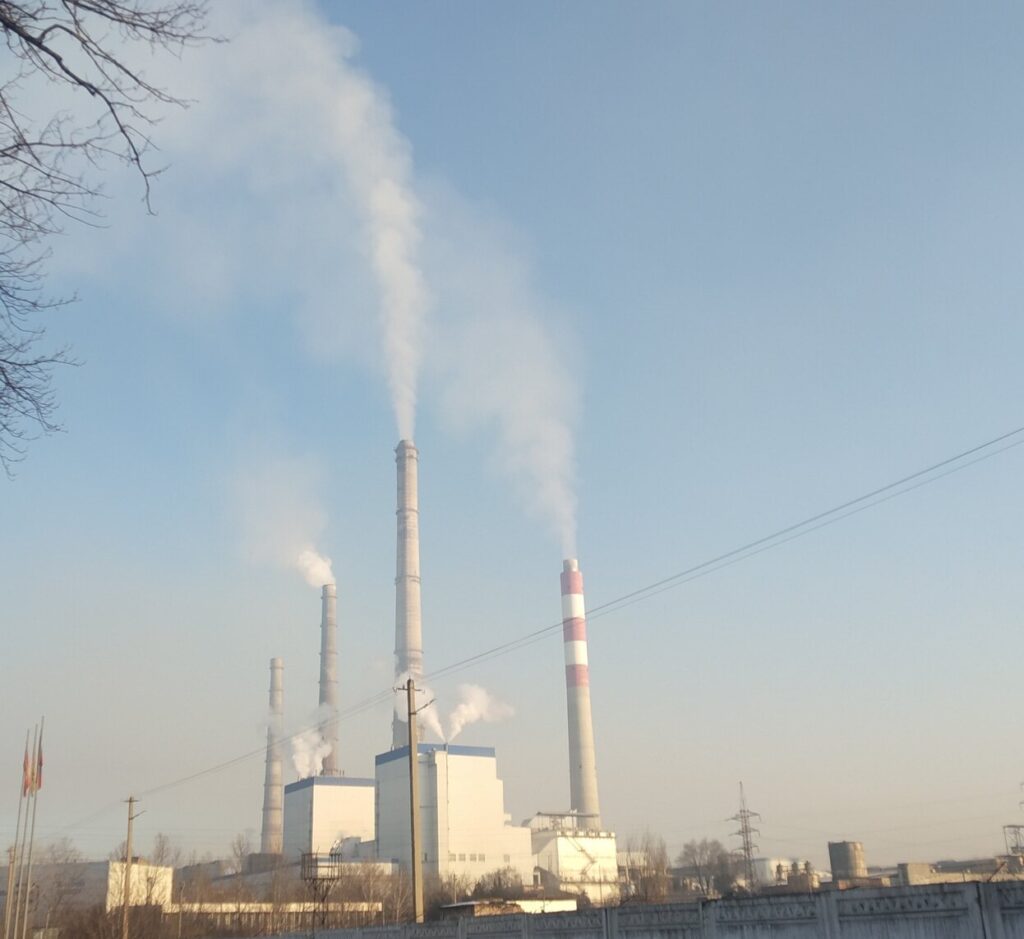
Kyrgyzstan’s Ministry of Natural Resources, Ecology and Technical Supervision has announced that smog in Bishkek has decreased by at least 10-15% resulting from the government’s efforts to improve the air quality in the capital city. Welcome news at a time when pollution had reached a critical level. In recent years, IQAIR has frequently ranked Bishkek among the worst cities in the world for the highest levels of air pollution.

The Asian Development Bank’s (ADB) brief, “Tackling Air Pollution in Bishkek: A Road Map to Cleaner Air,” released in November 2023, stated that air pollution in Bishkek exceeded the WHO air quality guidelines by up to 30 times in winter.

The brief referenced several studies on the main sources of air pollution. A UNICEF report showed PM2.5 concentrations are highest where households rely on coal for heating, in areas around the city’s coal-fired thermal power plant and where solid waste is burned. UNDP-UNEP similarly cited coal as the primary source of pollution, followed by road transport.

Transport was estimated by ADB to contribute around a third of annual emissions, particularly diesel trucks and minibuses.
In conclusion, the ADB report recommended that to arrest air pollution, top priority be given to phasing out coal and investing in clean public transport.

According to government reports, in 2023, nine residential neighborhoods comprising over 14 thousand households were supplied with natural gas. Today, 31 of the 47 residential suburbs, previously reliant on coal for heating, are connected to gas.

The ministry also stated that the Bishkek landfill, which had been burning for decades adding to the city’s air pollution woes, was completely extinguished last year. Its territory is currently being reclaimed, with 850 tree saplings planted so far on an area of 2.3 hectares. In addition, 850 new environmentally friendly buses running on liquefied gas have been purchased for Bishkek. Mild weather and heavy rainfall were contributory factors but the decrease in smog this winter bodes well for the city’s environment.

The Development and Drivers of Transport and Logistics in Kazakhstan

The challenging geopolitical situation in the region, combined with sanctions pressures, has ruptured traditional transport and logistics chains. Finding itself sandwiched, Kazakhstan has had to actively build new routes for transportation and freight, and to diversify its own suppliers. Measures previously taken to develop the transport and logistics industry has made it possible to solve these problems to some extent, though it still faces many challenges ahead.

Kazakhstan’s transport and logistics industry plays an important role in the country’s economy and attracts cargo flows. To transform the country into a transport and transit hub – one of the government’s declared strategic objectives – a number of large-scale measures are being taken today, with investments in the industry of about KZT1.8 trillion (U$4 billion), which are already bearing fruit.

Last year, about 29 million tons of freight passed through Kazakhstan, up 21% year-on-year, the lion’s share of which was transported by rail. Indeed, railways are slated to lead the country’s transit development. To further increase cargo flow, boost efficiency and, most importantly, expand the capacity of railroads, three large-scale projects were launched in Kazakhstan last year: the construction of a railway line bypassing the Almaty station, as well as two other lines – Darbaza-Maktaaral and Bakhty-Ayagoz. Over the next three years, more than 1,300 km of new rail lines will be laid. The projects aim not only at increasing transit traffic through Kazakhstan, but also expanding the country’s export potential and removing existing bottlenecks. Besides modernizing infrastructure, the industry faces many other tasks to spur transit traffic, including updating rolling stock, putting in place modern digital services, establishing competitive tariff rates for the transport of transit freight, etc.

To support cargo flows by road, the most used option, the construction and reconstruction of federal and local highways continues. In 2023, over 10,000 km of road was built or repaired. Such large projects as the BAKAD (Almaty ring road) and the Kandyagash-Makat and Usharal-Dostyk highways were completed. In the coming years, several road projects along federal and regional networks are planned, comprising a total length of about 9,000 km. More attention is to be paid to the quality of the roads under construction, which has been known to raise questions among motorists.

Kazakhstan’s maritime transport industry has also seen much development. In this regard, in the near future the creation of a container hub is planned at the Aktau seaport, along with the reconstruction of its docks and an upgrade of handling equipment. Dredging work is also to be done. The port of Kuryk is also being developed through the construction of a multi-functional terminal. Taken together, this will boost the throughput capacity of Kazakhstan’s seaports by 10 million tons, with container capacity rising to 300,000 TEUs per year. This is especially important in the context of the active development of alternative trade routes, in particular the Trans-Caspian International Transport Route (TITR) and the International North-South Transport Corridor (INSTC), for which both seaports will be used. The potential of these routes is evidenced by the interest of many foreign players. Note that the World Bank published a report in late November 2023 on the outlook for the TITR until 2030, exploring priority measures that could help countries participating in this multi-modal, rail-sea corridor to transform it into an important and reliable trade route.

The country’s airports are also a focus. Currently, the Astana, Almaty, Shymkent and Aktau airports are planning to attract $1.5 billion of foreign direct investment, which should raise the capacity of their cargo terminals from the current 200,000 to 1 million tons per year and create regional air hubs with a full range of services. A special economic zone for the airports is under consideration, a step that global experience shows will help attract cargo flows. In addition, as part of the Open Skies regime, airlines and low-cost carriers from 12 countries have agreed to fly to 13 international airports in Kazakhstan (Astana, Almaty, Taraz, Shymkent, Aktau, Semey, Karaganda, Ust-Kamenogorsk, Pavlodar, Petropavlovsk, Kokshetau, Turkestan and Aktobe), thus increasing competition among carriers, opening international routes, reducing the cost of tickets, developing tourism, and making cities in Kazakhstan more accessible.

Transport and logistics are reaching a new level of development in Kazakhstan and becoming one of the priority areas for the government. In the context of the unstable geopolitical situation in the former Soviet Union, as well as in the Middle East, which has affected global transport flows, Kazakhstan is well positioned to become an important transport and logistics hub between East and West and North and South, providing the shortest, safest routes, and convenient conditions for transporting goods.


Dauren Moldakhmetov 

Editor-in-Chief of industry transportation publications of Kazakhstan, railway magazine “Trans-Express Kazakhstan” and business magazine “Trans Logistics Kazakhstan”


Afghan Canal Will Divert Water from Uzbekistan

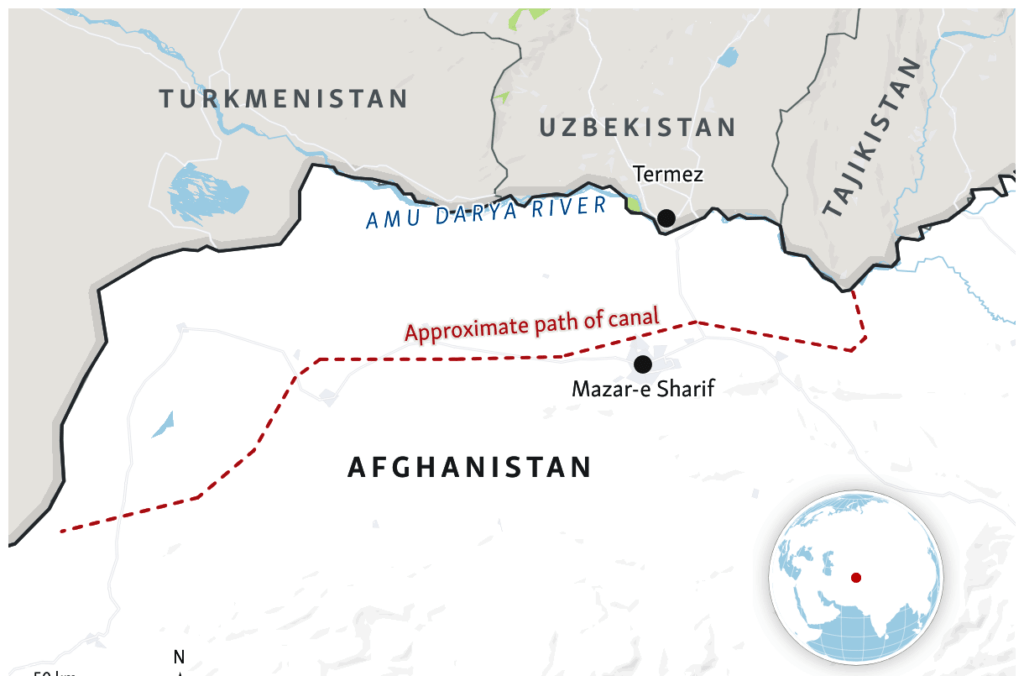
Afghanistan has begun construction of the second phase of the Qosh Tepa Canal, which will divert water from the Amu Darya River and may have an adverse effect on agriculture in downstream Uzbekistan.

The Taliban announced that construction work on the second phase, which stretches from Dawlat Abad District of Balkh Province to Andkhoi District of Faryab Province, began on February 20th, Afghan broadcaster TOLOnews reported, adding that the 198-km first phase of the canal is now complete and construction of the 177-km second phase will take 12 months.

The canal is expected to convert 550,000 hectares of desert into farmland in northern Afghanistan. The Taliban-led government of Afghanistan has made the Qosh Tepa Canal a priority project and its construction started in early 2022. However, neighboring Uzbekistan, the main downstream country in the Amu Darya basin, has expressed concerns that the canal will have an adverse effect on its agriculture.

In September 2023, Uzbekistan’s President Mirziyoyev stated that the canal could “radically change the water regime and balance in Central Asia.” Speaking at a meeting of the Council of Heads of the Founder States of the International Fund for Saving the Aral Sea, Mirziyoyev warned that a “new participant in the water use process has appeared in our region.” Mirziyoyev proposed the formation of a joint working group to study all aspects of the Qosh Tepa Canal and its impact on the water regime of the Amu Darya River with the involvement of research institutes of the Central Asian countries.

A Eurasian Development Bank’s (EDB) study, “Efficient Irrigation and Water Conservation in Central Asia,” released in November 2023, emphasized the need to mitigate the anticipated decrease in the flow of the Amu Darya River from Afghanistan. EDB analysts forecast that by 2028, the combined effects of climate change, low-water periods and the commissioning of Qosh Tepa Canal in Afghanistan will result in acute water shortages in Central Asia, estimated to be between 5 and 12 km3.

With the launch of the canal provisionally set for 2028, its expected water intake from the Amu Darya will be up to 10 cubic kilometers. A reduction in the Amu Darya flow will have an impact on the entire Aral Sea basin. As a result, from 2028, Central Asia will face a chronic water shortage, Evgeny Vinokurov, chief economist of the EDB warned.