• KGS/USD = 0.01144 0%
  • KZT/USD = 0.00193 -0%
  • TJS/USD = 0.10811 -0.28%
  • UZS/USD = 0.00008 0%
  • TMT/USD = 0.28490 0%
  • KGS/USD = 0.01144 0%
  • KZT/USD = 0.00193 -0%
  • TJS/USD = 0.10811 -0.28%
  • UZS/USD = 0.00008 0%
  • TMT/USD = 0.28490 0%
  • KGS/USD = 0.01144 0%
  • KZT/USD = 0.00193 -0%
  • TJS/USD = 0.10811 -0.28%
  • UZS/USD = 0.00008 0%
  • TMT/USD = 0.28490 0%
  • KGS/USD = 0.01144 0%
  • KZT/USD = 0.00193 -0%
  • TJS/USD = 0.10811 -0.28%
  • UZS/USD = 0.00008 0%
  • TMT/USD = 0.28490 0%
  • KGS/USD = 0.01144 0%
  • KZT/USD = 0.00193 -0%
  • TJS/USD = 0.10811 -0.28%
  • UZS/USD = 0.00008 0%
  • TMT/USD = 0.28490 0%
  • KGS/USD = 0.01144 0%
  • KZT/USD = 0.00193 -0%
  • TJS/USD = 0.10811 -0.28%
  • UZS/USD = 0.00008 0%
  • TMT/USD = 0.28490 0%
  • KGS/USD = 0.01144 0%
  • KZT/USD = 0.00193 -0%
  • TJS/USD = 0.10811 -0.28%
  • UZS/USD = 0.00008 0%
  • TMT/USD = 0.28490 0%
  • KGS/USD = 0.01144 0%
  • KZT/USD = 0.00193 -0%
  • TJS/USD = 0.10811 -0.28%
  • UZS/USD = 0.00008 0%
  • TMT/USD = 0.28490 0%
10 December 2025

Turkmenistan to Proceed with Energy and Transport Projects in Afghanistan

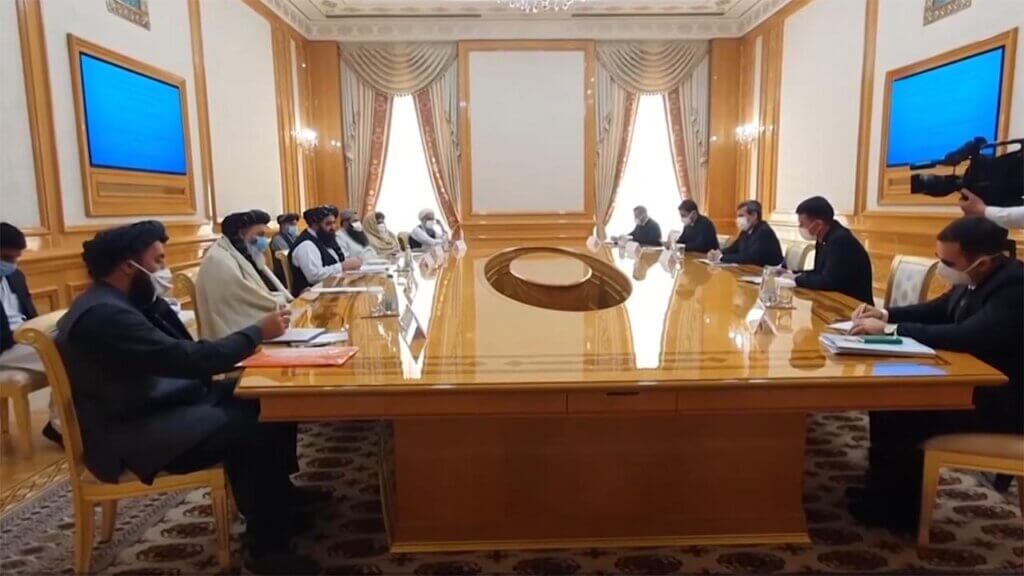
On 26th February, the Minister of Foreign Affairs of Turkmenistan, Rashid Meredov and an Afghan delegation led by acting Foreign Minister, Amir Khan Muttaqi met in Ashgabat to discuss large-scale energy and transport projects.

The negotiations focused on the Turkmenistan-Afghanistan-Pakistan-India (TAPI) gas pipeline, the Turkmenistan-Afghanistan-Pakistan (TAP) high-voltage power transmission line, and the construction of railways from Turkmenistan to Afghanistan. The Turkmen Foreign Ministry cited ‘a high degree of readiness’ on both sides to continue the construction of these facilities in Afghanistan.

TAPI is a major project to transfer Turkmenistan’s natural gas to Pakistan and India through Afghanistan. The construction of the pipeline in Afghanistan, long delayed by financial and security issues, will stretch for 1,840 km and transport more than 30 billion cubic meters of natural gas per year from Turkmenistan’s giant Galkynysh gas field. Once completed, the TAPI pipeline will provide Turkmenistan with an additional gas export route, while Afghanistan will receive both its own volume of gas and some $400 million a year in revenue from transit charges.

The two foreign ministers also agreed to explore the potential of training specialists in various sectors of the Afghan economy within Turkmen higher and secondary vocational educational institutions.

According to Afghan statistics, trade between Afghanistan and Turkmenistan reached $481 million in 2023.

Development Plan for Astana Agglomeration Approved

The plan for the agglomeration of Astana through to 2028 was approved by the government of Kazakhstan on February 27th.

The country’s capital since 1997, Astana has since grown and developed into one of the most modern cities in Central Asia. In addition to the city, the agglomeration will include more than 40 nearby towns and villages. Over the past 10 years, the population of Astana has increased by 46%. Records show that in January 2024, it exceeded 1.43 million and by 2035, is expected to grow to 2.3 million people.

The key aims of the Astana agglomeration are the improvement of urban development, the modernization of social, engineering and transport infrastructures, environmental sustainability and safety, and safeguarding against emergencies.

A unified urban planning policy will enable the synchronization of plans for the development of the capital and adjacent Akmola region, including the creation of eco-towns on an area of over 940 hectares.

The new transport and logistics infrastructure will comprise six logistics complexes, a service centre for the maintenance of electric locomotives, and subsidies for suburban routes.

Over 400 km of existing roads will be repaired, and 300 km of new roads and four bridges built in agglomerated towns and villages.

To attract investment and supply food, 25 facilities to produce food and 12 for industrial goods will be built in an industrial zone covering 300 hectares.

At the meeting, Kazakhstan’s Prime Minister Olzhas Bektenov highlighted the fact that the main problem to be addressed by the agglomeration is the sharp population increase in the suburbs and the daily migration to the capital and back, which significantly impacts the entire infrastructure of Astana, its ecology and safety.

In recognition of ongoing problems faced by many suburban villages, such as water supply, waste disposal, a stable electricity supply, and the condition of roads, the prime minister stated: “I believe that the implementation of the plan should solve these pressing issues. Moreover, we need to create permanent jobs in the suburbs. Astana as the core of the agglomeration creates prerequisites for sustainable development of the adjacent territories. This will help smooth out the existing imbalance between the living standards in the capital and neighboring settlements.”


Kazakhstan to Increase Use of Groundwater for Irrigation

On 27th February, Kazakhstan’s Ministry of Water Resources and Irrigation announced plans to increase the volume of groundwater used for agricultural irrigation by tapping into local reserves.

The country and especially its dry southern and eastern regions, has long been dependent on water from its upstream neighbors, Kyrgyzstan and China.
Kazakhstan’s groundwater reserves exceed 43,000 tons per day, 19,000 tons of which could effectively be used in irrigation.

Agriculture currently uses more than 40 thousand tons, equivalent to 60%, of water collected per day. Of this, groundwater makes up just 1.2%. Under the first stage, this is due to increase to 10-15%, initially from reserves in Almaty, Pavlodar, East Kazakhstan, and Zhambyl.

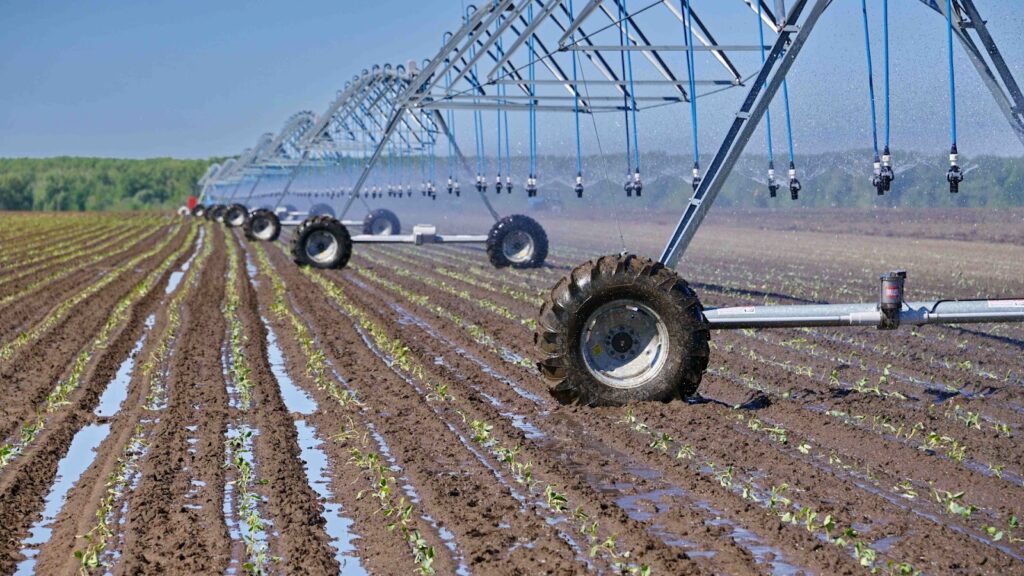
In 2023, of the 1.8 million hectares of irrigated land in Kazakhstan, water-saving technologies were employed on as little as 17% (312,000 hectares), with drip irrigation used on only 84,000 hectares.

As an added incentive to implement the expansion of areas of irrigated land through a greater use of groundwater and water-saving technologies, the state will introduce subsidies and reduced tariffs for users.

Turkmenistan Hosts Business Delegation from Afghanistan

On February 25th a group of businessmen from Afghanistan arrived in Turkmenistan to discuss investment opportunities in Afghanistan, and to shore up the two countries’ commercial and diplomatic connections.

Led by the acting Afghan foreign minister Amirkhan Muttaki. the group included members of the Afghanistan Railways Authority, the acting minister of mines and petroleum, and representatives of the national energy company.

This visit was not publicized by Turkmenistan’s Ministry of Foreign Affairs. The ministry did however report on a February 23rd meeting between the deputy minister of foreign affairs of Turkmenistan, Ahmad Gurbanov, and the special representative of the Chinese foreign ministry for Afghanistan, Yue Xiaoyun, in Ashgabat.

Labor Migration – Making Money At Any Cost

The number of labor migrants from Tajikistan continues to grow steadily, officially reaching the highest figure seen in the last decade. According to the Ministry of Labor, Migration and Employment, in 2023, 652,014 people left the country to work abroad.

Despite the fact that the Government of Tajikistan claims the poverty level in the country has decreased (the poverty threshold is not specified), in reality a huge swathe of the male population is working abroad in an attempt to feed their families. Up to 40% of households in Tajikistan have at least one member working abroad.

Remittances from migrants therefore account for a significant part of the country’s GDP, but the authorities claim they cannot say exactly how much is sent by migrants because these remittances are funneled through different channels (accounts, banks, cards or through compatriots). However, various international organizations have stated that the figure stands in the realm of billions of dollars. Thus, according to the World Bank-KNOMAD, migrants’ remittances to Tajikistan in 2022 amounted to 5.346 billion dollars (39.6% of the country’s GDP). This makes Tajikistan one of the most remittance-based economies in the world, which serves as both a boon and a curse for the authorities, for whilst this mass migration removes those often viewed as unemployed malcontents, it’s also a source of embarrassment.

Against the background of military conflict, the number of Tajik workers in Russia has slightly decreased, from 775,000 in 2022 to just over 652,000 in 2023, according to the Minister of Labor, Migration and Employment, Gulnora Hasanzoda. However, official statistics from the Russian migration services, number citizens of Tajikistan who are labor migrants in Russia at 1.5 million, whilst several hundred thousand more have obtained Russian citizenship.

Renowned for being humiliated and extorted by border guards, these ex-pats are easy targets for the Russian police and are the subject of attacks by Neo-fascist groups. Often living in dormitory blocks overseen by gang-masters on the plains of Siberia, many die on the job, but they couldn’t survive back home. The poorest of the post-Soviet Republics, in September 2020, the World Food Program estimated that 47% of people in Tajikistan live on less than $1.33 a day, whilst an estimated 30% suffer from malnutrition.

A relatively new trend of leaving the country to work abroad has also been observed in Turkmenistan, where those serving in the police and in military units rank among the highest in terms of expats. Though salaries in these professions are considered quite high by Turkmen standards – police officers receive $142-157 and servicemen $160-185 a month, it is possible to earn several times more on a construction site, as a waiter or a cab driver in Russia. Thus, in April 2023 alone, around 200 officers from the Department of Internal Affairs of the Dashoguz Province of Turkmenistan submitted their resignations with the aim of going to work in Russia.
Konye-Urgench Bazaar, Dashoguz Province, Turkmenistan. Photo: TCA.

Against the background of aggravated labor migration, the authorities of Turkmenistan continue to do everything possible to hinder it: the issuance of foreign passports is a deliberately laborious process and a stringent visa regime is actively maintained. In 2022, the authorities requested that Turkey cancel a visa-free regime for its citizens, with the visa now costing a princely $250. In addition, those wishing to travel abroad have to pass an interview with the Ministry of National Security, who, since March 2023, oblige citizens to have a letter of guarantee they will return home signed by a close relative.  The final stage – buying a ticket – also involves a number of hurdles, including massive queues at ticket offices, corruption, and inflated ticket prices. Even after boarding the plane, a traveler cannot be sure that he or she will not be ejected from the flight without explanation.

Those who do manage to leave Turkmenistan in search of earnings often end up doing hard physical labor and living in unsatisfactory conditions. Most migrants are forced to work illegally, meaning they have no medical insurance and no rights in cases of accidents or disputes with employers.

Kazakhstan Exported a Million Tons of Goods to China Last Month

In January 2024 Kazakhstan sent over a million tons of cargo to China by rail, Kazakhstan’s nation rail company Kazakhstan Temir Zholy has reported. This is an increase of 43% compared to the volume recorded for January last year.

The supply of iron ore to its eastern neighbor has increased by 19%, grain supplies have gone up by 37%, and export of ferrous and non-ferrous metals has more than doubled.

Demand for passenger transport by rail is also growing in Kazakhstan. Last month 1.8m train journeys were made in Kazakhstan, a growth of 6.6% compared to January 2023.