• KGS/USD = 0.01143 -0%
  • KZT/USD = 0.00192 -0%
  • TJS/USD = 0.10820 0.19%
  • UZS/USD = 0.00008 0%
  • TMT/USD = 0.28575 0%
  • KGS/USD = 0.01143 -0%
  • KZT/USD = 0.00192 -0%
  • TJS/USD = 0.10820 0.19%
  • UZS/USD = 0.00008 0%
  • TMT/USD = 0.28575 0%
  • KGS/USD = 0.01143 -0%
  • KZT/USD = 0.00192 -0%
  • TJS/USD = 0.10820 0.19%
  • UZS/USD = 0.00008 0%
  • TMT/USD = 0.28575 0%
  • KGS/USD = 0.01143 -0%
  • KZT/USD = 0.00192 -0%
  • TJS/USD = 0.10820 0.19%
  • UZS/USD = 0.00008 0%
  • TMT/USD = 0.28575 0%
  • KGS/USD = 0.01143 -0%
  • KZT/USD = 0.00192 -0%
  • TJS/USD = 0.10820 0.19%
  • UZS/USD = 0.00008 0%
  • TMT/USD = 0.28575 0%
  • KGS/USD = 0.01143 -0%
  • KZT/USD = 0.00192 -0%
  • TJS/USD = 0.10820 0.19%
  • UZS/USD = 0.00008 0%
  • TMT/USD = 0.28575 0%
  • KGS/USD = 0.01143 -0%
  • KZT/USD = 0.00192 -0%
  • TJS/USD = 0.10820 0.19%
  • UZS/USD = 0.00008 0%
  • TMT/USD = 0.28575 0%
  • KGS/USD = 0.01143 -0%
  • KZT/USD = 0.00192 -0%
  • TJS/USD = 0.10820 0.19%
  • UZS/USD = 0.00008 0%
  • TMT/USD = 0.28575 0%
13 December 2025

Record Numbers of Pink Flamingos Are Wintering in Turkmenistan

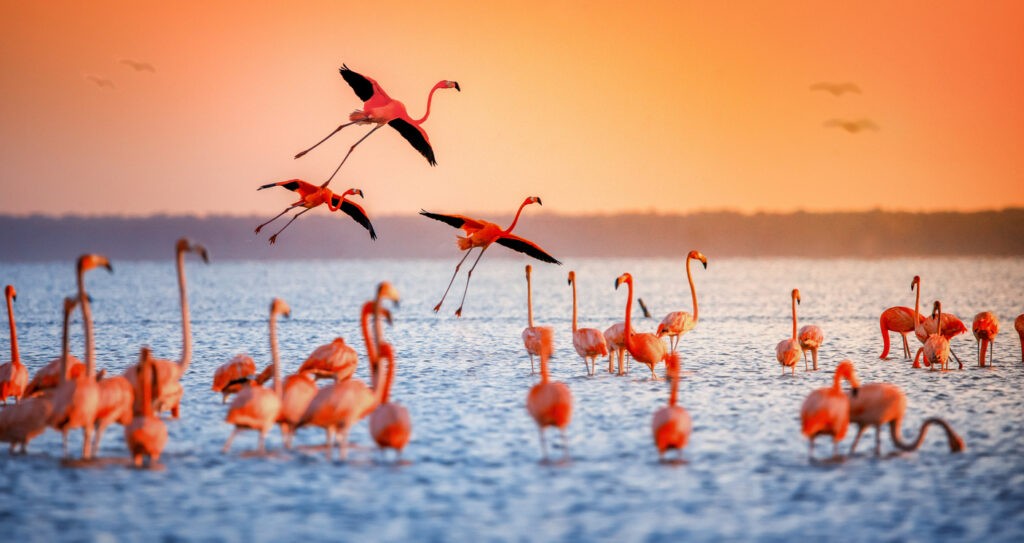
This year the Turkmen coastline of the Caspian Sea has hosted a record number of wintering birds. According to the international ornithological expedition, more than 207,000 birds have flown there since the fall.

Pink flamingos, listed in the so-called Red Book of endangered species, are the emblem of Turkmenistan’s Khazar State Nature Reserve. Scientists at the reserve counted 30,392 of these migratory birds in total. Turkmen ornithologist A.A. Shcherbina commented that “this is an official record, both according to recorded data and observations in our sector of the sea, which I have been engaged in since 1971.”

In Latin flamingo means fire or flame. This species is most commonly found in Africa, Southeast and Central Asia, the Caucasus, Central and South America, and the Mediterranean. In Central Asia there is a red-winged species of flamingo, which is usually called ‘pink’. Nomadic peoples across Asia believe that seeing one will make them happy.

Scientists carefully study, photograph and keep records of all coastal animal species of the Turkmen sector of the Caspian Sea. Specialists have noted that in the past years, endangered flamingos preferred to spend their winters in Iran. The current relocation of the birds, it seems, is caused by favorable changes in the water of the Caspian Sea and its coastline.

Thanks to the efforts of staff from the Khazar reserve, natural conditions for nesting are improving on the Turkmen coast — and the food base for protected birds is growing. According to their calculations, there are 50,000 more migratory birds this season than last season.

The reserve, founded in 1934, took its name from the ancient name of the Caspian Sea — Khazar. Most of the reserve’s 270,000 hectares fall on the shores of the Caspian Sea.
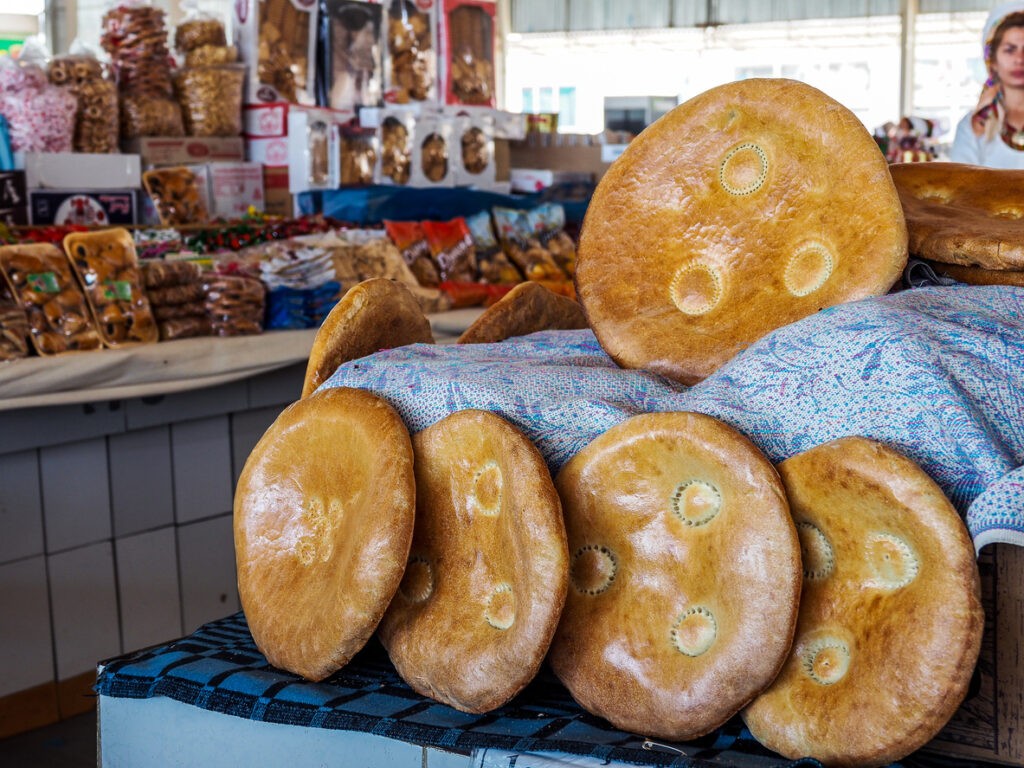
The Cost of Bread and Flour in Turkmenistan is Steeply Rising

According to local media, bread and flour are becoming much more expensive in Turkmenistan’s state stores.

The price of a kilogram of flour is being quoted at 3.5 manat ($1 at the state rate or $0.18 at the black market rate), instead of the one manat ($0.30 at the state rate or $0.05 at the black market rate) previously. Similarly, the cost of a loaf of bread has increased to 2.5 manats ($0.72 or $0.13) from one manat ($0.3 or $0.05).

The food ration limit has stayed the same despite the price increases: one person can still only purchase three loaves of bread and five kilograms of flour.

In Turkmenistan, state and private stores have entirely different prices. Private stores offer everything, but many families often cannot afford the goods. Although the prices in state stores are significantly lower, scarcity is a common issue, and there’s a rationing quota that caps the quantity of goods sold to each individual.

Additionally, lines frequently form in state stores because of the influx of customers looking to purchase bread at reduced prices. This occasionally leads to sad consequences; according to Turkmenistan’s domestic mass media, a woman was killed in a fight in the Tashkhovuz region last summer while purchasing subsidized flour.

People in Turkmenistan prefer to purchase flour imported from Kazakhstan over local flour found in state stores, in part due to the country’s growing demand for flour and bakery products, according to a report by Tukrman News. For instance, people in the Maryam region claim that Kazakh flour costs just slightly more and is of higher quality.

A 50-kilogram bag of local flour costs at least 180 manat ($51.50), while the price of Kazakh flour is 200 manat ($60.10). However, according to some shoppers, Turkmen flour smells bad and looks gray in color. It is not available in infinite quantities: there is still a five-kilogram per person ration quota in place.

According to people cited by Turkmen news, in addition to the price of bread and flour, prices for fertilizers, irrigation water and leases for the use of state equipment have increased several times. Unfortunately, farmers who rent land from the government aren’t receiving any additional income from the increase in retail purchase prices.

Kazakhstan Peacekeepers Deployed to Golan Heights

According to the Ministry of Defense of the Republic of Kazakhstan, a memorandum of understanding (MoU) has been signed at United Nations (UN) headquarters in New York between the Kazakh government and the UN regarding the deployment of a peacekeeping contingent to the UN Disengagement Observer Force mission.

This will be the first time in the history of Kazakhstan when the UN has given the country a mandate to carry out an independent peacekeeping mission. Earlier, Defense Minister Ruslan Zhaksylykov reported that 139 servicemen will be sent to the Golan Heights between Israel and Syria. They will maintain a ceasefire between the warring parties in accordance with the mandate of the UN mission.

In order to fulfill the UN mission with professionalism, peacekeepers from Kazakhstan have undergone a thorough selection and training process in accordance with all the requirements and standards of the UN. The training lasted six months, and took place at the center for peacekeeping operations under the Kazakh Ministry of Defense.

“The instructor staff of the centers of peacekeeping operations, demining and military medicine participated in the training of the servicemen. To improve practical skills and interoperability with officers of the contingent’s headquarters, classes were held on military decision-making at the operational-tactical level,” the Defense Ministry reported.

Kazakhstan’s peacekeepers were taught English, rules of engagement, and international and humanitarian law. They also trained in how to protect the peacekeeping base, organize roadblocks, patrols, disarm explosive devices, and provide assistance and evacuation. Based on the results of the training, experts said Kazakhstan’s peacekeeping contingent showed a high level of training and motivation.

Kazakhstan has painstakingly equipped the peacekeepers in accordance with UN standards. They have been provided with modern weapons and military equipment. The contingent has armored wheeled vehicles with combat modules, KamAZs, high cross-country vehicles and engineering equipment — as well as all the necessary lifesaving equipment. Also, one of the vehicles has been converted for evacuation of the wounded. It’s equipped with an oxygen machine, defibrillator, medicines and other medical equipment.

The Kazakh ministry’s specialized department says that during the peacekeeping mission the servicemen will be paid three times their monthly allowance, with an additional $1,448 from the UN budget. Moreover, after completion of service to the mission, they can count on treatment at a health resort and an extra 14 days added to their basic annual leave.

Peacekeepers from Kazakhstan will include individual servicemen as military observers as well as staff officers. Members of specialized units are also in demand; they include infantry, medical, reconnaissance and engineering.

Over the past 16 years, more than 600 Kazakh servicemen have participated in seven UN peacekeeping missions spread across Asia, the Middle East and Africa. Currently, 19 peacekeepers from Kazakhstan are serving in UN contingents in Lebanon, the Democratic Republic of Congo, Western Sahara and the Central African Republic.

Major Kazakh Oil Company Fined Over Fire that Wasn’t Extinguished for 200 Days

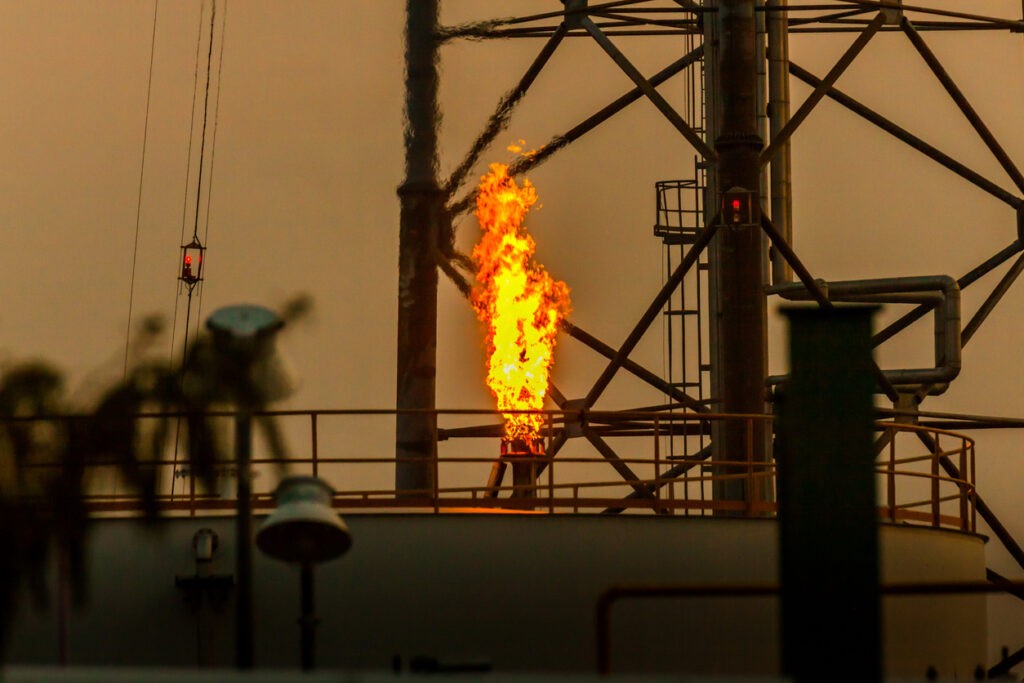
The Buzachi Oil Company has been fined 350 million tenge ($777,536) over a fire at the Karaturun field that burned for 200 days. As a result of a large methane leak at the field in June 2023, natural gas ignited at well number 303.  The fire was finally extinguished on December 25th.

Consequently, representatives from a regional Department of Ecology office conducted an unscheduled inspection of Buzachi Oil LLP, and according to the data gathered, the maximum permissible concentration (MPC) of methane in the air in the vicinity of the field was 480-times higher than normal. Furthermore, the concentration of petroleum products in the soil was 168.13 mg/kg higher than the permissible limit.

According to a since deleted post on petrocouncil.kz, the fire started on June 9th when a gas-water mixture was released during the lifting of the drilling tool and ignited. Members of Parliament subsequently called on the government to terminate the contract with Buzachi Neft and return the field to the state. It transpired that the well had been drilled a year earlier than it should have been – not in 2024, as indicated in the permit, but in May 2023.

“Based on the results of the inspection, the enterprise was issued a prescription on the need to develop a remediation program to eliminate the environmental damage caused, as well as compliance with the norms of emissions into the environment. Four administrative protocols were drawn up. According to preliminary calculations, the fine will amount to more than 350 million tenge,” the Ministry of Ecology and Natural Resources said.

Experts estimate the volume of methane leakage at the field in Mangistau region amounted to 127,000 tons. If these estimates are correct, the methane leak at Karaturun may be the second largest in the history of observed leaks.

Speaking to The Times of Central Asia, environmentalist Timur Yeleusizov said that Kazakhstan needs to open a full-scale inspection of multiple enterprises, hold them accountable, and fine them. Yeleusizov claims that multi-million dollar fines are imposed in theory, but it’s not known how many of them have been levied in practice.

“This is not the first such case. Last year Kazzinc dumped cement dust, then the Ulba River was colored white, and now it is green,” Yeleusizov told TCA. “How long will this continue and how long will our state inactivity last? Recently, there have been frequent cases of waste discharged into water bodies and rivers from which people drink. This problem concerns all the enterprises of Kazakhstan, because the issue of waste processing has not been solved so far. Moreover, companies can [afford to] pay these multi-million dollar fines without harming themselves.”

Yeleusizov also emphasized that the areas where hotels and resorts are located are in great danger, as none of them meet environmental standards. “I’ve repeatedly raised this issue with the Ministry of Ecology and Natural Resources. We are now developing ecological tourism – glamping and camping in specially protected areas. Nevertheless, not a single mountain resort in Kazakhstan meets the standards for the disposal of fecal waste. It all [goes] into rivers, springs, and groundwater. Thus, people are poisoned. We have no specific regulatory legislation that would oblige these resorts to install treatment facilities and remove waste,” he said. “In essence, we are destroying our people in favor of commercial structures.”

Nearly 750,000 Students in Kazakhstan to Get a New School

Three hundred and sixty-nine new schools, accommodating 740,000 students, will open in Kazakhstan in 2024 and 2025, the minister for education Gani Beisembayev said at a February 20th government meeting about the “Comfortable School” project. 

The minister added that 163 of these schools will be built in rural areas, and 217 of them will open their doors this year.

The new schools will be constructed using only domestically produced building materials, and all furniture will be purchased from Kazakh companies. 

The schools will be equipped with modern equipment, and increased security will be ensured with advanced technical means. They will also provide a barrier-free environment for children with special educational needs.

Prime minister Olzhas Bektenov, who chaired the meeting, emphasized that the “Comfortable School” project should resolve the problem of overcrowded schools, and replace old schools that have fallen into disrepair.

Eco-Activists Tackle Dust Storms on Karakalpakstan’s Aral Sea

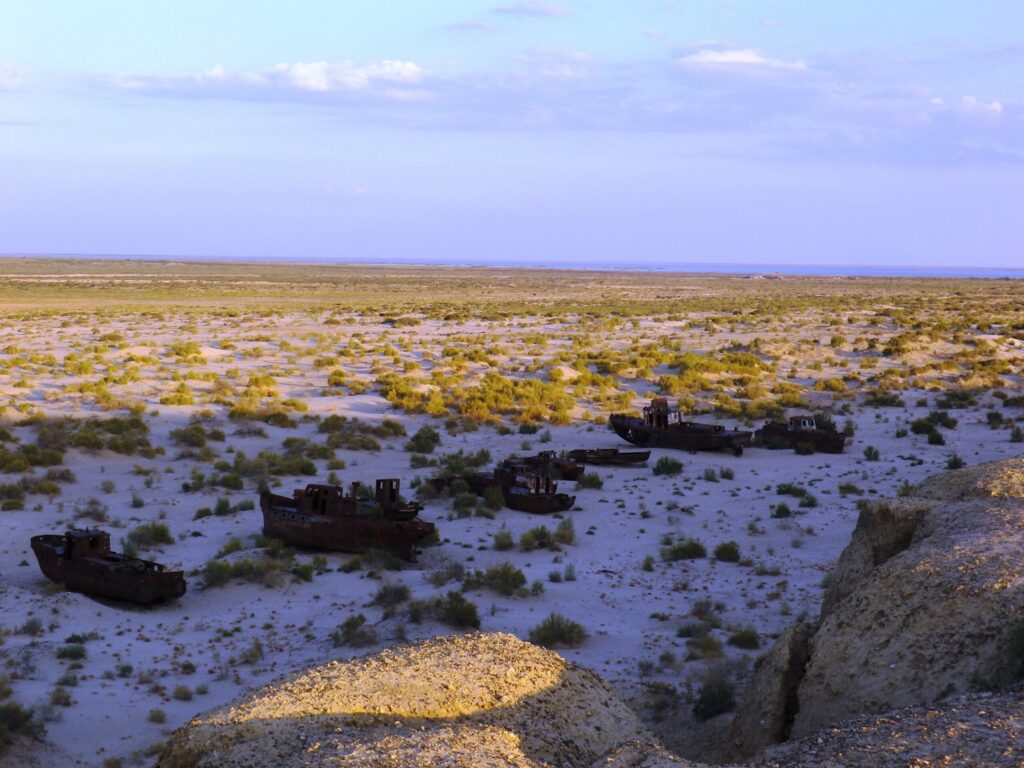
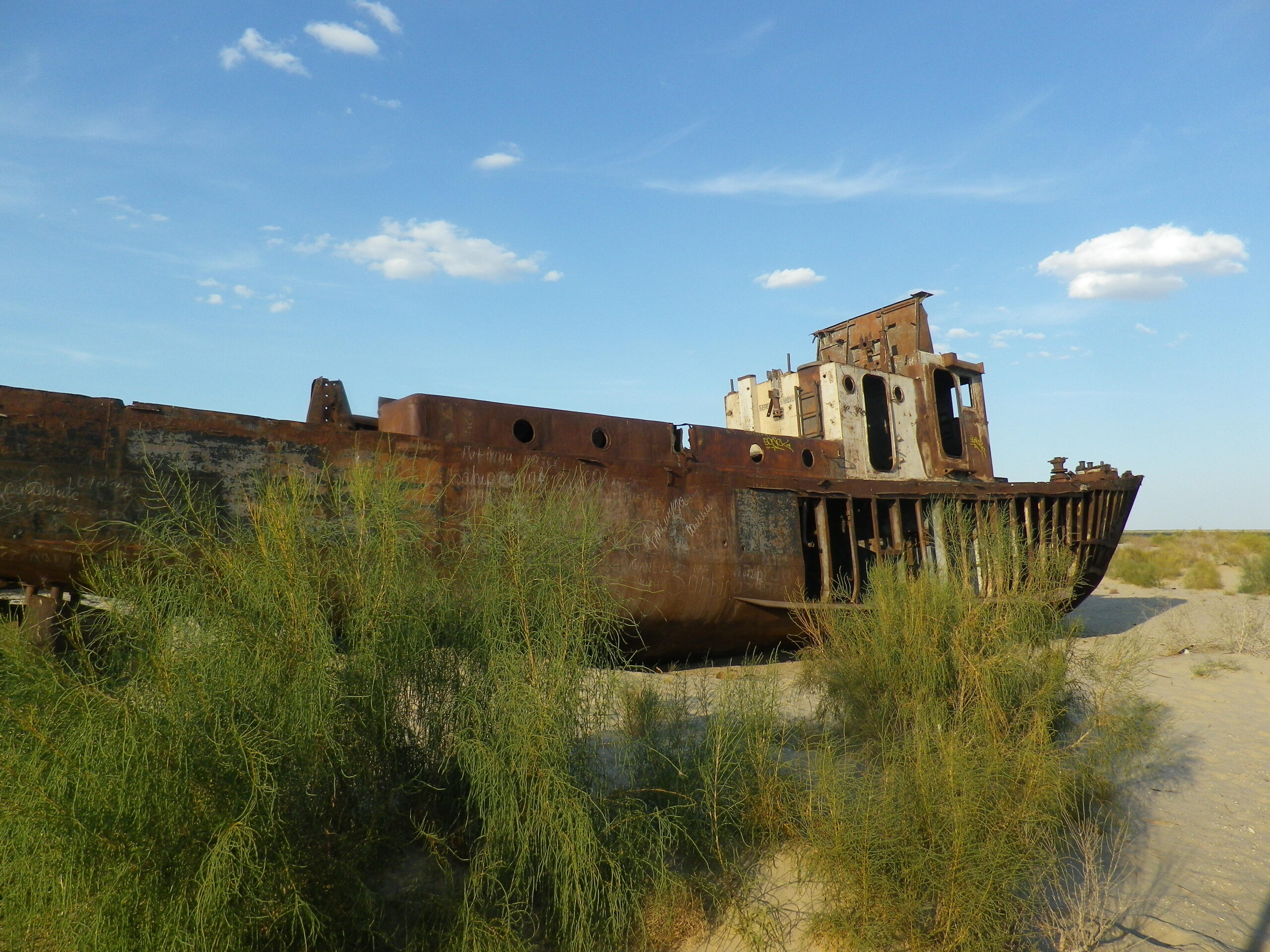
Forestry workers and ecological activists in Uzbekistan’s northwestern Karakalpakstan region have begun planting desert plants on dried up sections of the Aral Sea. 

Salt and dust carried in the wind cause significant damage to areas adjacent to the Aral Sea and their inhabitants. Every year more than 100 million tons of salt, dust and sand are blown from the bottom of the former Aral Sea and mix into the air. 

Up until the late-1990s, the land surrounding the Aral Sea was still cotton fields; today, it’s largely an expanse of salinized grey emptiness. The desiccation of the landscape has led to these vast toxic dust-storms that ravage around 1.5 million square kilometers. Spreading nitrates and carcinogens, these storms – visible from space – used to occur once every five years, but now strike ten times a year.

Once a thriving agricultural center, Karakalpakstan, home to the remaining section of the so-called Large Aral Sea, is now one of the sickest places on Earth. Respiratory illness, typhoid, tuberculosis and cancers are rife, and the region has the highest infant mortality rate in the former USSR.

“This year we plan to create green plantations in the most vulnerable places, where the winds with salt and sand come from,” said Zinovy Novitsky, a project manager from the Research Institute of the State Forestry Committee. “We plan to plant trees on 150-200,000 hectares. The country is introducing an effective policy to combat this problem.” 

Between 2018 and 2023, 1.7 million hectares of forests were planted on the bottom of what used to be the Aral Sea. To date, forestry enterprises have collected and prepared for sowing 192 tons of desert plant seeds, including 71 tons of saxaul seeds.

Similar plans are being undertaken across the border in Kazakhstan, where, according to the International Fund for saving the Aral Sea in the Republic of Kazakhstan, the so called “Green Aral Sea” being created will make a massive contribution to the process of achieving carbon neutrality. “One saxaul retains up to 4 tons of sand, 1 hectare of four-year-old saxaul absorbs 1,158.2 kg of carbon dioxide and releases 835.4 kg of oxygen per year, [whilst] the shrubby plant, salsola richteri kar absorbs 1,547.8 kg of carbon dioxide and releases 1,116.4 kg of oxygen per hectare. Accordingly, 1.1 million hectares will consume about 1.3 million tons of carbon dioxide.”