• KGS/USD = 0.01144 0%
  • KZT/USD = 0.00192 -0%
  • TJS/USD = 0.10849 0.37%
  • UZS/USD = 0.00008 0%
  • TMT/USD = 0.28490 0%
  • KGS/USD = 0.01144 0%
  • KZT/USD = 0.00192 -0%
  • TJS/USD = 0.10849 0.37%
  • UZS/USD = 0.00008 0%
  • TMT/USD = 0.28490 0%
  • KGS/USD = 0.01144 0%
  • KZT/USD = 0.00192 -0%
  • TJS/USD = 0.10849 0.37%
  • UZS/USD = 0.00008 0%
  • TMT/USD = 0.28490 0%
  • KGS/USD = 0.01144 0%
  • KZT/USD = 0.00192 -0%
  • TJS/USD = 0.10849 0.37%
  • UZS/USD = 0.00008 0%
  • TMT/USD = 0.28490 0%
  • KGS/USD = 0.01144 0%
  • KZT/USD = 0.00192 -0%
  • TJS/USD = 0.10849 0.37%
  • UZS/USD = 0.00008 0%
  • TMT/USD = 0.28490 0%
  • KGS/USD = 0.01144 0%
  • KZT/USD = 0.00192 -0%
  • TJS/USD = 0.10849 0.37%
  • UZS/USD = 0.00008 0%
  • TMT/USD = 0.28490 0%
  • KGS/USD = 0.01144 0%
  • KZT/USD = 0.00192 -0%
  • TJS/USD = 0.10849 0.37%
  • UZS/USD = 0.00008 0%
  • TMT/USD = 0.28490 0%
  • KGS/USD = 0.01144 0%
  • KZT/USD = 0.00192 -0%
  • TJS/USD = 0.10849 0.37%
  • UZS/USD = 0.00008 0%
  • TMT/USD = 0.28490 0%
11 December 2025

Women in Uzbekistan May Now Drive Buses and Heavy Trucks

Labor code regulations in place in Uzbekistan since 2018 that prohibited women from driving vehicles with a capacity of 2.5 tons or more, and buses with a capacity of more than 14 people, have been abolished by new rules which came into force on February 12, 2024. According to the Ministry of Transport of Uzbekistan, these changes were adopted to ensure gender equality in transportation and to attract women to jobs driving conventional buses and electric buses.

Uzbekistan is pursuing a policy of providing equal rights and opportunities for women in society and the economy. Consequently, since May 2019, a ban on women working in certain industries was lifted, though restrictions have been retained in fields such as oil and gas extraction, ferrous metallurgy, mining, construction, and installation work.

The government is also trying to create favorable conditions for women in the workplace. For example, since September 2022, women employed in the private sector have been paid maternity benefits by the state. Currently, women working for private companies receive a stipend of $160 for four months.

Doctors, Teachers Among Lowest-Paid Trained Professions in Uzbekistan

The Bdex.ru website, which publishes open-source statistics on salaries in various countries and cities, has provided data on average salaries in the Central Asian republics. According to their reporting, citizens of Kazakhstan earn the most at $775 per month. Wages in Uzbekistan ($346) and Kyrgyzstan ($360) are almost identical, whilst workers in Tajikistan are paid significantly less at $193. As in many fields, there is no data available for Turkmenistan.

According to the Uzbek Statistics Agency, average monthly wages rose 17.2% last year. The highest wages are still found in the capital at $600, and the lowest in the Namangan Oblast ($267).

Last year, the highest salaries were for those who work in finance and insurance ($1,077), with the lowest salaries going to healthcare ($242) and education workers ($252). At the same time, real per capita income in Uzbekistan grew by only 2.4% in 2023 – the lowest figure in at least five years.

In neighboring Tajikistan, the average monthly nominal wage in 2023 increased by 14.3% on the previous year according to the Minister of Labor, Employment and Migration of the Republic of Tajikistan, Gulnora Hasanzoda. Agricultural and forestry workers earn the least in the country at $74, whilst the highest salaries go to miners at $333, followed by energy workers ($332), and construction workers ($275).

According to official statistics, there are about two million migrant workers from Central Asia currently in Russia. Low wages and unemployment are increasingly forcing citizens of Uzbekistan and Tajikistan to look for work abroad. As a rule, these are low-skilled, low-paid jobs that locals are reluctant to take.

Due to the war in Ukraine and fear of being forced into the Russian military, migrants have recently started to look elsewhere. According to Staffing Industry Analysts (SIA), Uzbekistan was among the leaders in sending seasonal migrant workers to the U.K. in 2022. “We have seen a dramatic increase in the number of seasonal workers coming to the U.K. from Uzbekistan and Kyrgyzstan,” the director of the Gangmasters and Labor Abuse Authority (GLAA), Darryl Dixon observed in the SIA report.

Kazakhstan Continues Countdown Ahead of Move to Single Unified Time Zone

In less than two weeks, the stroke of midnight will unify all of Kazakhstan in a single timezone. On the night of February 29th-March 1st, residents of twelve regions – as well as the cities of Astana, Almaty and Shymkent – will have to move their clocks back an hour unifying the country in a single timezone (UTC+5). But not all citizens are happy about it, with some arguing it will impact their health.

Residents of the East Kazakhstan region are especially fierce in defending their perceived rights. Earlier this year, a lawyer from Ust-Kamenogorsk filed a grievance against then-Prime Minister Alikhan Smailov demanding compensation for damages due to the time change. For that reason, scientists were dispatched to the region to explain the benefits of the timezone change to local residents. Among the advantages they noted were the elimination of time barriers between residents of different regions of Kazakhstan, more favorable conditions for doing business, streamlining the work of government agencies and emergency services, and improved coordination of transport and communication.

Professor Sultan Tuleukhanov, head of the Department of Biophysics and Biomedicine of the Kazakh State University, agrees with the residents of East Kazakhstan. “There is such a concept as desynchronises, a type of inconsistency. In particular, it’s a change to the chrono-structural parameters of biological rhythms of the human organism,” he noted. Desynchronosis causes irritability and fatigue while also reducing the efficiency of the body. However, according to other specialists, residents of most regions will experience this only in the short term.

There is one more concern, however. In some cities, it will get dark earlier after the time change, meaning people will have to work under artificial lights and turn on electricity earlier, meaning expenditure on electricity will increase. Yeraly Shinasilov, the director of the national dispatching center of the system operator, KEGOK (Kazakhstan Electricity Grid Operating Company), said that the change of time zones will only affect the finances of residents slightly. “Our consumption grows about 2% every year. Due to the fact that our peak demand will move to an hour earlier, it will all dissolve into the natural growth of consumption during the year,” he stated.

Only time will tell how effective the single time zone will be for Kazakhstan.

Kazakhstan to Team Up With Turkish Partner to Produce Warships at Caspian Port

One of Turkey’s leading shipbuilding companies will soon begin producing warships in Kazakhstan, according to a report posted on Dearsan Shipyard’s website. An agreement has already been signed between the two countries to establish a shipyard at a Kazakh port.

Dearsan Shipyard is known for building small warships, submarines, frigates and patrol vessels with integrated weapons systems. It is owned by Aziz Yildirim, former president of the Fenerbahçe sports club. In 2023, the shipyard delivered two patrol ships to the Nigerian Navy. Dearsan is also building ships for Turkmenistan.

The company currently produces almost all of its ships in Tuzla, Turkey.

USAID Helps To Eradicate Tuberculosis In Tajikistan

The United States Agency for International Development (USAID), in collaboration with Tajikistan’s Ministry of Health and National Tuberculosis Program, has completed its Eliminating Tuberculosis in Central Asia activity (ETICA) in Tajikistan. Over four years ETICA has made remarkable achievements in the fight against tuberculosis (TB), improving the quality of TB services and enhancing the knowledge and skills of healthcare professionals, the US Embassy in Tajikistan said on February 13th.

ETICA has made significant strides in combating tuberculosis in the country by screening more than 83,000 individuals, including vulnerable and high-risk groups, finding new cases, and putting people suffering from TB on treatment. The activity facilitated the endorsement of evidence-based guidelines and policy protocols for the TB laboratory sector, and primary health and TB care. Supported by USAID, the National Reference Laboratory earned a certificate of excellence in performing modern testing for TB; new shortened regimens were introduced to optimize TB treatment, and the health workforce capacity was built to deliver people-centered, high-quality services. In total, 1,645 medical and 1,392 non-health professionals enhanced their knowledge and skills on the various aspects of TB control.

“The successful completion of the USAID’s ETICA activity in Tajikistan marks a significant milestone in the fight against TB,” said USAID Mission Director Peter Riley. 

Cocaine Smuggled Into Kazakhstan From Italy and Poland Hidden in Coffee Capsules

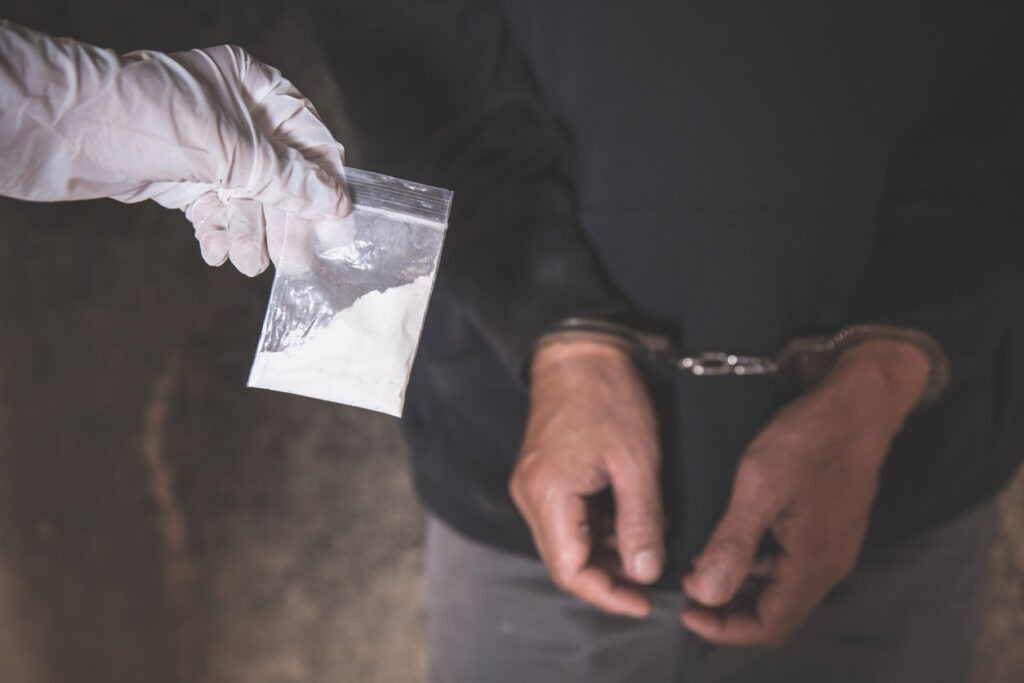
One channel of illicit cocaine smuggling into Kazakhstan has been blocked, according to website polisia.kz. In Almaty, authorities found that a rented apartment was being used for the distribution of illegal drugs, which were imported into the country from Italy and Poland. Police seized plastic capsules disguised as coffee – inside of each was a unit of cocaine weighing 250 grams.

Furthermore, Almaty police seized a parcel at a Kazpost office that belonged to the suspect. It held plastic jars that contained drugs, the total weight of which was about 0.5-1.0 kilogram (kg) of cocaine and more than 400 grams of ecstasy. In total, that’s more than 3,000 single doses. It turned out that the detained foreigner had been acting as a courier for three months.

“A pre-trial investigation is being conducted against the detainee for the illegal acquisition and possession of a particularly large amount of narcotic drugs for the purpose of their sale. Further measures are being carried out to establish the channels of cocaine supply in the country,” said the deputy head of the department for combating drug crimes of the Ministry of Internal Affairs of the Republic of Kazakhstan, Bakhytzhan Amirkhanov.

Possession and sale of drugs in Kazakhstan is punishable by harsh prison terms ranging between 10 to 15 years and the confiscation of property. According to the latest data, 47 anti-drug operations were carried out last year, including in cooperation with the corresponding authorities of Russia, Kyrgyzstan, and Australia. Eight international and 14 regional drug-trafficking operations were eliminated.

According to the Ministry of Internal Affairs, the annual illicit trafficking of narcotic substances in Kazakhstan amounts to 20-25 tons, 95% of which are from cannabinoid group drugs. Most often they are smuggled into the country from Tajikistan, Kyrgyzstan, Uzbekistan, Afghanistan, and Iran via the Caspian Sea. Additionally, the transit of synthetic drugs from Europe is also an issue accounting for about 5% of the total, with less than 1% in the form of opium, heroin, and other types of hard drugs.

Also, a number of drug laboratories have been discovered in Kazakhstan itself, with Astana, Almaty and Shymkent considered to be the leaders in terms of production sites and sales of new types of drugs. In total, 67 participants in criminal drug organizations were detained in 2023, and 483.2 kg of psychotropic substances, 11 kg of heroin, 32.8 kg of opium, 63.7 kg of hashish, 41.6 kg of marijuana, more than 17 tons of poppy raw materials and more than 22 tons of chemical reagents seized. At the same time, more than 3,000 people were convicted for crimes related to the trafficking of synthetic drugs.

Statistics show that over the last 10 years, the number of drug addicts globally has increased by 23% and reached 296 million people. Currently in Kazakhstan, the illegal drug market has almost completely moved on to cyberspace, making it much more difficult to track down drug dealers.