• KGS/USD = 0.01144 0%
  • KZT/USD = 0.00196 -0%
  • TJS/USD = 0.10899 -0%
  • UZS/USD = 0.00008 -0%
  • TMT/USD = 0.28490 0%
  • KGS/USD = 0.01144 0%
  • KZT/USD = 0.00196 -0%
  • TJS/USD = 0.10899 -0%
  • UZS/USD = 0.00008 -0%
  • TMT/USD = 0.28490 0%
  • KGS/USD = 0.01144 0%
  • KZT/USD = 0.00196 -0%
  • TJS/USD = 0.10899 -0%
  • UZS/USD = 0.00008 -0%
  • TMT/USD = 0.28490 0%
  • KGS/USD = 0.01144 0%
  • KZT/USD = 0.00196 -0%
  • TJS/USD = 0.10899 -0%
  • UZS/USD = 0.00008 -0%
  • TMT/USD = 0.28490 0%
  • KGS/USD = 0.01144 0%
  • KZT/USD = 0.00196 -0%
  • TJS/USD = 0.10899 -0%
  • UZS/USD = 0.00008 -0%
  • TMT/USD = 0.28490 0%
  • KGS/USD = 0.01144 0%
  • KZT/USD = 0.00196 -0%
  • TJS/USD = 0.10899 -0%
  • UZS/USD = 0.00008 -0%
  • TMT/USD = 0.28490 0%
  • KGS/USD = 0.01144 0%
  • KZT/USD = 0.00196 -0%
  • TJS/USD = 0.10899 -0%
  • UZS/USD = 0.00008 -0%
  • TMT/USD = 0.28490 0%
  • KGS/USD = 0.01144 0%
  • KZT/USD = 0.00196 -0%
  • TJS/USD = 0.10899 -0%
  • UZS/USD = 0.00008 -0%
  • TMT/USD = 0.28490 0%
08 December 2025

“At a Crossroads” – Atlantic Council Addresses Rare Earth Elements in Central Asia

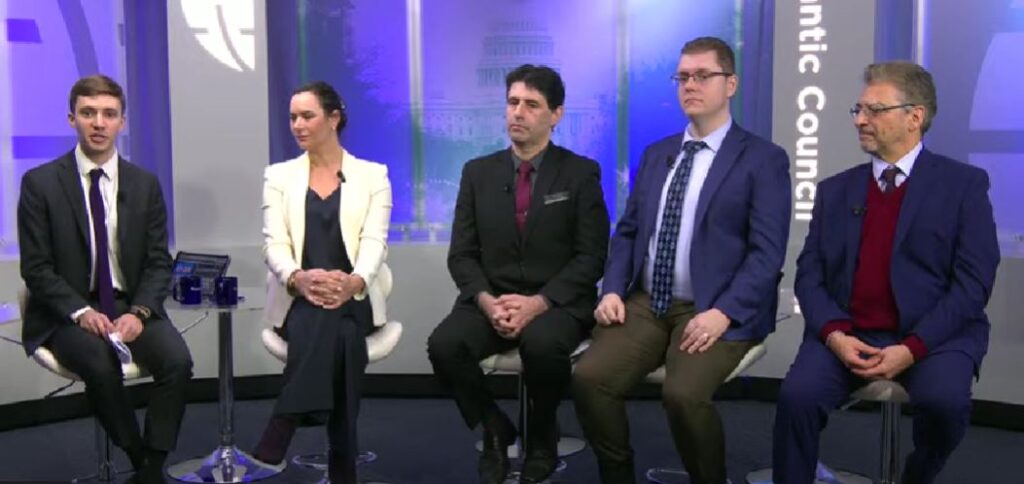
On January 23rd, the Atlantic Council’s Eurasia Center and the International Tax and Investment Center gathered together the authors of the report, “Leveraging Central Asia’s Rare Earth Elements for Economic Growth.” The report highlights the potential of Central Asia, which has remained underappreciated in terms of its rare earth elements (REE) resources, despite its increasing geopolitical significance.

China currently dominates the global mining and refining of REEs, giving it a near-monopoly status. The report argues that this scenario calls for an urgent need to diversify global supply chains and suggests that Western investment could play a pivotal role in exploring and mining Central Asia’s REEs, thereby contributing to the diversification of supply chains.

Furthermore, such investment could have far-reaching implications for the region itself, bolstering regional integration and sovereignty, spurring economic growth, and enhancing economic freedom throughout Central Asia.

Opening the discussion, Ariel Cohen, a Nonresident Senior Fellow at the Eurasia Center of the Atlantic Council, highlighted the critical geopolitical location of Central Asia, stating that REEs “may be the next big thing in Central Asia at the engine of economic growth.” Cohen praised the “visionary multi-vector policy pioneered” in Kazakhstan by President Tokayev, and characterized Kazakhstan’s relationship with Russia as “very fraught,” and defined by “multi-generational trauma. Nuclear energy is zero emission energy,” he said, but for the U.S. to capitalize on opportunities for mining REEs in Kazakhstan, “we need to do more and better.”

The President of Second Floor Strategies, a public policy consulting company, Wilder Alejandro Sánchez emphasized that Kazakhstan and Uzbekistan are the most “forward-looking” nations in Central Asia in regard to REEs, whilst mining in Kyrgyzstan remains stuck in a “legal limbo,” and Tajikistan currently lacks the necessary critical infrastructure. Nether the less, he stated, REEs could become a driving factor behind regional “cooperation and integration.”

Wesley Hill, an International Program Manager at the Energy, Growth, and Security Program of the International Tax and Investment Center, spoke about the international relations components of REEs. “In the same way we competed and continued to compete for other energy resources, most especially crude oil, we will be competing for REEs,” he stated. “It’s happening already, this geopolitical clash [which is] primarily driven by competition between the United States and China. After the publication of this report, Beijing cut off all exports of rare earth element refining technologies to the United States. Central Asia is very much at a crossroads,” he stated.

Addressing this geopolitical conflict with China over REEs, Ambassador John Herbst, a Senior Director at the Eurasia Center of the Atlantic Council, stated that Central Asia is a “critical region… rich in rare earth minerals [whilst] China is our principal adversary. They are not a friend of the United States.”

Finally, Suriya Evans-Pritchard Jayanti, a Nonresident Senior Fellow at the Eurasia Center of the Atlantic Council, characterized REEs as an “extremely important development opportunity” for Central Asia, particularly given “geostrategic energy realignment after the Russian invasion of Ukraine. I think it’s a geostrategic realignment opportunity for the governments of those countries to be a little bit less oriented towards China, or a little bit less reliant on Russia,” she stated.

According to the Brookings Institute, China is the dominant player in REEs, producing approximately 60% and processing 85% of the global output. Kazakhstan, meanwhile, is the world’s largest producer of uranium – responsible for 33% of global output as of 2021 – a large amount of which is found in rare earth deposits.

Excise tax increase provokes a rise in alcohol prices

Alcohol prices in Turkmenistan have changed twice this month: at the beginning of the year they doubled, and by the end of the month they almost returned to the previous level. The order to reduce prices, as reported in the Chronicles of Turkmenistan, came from the Ministry of Trade and Foreign Economic Relations. Thus, Turkmen wines went up in price from $2-2.86 per bottle to $2.86 – $4.29. Cognac went up from $8.59-14.31 to $10-17.17, vodka – from $8.59-10 to $17.17, expensive brands of vodka in liter bottles – from $28.62 to $42.94, beer – from $4.29-5.72 to $8.59-11.45. At the same time, the quality of alcoholic beverages produced in the country leaves much to be desired – consumers note that most of the wines are produced not from grapes, but from Chinese powder.

The increase in alcohol prices was due to another increase in excise taxes from January 1, 2024. Excise tax on beer increased from 30% to 34.5%, on wines and spirits, depending on the degree – from 39%, 61% and 77% to 44.85%, 70.15% and 88.55% respectively, the publication notes.

New excise tax rates are also introduced in neighboring Uzbekistan. Thus, the excise tax on domestically produced ethyl alcohol will double to $1.21 per liter. At the beginning of 2023, it increased fivefold. Excise on some types of alcoholic beverages will increase by 5% later – from July 1. However, tariffs for imported alcohol are again reduced by about 5%.

Now the minimum wholesale and retail prices for alcoholic beverages in Uzbekistan vary within the following limits: wines – $1.17 -1.33 per 1 liter of finished product, cognac, $4.65 – 5.35, vodka and other alcoholic products (except beer) $3.48.

For comparison, in Kazakhstan from October 1, 2023, the minimum retail price of vodka, strong liquor and vodka products was $4.69 per liter, cognac and brandy $6.95 per liter. This Central Asian country, according to WHO, has the highest alcohol consumption compared to its neighbors. Kyrgyzstan ranks second, Turkmenistan third, followed by Tajikistan and Uzbekistan.

Nevertheless, all countries in the region, except Tajikistan, have seen a decline in per capita alcohol consumption. For example, in Kazakhstan in 2010 it was 9.3 liters, and in 2016 this figure decreased to 7.7 liters. In Kyrgyzstan, during this time, total alcohol consumption decreased from 10.2 liters to 6.2 liters per capita. Similarly, in Uzbekistan, alcohol consumption fell from 3.2 liters to 2.7 liters. The same situation in Turkmenistan – alcohol consumption fell from 6 liters to 5.4 liters per capita. Only in Tajikistan is the opposite situation observed. People there began to consume more alcohol – 3.3 liters against 2.4 liters.

Recall that all Central Asian countries have a ban on advertising of alcoholic beverages, and a number of measures are taken to reduce the consumption of alcohol by the population. For example, in Kazakhstan, Uzbekistan, Tajikistan and Turkmenistan the minimum legal age to buy alcohol is 21; only in Kyrgyzstan can it be bought from the age of 18.

Shipment of psychotropic substances seized in Almaty

The press service of the National Security Committee has reported the seizure of a record shipment of psychotropic substances in Almaty. The laboratory for the manufacture of synthetic drugs was organized in a private house, which reportedly was rented. The organizer of the illegal drug laboratory was a 26-year-old citizen of Kazakhstan.

During the operation, the service seized more than 200kg of finished mephedrone, which is approximately equal to 610,000 single doses, as well as more than 100 liters of raw materials for its subsequent manufacture. Such a volume of finished substances indicates that the laboratory was the largest in the country.

The investigation revealed that the entire volume of psychotropic substances was intended for distribution in Kazakhstan. The owner of the drug laboratory has been detained and is in custody awaiting trial.

Over the past year, the drug situation in Central Asian countries has been characterized by an increase in the production of opiates and methamphetamine in Afghanistan, the emergence of new types of synthetic drugs and methods of their distribution.

The increase in drug turnover in Central Asian countries for 2023 exceeded 100%. From January to September 2023 alone, more than 40 tons of precursors were seized from illicit trafficking, which is 144% or more than in the same period of 2022.

Uzbekistan’s energy production figures have fallen

According to the Agency of Industrial Production Statistics, Uzbekistan’s gas production fell by 9.6% (4.97 billion cubic meters) last year compared to 2022, amounting to 46.7 billion cubic meters. Thus, the average monthly gas production is 3.89 billion cubic meters, while in 2022, 4.3 billion cubic meters of gas was produced per month.

In December, however, production has already increased to 3.95 billion cubic meters. This was the highest since April. However, it could not even come close to the figure for December 2022 – 4.35 billion cubic meters, which is up by 9% (395.1 million cubic meters).

However, thanks to gas supplies from Russia and Turkmenistan, the shortfall was bridged.

In 2023, however, electricity production increased significantly – from 73.7 billion to 76.9 billion kWh, i.e. by 3.19 billion kWh (4.3%). In December alone, 7.27 billion kWh were generated. If we start counting from May, this is the limit.

And this is despite the above-mentioned troubles with gas production, because about 80-85% of electricity in Uzbekistan is produced by thermal power plants, and they in turn operate on gas. However, their share in the country is decreasing due to the introduction of new capacities of photovoltaic power plants.

Also, coal production exceeded its previous figures – up to 6.19 million tons (15.5%). In December, for example, 456.7 thousand tons of coal were produced, and from July to November the figure did not fall below 600 tons.

And again to the bad: from 787.8 thousand to 770.1 thousand tons (-2.3%, or by 17.7 thousand tons) the oil production index decreased. And this decline was observed for the fifth month in a row – from 64.7 thousand tons in July to 60.8 thousand in December. This is the lowest figure for the last couple of years!

Nevertheless, Uzbekistan produced 75.4 thousand tons (6%) more motor gasoline in 2023 than in 2022. Diesel fuel output also increased by 212.4 thousand tons (26.6%) to 1.01 million tons.

At the same time, the indicator of heat energy production decreased from 26.5 to 24.4 million Gcal (by 8.1%), and gas condensate production decreased from 1.29 to 1.2 million tons (by 6.9%).

Nevertheless, no matter what problems in the energy sector put sticks in the wheels, according to the Agency of Statistics Uzbekistan managed to achieve a 6% growth in industrial production

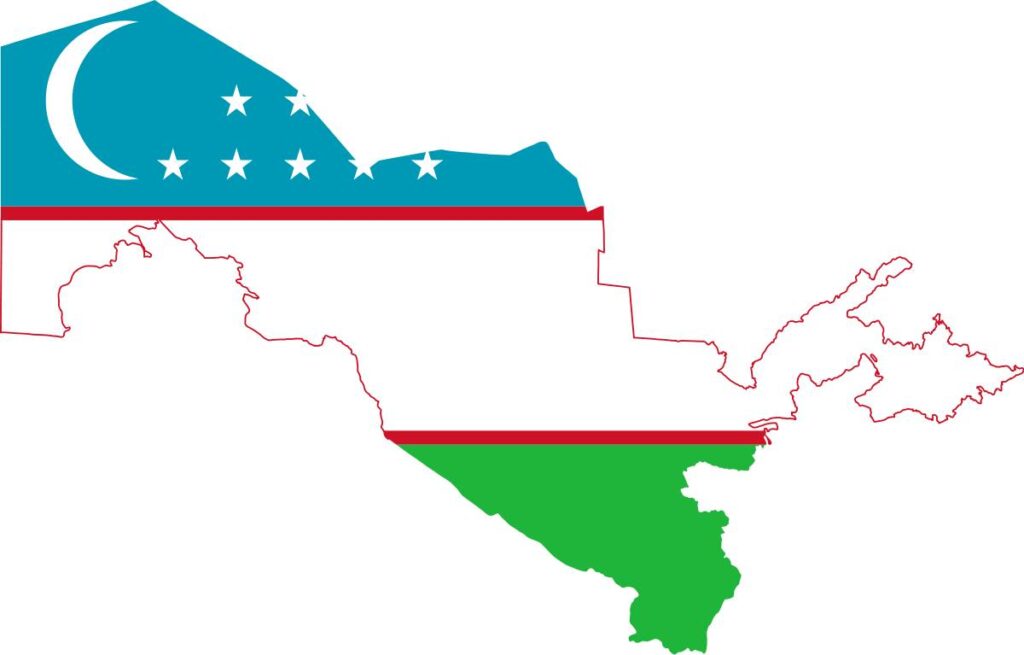
Uzbekistan Bans Mining Non-Metallic Materials In Rivers

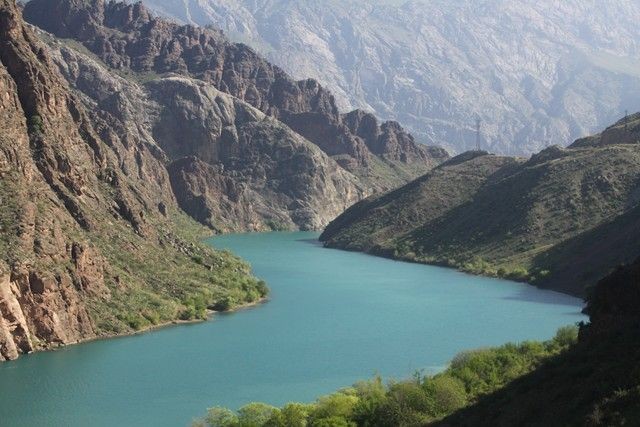
From May 1st Uzbekistan will introduce a permanent ban on the mining of non-metallic materials in the riverbeds of the Chirchik, Sangzor, Zarafshan, Naryn, Kashkadarya and Surkhandarya rivers. 

Permits to extract sand and gravel materials from river beds and other water areas will only be granted through the electronic trading platform E-Auksion. This proposal was made jointly by the Ministry of Ecology, Environmental Protection and Climate Change and the Ministry of Mines and Geology, and was approved by president Shavkat Mirziyoyev on January 17th. The boundaries of the areas covered by the ban will be determined by the Cabinet of Ministers.

During the moratorium period there will be a tenfold increase in the fines imposed for environmental damage caused to these areas as a result of illegal extraction. These fines will be directed to the country’s ecological fund.

The ban prohibits the extraction of sand and gravel materials in river beds and other water areas, as well as other extraction works on other deposits located in mountainous or foothill (land) areas.

Earthquake In Almaty: Residents Speak Of Panic And Damage

A magnitude seven earthquake shook Almaty last night, causing panic among local residents. However, some locals have said the situation was not as bad as it was portrayed on social media and in news reports. “They said it was a level seven magnitude earthquake, but my friend lives on the seventh floor and his furniture only wobbled, but nothing fell,” Anastasia, a resident of the city told The Times of Central Asia.

Despite the fact that numerous videos have appeared on the internet showing people in distress and buildings violently shaking, some have claimed that many of the videos are fakes, saying that the shaking was palpable, but did not reach levels that would cause widespread alarm.

“The only thing that caused panic was a severe tremor in residential complexes that made the chandeliers wobble. My family and I drove into the city; traffic was crazy,” Sanjar, a resident living on the outskirts of the city told The Times of Central Asia.

Nevertheless, others spoke of feeling fear and anxiety during the earthquake, with another resident, Raushan telling The Times of Central Asia that  ““Just after midnight we felt swaying and tremors, which was especially frightening considering we live on the 12th floor. First, the bed started to shake, and then I noticed the chandelier swinging violently. We quickly ran out of the apartment taking our passports and wallets. The worst part was that we were left with no communication as we had forgotten our phones, so we couldn’t contact our loved ones.”