• KGS/USD = 0.01144 0%
  • KZT/USD = 0.00210 0%
  • TJS/USD = 0.10523 0%
  • UZS/USD = 0.00008 0%
  • TMT/USD = 0.28530 0%
  • KGS/USD = 0.01144 0%
  • KZT/USD = 0.00210 0%
  • TJS/USD = 0.10523 0%
  • UZS/USD = 0.00008 0%
  • TMT/USD = 0.28530 0%
  • KGS/USD = 0.01144 0%
  • KZT/USD = 0.00210 0%
  • TJS/USD = 0.10523 0%
  • UZS/USD = 0.00008 0%
  • TMT/USD = 0.28530 0%
  • KGS/USD = 0.01144 0%
  • KZT/USD = 0.00210 0%
  • TJS/USD = 0.10523 0%
  • UZS/USD = 0.00008 0%
  • TMT/USD = 0.28530 0%
  • KGS/USD = 0.01144 0%
  • KZT/USD = 0.00210 0%
  • TJS/USD = 0.10523 0%
  • UZS/USD = 0.00008 0%
  • TMT/USD = 0.28530 0%
  • KGS/USD = 0.01144 0%
  • KZT/USD = 0.00210 0%
  • TJS/USD = 0.10523 0%
  • UZS/USD = 0.00008 0%
  • TMT/USD = 0.28530 0%
  • KGS/USD = 0.01144 0%
  • KZT/USD = 0.00210 0%
  • TJS/USD = 0.10523 0%
  • UZS/USD = 0.00008 0%
  • TMT/USD = 0.28530 0%
  • KGS/USD = 0.01144 0%
  • KZT/USD = 0.00210 0%
  • TJS/USD = 0.10523 0%
  • UZS/USD = 0.00008 0%
  • TMT/USD = 0.28530 0%

Kazakhstan Imported 500 Million Cubic Meters of Russian Gas in First Quarter 2024

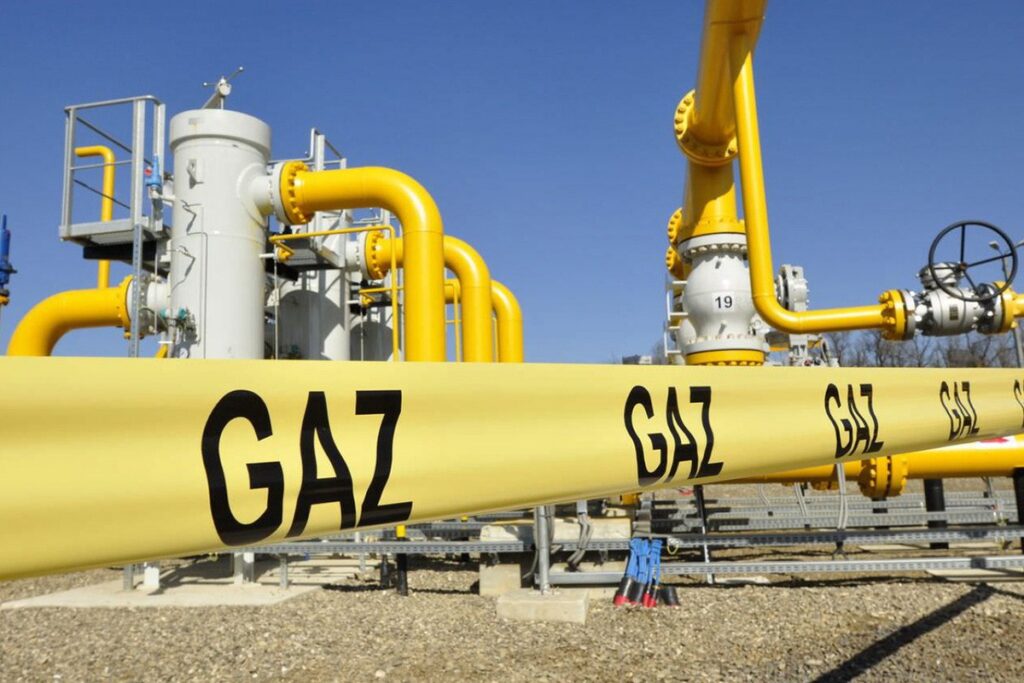
In the first quarter of 2024 Kazakhstan took delivery of 500 million cubic meters of Russian gas, according to a report by the Ministry of Energy of Kazakhstan, who said that the import of blue fuel from Russia is under a contract between state energy companies JSC QazaqGaz and PJSC Gazprom.

According to the agreement between the companies, fuel imports are made only when necessitated by the gas demand of the domestic Kazakh market against the background of peak consumption in winter — and exclusively at the request of the Kazakh side.

According to QazaqGaz, the wholesale cost of Kazakh gas is more than 60% higher than the retail price in the country. At the end of last year, the national company incurred $392 million in losses from the sale of natural gas on the domestic market. Experts say that the possibility of gas shortages in the country depends on the growth rate of domestic consumption and stability of commercial fuel supplies from domestic natural gas producers. If there is a shortage, it can be covered by imports assured by the national company.

However, in order to prevent shortages of gas in the medium and long term, QazaqGaz has increased its commercial gas reserves, started to develop new fields, and undertaken construction of new — and refurbishment of existing — gas processing and gas transportation facilities.

Earlier, Boris Martsinkevich, an energy expert and editor-in-chief of the Russian publication Geoenergetika, described Kazakhstan as a gas-dependent country. In his opinion, 2024 will be a milestone year for Kazakhstan. This is the year when Kazakhstan’s fields will not be able to meet the needs of the domestic market. Martsinkevich’s statements were made against the backdrop of a sharp decline in gas exports and an increase in gas imports.

Kyrgyz Authorities Seeking Monopoly on Insurance, Industry Group Says

The Kyrgyz Association of Insurers is sounding the alarm that private insurance companies may soon be out of work due to government interference.

According to a decree signed by Kyrgyz President Sadyr Japarov, all state bodies and local governments are now instructed to insure all their property with the State Insurance Organization (JSC SIO) in order to develop the national insurance market.

“The Cabinet of Ministers of the Kyrgyz Republic will define JSC SIO as the national operator for reinsurance, including export risks, within the framework of cooperation with the Eurasian Reinsurance Company,” the document says.

The Kyrgyz Association of Insurers appealed to human rights activists to assist in protecting their interests. Private insurers are sure that the new law violates their rights and doesn’t comply with Kyrgyzstan’s current legislation. “According to insurers, the principles of entrepreneurial activity established by the legislation of the country, such as non-interference of state bodies in the activities of business entities, are violated. In addition, the state guarantees for the protection of the rights of entrepreneurs equal rights and opportunities to access financial resources — as well as the creation of conditions for the protection and development of competition — are being violated,” – said the International Business Council, which was engaged by Kyrgyz private insurance companies on the matter.

The current law “On Organization of Insurance in the Kyrgyz Republic” prohibits interference in insurance activities.

Private insurance brokers and business owners argue that the state is playing an unfair game at the legislative level, forcing state-owned companies to insure their property with the SIO. Besides, the financial means to underwrite risk and pay out possible insurance claims are miniscule to the capitalization of private insurers.

Last year, the authorities increased the capitalization of the SSO to 1 billion som, and this year they will allocate another 300 million som by presidential decree.

“In the prescribed manner by 2027 to find and gradually allocate funds in the amount of 5 billion som to JSC “SIO” to increase the authorized capital… By 2027, the annual profit in the amount of 100 percent, received from the activities of JSC “SIO,” will be directed to increase the authorized capital at the expense of the distribution of budget revenues and expenditures,” the law reads.

Today, 15 insurance companies, including SSS — as well as several Chinese and Kazakhstani insurers — operate in the Kyrgyz market. People familiar with the situation who spoke to The Times of Central Asia say most of the major national companies are already insured with SIO, meaning that only civil insurance lines — like health and life — and auto insurance remain for private insurers.

EU Supports Uzbekistan’s Anti-Corruption Efforts

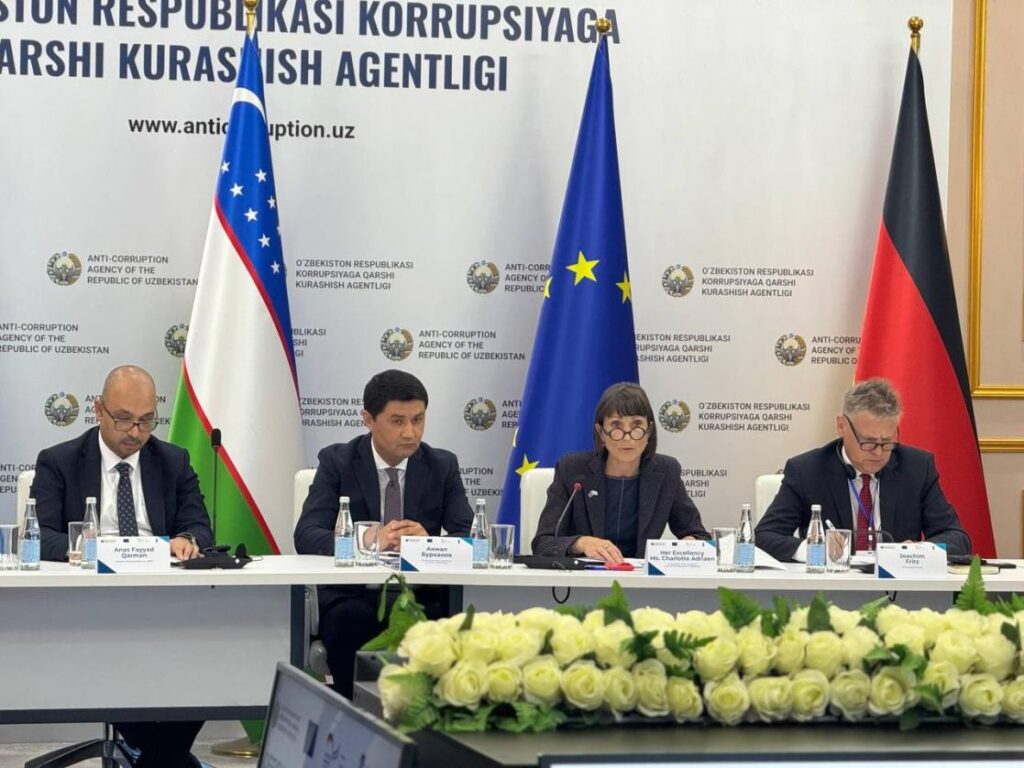
The European Union, an EU Consortium under the leadership of GIZ (Germany), UNDP Uzbekistan, and the Anti-Corruption Agency of Uzbekistan, have joined forces to bolster Uzbekistan’s anti-corruption efforts.

Funded by the European Union, “Improving Governance in Uzbekistan,” was officially launched on 19 April, and targeting all 14 of Uzbekistan’s regions, will run until 2026.

As reported by the Delegation of the European Union to Uzbekistan, the campaign will be actioned through two closely related projects.

The first, “Inclusive corruption prevention,” will be implemented by the EU Consortium under the leadership of GIZ in partnership with Regional Dialogue and the Central Finance and Contracting Agency of Latvia. The budget of 4,550,000 euros is co-funded by the German government.

The second, “Strengthening the National Anti-Corruption Ecosystem in Uzbekistan,” costing 2,500,000 euros, will be implemented by UNDP.

Operating in tandem, the projects aim to address critical challenges faced by anti-corruption efforts including weak institutionalization and gaps between national and regional levels of their implementation.

Ms. Charlotte Adriaen, EU Ambassador to Uzbekistan, expressed her optimism about the campaign, saying, “This initiative signifies EU’s continued support of the ambitious reform program in Uzbekistan. Supporting efforts in fighting corruption will be essential for ensuring sustainable and equitable development.”

Speaking on behalf of Anti-Corruption Agency, director Mr Burkhanov outlined expansive plans to address the issue including the introduction of the Integrity Assessment initiative and ensuring that corruption reforms reach all regions. In addition, the agency is set to introduce digital technologies and artificial intelligence into the anti-corruption system, enhance cooperation of civil society institutions and increase their effectiveness, and introduce a coordinated system for cooperation with donors supporting anti-corruption.

German Company to Manufacture Ultralight Aircraft in Kazakhstan

Germany’s Flight Design GmbH, a leading manufacturer of ultralight aircraft with over 25 years of experience, is set to produce ultralight CT series aircraft in Kazakhstan.

The project was announced at the Flight Design and Kazakh Invest press conference at the 30th AERO Friedrichshafen General Aviation Exhibition in Friedrichshafen, Germany, on 19 April.

According to Flight Design CEO Daniel Guenther, the aircraft will be produced with support from the Virage group of companies under a newly created joint venture, Flight Design Kazakhstan.

Aircraft assembled in the free economic zone (FEZ) in Almaty, Kazakhstan, will be sold to both local and foreign markets.

Kazakhstan Debates Foreign Media Accreditation

Following their second reading, the Mazhilis (lower chamber of parliament) of the Republic of Kazakhstan has adopted the bills “On Mass Media” and “On Amendments and Additions to Certain Legislative Acts of the Republic of Kazakhstan in the Field of Mass Media,” sending them to the Senate for consideration. The documents are designed to regulate the professional activities of mass media outlets. The new amendments are evoking mixed reactions.

One of the key proposals was the right of the Ministry of Foreign Affairs to deny accreditation to foreign media and their representatives if they pose a threat to national security. This initiative provoked opposition from representatives of the media, who consider such regulations a mechanism for suppressing freedom of speech.

“The draft law proposes a regulation on the introduction of press cards, granting the right to simplified accreditation to individual journalists. Frankly speaking, this norm caused great controversy in the working group and society as a whole. The overwhelming majority of the working group members regarded this rule as one that contradicts democratic principles, discredits journalists, and hinders the comprehensive dissemination of information. Therefore, a specific decision was made on this: the rule on press cards was excluded,” said Mazhilis representative, Zhanarbek Ashimzhanov, answering journalists’ questions.

Other changes proposed in the draft laws include combining online publications and news agencies into the category of “internet publications,” as well as shortening the statute of limitations for journalist legal requests and setting shorter deadlines for responding to media inquiries.

Among other rules, members of the Mazhilis also proposed introducing a ban on the publication of materials about LGBT themes and topics. These changes were critically evaluated by experts, and these regulations were not included in the final document as members of the working group concluded that it contradicts both Kazakhstani and international legislation.

TikTok Users Struggle to Access App after Kyrgyzstan Announces Restrictions

Kyrgyzstan is restricting access to TikTok.

The Ministry of Digital Development sent a letter to internet providers, asking them to block the TikTok social media platform, local media has reported. The ministry cited the network´s failure to comply with a law designed to “prevent harm to the health of children, their physical, intellectual, mental, spiritual and moral development.”

The ministry said it took action after receiving a memorandum from Kyrgyzstan’s State Committee for National Security about TikTok, whose owner is the Chinese firm, ByteDance. Users reported “difficulties and interruptions” in using TikTok, which was still accessible via some providers, the 24.kg news agency reported on Thursday.

Opponents of the restrictions on video-based TikTok say it is part of a clampdown on free speech and other basic rights in Kyrgyzstan. They note that the authorities arrested some journalists in a separate case, and the parliament passed a law tightening control over non-governmental groups that get foreign funding. In the wake of this, the George Soros funded, Open Society Foundations, which claims it has spent more than $115 million on projects in education, public health, criminal justice, supplying water to rural communities and other areas since it opened in 1993, said earlier this week that it was closing down its Kyrgyz branch.

Government officials in Kyrgyzstan started to move against TikTok last year, saying that some social networks were having a negative effect on children.

The U.S. Congress is also fast-tracking legislation that would ban TikTok unless ByteDance sells its stake, with a vote due on Saturday. There are concerns in the U.S. that the app could share user data with the Chinese government; TikTok has said it is owned by a private company and doesn’t share such data.