• KGS/USD = 0.01144 0%
  • KZT/USD = 0.00211 0%
  • TJS/USD = 0.10454 -0.1%
  • UZS/USD = 0.00008 0%
  • TMT/USD = 0.28571 0.28%
  • KGS/USD = 0.01144 0%
  • KZT/USD = 0.00211 0%
  • TJS/USD = 0.10454 -0.1%
  • UZS/USD = 0.00008 0%
  • TMT/USD = 0.28571 0.28%
  • KGS/USD = 0.01144 0%
  • KZT/USD = 0.00211 0%
  • TJS/USD = 0.10454 -0.1%
  • UZS/USD = 0.00008 0%
  • TMT/USD = 0.28571 0.28%
  • KGS/USD = 0.01144 0%
  • KZT/USD = 0.00211 0%
  • TJS/USD = 0.10454 -0.1%
  • UZS/USD = 0.00008 0%
  • TMT/USD = 0.28571 0.28%
  • KGS/USD = 0.01144 0%
  • KZT/USD = 0.00211 0%
  • TJS/USD = 0.10454 -0.1%
  • UZS/USD = 0.00008 0%
  • TMT/USD = 0.28571 0.28%
  • KGS/USD = 0.01144 0%
  • KZT/USD = 0.00211 0%
  • TJS/USD = 0.10454 -0.1%
  • UZS/USD = 0.00008 0%
  • TMT/USD = 0.28571 0.28%
  • KGS/USD = 0.01144 0%
  • KZT/USD = 0.00211 0%
  • TJS/USD = 0.10454 -0.1%
  • UZS/USD = 0.00008 0%
  • TMT/USD = 0.28571 0.28%
  • KGS/USD = 0.01144 0%
  • KZT/USD = 0.00211 0%
  • TJS/USD = 0.10454 -0.1%
  • UZS/USD = 0.00008 0%
  • TMT/USD = 0.28571 0.28%

FAO to Improve Soil Health In Uzbekistan

Earlier this month, The Food and Agriculture Organization of the United Nations (FAO) and its Global Soil Partnership (GSP), in collaboration with the Ministry of Agriculture of Uzbekistan, held a seminar in Tashkent on the ‘Recarbonization of Agricultural Soils’ (RECSOIL). The meeting concluded with unanimous approval of the development of an action plan for the development of the initiative in Uzbekistan.

RECSOIL will be implemented in collaboration with two other FAO projects in Uzbekistan funded by the Global Environment Facility (GEF): ‘Integrated Natural Resources Management in Drought-Prone and Salt-Affected Agricultural Production Landscapes in Central Asia and Turkey’ and ‘Sustainable Forest and Rangelands Management in the Dryland Ecosystems of Uzbekistan.’ In recent years, both projects have proven effective in supporting agricultural development in drought-prone regions of Uzbekistan through the use of advanced resource-saving methods, and continue to increase farmers’ incomes through the contribution of technical equipment to farms, and by maintaining land degradation neutrality.

The initiative addresses challenges related to climate change by promoting sustainable soil management (SSM) and by enhancing its health, make soil more productive and shock resilient. Aimed at maintaining and increasing carbon stocks to boost soil health which in turn, will secure and increase production and income, SSM practices include using cover crops, crop rotation and agroforestry.

The new scheme to tackle both carbon sequestration and mitigation of greenhouse gases (GHG) emissions, will be piloted through the provision of training for farmers and financial compensation to support their adoption of SSM practices. RECSOIL also provides robust methods to monitor and assess both soil health and levels of GHG emissions reduced through the project.
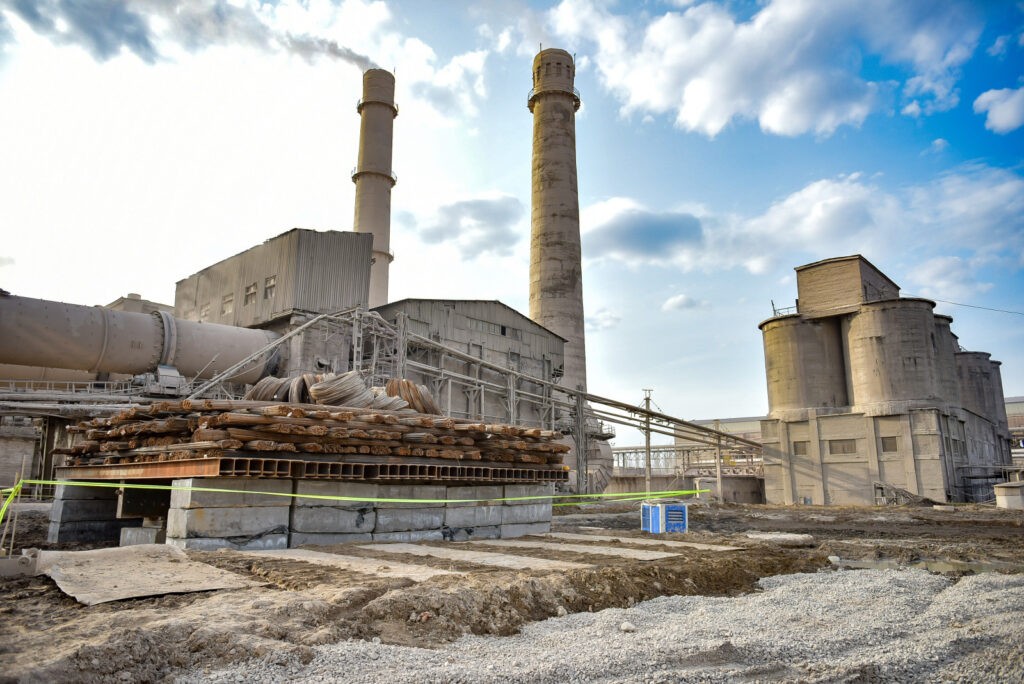
Launch of a Clinker Line for Kyrgyzstan’s Largest Cement Plant

On March 20th, First Deputy Chairman of the Cabinet of Ministers of the Kyrgyz Republic, Adylbek Kasymaliev attended a ceremony to launch the construction of a new clinker line at the cement plant in Kant.

Kasymaliev reported that in 2023, the plant received $8.5 million from the Kyrgyz-Russian Development Fund for an export-oriented aerated concrete line. This year, thanks to a loan of $50 million from the Eurasian Development Bank and $20 million of internal investments, the construction of a new clinker line has begun.

Clinker is essential for cement production and its versatility allows it to be stored and transported globally without risk of degrading. With the completion of the new line, the production of high-quality clinker will total 800 thousand tons per year.

Located 20km east of Bishkek, Kyrgyzstan’s largest cement plant currently produces over 1.1 million tons of cement per year and since it cooperates with 45 companies – from manufacturers of bags for cement to end consumers – the plant’s activities have a widespread impact on Kyrgyzstan’s economy.

AIIB Allocates $670 Million for Uzbekistan’s Economic Transition

The Asian Infrastructure Investment Bank (AIIB) has approved the allocation of $670 million to Uzbekistan to support reforms and its ongoing transition to a market economy. The project is supported by the special fund for Covid-19 crisis recovery and is co-financed by the World Bank.

The borrower will be Uzbekistan’s Ministry of Economy and Finance, who will use the funds to finance reforms in such areas as improving fiscal risk management, supporting social inclusion, improving environmental sustainability, and market formation.

The project will improve the energy, railroad and chemical sectors, as well as agriculture. In addition, funds will be used to create environmentally friendly markets, improve Uzbekistan’s fiscal management and procurement system, and develop a more socially adapted economy. Planned reforms will serve to improve the efficiency of health care and public services.

“We are pleased to continue to support Uzbekistan’s journey towards a sustainable market economy. By strengthening social safety nets and helping to mitigate climate risks, we aim to improve the effectiveness of social assistance initiatives and facilitate Uzbekistan’s transition to a green economy, which is in line with AIIB’s mission to finance promising infrastructure,” said Konstantin Limitovsky, Vice President for Investment Operations at AIIB.

In late January 2024, Uzbek president Shavkat Mirziyoyev met with AIIB President Jin Liqiong in Beijing. During the meeting, the two sides signed a three-year investment program for further support of Uzbekistan’s development in a number of sectors. To date, the bank has approved 14 projects in Uzbekistan worth $3.1 billion, making it the seventh-largest portfolio among its membership. The AIIB’s annual meeting in Samarkand is scheduled for September 2024, which will be the bank’s first such event in Central Asia.

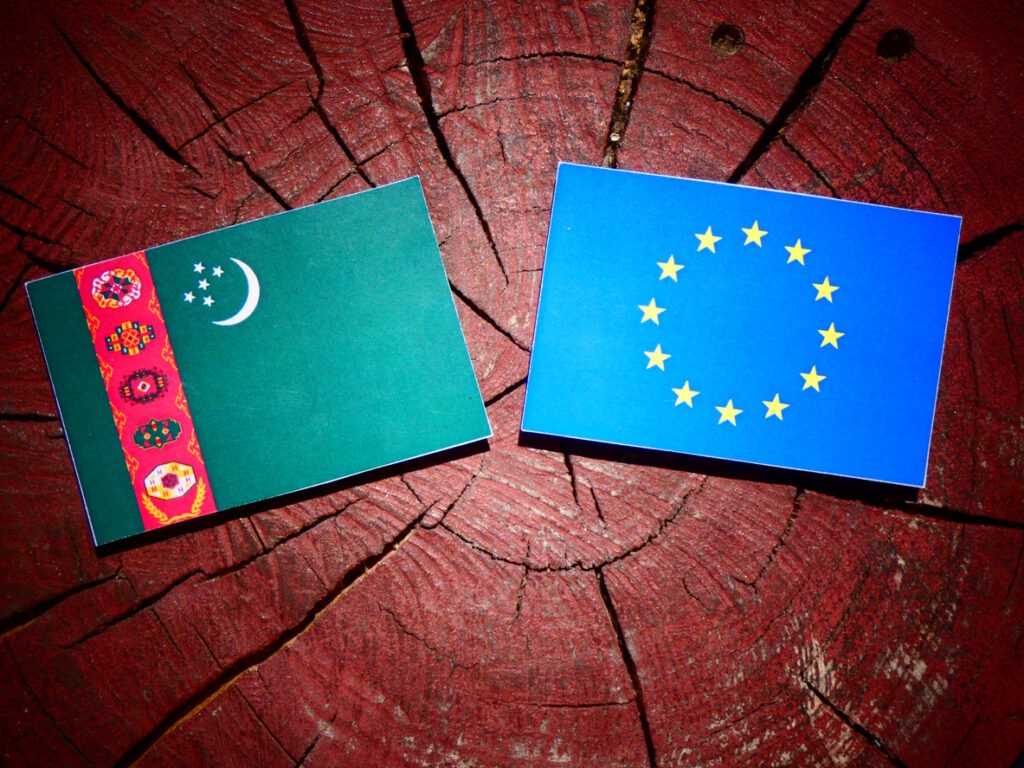
Turkmenistan and EU Discuss New Projects

A roundtable discussion called Turkmenistan and the European Union: Towards a New Economic Partnership took place in Brussels, Belgium on Monday.

The event featured business meetings between Turkmen representatives and members of EU business circles. Turkmenistan’s minister of foreign affairs, Rashid Meredov, held meetings with the leaders of the Walloon Export and Investment Agency, the Organization for Economic Cooperation and Development (OECD), and the vice-presidents of Picanol and Philips.

The director of the country’s Transport and Communications Agency Mammetkhan Chakiyev met with the management of Cargolux, Exagon Global BV, Royal IHC, and the Dredging, Environmental and Marine Engineering NV (DEME Group), in addition to executives from the Port of Antwerp.

The parties talked about Turkmenistan’s production of equipment logistics, digitalization, industrial technologies, and service centers. Discussions touched upon prospective projects and investment activities.

Kazakhstan Bank Deposits Decline by $1.1 Billion

Bank deposits by Kazakhstani citizens have declined by 2.5%, according to data from January of this year. Analysts from Ranking.kz say that the portfolio “lost weight” by $1.1 billion and amounted to $44 billion at the end of January 2024. Experts say that it’s a common seasonal occurrence, when after December inflows, there’s an outflow of money from second-tier banks, which is called a “calendar pit.”

Correspondingly, according to analysts’ data, there’s only one financial institution among the largest banks of Kazakhstan that had an inflow of deposits in January — Home Credit Bank’s $725 million (+1.2%). Experts say that was expected, considering the bank has kept rates on its retail deposit products above the average level on the market. Currently the bank’s offered rates on savings products range from 14.5% to 16.7% per annum.

All other large Kazakh banks showed reductions in their portfolios of individual deposits. However, at Bereke Bank, the volume of savings deposits barely changed (-0.02%) and remained at $951 million. By year-on-year measure, Bereke Bank’s portfolio of retail deposits has doubled.

Out of 21 Kazakhstani banks and four foreign financial institutions, Russia’s VTB Bank saw an increase of 36.6% to $128 million, and two Islamic banks — Al Hilal, whose deposits rose 1.5 times to $8.1 million, and Zaman Bank, up 8.5 times to $2.4 million — showed strong deposit growth.

In total, the volume of all bank deposits in Kazakhstan at the end of January 2024 amounted to $76.5 billion — which is 1.4% less than at the end of 2023.

Drug Dealing in Kazakhstan Continues to Gain Momentum

Over the past six years the volume of seized synthetic drugs in Kazakhstan has almost doubled, Finprom.kz reports. In 2023 law enforcement agencies in Kazakhstan interdicted and confiscated 41.1 tons of illicit substances, up from 20.3 tons in 2018.

In 2023 the number of drug laboratories destroyed increased to 75 from 68, and Kazakhstani officials called the increase in the distribution of banned substances an outbreak of drug trafficking. Because of the increase in drug usage, the Ministry of Internal Affairs has said that new types of synthetics will be included in the national list of narcotic drugs before they are brought into Kazakhstan. As soon as the drugs are on the national list, they’ll immediately be registered on Eurasian Economic Union (EAEU) and UN International Committee lists. Until 2019 in Kazakhstan, the procedure for inclusion of new drugs in the national list took about a year — now it takes no more than a month.

Over the past few years in Kazakhstan, the volume of seizures of all sorts of so-called “salts,” “ecstasy” and various synthetic cannabinoids has increased 143.4 times — rising to 1.1 tons from 7.7 kilograms. At the same time, the share of synthetics out of the total number of confiscated drugs in 2023 was insignificant, at 2.7 percent. It’s difficult to obtain accurate data on the market volume of modern illicit substances — often because new types of drugs are distributed mainly among young people through messenger apps and crypto-wallets, with the use of bots for publishing advertisements. According to the Interior Ministry, more than 3,000 different drug-dealing sites and 1,300 online stores on encrypted messaging app Telegram were blocked by Kazakhstan last year. Finprom.kz analysts report that they themselves managed to independently find several such channels operating in the country.

At the end of 2023, Kazakhstani Interior Minister Yerzhan Sadenov named some of the main barriers in the fight against the spread of synthetic drugs. He said the issue is complicated by the fact that the drugs are made in clandestine labs in the country from substances that are not considered illegal in Kazakhstan — and can only legally be brought to the attention of police after they are used to make a drug. Last year the Ministry of Internal Affairs seized more than 100 tons of these ingredients — which could have turned into eight tons of finished drugs. Therefore, the Ministry of Internal Affairs proposes increasing criminal liability for trafficking in precursor chemicals. Today the country punishes only the smuggling of these substances.

According to the Prosecutor General’s Office of Kazakhstan, last year drug crime in the country increased by 9%. In 2023, 7,500 drug crimes and criminal offenses were recorded. The police detained about 4,500 people, including minors, on suspicion of distribution, manufacture or sale of illegal substances.