• KGS/USD = 0.01144 0%
  • KZT/USD = 0.00213 0%
  • TJS/USD = 0.10456 0.19%
  • UZS/USD = 0.00008 0%
  • TMT/USD = 0.28490 0%
  • KGS/USD = 0.01144 0%
  • KZT/USD = 0.00213 0%
  • TJS/USD = 0.10456 0.19%
  • UZS/USD = 0.00008 0%
  • TMT/USD = 0.28490 0%
  • KGS/USD = 0.01144 0%
  • KZT/USD = 0.00213 0%
  • TJS/USD = 0.10456 0.19%
  • UZS/USD = 0.00008 0%
  • TMT/USD = 0.28490 0%
  • KGS/USD = 0.01144 0%
  • KZT/USD = 0.00213 0%
  • TJS/USD = 0.10456 0.19%
  • UZS/USD = 0.00008 0%
  • TMT/USD = 0.28490 0%
  • KGS/USD = 0.01144 0%
  • KZT/USD = 0.00213 0%
  • TJS/USD = 0.10456 0.19%
  • UZS/USD = 0.00008 0%
  • TMT/USD = 0.28490 0%
  • KGS/USD = 0.01144 0%
  • KZT/USD = 0.00213 0%
  • TJS/USD = 0.10456 0.19%
  • UZS/USD = 0.00008 0%
  • TMT/USD = 0.28490 0%
  • KGS/USD = 0.01144 0%
  • KZT/USD = 0.00213 0%
  • TJS/USD = 0.10456 0.19%
  • UZS/USD = 0.00008 0%
  • TMT/USD = 0.28490 0%
  • KGS/USD = 0.01144 0%
  • KZT/USD = 0.00213 0%
  • TJS/USD = 0.10456 0.19%
  • UZS/USD = 0.00008 0%
  • TMT/USD = 0.28490 0%

A New Railway Project for China, Kyrgyzstan and Uzbekistan

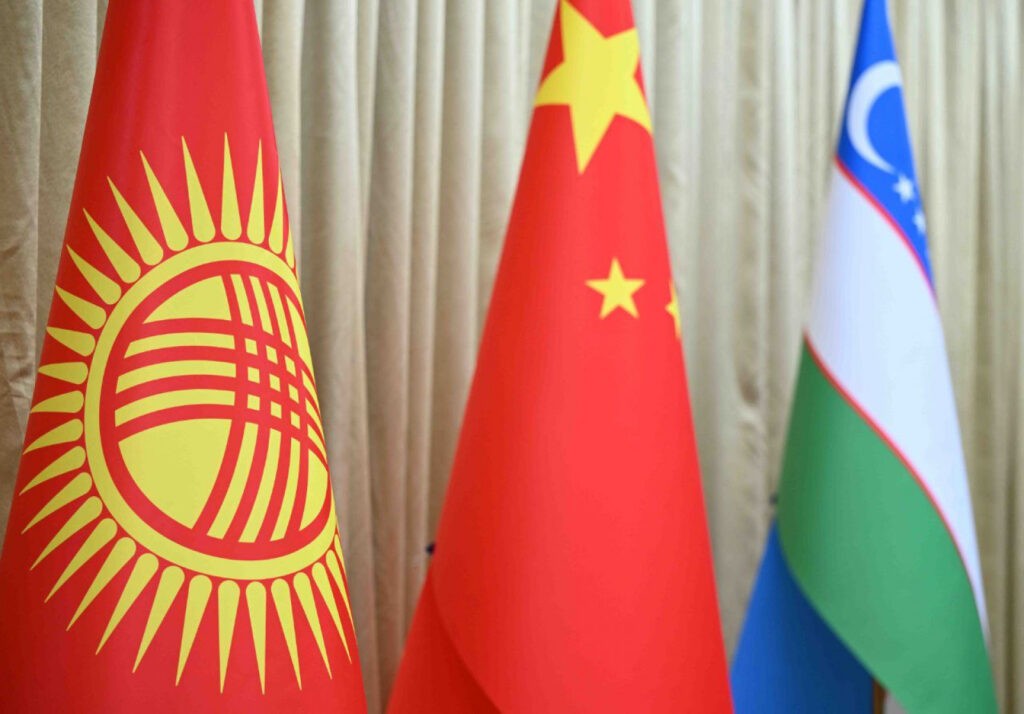
On March 1st, Akylbek Japarov Chairman of the Cabinet of Ministers of the Kyrgyz Republic, Abdulla Aripov Prime Minister of Uzbekistan and Ma Xingrui Communist Party Secretary of China’s western Xinjiang Uygur Autonomous Region, met in Kashgar (Xinjiang) to discuss the construction of the China-Kyrgyzstan-Uzbekistan railway.

Japarov first praised the incentive for its potential to strengthen the development of trade and economic cooperation between the three countries and reported that a jointly funded feasibility study of the project had already been developed and approved.

Uzbekistan’s Prime Minister Aripov expressed his country’s interest in developing multimodal transport routes to support the joint construction of the China-Kyrgyzstan-Uzbekistan railway.

Addressing the insufficient throughput capacity of the Irkeshtam checkpoint on the Kyrgyz-Chinese border, Japarov stated, “increasing the volume of cargo throughput at the Irkeshtam checkpoint is an issue relevant to both the Kyrgyz and Chinese sides, as well as the Uzbek side. It is therefore important that all checkpoints are modernized and equipped with updated means of customs control.”
He then reported that new customs inspection complexes at the Irkeshtam and Torugart checkpoints to be installed this year, will allow up to 125 vehicles per hour to cross the border, and added that the Kyrgyz side aims to increase the throughput capacity of these checkpoints to 1,000 vehicles per day.

In the interest of developing trade and economic ties, the Secretary of Xinjiang’s Party Committee welcomed the Kyrgyz Prime Minister’s proposals and supported his stance that Xinjiang is perceived as a gateway to China from Kyrgyzstan and in turn, several other Central Asian countries.


Przewalski’s Horses to Return to Kazakhstan

In Astana on February 29th, Roman Vassilenko, Kazakhstan’s Deputy Minister of Foreign Affairs, met with a Czech delegation led by Miroslav Bobek, director of Prague Zoo, to discuss the reintroduction of Przewalski’s horses to Kazakhstan.

“We have just begun a new chapter on the return of the last wild horses to their natural habitats,” explained Bobek. “Following the success of the horses’ reintroduction to Mongolia, where the population is now thriving, we were approached by the government of Kazakhstan for the same purpose.”

Under an agreement made during a visit to Astana in April 2023 by the Czech Republic’s Prime Minister Petr Fiala, the ‘Return of the Wild Horses Project’ aims to relocate some forty horses from Europe and over five years, increase their population in the Kazakh steppe ecosystem.

The Kazakh Ministry of Ecology and Natural Resources reported that two Czech Air Force aircraft carrying the first eight horses are scheduled to arrive on June 2nd from Prague and Berlin. They will then be transported to the Altyn Dala state natural reserve in the Kostanay region.

The Przewalski horse named after the Russian who discovered it and known as ‘takhi’ in Mongolia, is a rare and endangered species. Originally found on the steppes of Central Asia, it had disappeared from the wilds by the sixties. Thanks to special breeding programmes in European zoos, the breed was saved from extinction and since the 1990’s, has been gradually resettled in its native lands.

French Company to Build a Solar Plant in Uzbekistan

Attended by Uzbek President Shavkat Mirziyoyev, a ground-breaking ceremony for the construction of a solar power plant with a capacity of 100 megawatts took place in Uzbekistan’s Khorezm region on February 29th.

Built by the French company Voltalia, the new photovoltaic plant will generate 254 million kilowatt-hours of green energy per annum and increase the volume of electricity generated in Khorezm by 30%.
In addition to providing 11% of the region’s annual electricity consumption by the end of the year, the new plant will save 76 million cubic meters of natural gas and prevent the release of 106 thousand tons of harmful substances into the atmosphere.

The project will also harness agrovoltaics technology and by combining energy production and agriculture, allow crops to be grown under solar panels for the first time in Uzbekistan.

In discussion with Sébastien Clerc, CEO of Voltalia, President Mirziyoyev emphasized his support of both the Khorezm project and the construction of a hybrid power plant in the Bukhara region, and reiterated the extent to which such innovative projects strengthen multifaceted cooperation between Uzbekistan and France.

Kyrgyzstan Becomes an Industrial Producer of Black Caviar

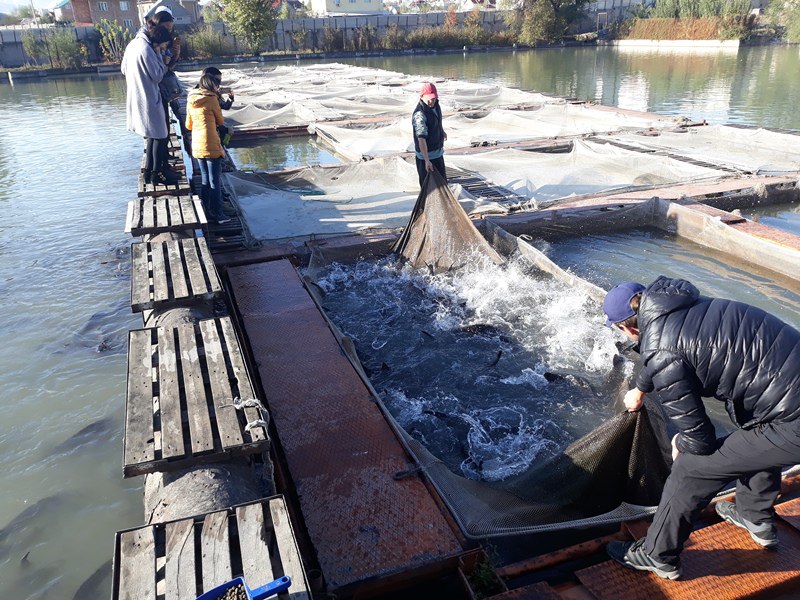
Until recently Kyrgyzstan has not produced or exported black caviar — but by the end of 2024 the republic will have made several tons of it.

Today Kyrgyzstan is breeding different species of sturgeon fish, which produce black caviar. Female fish purchased 4-5 years ago have now reached sexual maturity, and can produce a high volume of black caviar. Fish farm owners believe it is much cheaper to produce caviar in Kyrgyzstan than in Kazakhstan or Russia because of the better climatic conditions.

“Sturgeon [reach maturity] in 4-5 years in our country, while in Russia it takes 8-10 years,” the Kyrgyz fisheries association commented. One of Kyrgyzstan’s fish companies said that as of a week ago, the country was not on the world’s black caviar production lists. But today they are already harvesting caviar using the so-called ‘lifetime method’. That means the caviar is simply squeezed out of a live fish. Therefore, from one fish it’s possible to harvest caviar several times over the fish’s lifetime. According to the producers, such caviar is usually larger in size and discernible by taste.

“At the moment we are not talking about dozens, but hundreds of kilograms of caviar. By the end of 2024, tons of products will be produced, which will soon be available for sale on the shelves of domestic stores. At the moment, work is underway to produce cans and stickers,” said Kyrgyz meat company ichthyologist Alexander Dytynyak.

Meanwhile, black caviar exports from Kyrgyzstan to Russia have already begun. According to Russian Customs Service data, black caviar from Kyrgyzstan was not supplied to the Russian market at all until 2022, when 1.7 tons of it were sent.

Experts from the food oversight agency Rosselkhoznadzor suspect that the caviar supplied to Russia is not actually produced in Kyrgyzstan, but is re-exported from Europe. To verify these speculations, the Russian inspection body inspected Kyrgyz fish farms last year. However, not all enterprises agreed to let Russian specialists in. “The refusal to participate in the inspection confirms the validity of Rosselkhoznadzor’s claims and the possibility of supplying products from third countries under the guise of Kyrgyz products,” the Russian agency reported.

Last year, representatives of the European Union (EU) also noted the growth of caviar exports from Europe to Kyrgyzstan. According to them, after the introduction of economic sanctions against Russia, exports of the delicacy from Europe to Kyrgyzstan increased many times over.

Rosatom Looks to Promote Small-Scale Nuclear Power in Central Asia

The Russian state corporation Rosatom is discussing the construction of small-capacity nuclear power plants (SCNPPs) with Kyrgyzstan, Uzbekistan, Myanmar and some island nations in East Asia, according to Rosatom’s general director Aleksey Likhachev. According to him, demand for small-scale nuclear plants is increasing globally, and, according to Rosatom analysis, in the next 10-15 years up to 30-40 GW of small-capacity reactors will be commissioned. The company is now discussing joint projects on SCNPP with Norilsk Nickel, Gazprom, Lukoil and Russian Platinum.

Last December Rosatom and the Mongolian company Mon-Atom signed a memorandum on the construction of a low-capacity nuclear power plant in Mongolia. In early 2023 the parties signed a memorandum on cooperation in the field of peaceful atomic use, and development of a project for the Center for Nuclear Science and Technology.

In Uzbekistan, the issue of joint construction of a nuclear plant with Russia has been under discussion since 2018. Under one agreement Rosatom will build two VVER-1200 units with a capacity of 1.2 GW each near Lake Tuzkan in the Jizzakh region. The nuclear plant’s potential to compensate for energy shortages and to decarbonize the country’s energy sector form a clear rationale for its construction. The project, which should take six years to build, is assessed as promising by both power engineers and environmentalists. Furthermore, considering that Uzbekistan is one of the world’s five biggest producers of uranium, it should always be able to fully supply its nuclear reactors with fuel.

Rosatom is proposing a “dry cooling tower” design for Uzbekistan — a technically more complicated option, but, given the growing water shortage in Central Asia, increasingly relevant.

South Korea’s Hyundai has also expressed interest in building SCNPPs in Uzbekistan. Hyundai is proposing its latest modular reactors based on integrated systems (SMART), where high-pressure water is used for cooling. Such reactors, despite their small size, are capable of generating up to 110 MW of energy, and their compactness and mobility allow them to be installed in the remote mountainous terrain of Central Asia.

In addition to Uzbekistan, Rosatom is considering building a nuclear power plant in neighboring Kyrgyzstan. Experts suggest installing two power units of 55 MW each. The corresponding memorandum was signed by Rosatom and Kyrgyzstan in January 2022 during the World Expo-2022 in the UAE. Experts believe that an SCNPP project could appear in Kyrgyzstan no earlier than 2028.

Kyrgyzstan Measles Outbreak Registers 4,000 Cases

Bishkek is currently dealing with a measles outbreak, with cases also reported in the Chui and Jalal-Abad regions. Up to 85% of all those affected are children under the age of 10.

The city of Bishkek’s main immunization center stressed in a statement: “The main reason for the increase […] remains a large number of refusals of routine immunization against measles and rubella among children and adults.” According to Kyrgyzstan’s Ministry of Health, 40% percent of people who refuse their innoculations say that they doubt the quality of the vaccine, with the rest refusing to immunize their children for religious reasons. This is in spite of the fact that under Kyrgyz law parents can face criminal penalties if they deliberately fail to seek medical help when a child’s health is in danger.

In response to the measles outbreak, the Ministry of Health mandated a strengthened immunization regime throughout the country, and pushed to vaccinate high-contact citizens. The National Immunization Calendar is also under review: currently the measles vaccine should be administered twice in a person’s lifetime — at one year, and at the age of six — but Kyrgyz doctors want to add another dose at the age of two. In turn, the World Health Organization (WHO) says that children who have been in contact with a measles patient can be vaccinated as early as six months of age. According to the Ministry of Health’s clinical guidelines for the diagnosis and treatment of measles, susceptibility to the disease is highest in children aged one to five.

An outbreak of measles was observed in the republic last year as well. In September 2023 the Kyrgyz authorities appealed to the WHO for help. As a result, 755,500 doses of measles and rubella vaccine were delivered to Kyrgyzstan, and 750 temporary vaccination points were opened throughout the country.

For the calendar year 2023, according to official data, 5,500 people fell ill, and doctors were unable to save nine children.