Japanese Foreign Minister Takeshi Iwaya made a landmark trip to Central Asia from August 24–28, 2025, holding talks in Kazakhstan and Uzbekistan. Tokyo framed the visit as a bid to deepen bilateral ties and revive the Central Asia plus Japan leaders’ summits. The visit fulfilled commitments made by then-Prime Minister Kishida, who had planned a similar tour in 2024 before cancelling at the last minute due to a domestic earthquake alert.
Strategic Engagement
Iwaya’s visit reflects Tokyo’s long-standing, multifaceted approach to Central Asia. Analysts emphasized to The Times of Central Asia that Japan is pursuing “trust-building diplomacy” in the region, focusing on human capital, infrastructure, and governance rather than quick geopolitical wins. Tokyo inaugurated the Central Asia plus Japan Dialogue format in 2004, making it the first outside power to group all five Central Asian republics within a single framework. As Professor Timur Dadabaev of Tsukuba University told The Times of Central Asia, Tokyo is seen “not as a competing hegemon, but as a partner that invests in the region’s human capital, infrastructure, and governance in ways that reinforce independence.” This approach contrasts with what has been characterized as the transactional models of other powers.
On August 25, Iwaya met with Kazakhstan’s Deputy Prime Minister and Foreign Minister Murat Nurtleu in Astana, marking his first official visit to the country. The talks underscored both sides’ commitment to strengthening ties as strategic partners and in upholding a “free and open international order based on the rule of law.” The ministers welcomed active exchanges and pledged to expand cooperation in trade, investment, mineral resources, disaster prevention, and nuclear non-proliferation. They also announced plans to accelerate preparations for the long-delayed Central Asia plus Japan summit.

Japanese Foreign Minister Iwaya with Kazakh Foreign Minister Nurtleu in Astana after their meeting on August 25, 2025; image Japan MOFA
In Tashkent, Iwaya echoed this message, calling Uzbekistan “an important strategic partner,” and highlighting the first-ever foreign ministers’ strategic dialogue held there.
Japanese officials also stressed their policy does not aim to pressure Central Asian partners on sensitive issues. Characterizing Japan as a “catalyst to promote interconnectivity and inter-regional cooperation,” Foreign Ministry spokesman Toshihiro Kitamura stated that Tokyo does not see a zero-sum “competition between Japan and other countries. We would like to see Central Asian countries work together with other parts of the world.”
In Tashkent, Kitamura explicitly noted that while Japan condemns Russia’s invasion of Ukraine, it will not pressure Uzbekistan or others to take the same stance. “The relationship between Russia and the Central Asian countries is a very delicate issue. Each country should take into account the relations it establishes with other countries. Even if it is with Russia, such relations do not affect the relations of other countries with Japan,” Kitamura stated.
Bilateral Agreements
In Kazakhstan, Iwaya held high-level talks with President Kassym-Jomart Tokayev and Foreign Minister Nurtleu. Tokayev welcomed Japan as a “reliable and close partner in Asia” and said ties are “developing dynamically.” The sides agreed to arrange a Central Asia plus Japan summit as soon as possible, exchanged notes on Japanese grant aid for medical equipment for victims of nuclear testing, and announced a direct Tokyo–Almaty flight starting in March 2026. Kazakhstan also invited greater Japanese participation in energy and transit. “Kazakhstan already accounts for about 80% of overland freight traffic between Asia and Europe. We are ready to cooperate on the development of the Trans-Caspian International Transport Route and the introduction of digital technologies, including artificial intelligence, with the involvement of Japanese investors,” said Nurtleu.
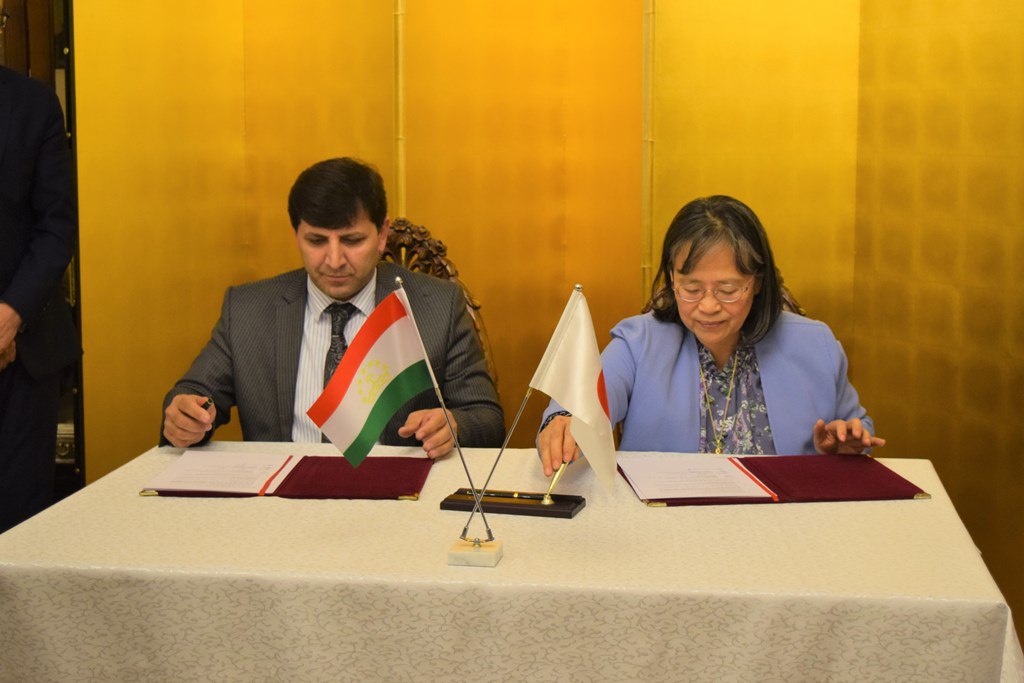
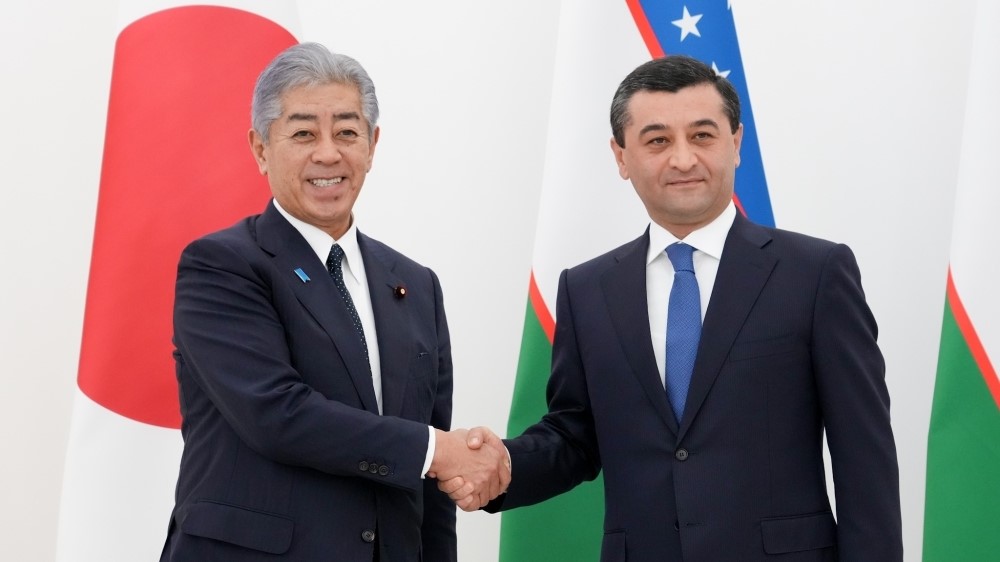
In Tashkent, Iwaya and Uzbek Foreign Minister Bakhtiyor Saidov held the first Japan–Uzbekistan Foreign Ministers’ Strategic Dialogue, signed a joint communiqué, and showcased two grant projects: the Project for Human Resource Development Scholarship and an economic initiative for vulnerable groups, including Afghan returnees. The two sides agreed to hold the dialogue biennially and to schedule the Japan–Central Asia leaders’ summit at an early date, while expanding cooperation on economic security and supply chains.
Regional Implications
Iwaya’s August 2025 trip underscored Japan’s intent to remain a steady partner in Central Asia, balancing economic opportunity with respect for regional sensitivities. By advancing grant aid in Kazakhstan, launching new scholarship and development projects in Uzbekistan, and pledging to revive the Central Asia plus Japan summit, Tokyo is positioning itself as a constructive actor focused on connectivity, resilience, and trust-building. This “bridges not blocs” strategy comes backed by official statements from the Japanese Foreign Ministry highlighting a commitment to long-term partnerships. With strategic dialogue in Tashkent and new agreements in Astana, Japan has signaled that its presence in Central Asia is not episodic but a durable part of the region’s evolving geopolitical landscape.