• KGS/USD = 0.01144 0%
  • KZT/USD = 0.00211 0%
  • TJS/USD = 0.10460 0.19%
  • UZS/USD = 0.00008 0%
  • TMT/USD = 0.28490 0%
  • KGS/USD = 0.01144 0%
  • KZT/USD = 0.00211 0%
  • TJS/USD = 0.10460 0.19%
  • UZS/USD = 0.00008 0%
  • TMT/USD = 0.28490 0%
  • KGS/USD = 0.01144 0%
  • KZT/USD = 0.00211 0%
  • TJS/USD = 0.10460 0.19%
  • UZS/USD = 0.00008 0%
  • TMT/USD = 0.28490 0%
  • KGS/USD = 0.01144 0%
  • KZT/USD = 0.00211 0%
  • TJS/USD = 0.10460 0.19%
  • UZS/USD = 0.00008 0%
  • TMT/USD = 0.28490 0%
  • KGS/USD = 0.01144 0%
  • KZT/USD = 0.00211 0%
  • TJS/USD = 0.10460 0.19%
  • UZS/USD = 0.00008 0%
  • TMT/USD = 0.28490 0%
  • KGS/USD = 0.01144 0%
  • KZT/USD = 0.00211 0%
  • TJS/USD = 0.10460 0.19%
  • UZS/USD = 0.00008 0%
  • TMT/USD = 0.28490 0%
  • KGS/USD = 0.01144 0%
  • KZT/USD = 0.00211 0%
  • TJS/USD = 0.10460 0.19%
  • UZS/USD = 0.00008 0%
  • TMT/USD = 0.28490 0%
  • KGS/USD = 0.01144 0%
  • KZT/USD = 0.00211 0%
  • TJS/USD = 0.10460 0.19%
  • UZS/USD = 0.00008 0%
  • TMT/USD = 0.28490 0%

Kazakhstan to Build Eight New Power Plants by 2030

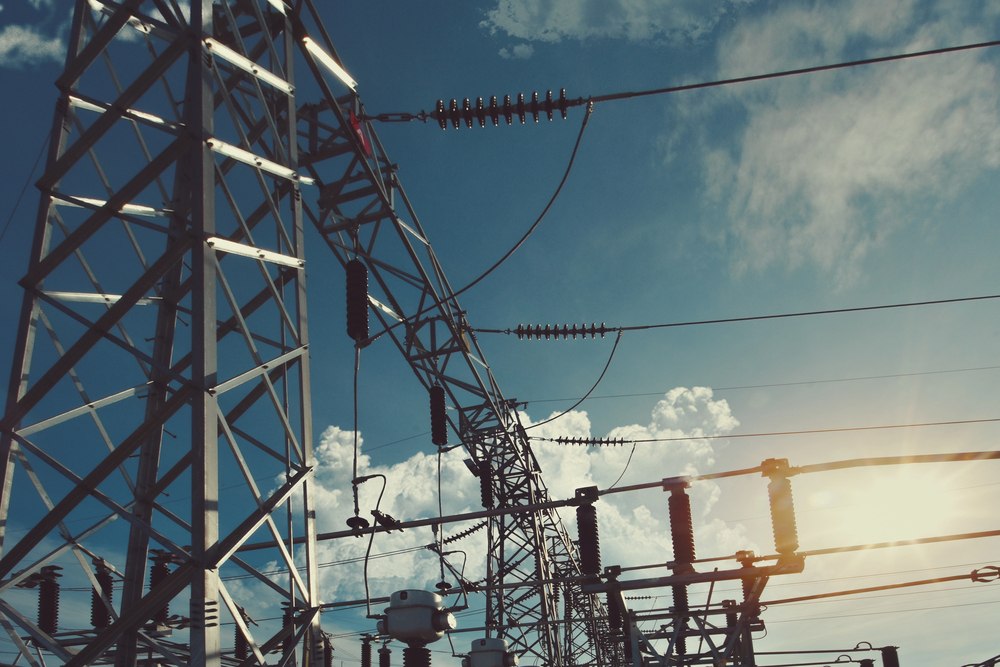
Kazakhstan plans to build eight new power plants and modernize 11 existing facilities by 2030 as part of a national project to expand coal-fired power generation.

The project, approved in March, aims to meet growing electricity demand and modernize the country’s energy infrastructure, strengthening the stability of the Unified Power System.

According to Kazakhstan’s Ministry of Energy, 7.8 GW of new and upgraded capacity is scheduled to be commissioned by 2030. This includes both newly constructed plants and modernisation of existing facilities .

The new construction program, with a total capacity of 5.3 GW, includes projects in several key regions. Plans include a 700 MW condensing power plant in Kurchatov; the Ekibastuz GRES-3 plant with a capacity of 2,640 MW; thermal power plants in Karaganda (350 MW) and Ekibastuz (180 MW); as well as combined heat and power plants in Zhezkazgan (500 MW), Kokshetau (240 MW), Semey (360 MW), and Ust-Kamenogorsk (360 MW).

The project also aims to improve the efficiency of existing capacity. According to ministry estimates, modernization will reduce equipment wear by 13%.

The Ministry of Energy stated that the initiative is expected to provide a reliable energy base for industrial growth, support the development of the digital economy, and facilitate the adoption of AI technologies. Coal-fired generation, if modernized and compliant with environmental standards, will continue to play a key role in ensuring the country’s energy security.

The Times of Central Asia previously reported that Kazakhstan plans to attract at least $15.5 billion in investment for the development of coal-fired power generation.

The country is expected to fully meet domestic electricity demand by 2027 and achieve a sustainable surplus by 2029, enabling it to begin exporting electricity.

At the same time, the government plans to create a “data center valley” in Pavlodar powered by coal-fired energy.

Istanbul Strait Rail Project to Boost Trade Along Trans-Caspian Transport Route

On March 31, the World Bank approved a $2 billion loan for the Istanbul North Rail Crossing Project (INRAIL), aimed at strengthening railway connectivity across the Istanbul Strait (Bosphorus) and reinforcing Türkiye’s role as a key logistics hub linking Europe, Asia, and the Middle East.

With the Baku-Tbilisi-Kars railway, Turkey serves as a key node in the Trans-Caspian International Transport Route (TITR), also known as the Middle Corridor. The route connects China and Europe via Kazakhstan, the Caspian Sea, the South Caucasus, and Turkey.

Turkey’s major rail corridors passing through Istanbul, including the Middle Corridor, the Iraq Development Road, and the Turkey-EU corridor, are essential for international trade but currently face a significant bottleneck at the Bosphorus.

INRAIL will involve the construction of a 127-kilometer electrified, high-capacity railway line providing a new overland rail crossing of the strait. The project will utilize the rail-ready Yavuz Sultan Selim Bridge and bypass central Istanbul, increasing both freight and passenger capacity while reducing logistics costs and improving reliability across national and intercontinental transport corridors, including the TITR.

Once operational, rail freight capacity across the Bosphorus is expected to increase from approximately 3 million tons per year to as much as 50 million tons, significantly improving transit times, reliability, and predictability for freight operators.

“By removing a critical rail bottleneck at the Istanbul Strait and enhancing the resilience and efficiency of rail infrastructure, Turkey is boosting its competitiveness and reinforcing its role as a logistics hub,” said Humberto Lopez, World Bank Country Director for Turkey. “INRAIL will also generate benefits for the wider region by connecting to international corridors such as the Middle Corridor and the Development Road, facilitating trade between Europe, Central Asia, and the Gulf.”

The project aligns with Kazakhstan and Türkiye’s broader efforts to develop the Middle Corridor.

In July 2025, Kazakhstan’s national railway operator, Kazakhstan Temir Zholy (KTZ), and TCDD Taşımacılık A.Ş. signed a cooperation agreement to enhance freight transportation along the TITR.

The agreement aims to improve the route’s efficiency and competitiveness by launching regular rail services between Kazakhstan and Turkey, increasing freight volumes along the Baku-Tbilisi-Kars railway, and expanding cargo flows between China and Europe.

KTZ has also held discussions with Mersin International Port, part of PSA International, on expanding cooperation to strengthen the Middle Corridor and develop more efficient multimodal logistics links between Asia and Europe.

KTZ Chairman Talgat Aldybergenov reaffirmed both sides’ commitment to ensuring stable freight volumes and highlighted Mersin’s role as a strategic transshipment hub for the corridor.

To further strengthen the logistics chain, Kazakhstan has proposed leveraging the potential of KPMC, a joint venture between KTZ and PSA International, which is already involved in developing multimodal services along the Xi’an-Istanbul route.

Kazakhstan Expands Kashagan Legal Fight as Arbitration and Claims Mount

For several years, Kazakhstan has been engaged in arbitration proceedings worth billions of dollars, many of which have been conducted behind closed doors. Recently, new details have emerged about one of the largest disputes, involving the North Caspian Operating Company (NCOC). 

The dispute stems from environmental violations identified during a 2022 inspection at the Kashagan field. Environmental authorities found that the operator, NCOC, had stored approximately 1.2 million tons of sulfur in excess of permitted limits. As a result, the company faced a fine of around $5 billion.

Kashagan is one of the largest and most technically complex offshore oil fields ever discovered, with proven hydrocarbon reserves estimated at 4.65 billion tons. The consortium includes seven major international energy companies: KazMunayGas (16.88%); Eni (16.81%); Shell (16.81%); ExxonMobil (16.81%); TotalEnergies (16.81%); CNPC (8.33%); and INPEX Ltd (7.56%). A lawsuit was filed by all consortium members except KazMunayGas, Kazakhstan’s national oil company. The field has long been central to Kazakhstan’s oil production and relations with international investors.

Kazakhstan’s interests in the Kashagan dispute are represented by the Ministry of Ecology and the Ministry of Justice. According to the Vice Minister of Justice, Daniel Vaisov, a trial court has already ruled in favor of the state.

“A first-instance court has ruled in Kazakhstan, recognizing the state’s position as lawful. Six contractors — excluding KazMunayGas — filed an appeal in March,” Vaisov said.

NCOC challenged the environmental inspection results. In June 2023, a court in Astana partially upheld the company’s claims. However, this was overturned in February 2024, when an appellate court ruled in favor of the government, confirming the inspection’s legality.

Subsequent developments have further complicated the case. In August 2025, an Astana court overturned the environmental agency’s order, citing procedural violations. The case is once again under appeal.

At the same time, the contractors have challenged the $5 billion fine through international arbitration. The proceedings are set to take place in Washington at the International Centre for Settlement of Investment Disputes (ICSID), where the arbitral tribunal is currently being formed, Vaisov said.

The case is being closely watched as a test of how far Kazakhstan is willing to push legal pressure on major Western energy investors.

Separately, Kazakhstan is pursuing much larger claims against Kashagan consortium members under the production-sharing agreement. In May 2024, Kazakhstan’s Ministry of Energy said claims against Kashagan project developers could reach up to $150 billion.

Initially, the government sought $15 billion from NCOC. It later increased its claims by a further $138 billion, citing lost profits linked to oil volumes that investors had committed to supply to the state.

The Ministry of Energy has described the dispute as purely commercial, relating to Kazakhstan’s rights under the production-sharing agreement. Officials maintain that the legal proceedings do not affect the investment standing of project participants.

Separately, in January last year, an economic court in Astana ordered NCOC to pay 3.5 billion KZT (about $8 million) for excessive flaring of raw gas.

In addition to Kashagan, Shell is involved in the Karachaganak oil and gas project. The consortium is led by Eni and Shell, with each holding 29.25%. Other partners include Chevron (18%), Lukoil (13.5%), and KazMunayGas (10%).

In January, Shell and its partners lost a separate dispute over cost deductions, with potential payments to Kazakhstan estimated at up to $4 billion. Shell said in February 2026 that it would suspend new investments in Kazakhstan pending the outcome of its legal disputes with the government.

At the time, Shell CEO Wael Sawan stated that the volume of claims, amounting to billions of dollars, had dampened the company’s willingness to invest. This position appeared to have been reversed a few weeks later when it signed a contract for geological exploration of the Zhanaturmys site in the Aktobe region.

That exploration agreement was signed by Kazakhstan’s Vice Minister of Energy, Yerlan Akbarov, and Shell’s Senior Vice President and Chair in Kazakhstan, Suzanne Coogan.

Experts say that despite ongoing legal disputes and broader geopolitical uncertainty, demand from Western investors for Central Asian oil and gas resources is likely to remain strong. 

Plans Underway to Launch Humanoid Robot Production in Astana

Plans are underway to launch humanoid robot production in Astana at the Astana Hub International Technology Park, Minister of Digital Development and Artificial Intelligence Zhaslan Madiev announced at a government meeting.

According to Madiev, Astana Hub remains a key institution for fostering innovative entrepreneurship in Kazakhstan. The technology park runs acceleration programs, including AI’preneurs, aimed at launching startups in the field of artificial intelligence. Since September 2024, 35 AI startups have been established through the program’s three cohorts.

In collaboration with the city authorities, the Astana Innovations Accelerator program is also being implemented. It focuses on integrating startups into urban infrastructure and helping them secure commercial contracts. Following a competitive selection process, eight projects have received funding.

The minister also reported that an “Exponential Cluster” is being developed at the technology park, an innovation platform designed to bring together science, startups, and industry. As part of this initiative, a network of technology centers is being created, covering areas such as robotics, unmanned systems, cybersecurity, medicine, and industrial applications.

A humanoid robotics laboratory has already been launched at the Robotics Center. Projects include the development of teleoperation systems for robot control and the integration of robots with the AlemLLM language model for user interaction.

Special attention is being given to unmanned technologies. According to Madiev, Kazakhstan plans to launch a pilot project for autonomous vehicles involving international companies in the second quarter of 2026. A separate private initiative to deploy delivery drones is also underway.

At the Drone Center, construction of a “phygital” arena, combining physical and digital environments, and infrastructure for training unmanned aerial vehicle operators is nearing completion. All Astana Hub technology centers are expected to be operational by the end of the year.

The ministry expects the cluster to support the launch of up to 500 startups annually, including more than 100 hardware projects, and to position Astana as a regional innovation hub.

According to official data, by 2025 Astana Hub residents had created more than 32,500 jobs. A total of 537 companies export IT services to 111 countries, with export volumes reaching $681 million, an increase of 44% compared to the previous year.

The Times of Central Asia previously reported that the Chinese company AgiBot plans to launch the production and deployment of industrial robots in Kazakhstan.

Kazakhstan Is Rethinking Its Healthcare System, Focusing on Prevention

Kazakhstan’s Ministry of Health has outlined updated investment and development plans for 2023-2027, signaling a shift in the country’s healthcare approach from treating diseases to preventing them, strengthening biosafety, and expanding mental health support.

However, some experts warn that the new strategy could have unintended economic consequences, including the reallocation of budget funds toward information campaigns, digital initiatives, and infrastructure projects whose effectiveness may be difficult to assess.

One of the key areas of reform is the prevention of noncommunicable diseases. Authorities are considering restrictions on advertising products high in salt, sugar, and trans fats, amid rising childhood obesity rates. According to the Food and Agriculture Organization of the United Nations, 21% of children in Kazakhstan aged 6-9 are overweight.

Such restrictions could affect the media market. Research by the Institute for Fiscal Studies indicates that bans on advertising unhealthy food can reduce media revenues. In Kazakhstan, this could increase pressure on an industry already subject to limits on advertising alcohol, tobacco, and certain medications.

At the same time, the ministry plans to expand public awareness campaigns, including video content and national initiatives such as “Salamatty shanyraq” (“Healthy Family”). Public health research suggests that the effectiveness of such campaigns can be difficult to measure, and their impact on behavior may be limited.

Another priority is the creation of a “biological shield” system, including genomic and metagenomic surveillance, as well as the development of domestic pharmaceutical manufacturing. These initiatives are expected to attract up to $380 million in private investment.

However, concerns remain about implementation capacity. Previous reports have highlighted inefficient use of medical equipment. In 2024, Health Minister Akmaral Alnazarova stated that expensive equipment in some medical facilities remained unused. In certain regions, shortages of trained specialists and necessary consumables have prevented effective deployment.

The third component of the strategy focuses on mental health. Authorities plan to expand the network of specialized centers and introduce the uSupport digital platform to provide online consultations.

At the same time, public trust in the state system remains limited. According to official data, individuals with addictions often avoid seeking treatment due to fears of being registered, which could restrict access to employment, education, and driver’s licenses.

Experts also highlight the scale of gambling addiction. Estimates suggest that around 350,000 people in Kazakhstan suffer from compulsive gambling, while the growing availability of online casinos and microfinance services continues to contribute to rising household debt.

The shift toward a preventive healthcare model aligns with global trends. However, analysts warn that without effective implementation, the reform could result in increased administrative pressure on businesses, inefficient public spending, and limited improvements in health outcomes.

Georgia May Replace Russian Oil with Imports from Turkmenistan and Kazakhstan

Georgia’s only oil refinery, owned by Black Sea Petroleum (BSP), plans to completely stop importing Russian oil and instead switch to crude supplies from Turkmenistan and, potentially, Kazakhstan. This was announced by the company’s CEO, David Potskhveria.

According to Potskhveria, the shift would not only diversify supply sources but also open access to European markets.

“We will completely replace Russian oil with Turkmen oil, and then with Kazakhstani oil. This will give us the opportunity to export products to the EU,” he said.

The rationale is straightforward: imports of Russian petroleum products into the European Union are currently prohibited. Maintaining previous supply arrangements would effectively block access to European markets.

However, switching suppliers presents logistical challenges. As Potskhveria noted, processing of Turkmen crude can begin only after transit issues through Azerbaijan are resolved. For now, logistics remain the main bottleneck. While the refinery is technically ready, implementation depends on securing reliable transport routes.

The proposed move away from Russian oil follows earlier developments. In late February, the EU considered including the Kulevi port on a preliminary sanctions list due to its import and processing of Russian crude. The trigger was a shipment delivered in October 2025 by Russneft, involving approximately 105,000 tons of oil to the port of Kulevi.

The shipment prompted criticism from the Georgian opposition, which accused the authorities of undermining the sanctions regime and appealed to European institutions.

The Kulevi refinery is a relatively new entrant to the regional oil market. It began operations in December last year and has already outlined expansion plans. Its current processing capacity is around 1.2 million tons per year, with plans to increase this to 4.5 million tons.

At present, the facility produces fuel oil, diesel, and other petroleum products. Future plans include expanding output to Euro-5 standard gasoline, jet fuel, and Eurodiesel. BSP’s international partners reportedly include Trafigura and Saudi Aramco.