Kazakhstan’s Interior Ministry has opened public consultation on rules for a paid electronic entry permit for foreign visitors. The ministry has proposed a phased rollout between August and December 2026, but the published summary leaves several basic questions unanswered.
The proposal was posted on July 31, and remains open for comments until August 17. It would amend Kazakhstan’s 2012 rules governing the entry, stay, and departure of foreign nationals. The ministry says the system will provide “transparency, speed, and completeness [in] recording the cross-border movements of foreign nationals.”
However, the consultation page does not display the proposed amendments, an explanatory note, or a comparative table. Rather, it shows an information summary and one attachment labeled as a Russian-language table, leading one public commenter, Andrei Sukhanov, to ask: “Where is the draft itself? Or is only its title being discussed?”
That omission makes it impossible to establish several important terms from the consultation. The page does not state the fee, the nationalities covered, the grounds for refusal, the appeal process, or the date when permits would become mandatory. It also fails to explain whether visa holders would need a further separate authorization.
The legal basis for introducing paid electronic entry permits already exists: President Kassym-Jomart Tokayev signed Law No. 326-VIII on June 24. The law was first published on June 25, and most of its provisions take effect on August 25.
The law defines an electronic entry permit as a digital document granting a foreign citizen or stateless person the right to enter Kazakhstan or transit its territory. The Interior Ministry will issue, refuse, or cancel permits in coordination with the National Security Committee. Foreign citizens and stateless persons entering Kazakhstan will undergo identification and authentication, including the processing of personal and biometric data for a digital immigration profile.
The government will set the fee and payment procedure. The law directs half of the revenue toward migration and border-control technology, while the other half will support domestic and inbound tourism. The Interior Ministry’s summary says differentiated charges would fund technical maintenance, digital infrastructure upgrades, and personal-data protection. It gives no amounts or categories, meaning travelers cannot assess the cost.
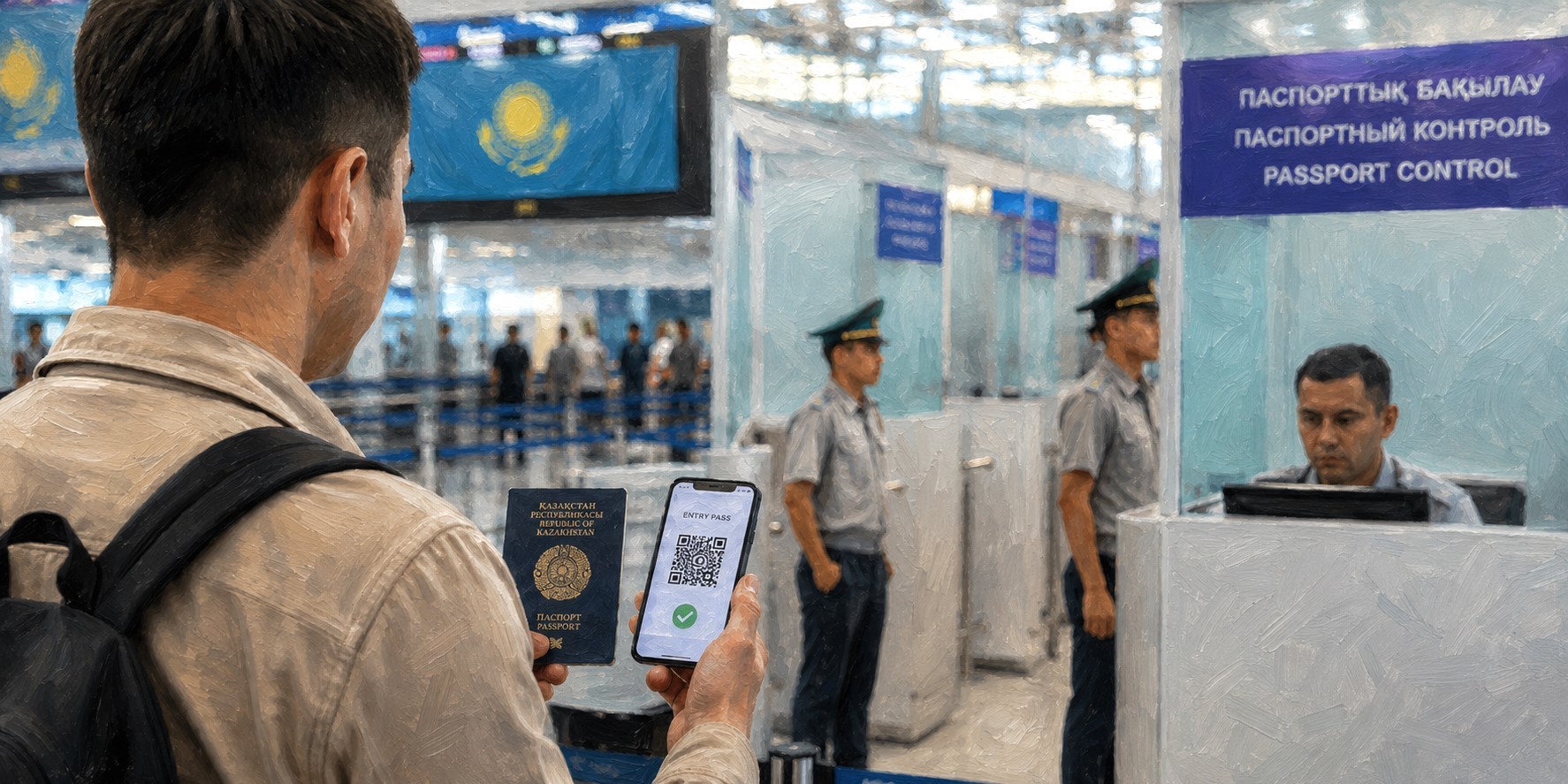
Kazakhstan is already testing the permit through the QazETA platform. During the pilot, the Electronic Travel Authorization is recommended rather than compulsory for citizens of visa-exempt countries. Applicants are asked to submit requests through the mobile app at least 72 hours before travel, and an authorization remains valid for 180 days.
An ETA does not extend the permitted length of stay or guarantee admission, with border officials retaining the final decision. The current pilot exempts holders of diplomatic and service passports, members of official delegations, and accredited diplomats.
The government has not announced when the pilot will end or published the list of countries that will face a mandatory requirement. A local report in July said Kyrgyzstan had sought clarification on whether the system would cover citizens of Eurasian Economic Union states. Kazakhstan has not published a decision on that point.
The August 25 effective date therefore creates a legal framework rather than an automatic application deadline for every visa-free traveler.
Government pages describe QazETA as a state digital platform. Its privacy policy says the current app is developed and operated by Kazdream Special Systems LLP and is “not an official product of government bodies.” The law says the government will appoint the operator of the paid permit platform, so the final rules should clarify how the current app fits into that structure.
The permit is taking shape as Kazakhstan tries to increase foreign travel and investment. The country received 15.7 million foreign visitors in 2025, including 11.1 million who came for tourism purposes. Another three million foreign travelers entered during the first quarter of 2026.
The government has also widened access through electronic visas and new categories for remote workers and skilled professionals. Interior Minister Yerzhan Sadenov said in June that citizens of 105 countries could obtain electronic visas “without applying to embassies.” Kazakhstan has also introduced the Neo Nomad and Digital Nomad visas, and is preparing an Altyn Visa for investors and highly qualified specialists.
The system could strengthen advance screening and help finance border technology, but it will add a requirement for travelers who now enter visa-free. Its eventual impact will depend on the fee, exemptions, processing time, and the app’s reliability.
Those details remain absent from the published consultation. There is no official basis yet to treat August 25 as a compulsory QazETA deadline. The public comment period closes on August 17.