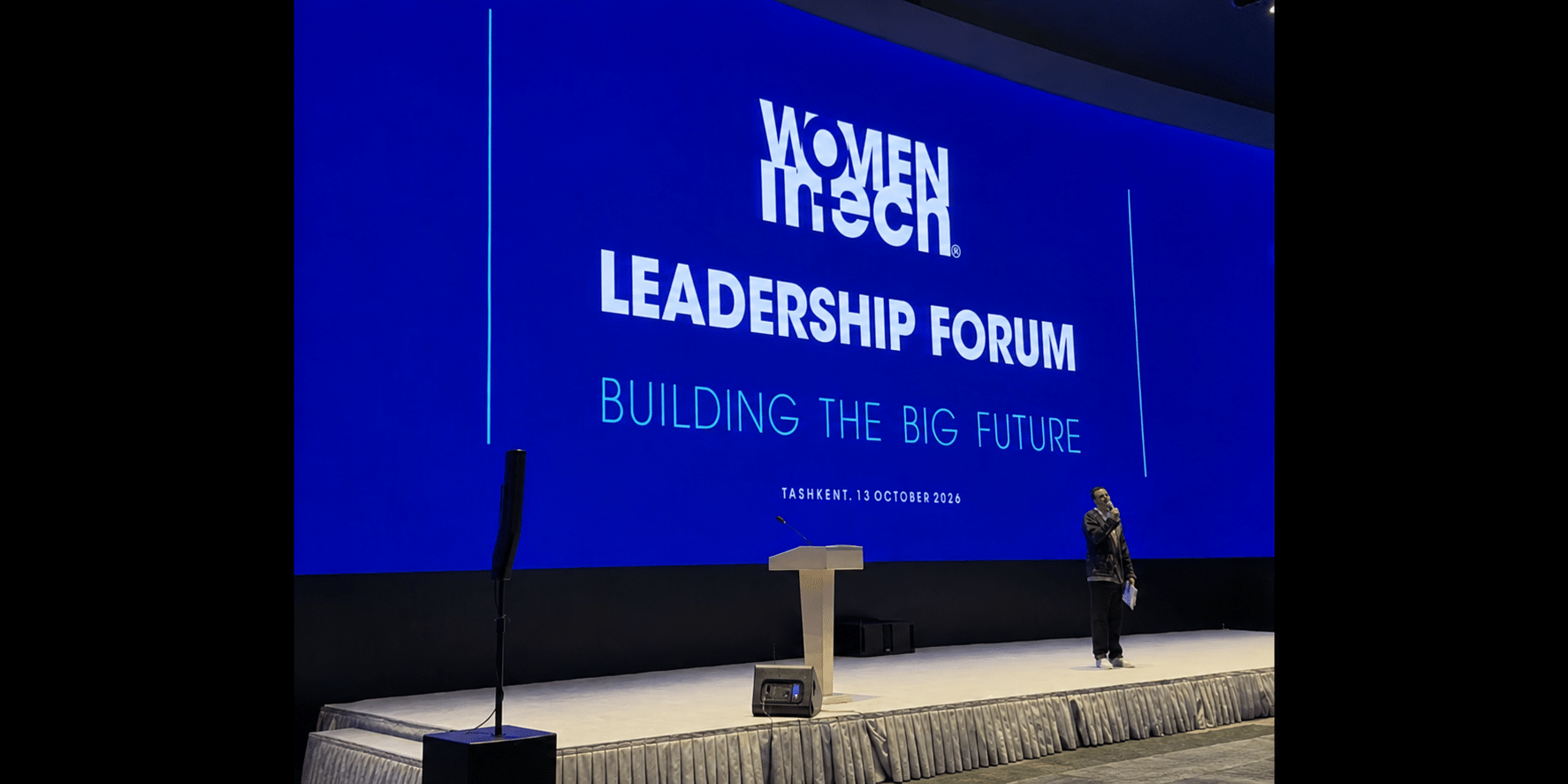
Uzbekistan is attracting foreign technology companies, expanding IT education, and training young people to work with artificial intelligence. But employers’ needs are changing faster than educational programs can adapt. Just a few years ago, companies were looking for programmers, then cloud technology specialists. Now they need developers capable of building AI systems and autonomous digital agents. Against this backdrop, discussions in Tashkent are focusing on how to increase women’s participation in the technology industry and enable them not only to learn new tools but also to develop their own products.
These issues took center stage at the Women in Tech Leadership Forum, held on October 13 at Uzbekistan’s Ministry of Digital Technologies. The event brought together approximately 300 representatives of government agencies, international organizations, technology companies, and the business community. It was organized by the ministry and Women in Tech Uzbekistan, the national chapter of an international organization working to expand women’s participation in technology.
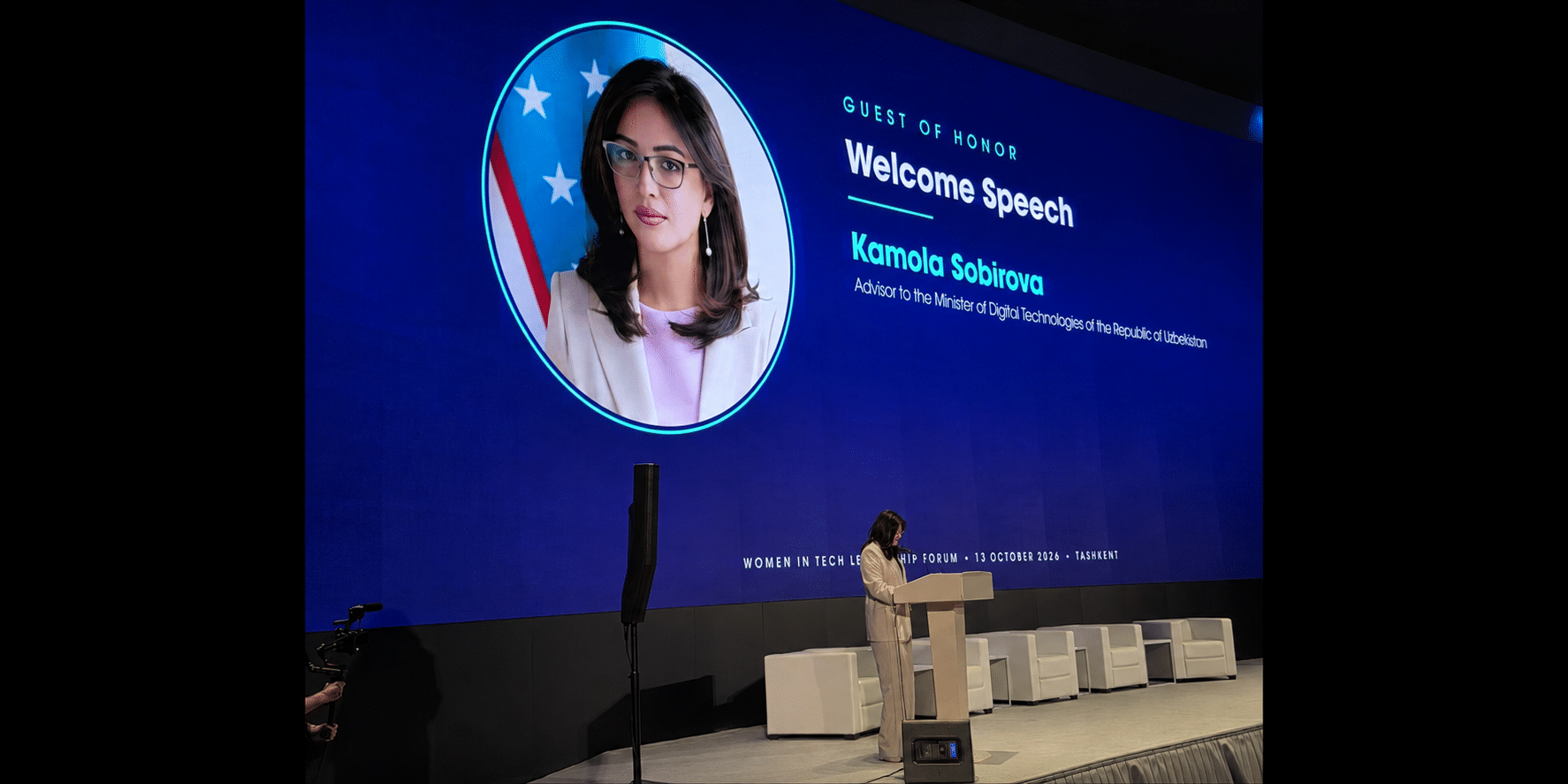
Kamola Sobirova, an adviser to Uzbekistan’s Minister of Digital Technologies
Employers Need More Than Programmers
Kamola Sobirova, an adviser to Uzbekistan’s Minister of Digital Technologies, explained in an exclusive interview with The Times of Central Asia how international companies’ requirements for local specialists have changed.
“A few years ago, there was high demand for programmers. A year or two later, companies started asking us for cloud technology specialists. Then artificial intelligence emerged, and companies needed AI architects and prompt engineers,” Sobirova said.
According to Sobirova, employers are now looking for specialists who can develop AI agents – software systems capable of independently carrying out sequences of tasks using artificial intelligence.
“We cannot afford to stand still because technology continues to evolve. We must train specialists with up-to-date skills and create the right conditions for them,” she said.
Uzbekistan previously ran the One Million Uzbek Coders program and has since launched the Five Million AI Leaders initiative. These programs are designed to provide large-scale training in digital skills, including programming and working with artificial intelligence.
AI and the future of women’s work
The question of whether AI will eliminate jobs was also raised during the interview. Sobirova rejected the idea that the main effect of AI would simply be widespread job losses.
“There is a trend that everyone thinks AI will take over many professions and replace them, or that artificial intelligence has arrived and we will lose our jobs, but it is not like that,” she said. “Artificial intelligence will take the jobs of people who do not have artificial intelligence skills.”
She argued that AI should increasingly be viewed as a tool that allows people to work more efficiently rather than simply as a replacement for workers.
“Life has become much faster, and in this process artificial intelligence can help us become full users of AI and optimize our work,” Sobirova said.
She also said the same principle applies to journalism and other media-related work, where AI can be used to support different parts of the workflow.
“Coursera [an online learning platform] recently identified Uzbekistan as a role model, because in terms of the number of users studying artificial intelligence, women in Uzbekistan have reached first place globally,” she said. “Among users taking generative AI courses, 58.9% are women.”
The forum therefore placed particular attention on whether women can move beyond simply using new technologies and become people who develop and lead them.
She said some international online courses can be expensive, but Uzbekistan has introduced mechanisms to reimburse certain educational expenses after participants complete approved courses and submit their certificates through the my.gov.uz system.
“Recently, Google’s training in the field of artificial intelligence became free in the Uzbek language specifically for Uzbekistan,” Sobirova said. “A $60 training became free for Uzbek students and users in Uzbekistan. This is also a very big opportunity.”
She said the government’s approach is intended not only to increase the number of people with technical skills but also to strengthen Uzbekistan’s position as a technology destination.

Makhliyo Muksinova, Director of Strategic Development at IT Park Uzbekistan
A Young Population and a Growing IT Sector
Makhliyo Muksinova, Director of Strategic Development at IT Park Uzbekistan, linked the industry’s growth to economic reforms and the arrival of international companies.
According to figures she presented, Uzbekistan has a population of approximately 39 million, with around 65% under the age of 35. About 650,000 young people enter the labor market each year.
For the IT sector, this represents both a potential source of employees and a need to create new jobs every year.
Muksinova said Uzbekistan has more than 220 universities, with approximately 25,000 students graduating annually in IT-related fields. According to figures presented at the forum, almost five times as many women were enrolled in higher education in 2025 as in 2018. Women now account for approximately half of all university students.
The number of technology companies is also growing. According to Muksinova, IT Park Uzbekistan has more than 4,000 registered resident companies, including over 1,000 foreign companies and more than 1,000 export-oriented businesses. These companies employ more than 56,000 people, while their combined revenue reached $2.8 billion in 2025.
Muksinova valued Uzbekistan’s startup ecosystem at $4.3 billion. She said more than 100 Uzbek startups had already opened offices abroad.

From Education to Leadership in Technology Companies
“Women in Tech has brought leaders from different parts of the world to the region to inspire the next generation,” Ayumi Moore Aoki, founder and president of Women in Tech Global, told The Times of Central Asia.
The Uzbekistan chapter of Women in Tech was established in March 2024 in cooperation with the Ministry of Digital Technologies. Its activities include mentoring, supporting women entrepreneurs, and narrowing the gender gap in the digital sector.
Aoki believes Uzbekistan’s young population gives the country an advantage in adopting new technologies. At the same time, she emphasized the importance of combining AI skills with human knowledge and experience.
The international organization aims to reach five million women and girls by 2030. According to Aoki, expanding its programs will require women leaders capable of building their own teams and supporting other participants.
The forum also featured the Women in Tech Caucasus and Central Asia Awards, a regional program recognizing women working in technology. The 2026 finalists included 46 women and projects, with 15 representatives from Uzbekistan. Award categories covered startups, technology diplomacy, Web3, and other fields.
Emel Gümüş, founder and CEO of EGG Global Group, who has lived in Tashkent for four years, highlighted the opportunities for cooperation.
“We have an opportunity to work together — women from Uzbekistan and other countries — and create something new,” she said.
Skilled Workers Matter More than Presentations
Uzbekistan aims to expand its exports of digital services and attract international companies. Achieving these goals requires specialists capable of working with technologies that were in limited demand just a few years ago.
Sobirova described the challenge through her experience working with foreign investors:
“No matter how much we praise ourselves and say, ‘Look, we have wonderful conditions, come here,’ when they arrive, the first thing they encounter is the specialist. If they struggle to find the specialists they need, they won’t believe our beautiful words. They will believe in our specialists.