• KGS/USD = 0.01144 0%
  • KZT/USD = 0.00203 0%
  • TJS/USD = 0.10394 -0.38%
  • UZS/USD = 0.00008 0%
  • TMT/USD = 0.28571 0%
  • KGS/USD = 0.01144 0%
  • KZT/USD = 0.00203 0%
  • TJS/USD = 0.10394 -0.38%
  • UZS/USD = 0.00008 0%
  • TMT/USD = 0.28571 0%
  • KGS/USD = 0.01144 0%
  • KZT/USD = 0.00203 0%
  • TJS/USD = 0.10394 -0.38%
  • UZS/USD = 0.00008 0%
  • TMT/USD = 0.28571 0%
  • KGS/USD = 0.01144 0%
  • KZT/USD = 0.00203 0%
  • TJS/USD = 0.10394 -0.38%
  • UZS/USD = 0.00008 0%
  • TMT/USD = 0.28571 0%
  • KGS/USD = 0.01144 0%
  • KZT/USD = 0.00203 0%
  • TJS/USD = 0.10394 -0.38%
  • UZS/USD = 0.00008 0%
  • TMT/USD = 0.28571 0%
  • KGS/USD = 0.01144 0%
  • KZT/USD = 0.00203 0%
  • TJS/USD = 0.10394 -0.38%
  • UZS/USD = 0.00008 0%
  • TMT/USD = 0.28571 0%
  • KGS/USD = 0.01144 0%
  • KZT/USD = 0.00203 0%
  • TJS/USD = 0.10394 -0.38%
  • UZS/USD = 0.00008 0%
  • TMT/USD = 0.28571 0%
  • KGS/USD = 0.01144 0%
  • KZT/USD = 0.00203 0%
  • TJS/USD = 0.10394 -0.38%
  • UZS/USD = 0.00008 0%
  • TMT/USD = 0.28571 0%

Viewing results 613 - 618 of 1250

Fallout From Assault on Tashkent Schoolboy Reaches Russian Foreign Ministry

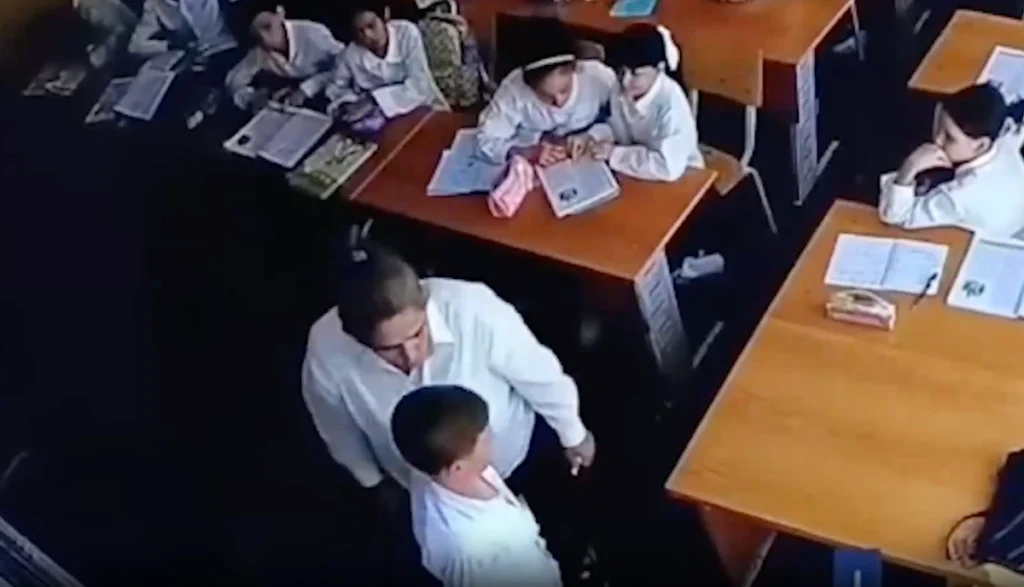
On September 23 a teacher at a school in Tashkent's Chilonzor district slapped a student when the child asked for the Russian language class to be taught in Russian. The Children’s Ombudsman of Uzbekistan, Surayyo Rahmonova, has begun an investigation into the incident -- but not before news of the assault reached Russia. Maria Zakharova, the spokesperson for the Russian Ministry of Foreign Affairs, said that she was concerned about the content of a video of the slap that was posted on social media. “We have requested official clarification from the Uzbek side,” Zakharova commented. “The Uzbek side is urgently asked to give the media material a legal assessment and, if justified, to take action against the perpetrator of cruel treatment of the child. We are keeping this issue under the closest attention.” The leader of Uzbekistan’s Milli Tiklanish (National Revival) party and deputy speaker of the lower house of parliament, Alisher Qodirov commented on Telegram that “it would be better for [Russia] to deal with their own affairs [which are] full of problems than to deal with our internal issues. The violation of rights of an Uzbek child at a school in Uzbekistan will be investigated in accordance with Uzbek laws.” A vocal critic of Russian influence, earlier this year Qodirov proposed a ban on the provision of public services to persons who don’t speak the Uzbek, and the promotion of Soviet ideology and symbols in Uzbekistan.

Central Asian Economies to See Continued Growth in 2024 and 2025

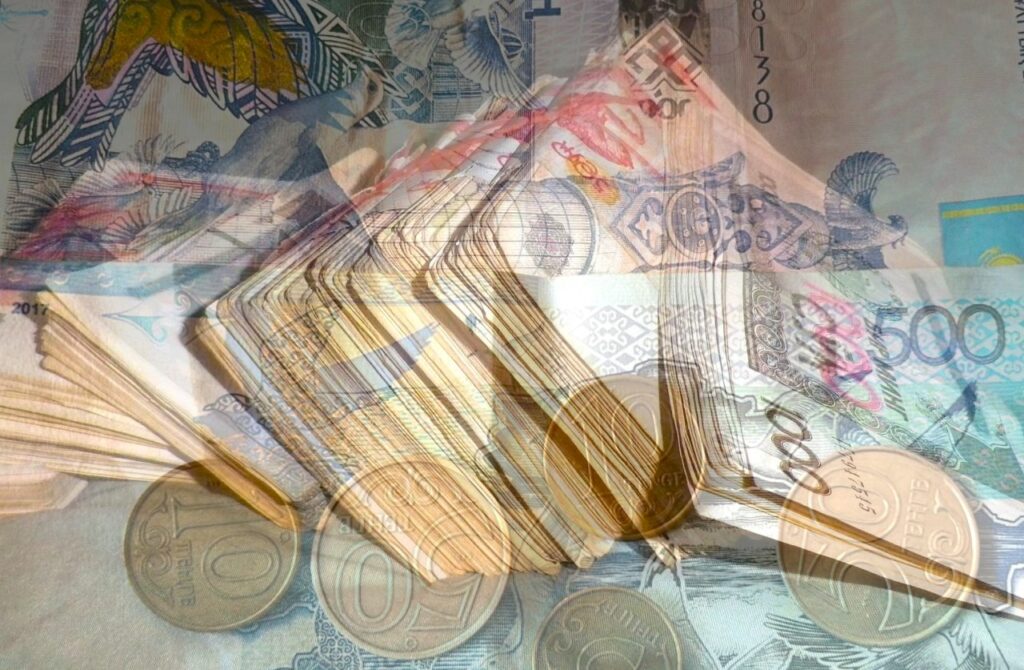
The latest economic outlooks from the European Bank for Reconstruction and Development (EBRD) and Asian Development Bank (ADB) project continued economic growth in the five Central Asian countries in 2024 and 2025. According to the latest edition of the EBRD’s Regional Economic Prospects report, Kazakhstan’s economy will grow by 4% in 2024, with upside from public spending to restore flood-affected infrastructure and housing. The trade, transport, warehousing, services, and IT sectors were the main growth drivers for Kazakhstan in the first half of the year. The EBRD forecasts that in 2025, the country’s real GDP will likely grow by 5.5% amid the planned expansion of the Tengiz oil field. The Asian Development Bank’s (ADB) Asian Development Outlook (ADO) September 2024 projects 3.6% growth of Kazakhstan’s gross domestic product (GDP) this year, slightly lower than the bank’s previous forecast of 3.8% in April 2024. The reason is a weaker service expansion in the first half of the year, lower oil outputs, massive spring floods, and a slowdown in investment. ADB forecasts Kazakhstan’s economic growth to accelerate to 5.1% in 2025. The government of Kazakhstan anticipates the country’s economic growth at 5.6% in 2025. The EBRD report forecasts Kyrgyzstan’s GDP growth to reach 9% in 2024 before moderating slightly to 7% in 2025. The country’s growth potential stems from the expansion of tourism, investment in infrastructure, and gold exports. Both remittances and real wages have remained elevated, helping retail and wholesale trade grow. ADB projects 6.3% growth for Kyrgyzstan in 2024 and 5.8% in 2025. Kyrgyzstan’s Ministry of Economy forecasts economic growth of 6.3% in 2024 and 6% in 2025. Kyrgyzstan’s Minister of Economy, Daniyar Amangeldiev, has explained why the economic forecasts from international financial institutions sometimes differ from those of the Kyrgyz Ministry of Economy. According to Amangeldiev, the forecasts differ because international financial organizations often do not take into account specific measures and actions that the government plans, each of which would potentially impact the country’s economic growth. He added that international forecasts can be skeptical, based on data that may not reflect all the government's actions. According to the EBRD report, Tajikistan’s GDP growth is projected to reach 8% in 2024 and 7% in 2025. Hikes in public-sector salaries, pensions, and minimum wages drove domestic demand in the year's first half, boosting the retail and wholesale trade sectors. The resumption of precious and semi-precious metal exports increased public infrastructure spending, and fixed capital investment was a major growth factor. However, fluctuations in remittances from Tajik labor migrants working in Russia present a significant downside risk for the Tajik economy. ADB forecasts Tajikistan’s economy to grow 6.5% in 2024 and 2025. The EBRD report says Turkmenistan’s economy has shown stability in recent years, citing investment in public infrastructure projects, production facilities, and fixed capital investment as key growth factors. Launching a new single window for export-import operations has improved Turkmenistan’s customs efficiency and simplified transit procedures, enabling higher freight turnover. This has led to the expansion of the country’s transportation sector. The EBRD forecasts...

Turkmenistan Sees Increase in Number of Bank Cards

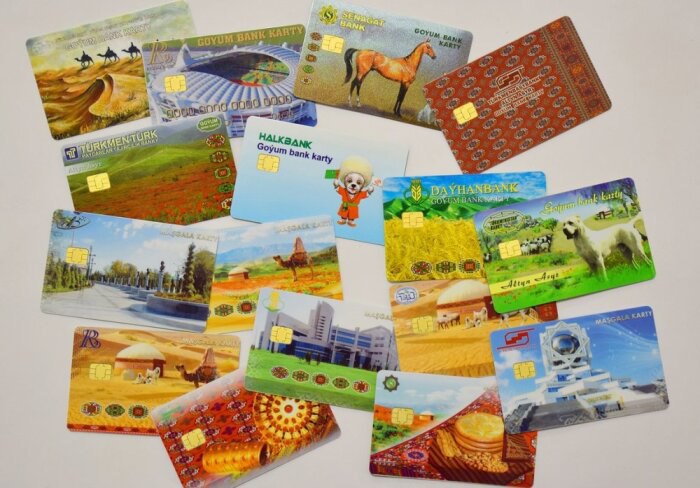
As of September 1, over 5.8 million bank cards were registered in Turkmenistan, indicating a growing interest in cashless payments in the country. Since the beginning of 2024, the number of cards issued has increased by 4.7%, from 5.562 million in January to 5.823 million in September. There was a slight increase during August and September, with about 38,600 cards added, a 0.67% increase from the previous month. Looking at the trend of recent years, 5.177 million cards were issued in January 2023, an 8.5% increase from 4.771 million at the beginning of 2022. The main factor driving this growth is the availability of financial services, as more and more people can use banking products and transition to cashless payments. Government initiatives to digitalize the economy contribute to this process.

By End of Year, Kyrgyz Authorities Want to Insure All Houses in the Country

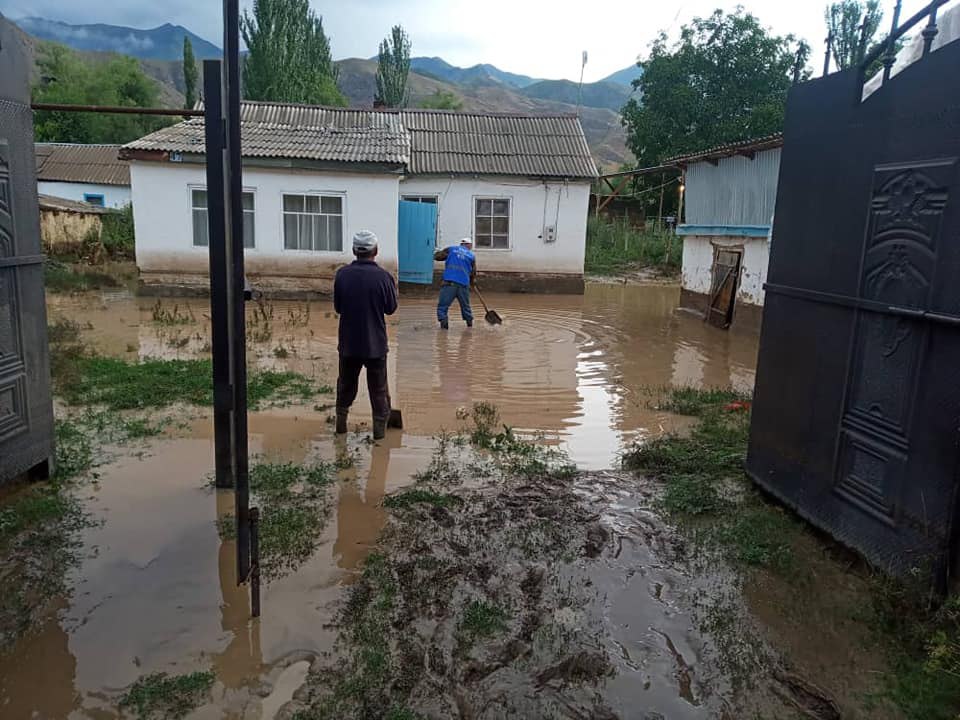
The Chairman of the Kyrgyzstan Cabinet of Ministers, Akylbek Japarov, instructed specialized government agencies to ensure the safety of all houses in the country, especially those in mudflow-prone areas. At the meeting devoted to natural disaster risk management, Japarov assigned specialized government agencies to ensure the safety of all houses in Kyrgyzstan. Thus, according to the head of the Cabinet of Ministers, the authorities will provide financial protection to citizens in case of natural disasters. This year, powerful mudslides flooded the south of Kyrgyzstan and the Issyk-Kul region. Over 5,000 households, dozens of social facilities, and hundreds of kilometers of roads were damaged. “Insurance will provide financial protection for citizens in such situations and minimize the consequences for families who lost their homes. Insurance will be an important tool to help people recover faster from natural disasters and reduce the burden on the state budget,” Japarov said. The head of the Cabinet emphasized that due to global warming, the number of natural disasters will continue to grow. Compulsory home insurance will ensure protection for citizens. It should be noted that the law on compulsory real estate insurance came into force in Kyrgyzstan on August 26, 2024. According to the law, residents must insure their real estate against fire and natural disasters. The State Insurance Organization (SIO) explained to The Times of Central Asia that legislative changes would be implemented gradually. The law on compulsory home insurance was first adopted in 2016, but the authorities postponed its implementation. There is no system of fines for lack of such insurance, at least not yet. “It is not profitable for private firms to engage in home insurance, as the rate is only 0.12%. That is, the cost of insurance is KGS 600 ($8), while payouts can be multi-million: KGS 500,000 ($6,000) for a village and KGS 1 mln ($12,000) for a city. Today in Kyrgyzstan, 143 thousand residences are insured,” the SIO noted.

The Illusion of Influence: The CSTO’s Journey From Symbolic Maneuvers To Real Challenges

Accompanied by a picture of military hardware - though in reverse gear as if symbolically - today, the CSTO (Collective Security Treaty Organization) website announced that “From 26 to 30 September, formations participating in the command-staff exercise 'Unbreakable Brotherhood-2024' with the CSTO Peacekeeping Forces are regrouping in the Republic of Kazakhstan. Contingents of CSTO troops are being sent from the Republic of Belarus, the Kyrgyz Republic, the Russian Federation, and the Republic of Tajikistan to the exercise area in accordance with the plan.” In reality, the history of the CSTO is one of refusals, inaction, and sometimes unexpected successes. On August 31, Armenia announced it had frozen its participation in the CSTO. Prime Minister Nikol Pashinyan said he would not name the day when Armenia would leave the CSTO and called the decision to freeze the republic's participation in all structures of the organization correct “at this stage.” In many ways, this half-hearted decision reflects a certain amorphousness that originally characterized the CSTO.   History The history of the structure's emergence reflects this lack of crystalline form. The Collective Security Treaty (CST) was signed in Tashkent between Armenia, Kazakhstan, Kyrgyzstan, Russia, Tajikistan and Uzbekistan on May 15, 1992. Azerbaijan, Belarus and Georgia later joined in 1993. The treaty came into effect in 1994 and was set to last five years. During the 1990s and the disintegration of Soviet-era institutions, organizations such as the CSTO or the previously created Commonwealth of Independent States (CIS), whose founding protocol was signed in Almaty, were created to facilitate a smooth “divorce” between the newly independent states. The CSTO was also seen as a force capable of curbing the regional conflicts which were boiling over, such as the Mujaheddin in Afghanistan. Tashkent's bet on Russian weapons in case of conflicts with the Taliban did not work out, however. From the turn of the 1990s into the 2000s, two serious fissures across the borders of Uzbekistan and Kyrgyzstan took place; the republics fought back with their own military and weapons, in addition to Kazakhstan coming to the rescue. The Collective Security Treaty expired in 1999, with Uzbekistan, Azerbaijan, and Georgia withdrawing, whilst Armenia, Belarus, Kazakhstan, Kyrgyzstan, Russia, and Tajikistan soldiered on under a new pact. The remaining states later transformed the CST into the Collective Security Treaty Organization in 2002. Uzbekistan joined as a full member of the CSTO in 2006 but then flip-flopped and suspended its membership in 2012.   A powerless organization While the CSTO was still developing, with President Vladimir Putin coming to power in Russia, the Kremlin's foreign policy changed substantively from that of the Yeltsin era, when Moscow remained indifferent to Nursultan Nazarbayev's integration initiatives. The new direction of Russian foreign policy was expressed in the concepts of “Russia rising from its knees” and the "gathering of lands.” Over time, this evolved into joint war games and military operations with the West in the Middle East and Africa, and for a period the Kremlin seemed to lose interest in Central Asia....

Kyrgyzstan Begins Development of Large Titanomagnetite Deposit

Kyrgyzstan has begun developing its largest titanomagnetite deposit, Kyzyl-Ompol, in the Issyk-Kul region. Speaking at the launch ceremony on September 25, the Chairman of the Kyrgyz Cabinet of Ministers, Akylbek Japarov, emphasized that the state will develop and finance this strategic deposit. "This is a very important event for Kyrgyzstan. The Kyzyl-Ompol deposit contains millions of tons of titanomagnetite. Titanium is valuable in various industries, including medicine, aviation, and space. The development of this deposit will allow us not only to increase exports but also to create new jobs, which will give an impetus to developing the country's economy," Japarov said. Japarov also emphasized the importance of an environmentally friendly approach to the deposit's development, saying that technologies used to extract titanomagnetite will guarantee the safe extraction of associated minerals such as uranium and thorium. Early in June, the Kyrgyz parliament approved a government bill lifting a ban on the mining of uranium and thorium that had been in place since 2019. The move caused environmental concerns in Kyrgyz society, as the country still works on the rehabilitation and conservation of radioactive uranium waste sites left over from the Soviet era. The ban was lifted to start the mining of titanomagnetite, which is accompanied by uranium and thorium. The government plans to process both elements at the Kara-Balta Mining Combine, some 100 km west of Bishkek.