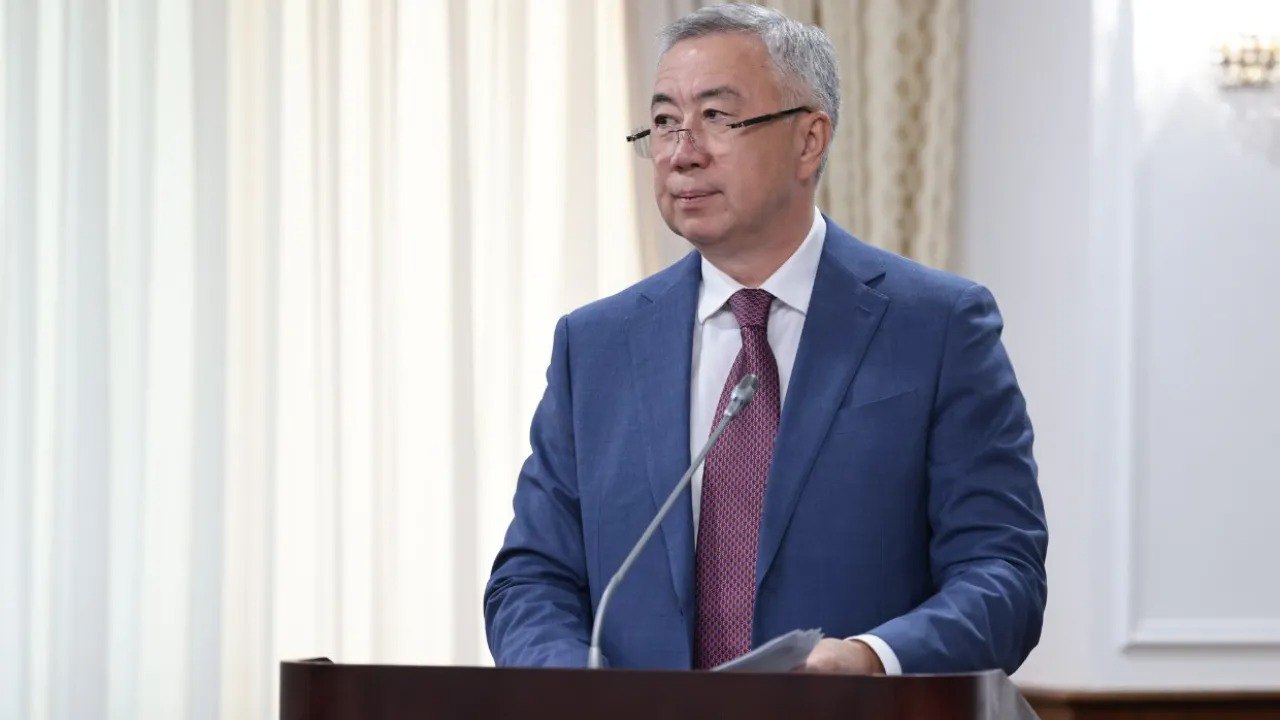
The Kazakh Cabinet of Ministers does not plan to revisit the issue of raising the minimum wage before 2027-2028, according to Deputy Prime Minister and Minister of National Economy Serik Zhumangarin.
Earlier this year, in June, Minister of Labor and Social Protection Svetlana Zhakupova had announced plans to raise the minimum wage from January 1, 2026. At the time, the minimum wage stood at approximately $163, and Finance Minister Madi Takiev indicated that an increase to just over $172 was under consideration. However, in August, Zhumangarin announced that the minimum wage would remain frozen at its current level.
Speaking at a government meeting this week, Zhumangarin confirmed that a review of the minimum wage is not scheduled in the near term. “In 2027-2028, the issue of raising the minimum wage will be considered,” he said, presenting a draft program of joint actions by the government, the National Bank, and the Agency for Regulation and Development of the Financial Market (ARDFM) aimed at macroeconomic stabilization and improving the population’s well-being from 2026 to 2028.
Under the program, more than 100 investment projects in the manufacturing and agro-industrial sectors are to be launched annually to support employment.
“The program’s priority is to increase real incomes by promoting high-quality, sustainable economic growth and reducing inflation. To this end, a set of tools has been developed across key areas of economic policy,” Zhumangarin stated.
To curb inflation, the government plans to saturate the domestic market with local goods, strengthen pricing oversight, and tackle monopolistic practices.
Zhumangarin also outlined plans to enhance transparency on e-commerce platforms. This includes requiring disclosure of commission fees included in the cost of goods, as well as optimizing commission structures for trading platforms and intermediaries. To protect consumers, dual pricing will be introduced, listing prices both with and without installment plans.
A separate priority will focus on boosting long-term economic productivity through improvements in labor efficiency, effective employment, and capital modernization. These efforts aim to reduce the persistent gap between GDP growth and wage growth.
Between 2026 and 2028, the government expects real income to grow by at least 2-3% annually.
“At the end of the first nine months, nominal wage growth stood at 10%, but real growth was negative due to inflation,” Zhumangarin said at a briefing. “Our task is to ensure that inflation does not erode incomes. If we aim for real income growth of 2-3%, this means nominal growth must exceed inflation by that margin in the coming years.”
As previously reported by The Times of Central Asia, inflation has significantly eroded household income this year, driven by Kazakhstan’s reliance on imports, rising utility rates, and an increased tax burden.