Kazakhstan’s Ministry of Labor and Social Protection has drafted legislation aimed at eliminating the widespread practice of paying employees off the books, known locally as “gray” salaries, Minister Svetlana Zhakupova announced this week.
According to ministry estimates published earlier this summer, approximately 30% of Kazakhstan’s employed population fails to contribute to the Unified Accumulative Pension Fund (UAPF), a clear indicator that they may be receiving unreported wages.
Data from the Bureau of National Statistics shows that in the second quarter of 2025, 9.3 million people were employed across the country. Of these, 7.1 million were salaried employees (76.8%) and 2.2 million were self-employed (23.2%).
This suggests that more than 3 million workers may be receiving wages outside the official system, avoiding both income tax and social contributions.
Targeting the Shadow Economy
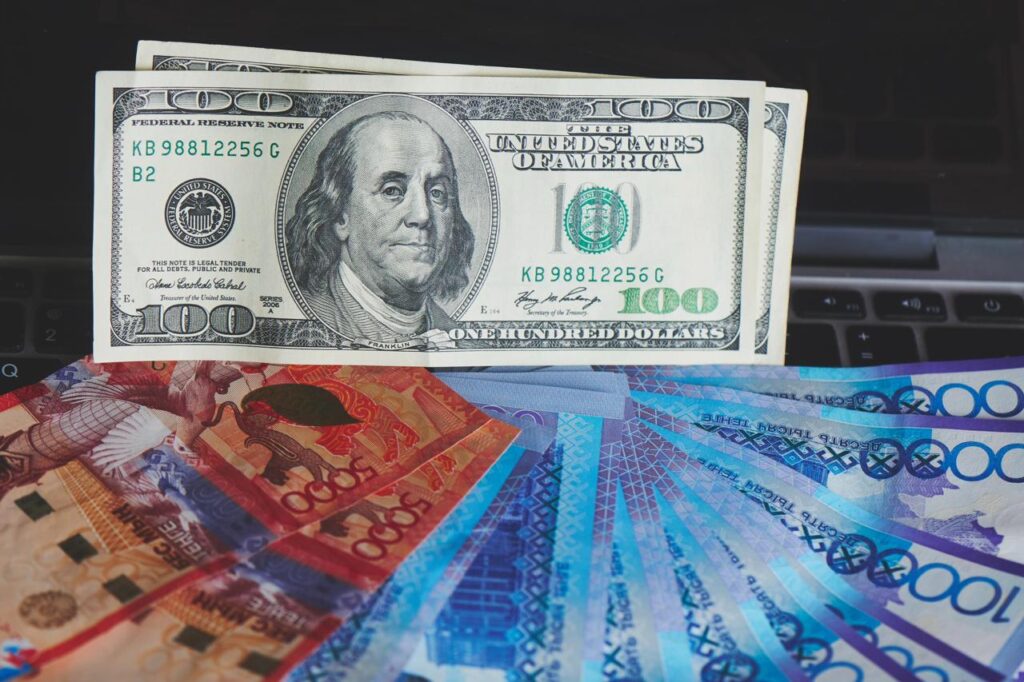
The ministry plans to focus first on those who make no contributions at all. “We have cases where highly qualified employees officially receive the minimum wage of 85,000 KZT (about $159),” Zhakupova said. “To avoid taxes, employers declare the minimum wage on paper and pay the rest in cash.”
This practice, she added, creates striking wage disparities among employees with the same qualifications and roles. “In some instances, workers in identical positions earn between 229,000 KZT ($426) and 1.2 million KZT ($2,200), depending on the employer,” Zhakupova noted. These discrepancies are particularly acute in Kazakhstan’s mining and metallurgical sector.
Digital Oversight and Industry Agreements
To address the issue, the ministry is negotiating industry-wide wage agreements and requiring companies to declare their staffing structures. A digital tool for this purpose is available on the enbek.kz platform.
“About 20 to 25 major organizations, including several under our jurisdiction, have already submitted their staffing schedules in a pilot project,” said Zhakupova.
She believes the initiative will help ensure a more equitable distribution of company profits. “We’ve seen cases where salaries have risen, yet labor productivity has not. That contradicts basic economic logic. Our digital system identifies such ‘red zones’ for inspection,” she explained.
Legislative Timeline
The draft law is currently under interagency review and has received support from both the government and the presidential administration. It is expected to be submitted to Kazakhstan’s parliament, the Mazhilis, for consideration in the near future.
In the meantime, the ministry has begun flagging suspicious labor contracts, particularly those listing highly skilled workers, such as mechanical engineers, at or near the minimum wage.
More than 1.1 million people in Kazakhstan currently earn wages at or below the legal minimum. “When we see such contracts, it’s clear these companies are operating in the shadow economy,” Zhakupova said during a recent government briefing. “Inspectors are now actively working with such employers.”
As The Times of Central Asia previously reported, the government has also decided to freeze the minimum wage in 2026, despite earlier pledges to raise it.