Kyrgyzstan is stepping up action against companies that could expose its banks and wider economy to Western sanctions. On August 18, the authorities moved to forcibly liquidate another 19 legal entities, while major banks are closing the accounts of dozens of clients deemed too risky. Bishkek has not formally joined Western sanctions against Russia, but those restrictions are increasingly determining whom Kyrgyz businesses can work with and which banks they can use to move money.
The names of the 19 companies have not yet been disclosed. The authorities stated that they were selected after reviewing around 40 organizations considered to pose heightened sanctions risks.
This is not the first such move. In May, the authorities ordered 50 businesses to cease operations after sanctions risks were identified. Their full names were not made public either.
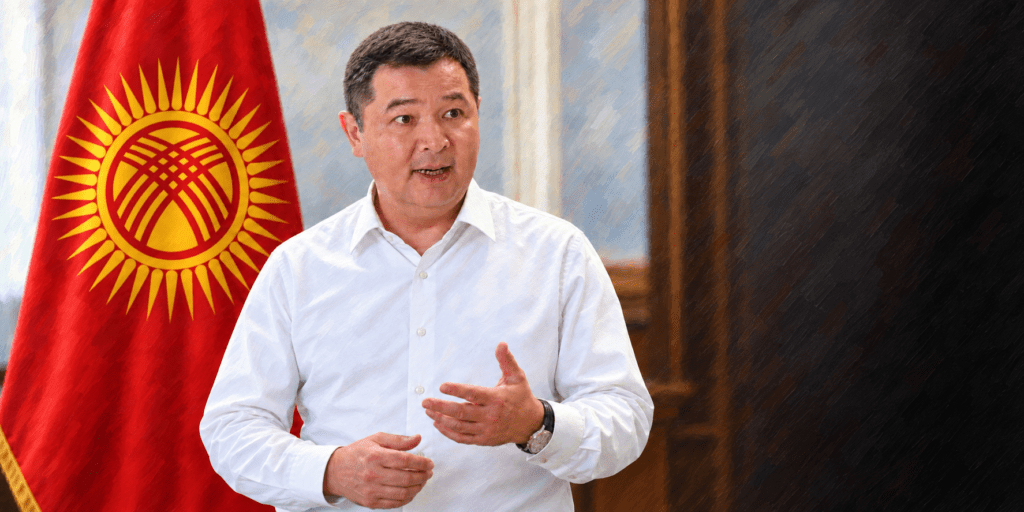
First Deputy Chairman of the Cabinet of Ministers Daniyar Amangeldiev said at the time that Western partners provide information about suspicious companies, which Kyrgyz authorities then investigate. He warned that sanctions against Kyrgyzstan itself could disrupt international payments and access to technology.
How the Pressure Built
Western scrutiny of Kyrgyz companies began well before the current cleanup. In the summer of 2023, the U.S. Treasury Department sanctioned four companies registered in Kyrgyzstan: RM Design and Development, Progress Lider, GTME Tekhnologii, and Cargoline. Washington said they had supplied Russia with electronics and other restricted goods, while Cargoline had shipped millions of dollars’ worth of foreign-made aviation equipment.
The focus later expanded from goods to financial networks. In January 2025, the U.S. Treasury sanctioned Keremet Bank, saying it had coordinated with Russian officials and sanctioned lender Promsvyazbank on a scheme to facilitate cross-border transfers.
In practice, U.S. sanctions severely restrict a bank’s ability to deal with American companies or use the U.S. financial system. Within days of Keremet Bank’s designation, Visa restricted cards issued by the bank so that they could be used only through Keremet’s own ATMs and payment terminals.
In August 2025, the United Kingdom imposed sanctions on Grinex, Tengricoin, Old Vector, and Capital Bank of Central Asia as part of a crackdown on financial and cryptocurrency networks that London said Russia was using to circumvent Western restrictions.
By early 2026, however, the risk was beginning to shift from sanctions against individual Kyrgyz companies and banks to restrictions affecting the country as a whole. During a February meeting with EU Sanctions Envoy David O’Sullivan, Amangeldiev discussed financial monitoring, sanctions risks, and greater transparency in foreign trade rather than Kyrgyzstan adopting EU sanctions itself. Bishkek was effectively trying to show that it could tackle sanctions evasion without joining the EU sanctions regime.
The prospect of broader measures was already worrying businesses. Askar Sydykov, head of Kyrgyzstan’s International Business Council, said reports that the EU could use its anti-circumvention mechanism against the country were causing serious concern among businesses and government agencies.
Those efforts were not enough to prevent broader action. In April, the EU used its anti-circumvention mechanism against Kyrgyzstan for the first time, prohibiting exports to the country of computer numerical control (CNC) machine tools – automated machines used for precision manufacturing – and certain radio equipment. Brussels pointed to a sharp change in trade flows: during the first ten months of 2025, Kyrgyzstan’s imports of these high-priority goods from the EU were almost 800% above prewar levels, while Kyrgyz exports of the same products to Russia had risen by 1,200%.
Previously, sanctions had generally targeted individual intermediaries. The actions of Kyrgyz companies had now helped trigger restrictions on European exports to Kyrgyzstan itself. At an April 27 government meeting, officials agreed to tighten monitoring of foreign trade and seek the removal of Kyrgyz companies from sanctions lists.
The pressure intensified again in July 2026. The EU’s 21st sanctions package imposed a transaction ban on a Kyrgyz bank linked to Russia’s SPFS, a state-run financial messaging network, and targeted cryptocurrency platforms and third-country companies accused of helping Russia circumvent restrictions. Several companies based in Kyrgyzstan were also placed under tighter export restrictions over their alleged role in supporting Russia’s military-industrial sector.
Banks Cut Their Exposure
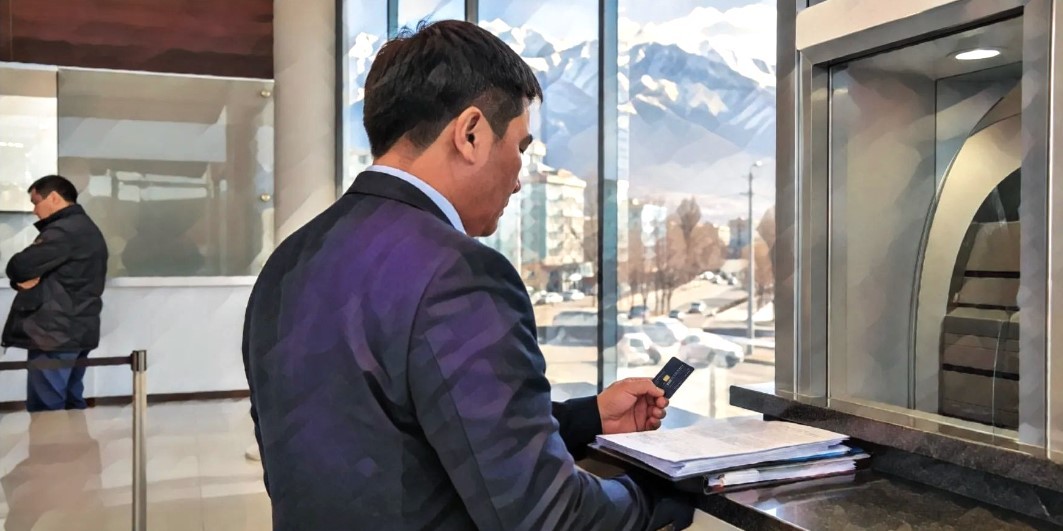
Banks, meanwhile, are moving faster than the government to distance themselves from risky clients. According to information presented at the August 18 meeting, between July and August 14, Eldik Bank ended relationships with about 109 companies and was closing around 20 more accounts. Over the same period, ABank dropped around 35 clients and was reviewing another 40.
For Kyrgyz banks, the danger is not limited to being sanctioned themselves. Even before a bank is sanctioned, foreign correspondent banks and payment companies may cut ties if they believe dealing with it poses too great a compliance risk. That can make international transfers slower or more expensive, or block some payment channels altogether.
Economist Iskender Sharsheyev described this process in May as “de-risking” by Western banks, warning that it was making payments more expensive, discouraging investment, and increasing diplomatic pressure on Bishkek.
Russia remains one of Kyrgyzstan’s main economic partners, a major market for Kyrgyz goods, and the most important destination for the country’s labor migrants. Bishkek has no intention of severing those ties. But allowing companies or payment channels to operate in ways that threaten banks’ international relationships, or bring restrictions on Kyrgyzstan itself, is becoming increasingly costly.
The policy still has a significant problem: a lack of transparency. The authorities have not named the current 19 companies or published the full list of 50 legal entities whose operations they moved to terminate in May. Nor has there been a public explanation of the allegations against each company. Businesses can therefore see the direction of government policy, but they do not always know exactly where the line between acceptable and unacceptable activity lies.
What has changed since 2023 is the scale of the risk. Sanctions that once threatened individual trading companies now affect banks, payment networks, and Kyrgyzstan’s ability to import certain European goods. Bishkek is increasingly trying to intervene before Western regulators do.