Uzbekistan has poured concrete for its first nuclear power plant, while Kazakhstan has signed a $16.5 billion agreement for a two-reactor facility near Lake Balkhash and approved a site for a second plant. Kazakhstan’s long-term strategy calls for at least three nuclear power plants by 2050, with a fourth possible.
Both governments are presenting nuclear power as a way to meet rapidly growing electricity demand and strengthen energy security. Yet the projects are advancing at different speeds and are reviving questions over water use, cross-border safety, financing, and long-term reliance on Russian technology and credit.
Uzbekistan Moves Into Construction
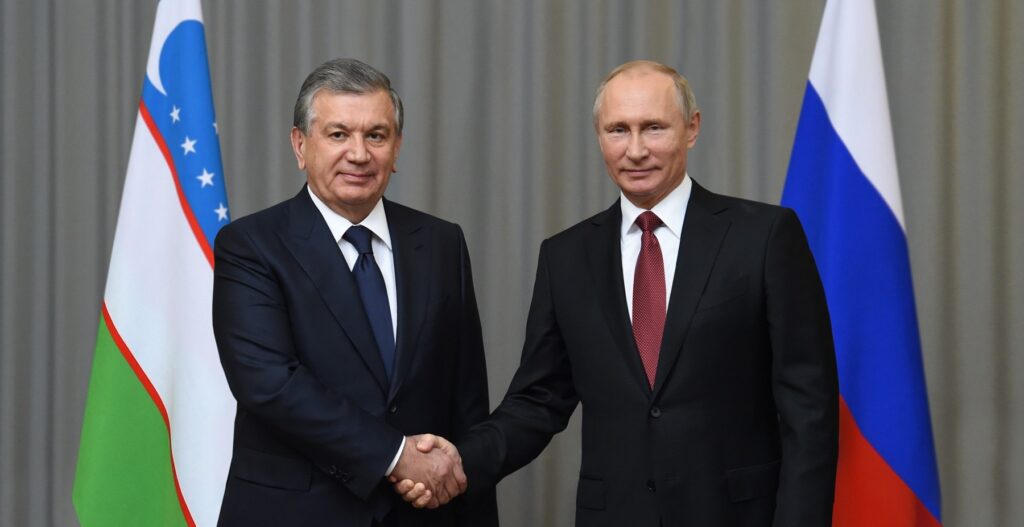
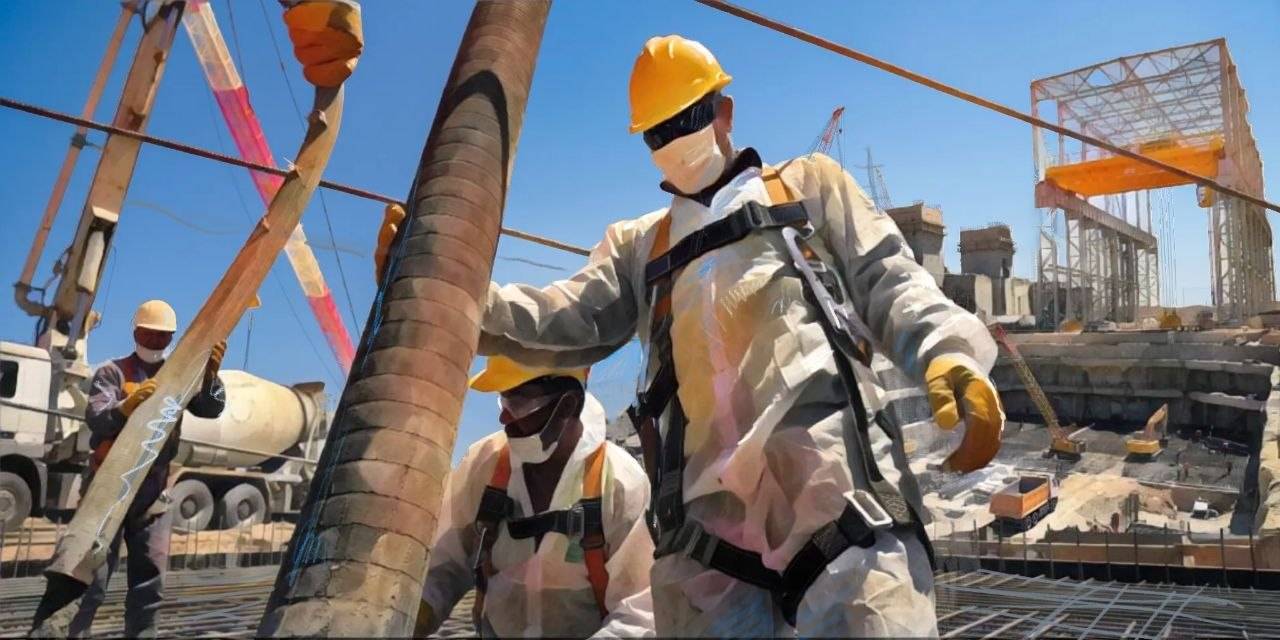
On June 4, 2026, Uzbek President Shavkat Mirziyoyev and Russian President Vladimir Putin launched construction by video link. Rafael Mariano Grossi, director general of the International Atomic Energy Agency, also took part. The first nuclear-grade concrete was poured overnight from June 4 to June 5 for the foundation slab of the first RITM-200N small modular reactor unit in the Forish district of the Jizzakh region. Uzatom subsequently classified the site as a nuclear power plant under construction.
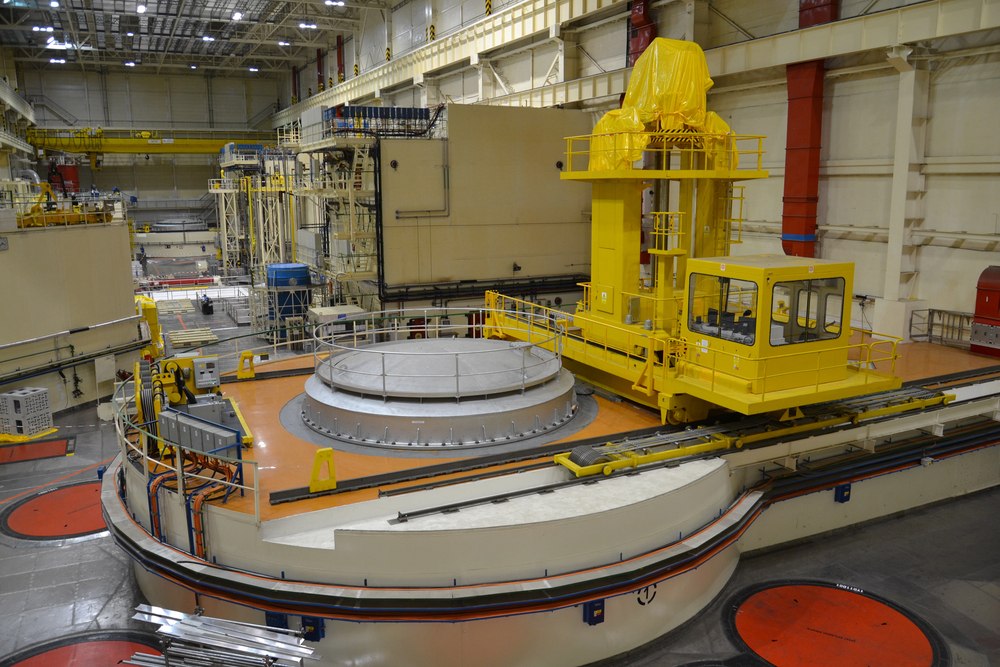
The facility is one plant with four planned reactor units: two large VVER-1000 units and two smaller RITM-200N units, each rated at 55 MW. Together, they would provide more than 2.1 GW of installed capacity. The present configuration is the latest version of a project that began with a 2017 peaceful-use agreement and a 2018 plan for two large reactors. In 2024, the focus shifted to six small reactors, before the design changed again in 2025 to the mixed large-and-small format now under construction.
Uzbek and Russian projections put annual generation at about 17 billion kWh, or roughly 15% of future national demand. The current schedule envisages the first small unit reaching criticality in late 2029, with the large reactors expected to be commissioned in 2033 and 2035, although Uzatom has said final dates depend on outstanding contract arrangements. The project’s stated base price is $9.5 billion, and Tashkent is seeking loans for most of the cost. Those financing terms, along with the final allocation of construction and operating risk, remain central to the project’s viability.
Water and Cross-Border Concerns
The plant will stand near Lake Tuzkon in the Aydar-Arnasay lake system, about 40 kilometers from Kazakhstan’s border. That proximity has made what is formally an Uzbek project a regional issue. Residents and environmental advocates in southern Kazakhstan have raised concerns about accident preparedness, radioactive waste, and possible pressure on already stressed water systems.
Aiman Tleulesova, national coordinator of the Central Asian Regional Water Network, has argued that reactor cooling could require greater discharges into Lake Tuzkon and additional withdrawals linked to the Syr Darya system. In her assessment, that could intensify competition for irrigation water in Kazakhstan’s Turkestan and Kyzylorda regions. These are concerns raised by specialists and campaigners, rather than established measurements of the completed plant’s impact, but they require a quantified response because water scarcity is already a recurring regional problem.
Uzbekistan held public hearings on the environmental impact assessment in December 2025. The State Ecological Expertise Center said the assessment complied with national requirements and IAEA standards, and that participants received answers on water, agriculture, radiation safety, health monitoring, and compensation. Uzatom has also pursued Hungarian dry-cooling technology intended for water-scarce locations, which could reduce water withdrawals compared with conventional wet cooling.
However, the published hearing summary does not state the plant’s expected annual water demand or explain whether Kazakhstan participated in a project-specific transboundary consultation. The two countries already cooperate on Syr Darya monitoring and automated measuring stations, but the nuclear project will need its own transparent mechanism for sharing water-use data, emergency plans, and environmental monitoring results.
Kazakhstan’s Return to Nuclear Power
Kazakhstan’s path has been more politically visible. In the October 6, 2024 referendum, 71.12% of participating voters supported construction of a nuclear power plant, with turnout of 63.66%. The vote gave the government a mandate to proceed, despite the country’s unusually sensitive nuclear history.
Between 1949 and 1989, the Soviet Union carried out 456 nuclear tests at the Semipalatinsk site, which was formally closed in 1991. Kazakhstan also previously generated nuclear electricity at the BN-350 fast reactor in Aktau, which shut down in 1999. The new program is therefore a return to civilian nuclear generation and the construction of the country’s first new large commercial plant in the post-Soviet period, rather than its first nuclear facility of any kind.
Kazakhstan officially broke ground near the village of Ulken in August 2025, launching engineering and site-survey work on the shore of Lake Balkhash. That ceremony marked the official start of the construction process, but not yet the full civil construction of the reactor buildings.
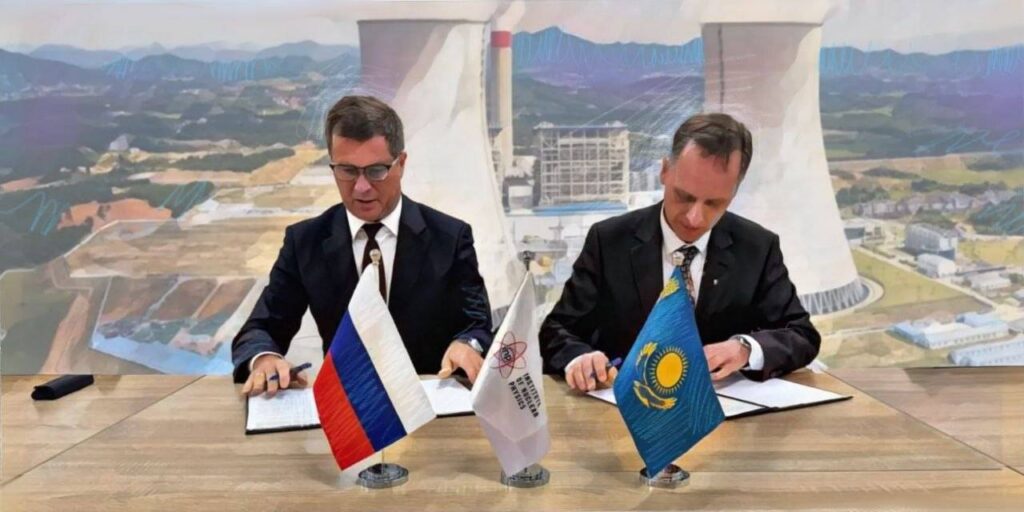
The commercial framework became clearer on May 28, 2026, when Kazakhstan and Russia signed the agreement for the Balkhash nuclear power plant. The project will use two VVER-1200 Generation III+ reactors with a combined capacity of about 2.4 GW. Almasadam Satkaliyev, the head of Kazakhstan’s Atomic Energy Agency, put the cost at about $16.5 billion, including roughly $2 billion for security and infrastructure. Russia is expected to provide export credit. Active construction is planned to begin in 2027, with the first reactor scheduled for commissioning in early 2034.
At Least Three Plants
Kazakhstan is planning beyond Ulken. In January 2026, the government approved the Zhambyl district of the Almaty region as the site of a second plant, adjacent to the first project area. China National Nuclear Corporation has been selected to lead the second project and is also expected to lead a third plant. Final designs, costs, and the detailed siting arrangements for the later projects remain under development.
The national nuclear strategy says at least three plants should be operating by 2050, while leaving open the possibility of a fourth. The multi-supplier approach also reflects Kazakhstan’s effort to avoid placing its entire nuclear program with one foreign partner.
The energy case is substantial. According to Kazakhstan Electricity Grid Operating Company, the country generated 123.1 billion kWh in 2025 but consumed 124.6 billion kWh; the 1.5 billion kWh gap was covered by supplies from Russia. Thermal plants produced 74.4% of generation, gas-turbine plants 11%, hydropower 8.5%, and wind, solar, and biogas 6.1%. Demand rose particularly quickly in the western and southern zones.
Kazakhstan is the world’s largest uranium producer, but domestic uranium reserves do not by themselves create energy independence. The first plant will still depend on foreign reactor technology, export financing, specialist services, and long-term supply arrangements. Nuclear power may reduce exposure to electricity shortages and aging thermal capacity; the government objective is energy security rather than complete independence.
Sanctions and Delivery Risk
Given that Rosatom leads the first nuclear projects in both Uzbekistan and Kazakhstan, sanctions and related banking or supply restrictions are a legitimate delivery risk. In February 2026, the United Kingdom sanctioned three Rosatom subsidiaries associated with overseas projects. Rosatom itself was not sanctioned in that package and said its international work would continue. Kazakhstan’s Atomic Energy Agency said none of the sanctioned entities was involved in its project and that work remained on schedule.
The experience of Turkey’s Akkuyu plant nevertheless shows how restrictions can affect a Rosatom-led project indirectly. In that instance, Siemens Energy withheld key components because export licenses had not been issued, prompting Rosatom to seek replacements from China and contributing to a delay. The project later required additional Russian financing while its first unit, originally expected to start in 2023, is now expected to begin supplying power in 2026
Akkuyu shows how supply chains, payments, and replacement equipment can become points of vulnerability in a Rosatom-led project, though it does not mean the Kazakh or Uzbek plants will face the same delays. The key question will be whether contracts provide for alternative suppliers, secure financing channels, and sufficient localization without weakening quality control or independent oversight.
The regional picture is therefore uneven. Uzbekistan has moved first into the construction phase, but its mixed-reactor project still faces financing, water-disclosure, and schedule tests. Kazakhstan has the larger long-term buildout, but its first plant remains in engineering and preconstruction before the active phase planned for 2027. In both countries, public confidence will depend as much on transparent water data, cross-border consultation, financing terms, and credible safety regulation as on the reactors themselves.