Kyrgyzstan is emerging as a potential player in the global critical minerals market and is actively seeking international partnerships to develop its untapped geological resources.
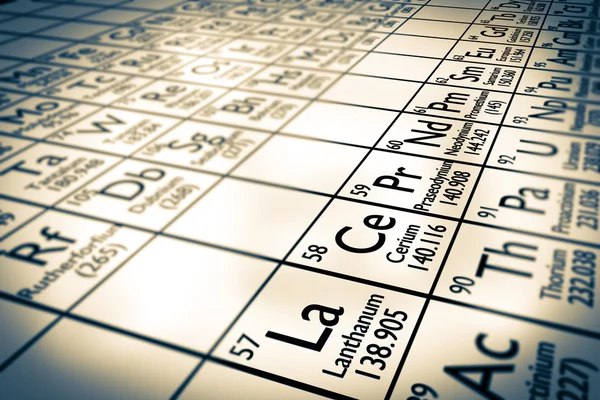
Speaking at the International Forum on Critical Minerals 2025 in Seoul on May 12-13, Deputy Minister of Natural Resources, Ecology, and Technical Supervision Marat Jusupbekov emphasized the country’s growing relevance in the strategic resource sector. He noted that Kyrgyzstan is home to 11 deposits of rare earth elements (REEs), positioning it as a promising destination for investment and cooperation.
“Kyrgyzstan has significant reserves of rare and critical minerals that are essential for the energy transition and high-tech manufacturing. We are open to cooperation with global partners,” Jusupbekov said during his address.
One of the most notable assets is the Kutessay II deposit, which holds more than 63,300 tons of rare earth metals, along with molybdenum, silver, bismuth, lead, and zinc. The government is promoting joint development of this site with the nearby Kalesai beryllium deposit, which contains an estimated 11,700 tons of beryllium. Both deposits are licensed to Kyrgyzgeology, a state-owned enterprise tasked with attracting foreign investment.
Jusupbekov also highlighted the potential of the Kyzyl-Ompol uranium-thorium group, including the Tash-Bulak area, where titanium-magnetite reserves are estimated at 5.5 million tons. This project is licensed to Kyrgyzaltyn, the country’s largest mining company.
The deputy minister underlined the strategic role of critical minerals in the global transition to clean energy and advanced manufacturing. Materials such as lithium, cobalt, manganese, gallium, indium, graphite, and zinc are essential for the production of solar panels, electric vehicle batteries, and other next-generation technologies.
“Kyrgyzstan is committed to modernizing its mining sector by adopting green technologies and responsible extraction practices,” he said. “We invite international partners to co-develop critical mineral projects and advance sustainable industrial growth.”
In December 2024, Kyrgyzstan signed Memorandums of Understanding with South Korea’s Ministry of Trade, Industry and Energy and the Korea Institute of Geoscience and Mineral Resources (KIGAM). These agreements laid the foundation for deeper cooperation and potential South Korean investment in Kyrgyzstan’s mining sector.
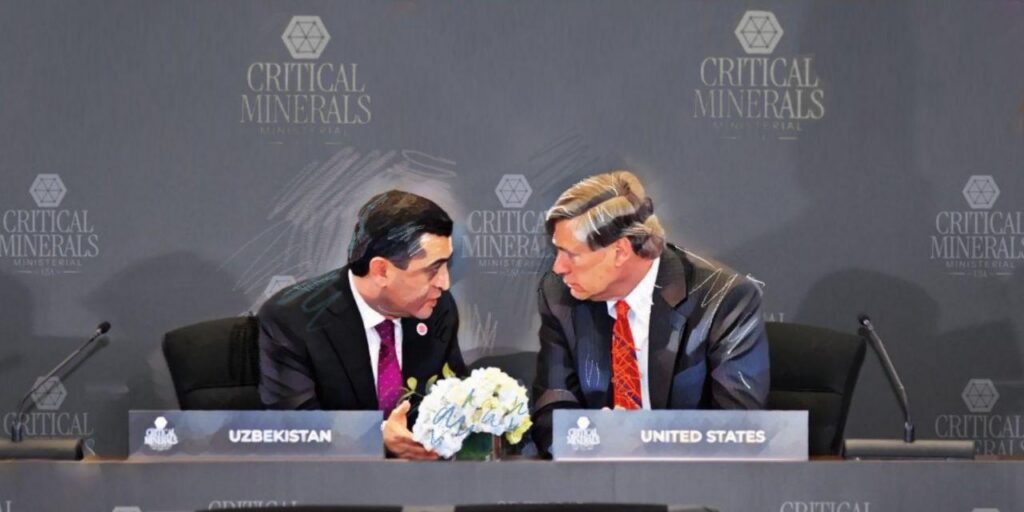
The International Forum on Critical Minerals 2025, co-hosted by KIGAM, South Korea’s Ministry of Trade, Industry and Energy, and its Ministry of Foreign Affairs, brought together representatives from 12 countries, including Kazakhstan, Uzbekistan, Tanzania, the Democratic Republic of the Congo, Nigeria, Mongolia, Vietnam, Indonesia, Australia, Canada, and new participants Kyrgyzstan and Tajikistan.