The global confrontation between the West and East could, quite literally, devastate the economies of Central Asian countries in the near future. Some experts argue that the position Kazakhstan and its regional neighbors now occupy, four years into the war between Russia and Ukraine, has spiraled beyond anyone’s control.
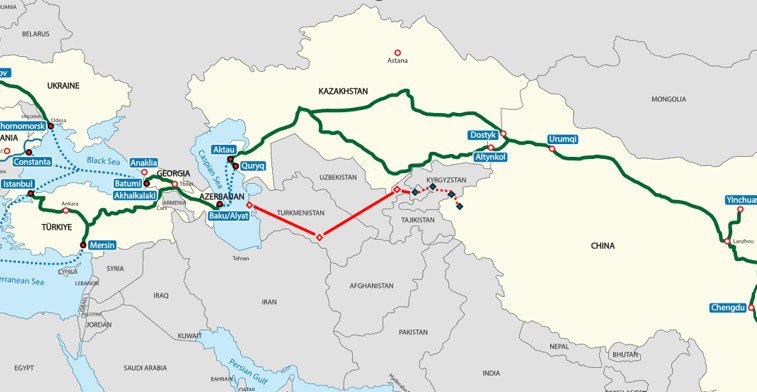
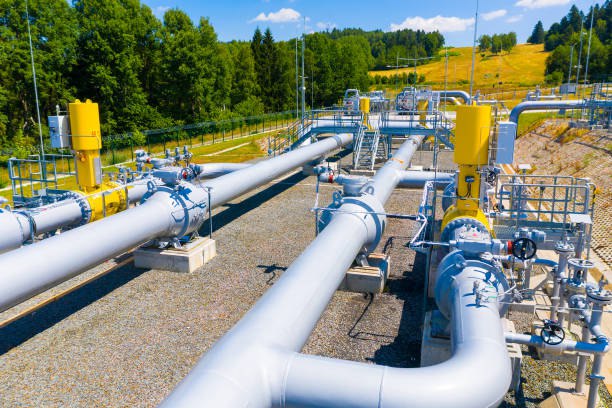
The disruption began with Ukrainian drone strikes on Russian infrastructure used by the Caspian Pipeline Consortium (CPC), which indirectly impacted oil flows from Kazakhstan to Europe.
On August 2, several media outlets, citing sources within the Ukrainian military, reported an attack on the Central Asia-Center (SAC) gas pipeline running through Kazakhstan. The attack allegedly caused an indefinite halt in gas deliveries that Russia had been sending in reverse flow to Uzbekistan. Kazakhstan also uses this gas domestically. Shortly after, the energy ministries of both Uzbekistan and Kazakhstan denied reports of any damage to the pipeline. Nonetheless, Ukraine’s classification of the SAC pipeline as a legitimate target remains on record.
Notably, although Kazakhstan’s Foreign Ministry has issued a formal protest to Kyiv over the CPC attacks, it has yet to reveal any official response from the Ukrainian side.
Kazakhstan thus finds itself in an extremely vulnerable position: its national budget is heavily dependent on oil exports, while its southern infrastructure increasingly relies on imported gas. For example, the planned conversion of Almaty’s TPP-2 to gas is unfeasible without stable fuel supplies. In other words, Kazakhstan has become fully dependent on developments in the Russian-Ukrainian war.
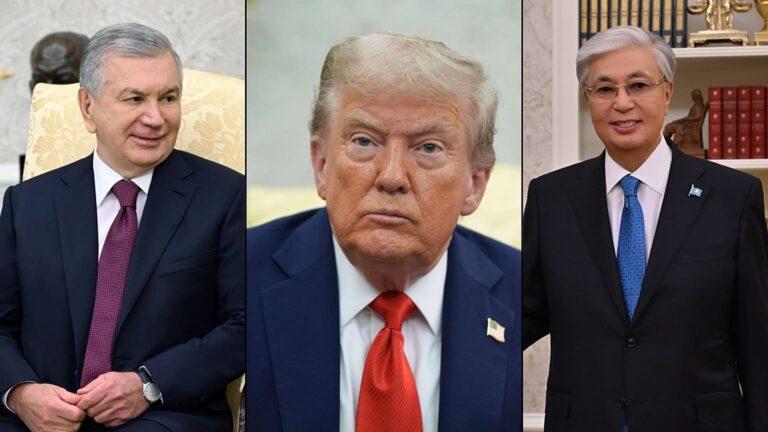
Compounding the geopolitical tension, U.S. President Donald Trump has pursued an aggressive and often unpredictable foreign policy approach. He has threatened sanctions against Russia’s economic partners if they continue buying oil from President Vladimir Putin. This pressure is primarily directed at China and India, both of which have already signaled they do not intend to comply with Trump’s ultimatum.
In response, Russia may adopt symmetrical countermeasures targeting American companies, specifically, by halting oil flows via the CPC. That’s the view of JPMorgan analysts, who suggest that such a move could drive global oil prices up to $80 per barrel. This would benefit Russia but would deal a serious blow to Kazakhstan, which relies on CPC to export up to a million barrels of oil per day.
Unfortunately, Kazakhstan lacks viable alternatives. The Baku-Tbilisi-Ceyhan (BTC) pipeline, often cited as a backup route, depends heavily on Caspian Sea shipping, which is increasingly hindered by shallow waters. Heavier oil barges dispatched from Aktau to Baku risk running aground. As a result, Kazakhstan’s oil volume transported via BTC is expected to increase by only 300,000 tons this year, from 1.4 to 1.7 million tons.
It’s worth noting that CPC exports oil produced by American firms Exxon and Chevron, the British company Shell, Italy’s ENI, and France’s TotalEnergies. These are the very firms Russia could target in retaliation. As Trump’s statements deepen the appearance of a Russia-versus-West conflict, energy infrastructure could increasingly become a battlefield.
Hints of Moscow’s readiness to act have already emerged. In mid-July, President Putin signed a decree mandating that vessels arriving from foreign ports obtain permission from the FSB before entering Russian seaports. The order gives port captains, in consultation with FSB representatives, the authority to grant or deny entry. The FSB will determine the list of officials responsible for these decisions. One affected port is Novorossiysk, which handles Kazakh oil exports shipped via the CPC. Although rumors spread that Kazakh ships were being denied entry, these were later refuted. Still, alarm bells are ringing.
Will Kazakhstan act to prevent its strategic partner from taking such a drastic step?
Doubts persist as to whether Astana will intervene at all. Official circles in Kazakhstan remain focused on revising profit-sharing agreements with Western oil majors. A decline in the negotiating position of those companies might even work in Akorda’s favor, particularly after the premature celebrations in Western capitals over their court win against Kazakhstan’s Ministry of Ecology.
In early August, Bloomberg reported that shareholders in the Kashagan project had prevailed in a lawsuit over a potential $4 billion environmental fine. The dispute stemmed from Kazakhstan’s attempt to impose a penalty of 2.3 trillion tenge, then equivalent to $5.1 billion, now $4.2 billion at current exchange rates.
“We welcome the Court of Appeal’s decision confirming the correctness of NCOC’s sulfur management operations, which are conducted responsibly and in accordance with the laws of the Republic of Kazakhstan, as well as applicable standards and best practices,” Bloomberg quoted the shareholders as saying.
However, that sense of triumph was short-lived. According to court documents, the ruling to overturn the order “does not mean automatic recognition of the absence of violations of environmental legislation.” The court did not assess the merits of the claims from the Department of Ecology, nor did it rule out renewed action once procedural errors are addressed.
For officials in Astana, the eagerness with which Western firms assumed they were off the hook may have exposed what they view as a lingering colonial attitude among American and European stakeholders. In this context, it would be entirely logical, though unofficial, for Kazakhstan to support Moscow’s economic pressure campaign while publicly voicing “concern” and refraining from diplomatic intervention.
That would leave Western partners with a sobering realization: if they want continued access to Kazakhstan’s natural resources, they may need to start offering a price that reflects the real value and the political risks involved. How high that price goes may ultimately depend on how deep their economic desperation becomes.