• KGS/USD = 0.01144 0%
  • KZT/USD = 0.00212 0%
  • TJS/USD = 0.10456 0.19%
  • UZS/USD = 0.00008 0%
  • TMT/USD = 0.28490 0%
  • KGS/USD = 0.01144 0%
  • KZT/USD = 0.00212 0%
  • TJS/USD = 0.10456 0.19%
  • UZS/USD = 0.00008 0%
  • TMT/USD = 0.28490 0%
  • KGS/USD = 0.01144 0%
  • KZT/USD = 0.00212 0%
  • TJS/USD = 0.10456 0.19%
  • UZS/USD = 0.00008 0%
  • TMT/USD = 0.28490 0%
  • KGS/USD = 0.01144 0%
  • KZT/USD = 0.00212 0%
  • TJS/USD = 0.10456 0.19%
  • UZS/USD = 0.00008 0%
  • TMT/USD = 0.28490 0%
  • KGS/USD = 0.01144 0%
  • KZT/USD = 0.00212 0%
  • TJS/USD = 0.10456 0.19%
  • UZS/USD = 0.00008 0%
  • TMT/USD = 0.28490 0%
  • KGS/USD = 0.01144 0%
  • KZT/USD = 0.00212 0%
  • TJS/USD = 0.10456 0.19%
  • UZS/USD = 0.00008 0%
  • TMT/USD = 0.28490 0%
  • KGS/USD = 0.01144 0%
  • KZT/USD = 0.00212 0%
  • TJS/USD = 0.10456 0.19%
  • UZS/USD = 0.00008 0%
  • TMT/USD = 0.28490 0%
  • KGS/USD = 0.01144 0%
  • KZT/USD = 0.00212 0%
  • TJS/USD = 0.10456 0.19%
  • UZS/USD = 0.00008 0%
  • TMT/USD = 0.28490 0%

What types of crimes did the people of Uzbekistan commit in 2023?

Information on the types of criminal cases the courts considered in 2023 was provided by the Supreme Court of the Republic of Uzbekistan. According to the report, criminal courts considered 58,418 cases involving 73,797 individuals in 2023 – 1,244 people received rehabilitation and an acquittal, whilst a total of 55,763 people were found guilty; of these, 17,396 received prison sentences, 37,077 received other types of sentences, and 1,290 received conditional sentences. Of those found guilty, 49,297 men, 6,466 women, 20,922 young people (including 1,911 minors), and 2,123 people over the age of 6o.

In addition, 7,362 people were freed from prison in connection with the imposition of non-custodial sentences; 33,612 people were released on parole; 12,286 people had their sentences remitted; and 13,522 people had the charges against them dropped because the preliminary investigation found the authorities had unfairly targeted them.

The majority of cases during the reporting period involved fraud; other offenses included theft or robbery; the transfer, storage, and other activities related to narcotics, their analogues, or psychotropic substances; the preparation of documents, stamps, seals, forms, forgery, sale, or use of them; bullying; purposeful infliction of moderately severe bodily injury; and other offenses that fall under the category of bribery.

In total, 14,698 people were freed from criminal responsibility as a result of the Reconciliation Institute’s effective use, whilst 8,586 people received non-custodial sentences in exchange for making restitution for the material harm they caused.

In the appeals process, 10,843 criminal cases involving 15,720 individuals were taken into account. The rulings rendered by the first-instance courts against 1,715 individuals were overturned, and the rulings made against 3,556 individuals were modified.

The Criminal Trial Panel of the Supreme Court reviewed 5,130 criminal cases involving 5,855 individuals. Lower court rulings against 1,143 people were overturned, and rulings against 509 people were modified.

Additionally, at the cassation instance, 402 criminal cases involving 467 individuals were reviewed multiple times. Court rulings against 121 people were modified, while rulings against 288 people were revoked.

Astana Motors To Build New Plant In Almaty

On January 25th Kazakhstan’s president Kassym-Jomart Tokayev received the founder of Astana Motors, Nurlan Smagulov, who informed him about his company’s plans for the automotive industry in Kazakhstan, the president’s press office reported.

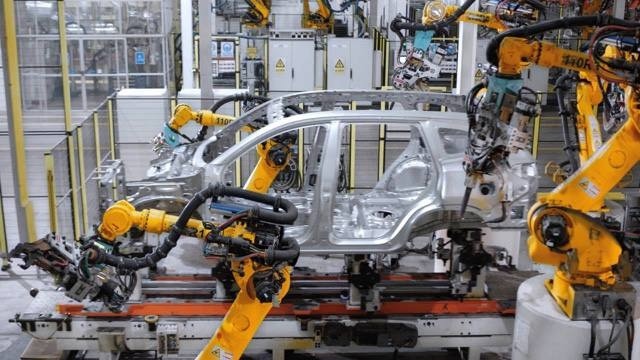
Mr Smagulov reported that in 2023 Hyundai Trans Kazakhstan and Hyundai Trans Almaty, subsidiaries of Astana Motors, manufactured 48,857 passenger cars and 981 commercial vehicles.

Mr Smagulov told the president that the construction of the Astana Motors Manufacturing Kazakhstan multi-brand plant in Almaty, for the production of China’s Chery, GWM (Haval), and Changan vehicles, is scheduled to be completed in February 2025. The plant’s capacity will be 90,000 vehicles per year. Of these, 60% will go for export. 

In September 2022 Astana Motors signed memoranda with Chinese automobile concerns Chery Automobile Company, Changan International Corporation, and Great Wall Motor, allowing it to manufacture these companies’ cars in Kazakhstan.

Unplanned vacations: 50,000 Aktobe Schoolchildren Missed Classes Because of Fake Terrorist Threat

In Aktobe, an attacker spread a terrorist threat to schools, after which parents did not let their children attend classes. On January 25th, an unknown culprit left a threatening message in a Telegram channel, where they spoke about plans to organize a mass shooting in schools in the city of Aktobe. The message quickly spread through social networks and parental chats, after which many parents did not let their children to go to school: out of 57924 students, only 8558 attended classes.
The police immediately found the author of the threatening messages and asked the parents of schoolchildren not to sow panic. The city administration also assured citizens that there was no threat to children, and that schools would be reinforced with security guards.
The attacker turned out to be an 18-year-old young man, who is a citizen of another country from the near abroad. A case has already been opened against him for knowingly spreading false information about an act of terrorism.
Regional authorities in Aktobe say the situation is now under the control of specialized law enforcement agencies, and there is no cause for concern. Additionally, the city administration asked parents not to unnecessarily disrupt the educational process.

Chinese Company To Build Four Power Plants in Kyrgyzstan

Kyrgyzstan’s Ministry of Energy and the China National Electric Engineering Co. Ltd. (CNEEC) have signed a memorandum of cooperation. The document provides for the construction of the Suusamyr-Kokomeren cascade of hydroelectric power plants and Kara-Keche thermal power plant, the ministry announced on January 24th

The Suusamyr-Kokomeren hydropower cascade will consist of three hydroelectric power plants with a total capacity of 1,305 MW and an annual electricity generation of 3.3 billion kilowatt-hours. These are the Karakol hydroelectric power plant (33 MW), Kokomeren HPP-1 (360 MW), and Kokomeren HPP-2 (912 MW). 

The Kara-Keche thermal power plant, which will be built at the Kara-Keche coal deposit in the country’s Naryn region, will have a capacity of 600 MW, the ministry said.

In recent years Kyrgyzstan has been looking for foreign investment to build new power generation facilities. Kyrgyzstan has for years experienced chronic power shortages, especially in the cold winter months, and has to import electricity from neighboring Kazakhstan, Uzbekistan, and Turkmenistan to meet its growing power needs.  

Tashkent To Introduce Cable Car To Help Resolve Transport Problem

The Tashkent municipality and Chinese company Beijing North Bartholet Ropeway Technology Co., Ltd. have agreed on a project to introduce a cable car service to help in solving the Uzbek capital’s transport and environmental problems, the press service of the Tashkent municipality said. 

The agreement was signed during the Tashkent mayor’s visit to the Chinese city of Shenzhen on January 23rd, where he met with the management of Beijing North Bartholet Ropeway Technology, a joint venture with the Swiss company Bartholet Maschinenbau AG, a world leader in ropeways production. 

According to the agreement, the Chinese company is going to invest in a project to duplicate ground municipal transport in Tashkent with cable taxis. The project will first be presented to the public, whose recommendations and suggestions would be taken into account by the Chinese company’s designers, the municipality said.  

The Uzbek Ministry of Ecology, Environmental Protection and Climate Change earlier this month stated that emissions from motor vehicles largely the cause for increasing levels of air pollution in Tashkent. On average 730,000 vehicles are on the move in Tashkent every day, with between 160,000 to 300,000 entering the capital from the regions. To resolve the problem, the Tashkent municipality intends to develop green public transport.

EBRD Invested More Than €1.2bn In Central Asian Economies In 2023

The European Bank for Reconstruction and Development (EBRD) says it invested more than €1.2bn ($1.3bn) in projects across Central Asia in 2023 to stimulate the region’s sustainable growth. 

Uzbekistan remained the leading recipient of EBRD funding in the region for the fourth year running, attracting more than €700m ($760m). The remaining €518m ($560m) were channeled to support projects in Kazakhstan, Kyrgyzstan, Mongolia, and Tajikistan.

In Uzbekistan, the EBRD continued investing in renewable energy power generation and low-carbon technologies. It financed the construction of three greenfield solar power plants with a total installed capacity of nearly 900 MW. The bank provided funds to ACWA Power Wind Karatau to finance the construction of a 100 MW wind power plant in the autonomous republic of Karakalpakstan. It also provided a sovereign loan to modernise 118 pumping stations and improve the sustainability of water supply for irrigation in the densely populated Fergana Valley. Samarkand became the first city in the country to join the EBRD Green Cities programme, and is planning to deploy ecologically friendly electric buses as part of this engagement. In the financial sector, the bank continued working with local financial intermediaries such as SQB, Hamkorbank and Ipak Yuli Bank to support SMEs and promote green lending. 

Highlights of the EBRD’s work in Kazakhstan include the launch of the GEFF Kazakhstan II and an investment in a local currency bond issued by the country’s transmission system operator, KEGOC. The funds will help make the country’s electrical grid more sustainable and reliable. The bank’s loan to China Power International Holding and Visor International will be used to build, operate and connect the 100 MW Shokpar wind power plant to the transmission grid. The EBRD’s loan to Kazakhstan’s largest private rolling stock operator, Eastcomtrans, will help expand container-handling capacity at one of the most congested junctions near Almaty and address the issue of bottlenecks along the Trans-Caspian corridor. Last year marked the completion of the street lighting system in Ust-Kamenogorsk (Oskemen), which allowed energy-efficient LED street lights to be installed on 150 streets. In the financial sector, the bank extended a new loan to the country’s leading microlender KMF to support green lending and women’s entrepreneurship.

In Kyrgyzstan, the EBRD supported the modernisation of water supply services in the Batken and Jalal-Abad oblasts. The bank signed a number of sovereign projects aimed at modernising key transport and energy infrastructure, which will help improve the country’s connectivity and climate resilience. These projects included loans to upgrade a 30km section of the Issyk-Kul Lake ring road, increase the reliability of the national electricity transmission and distribution grid, and rehabilitate and modernise the Lebedinovskaya hydropower plant. The EBRD also completed the Bishkek landfill project last year, which will provide major environmental benefits for the more than one million people living in the country’s capital.

The completion of three infrastructure projects in Tajikistan allowed more than 400,000 people in 13 municipalities across the country to enjoy better access to clean and safe drinking water. Last year the EBRD launched the GEFF Tajikistan II and extended new GEFF loans to Bank Arvand and microlenders Humo and Imon International. With a joint base of more than 540,000 clients and operational even in remote mountainous parts of the country, these three institutions will help bring green finance to even the smallest borrowers in Tajikistan. The EBRD offered support to local retailers and agribusiness companies under a risk-sharing scheme with the country’s largest private lender, Bank Eskhata.