• KGS/USD = 0.01144 0%
  • KZT/USD = 0.00211 0%
  • TJS/USD = 0.10460 0.19%
  • UZS/USD = 0.00008 0%
  • TMT/USD = 0.28490 0%
  • KGS/USD = 0.01144 0%
  • KZT/USD = 0.00211 0%
  • TJS/USD = 0.10460 0.19%
  • UZS/USD = 0.00008 0%
  • TMT/USD = 0.28490 0%
  • KGS/USD = 0.01144 0%
  • KZT/USD = 0.00211 0%
  • TJS/USD = 0.10460 0.19%
  • UZS/USD = 0.00008 0%
  • TMT/USD = 0.28490 0%
  • KGS/USD = 0.01144 0%
  • KZT/USD = 0.00211 0%
  • TJS/USD = 0.10460 0.19%
  • UZS/USD = 0.00008 0%
  • TMT/USD = 0.28490 0%
  • KGS/USD = 0.01144 0%
  • KZT/USD = 0.00211 0%
  • TJS/USD = 0.10460 0.19%
  • UZS/USD = 0.00008 0%
  • TMT/USD = 0.28490 0%
  • KGS/USD = 0.01144 0%
  • KZT/USD = 0.00211 0%
  • TJS/USD = 0.10460 0.19%
  • UZS/USD = 0.00008 0%
  • TMT/USD = 0.28490 0%
  • KGS/USD = 0.01144 0%
  • KZT/USD = 0.00211 0%
  • TJS/USD = 0.10460 0.19%
  • UZS/USD = 0.00008 0%
  • TMT/USD = 0.28490 0%
  • KGS/USD = 0.01144 0%
  • KZT/USD = 0.00211 0%
  • TJS/USD = 0.10460 0.19%
  • UZS/USD = 0.00008 0%
  • TMT/USD = 0.28490 0%

Central Asia’s Airspace Is Growing in Value as the Iran Conflict Reshapes Routes

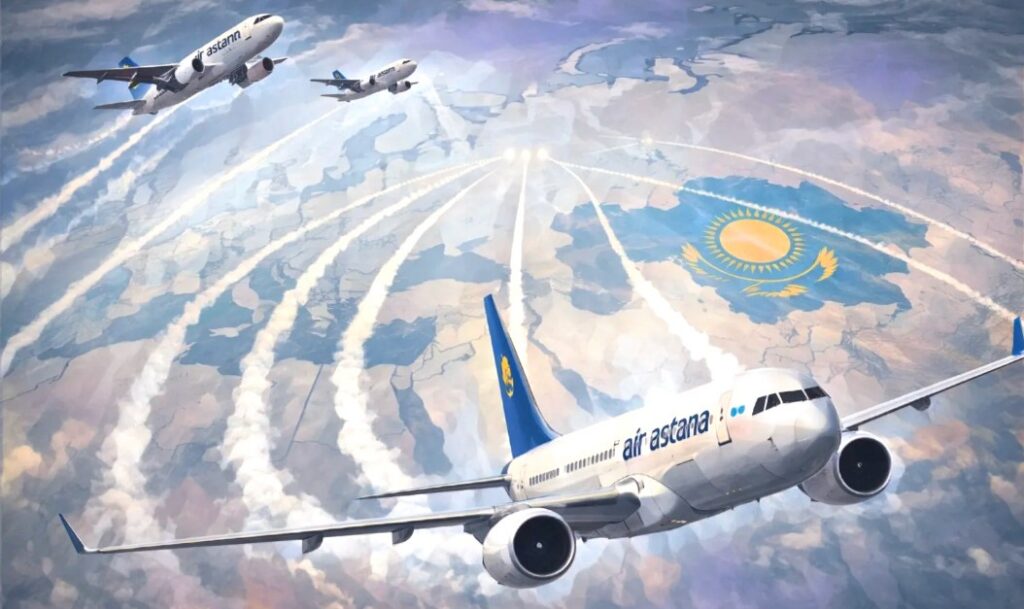
The war involving Iran has made Central Asia’s skies more important, but it has not made them a replacement for the Gulf. The change is narrower and more practical.

As previously reported by The Times of Central Asia, the conflict has already reshaped Europe–Asia flight routes, with airlines forced to reroute around high-risk airspace. As EASA’s conflict-zone bulletin for Iran remains in force through March 31, and its broader Middle East and Persian Gulf bulletin advises operators to avoid a wide band of regional airspace, airlines flying between Europe and Asia now have fewer safe and efficient options than they did even a month ago.

That matters for Central Asia because the region sits just north of the disrupted corridor. Iran’s airspace is considered high risk and is being widely avoided by airlines, while large parts of the central Middle East corridor are closed or heavily restricted.

Safe Airspace’s March 21 summary states that the normal central route has been effectively shut for many operators, while Oman has become a heavily used southern bypass. That leaves a northern arc running through the Caucasus and Central Asia as one of the few workable alternatives for many carriers.

The roots of this go back further than this month’s escalation. Since Russia’s full-scale invasion of Ukraine in 2022, many Western and Europe-bound operators have had to rethink routes that once crossed Russian airspace. In January 2025, Uzbekistan Airways began rerouting its Europe flights around Russia and Belarus. The airline said the Tashkent–Munich route grew from 4,849 kilometers to 5,156 kilometers, adding 30 to 40 minutes to each flight. The conflict has now squeezed traffic again, this time from the south.

That double squeeze raises a harder question. Can Central Asia handle more strategic weight in the air, not just on a map but in daily operations?

Kazakhstan is the strongest candidate. Kazaeronavigatsiya says Kazakhstan’s airspace handled 216,616 flights in the first half of 2025. Of those, 161,029 were flown by foreign airlines in transit or landing operations, while 55,587 were operated by Kazakh carriers. The same state operator lists 124 air traffic service routes with a combined length of 113,530 kilometers. These are substantial figures for a landlocked state positioning itself as a Eurasian transit hub.

The country’s broader aviation system has also been expanding. The Civil Aviation Administration of Kazakhstan says airports served 31.8 million passengers in 2025, up from 29.7 million in 2024. Airlines carried 20.7 million passengers, and Kazakhstan’s compliance with international aviation safety standards reached 95.7%. The same report points to a three-year development plan, a new accident investigation center, and continued work on digital systems and urban air mobility rules.

Still, higher value does not mean unlimited capacity. Central Asia is not one integrated aviation market. It is a set of separate national systems with uneven infrastructure, uneven investment, and different regulatory speeds. Kazakhstan has scale, but it is also expanding passenger traffic, cargo capacity, and international routes at the same time. More overflights can bring revenue, but they also increase pressure on controllers, diversion planning, and airport resilience when disruptions spill over from neighboring regions.

The northern bypass is also not Central Asia’s alone. The Caucasus is carrying part of the same burden as traffic shifts away from more direct routes. Many Europe–Asia re-routings now pass through Azerbaijan and Turkey before reaching or skirting Central Asian airspace. Any assessment of Central Asia’s role has to include that wider chain.

There is another limit. Airlines still have a southern option. EASA’s latest guidance leaves parts of southern airspace usable at certain altitudes. Central Asia is becoming more important, but it is not becoming the only path between Europe and Asia.

That distinction matters for policymakers in Astana, Tashkent, and elsewhere. The opportunity is real. More overflights can mean higher revenues, stronger arguments for investment in radar and runways, and a larger role in Europe–Asia connectivity. But expectations need to remain grounded. Central Asia is not about to become a global aviation hub. It is becoming something more measured but still significant: a more important link in a fragmented system.

That is enough to matter. When two of the main corridors are constrained, the skies over Central Asia begin to look less peripheral. They begin to look like infrastructure. And infrastructure only becomes strategic if it continues to function under pressure.

Kazakhstani Cinema at a Turning Point: Screenwriter Sergey Litovchenko Discusses the Industry

Kazakhstani cinema may be entering a “golden age.” Kazakh films are increasingly appearing at international festivals, while television series are reaching major global streaming platforms and attracting millions of viewers. Yet the country has not broken through at the Oscars, and the reasons go beyond funding.

Screenwriter and creative producer Sergey Litovchenko discusses the changes and challenges shaping the industry, why the pandemic unexpectedly benefited Kazakhstani cinema, and which projects he considers the most significant milestones to date.

TCA: Sergey, the Oscars have just taken place. Will Kazakhstan ever win an Oscar? And when might that happen?

Sergey: Our industry is developing rapidly, with the pace increasing every year. I believe we are close to that moment. However, it will probably come sooner in the short-film category. Although it may seem like an unattainable goal, that is not the case. Look at Brazil, for example, which has been prominent in the Oscar race for the second year in a row. Last year, the film I’m Still Here received three nominations and won an Oscar for Best International Feature Film. This year, Brazilian entries have already secured four nominations, including Best Picture. So anything is possible. At present, the main factor holding us back is technical capacity.

TCA: The relatively low-budget film Sentimental Value won Best International Feature Film this year. Is technical prowess really the most important factor?

Sergey: It is technically very well made. We should also remember that it participated in a major festival and featured Hollywood star Elle Fanning. The reason I mentioned the Brazilian example is that Brazilian cinema is not widely known to mass audiences, yet the technical quality and acting impressed me. It is clear they have the time and resources to prepare thoroughly for filming.

For Kazakhstan, the situation is more complex. We often operate in a “we should have filmed this yesterday” mode. The only film to reach not just the shortlist but the nominations was Sergei Bodrov’s Mongol. It is a masterpiece of technical craftsmanship. Its $17 million budget is evident on screen. It is not only technically accomplished, but also a strong film artistically.

There have been other worthy candidates: Sergei Dvortsevoy’s Aika and Tulpan, Yermek Tursunov’s Kelin, and Askhat Kuchinchirekov’s Bauryna Salu. All are high-level works. But for a major breakthrough, we need stronger production capacity.

TCA: Is this primarily a question of money?

Sergey: Not always. I often hear filmmakers say, “Give us a budget and we will make it happen.” I ask them how much they need, a billion? Two?

Asghar Farhadi shot A Separation for $400,000. Andrey Zvyagintsev filmed The Return for about $300,000. So it is not only about money. Nor is it about casting, we have many talented people.

To create a breakthrough film, you need not only a profound story but also extensive preparation and a certain uncompromising attitude, in a positive sense.

In Kazakhstan, however, we often adapt films to circumstances. If the weather is unsuitable, we proceed anyway. If the actor is not ideal, we work with whoever is available. If we cannot find a location, we rewrite the scene, moving it from the street to a hallway, or from a hallway to an apartment.

We have people who can make films on extremely tight budgets. For example, I enjoyed Sweetie, You Won’t Believe It, which was later sold to HBO.

It is unfortunate that this genre is not being developed further. Black comedy about friendship or partnership suits us very well. When the action takes place outside the city, it allows you to create a distinct cinematic world.

TCA: Not everyone realizes that Kazakhstani films are now watched abroad as well.

Sergey: Yes, we have learned to make films not only for domestic audiences. The shift to digital formats has truly liberated us. This happened largely because of the pandemic, strange as it may sound, we should in some ways be grateful for that. At the same time, there is a sense that we are still finding our footing.

Kazakh cinema reminds me of a small child whose growth is being restricted. It has only just begun to develop, yet we immediately hear accusations of promoting violence, crime, or other negative influences.

We are still a young industry, but we are already being treated as though we are fully mature. There is constant pressure and restraint.

Nevertheless, there are areas where we are strong: comedies, crime dramas, and family films. Horror may be the next direction. But because the industry is small, it is difficult to develop the genre. Hundreds of horror films are released annually in the U.S., while only a handful appear here.

TCA: Critics argue that without scrutiny, stereotypes can take hold. Festival programmers often joke that Kazakhstani cinema is recognizable for its steppe landscapes and social themes.

Sergey: Once, a man with great life experience told me, “We settled down too soon.” There is some truth in that.

Material concerns entered our lives very quickly, and we began focusing primarily on them. Life has become expensive, loans, mortgages, constant competition. Naturally, this is reflected in cinema. There are films in which the spiritual triumphs over the material, as in Tarkovsky’s work. We have very few such examples. That is why thematic diversity is often limited.

TCA: Does focusing on box-office success and contemporary audience tastes harm cinema?

Sergey: You cannot focus exclusively on that.

I recently thought about the Yakut film Our Winter by Stepan Burnashev. In one scene, an elderly woman tells a divorcing couple, “You don’t know how to love.” It is a powerful moment. It suggests that relationships are increasingly built on material foundations. That reflects a broader shift in values.

TCA: Yet you are currently writing a story about a courier. Does that also address social inequality?

Sergey: Yes. Urbanization and time pressure have created new professions. It is a story about a young man who comes to the city to survive but ends up being “consumed” by it, somewhat in the spirit of Scorsese’s Taxi Driver.

I want to show this against the backdrop of dense urban architecture, concrete buildings that feel as though they are physically crushing you. It is a story about how a metropolis can break a person.

TCA: Why are characters in local films so often portrayed as struggling, particularly financially?

Sergey: Because audiences need to relate and empathize.

It is difficult to create dramatic tension around a successful person with no problems, although there are exceptions, such as Succession.

TCA: But audiences love Succession. They are not concerned that the characters are oligarchs, it is simply a dramatic story about a dysfunctional family.

Sergey: That is also true. But it is important to understand the narrative foundation. At its core, Succession follows the structure of King Lear: a ruler steps down, the children divide the empire, and he observes how they treat him. It is a timeless plot. What makes the series compelling is the intense clash of personalities. The Roy family members are eccentric, deeply flawed individuals. Their characterization and the actors’ performances offer a masterclass in drama.

TCA: You are currently working as both a screenwriter and a creative producer for the Kazakhstani streaming platform Freedom Media. What are your most notable projects?

Sergey: We have many. One is the QJ League, a project about young football players competing in the Qazaqstan Junior League. Major clubs scout talent there. For instance, Dastan Satpayev, who received an invitation from Chelsea, plays in this league.

A young director, Aitore Zholdaskali, has filmed the series Toxic for us. It is a superhero story, unusual in tone, with a rock-and-roll spirit, aimed at comic-book fans and referencing Zack Snyder’s Justice League.

TCA: What is the plot?

Sergey: In the story, bloggers complete tasks in exchange for donations. One day they find themselves at an abandoned Soviet factory, fall into a basement, and discover a gas chamber. Exposure to the gas gives them new abilities each day, linked to childhood traumas. The result is an intriguing, youth-oriented project. We will see how it develops. I am also supervising a project titled Biba Hurrem.

TCA: Is it set in an Eastern cultural context?

Sergey: Yes. It follows a Kazakh woman who is a fan of Turkish television dramas and suddenly finds herself inside one of them. In real life, she lacks romance and feels disillusioned with men and life in general. Within the fictional world, she searches for her ideal partner.

These projects are written by junior screenwriters working as a team. I assign tasks, develop ideas, and lead the writers’ room. It is continuous work, listening, editing, refining, and guiding.

TCA: So a creative producer is essentially responsible for quality control in creative content?

Sergey: You could say that. I monitor quality, schedules, and deadlines, as well as the atmosphere in the writers’ room, to ensure the team functions cohesively.

It is important to be a genuine mentor to junior writers, creatively and personally, so they remain motivated and continue developing. The quality of writing depends directly on that.

My task is to stimulate their creative process so they generate ideas, write loglines, and eventually handle their own projects.

TCA: Are there talented newcomers?

Sergey: Certainly, and they are very ambitious.

One junior writer suggested applying the dramatic structure of the animated series Arcane to our projects. He analyzed it in detail, the hero’s journey, subplots, conflict, and world-building.

That is impressive. But building such a complex world takes time. That is why we often lean toward realism, it is easier to produce.

TCA: Is being a creative producer difficult?

Sergey: Yes. You must prove your competence every day.

If you are merely pretending to be creative, people will quickly see through it. The industry is small, so maintaining a facade is impossible.

TCA: How do you recruit junior writers?

Sergey: Our creative producer, Asya Omar, manages the process. It begins with an application, followed by an interview and test assignments.

One candidate, Nurbolat, sent us his work, loglines and synopses, over three years. Eventually, we offered him a three-month internship and then a contract.

Many of our juniors come from Astana. There is less industry there and limited employment opportunities, so they relocate, rent apartments, and try to establish themselves.

TCA: How many juniors are on your team?

Sergey: Six, all between 20 and 30 years old. I warned them from the start that the work would be demanding. They said they were ready.

TCA: Is teaching structure the main priority?

Sergey: No. Structure is secondary. Writers must understand fundamentals, beginning, middle, end, theme, and idea. But a perfectly structured story can still be dull, while an unconventional one can be gripping.

Many great filmmakers, Kubrick, Orson Welles, Tarantino, broke conventional rules. Try analyzing Django Unchained using the formula from Save the Cat! it does not fit. Tarantino follows his own narrative logic.

TCA: How original are the ideas you receive? Sometimes it seems that everything has already been done.

Sergey: We live in a postmodern era, so borrowing is inevitable. But sometimes people try to copy Hollywood by pitching stories in which, hypothetically, Almaty is taken over by artificial intelligence systems. I usually suggest staying closer to reality, after all, some villages still experience power outages.

TCA: But Kazakhstan has produced its first technology unicorn. Why not explore such themes?

Sergey: Perhaps. But in my view, it is still too early.

TCA: What prospects do these screenwriters have? Can they work in foreign markets?

Sergey: Absolutely. I have had that experience myself.

Once, director Askar Uzabaev told me that a Russian producer was seeking a story. I had a draft titled Americano. A Glass of Water. It tells the story of a depressed young woman who enters a café about to close, orders coffee, and reveals she plans to terminate a pregnancy. At that moment, a man bursts in with a gun, he has his own crisis.

It is an intimate, single-location story with strong tension, elements of chance and risk, and police involvement. In short, it holds the audience’s attention. I sold the script for $3,000 and was happy, because I had written it without expectations. Screenwriting requires patience and hard work.

TCA: Do you also oversee projects centered on female perspectives?

Sergey: Yes. One example is Forever 29, a series created largely by women from producers and director to actresses and designers. There are also women on our junior team.

TCA: Women’s stories remain relatively rare in Kazakhstani cinema, though the potential is considerable.

Sergey: I once attended a horror screening where about 95% of the audience were women. That surprised me. Women are a very engaged audience. They do not just watch; they discuss and share impressions. If you ask a man how a film was, he might say, “It was fine.” Women, however, often analyze and articulate their emotional responses.

TCA: Today, creative professionals are often expected to act as marketers and bloggers. How do you view this trend?

Sergey: I am somewhat old-school and not very fond of it. Social media can distract from creative focus, undermine inner calm, and encourage constant self-promotion.

Christopher Nolan does not have an Instagram account. Nor does David Fincher. I believe truly talented individuals will be recognized without continuous self-marketing.

Tokayev Proposes Turkestan as Venue for Middle East Peace Talks

Kazakhstan’s president, Kassym-Jomart Tokayev, has called for immediate negotiations to resolve the conflict in the Middle East and proposed the city of Turkestan as a venue for talks.

Tokayev made the remarks during a visit to the Turkestan region, warning that escalating conflicts worldwide, including the conflict involving Iran, the United States, and Israel, are harming global stability and trade conditions for countries not directly involved in the hostilities.

He said the situation in the Middle East has reached a critical stage and that further escalation by Iran, the United States, or Israel would benefit none of the parties.

“First and foremost, I call for an end to armed attacks on civilian and economic targets. Then it is necessary to sit down at the negotiating table,” Tokayev said.

The president said Kazakhstan is not seeking to mediate in the conflict but is prepared to offer its territory as a neutral platform for negotiations.

“I believe such a dialogue could be organized in Turkestan. This would demonstrate the goodwill of the Kazakh people,” Tokayev added, noting that the final decision depends on the parties involved.

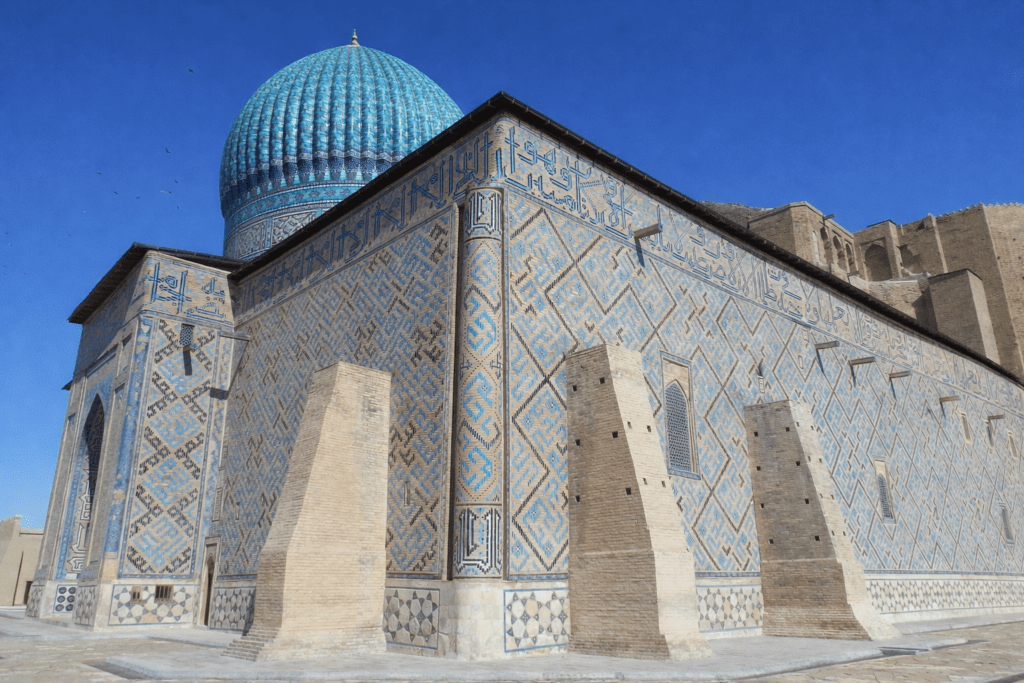
The choice of Turkestan is both geographic and symbolic. The city is regarded as one of Central Asia’s spiritual centers and an important destination for pilgrims. It is home to the mausoleum of Khoja Ahmed Yasawi, a prominent Sufi poet and thinker. The structure, commissioned in the 14th century by Amir Timur, adds historical resonance to Tokayev’s proposal and is included on the UNESCO World Heritage List.

Turkestan’s historical legacy and religious significance make it a potentially neutral and symbolically meaningful setting for peace talks.

The proposal also reflects Kazakhstan’s long-standing effort to position itself as a neutral diplomatic platform. Astana has previously hosted international negotiations, including talks on Syria, and has sought to build a reputation as a venue for dialogue between competing powers. Offering Turkestan, rather than the capital, reinforces both the initiative’s symbolic and political neutrality.

Tokayev’s proposal comes amid continued escalation in hostilities involving Iran and a U.S.-Israel coalition, which intensified in late February following exchanges of missile strikes and air attacks.

For Kazakhstan and other Central Asian states, the conflict carries direct implications. Iran’s status as a Caspian littoral country raises additional security concerns for Kazakhstan’s western regions in the event of further escalation. The Times of Central Asia previously reported on disruptions to regional supply chains and transport routes.

Volatility in global oil prices and the risk of disruption across Caspian-linked trade routes add further pressure, underscoring how conflicts far beyond Central Asia’s borders can quickly translate into economic and security risks for the region.

How Kazakhstan’s Southern Cities Celebrated Nauryz

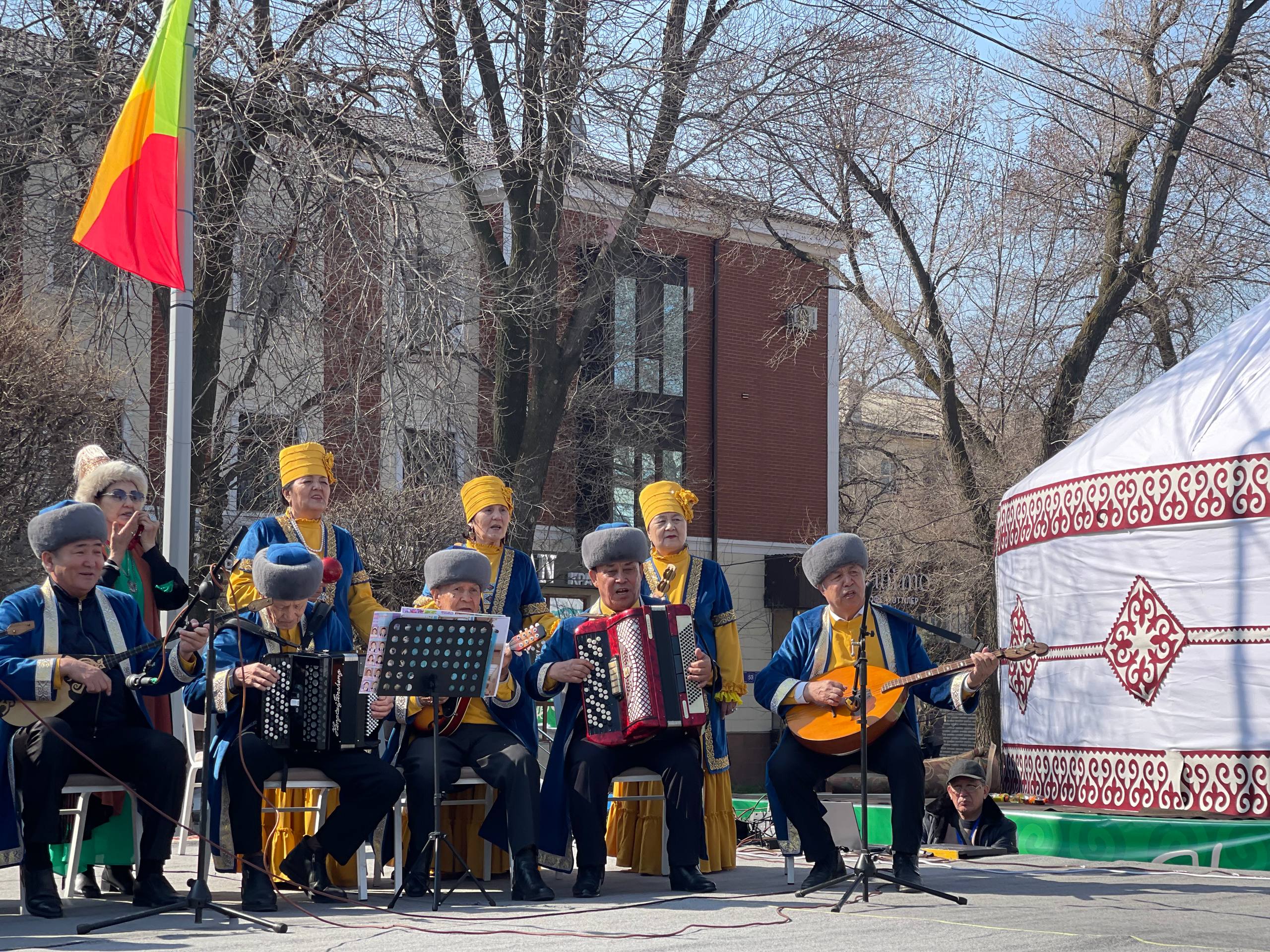
Across southern Kazakhstan, cities welcomed the arrival of spring with vibrant Nauryz celebrations that combined centuries-old traditions with modern cultural elements. Public squares, parks, and pedestrian areas were transformed into festive spaces filled with concerts, exhibitions, national games, and family activities.

Almaty

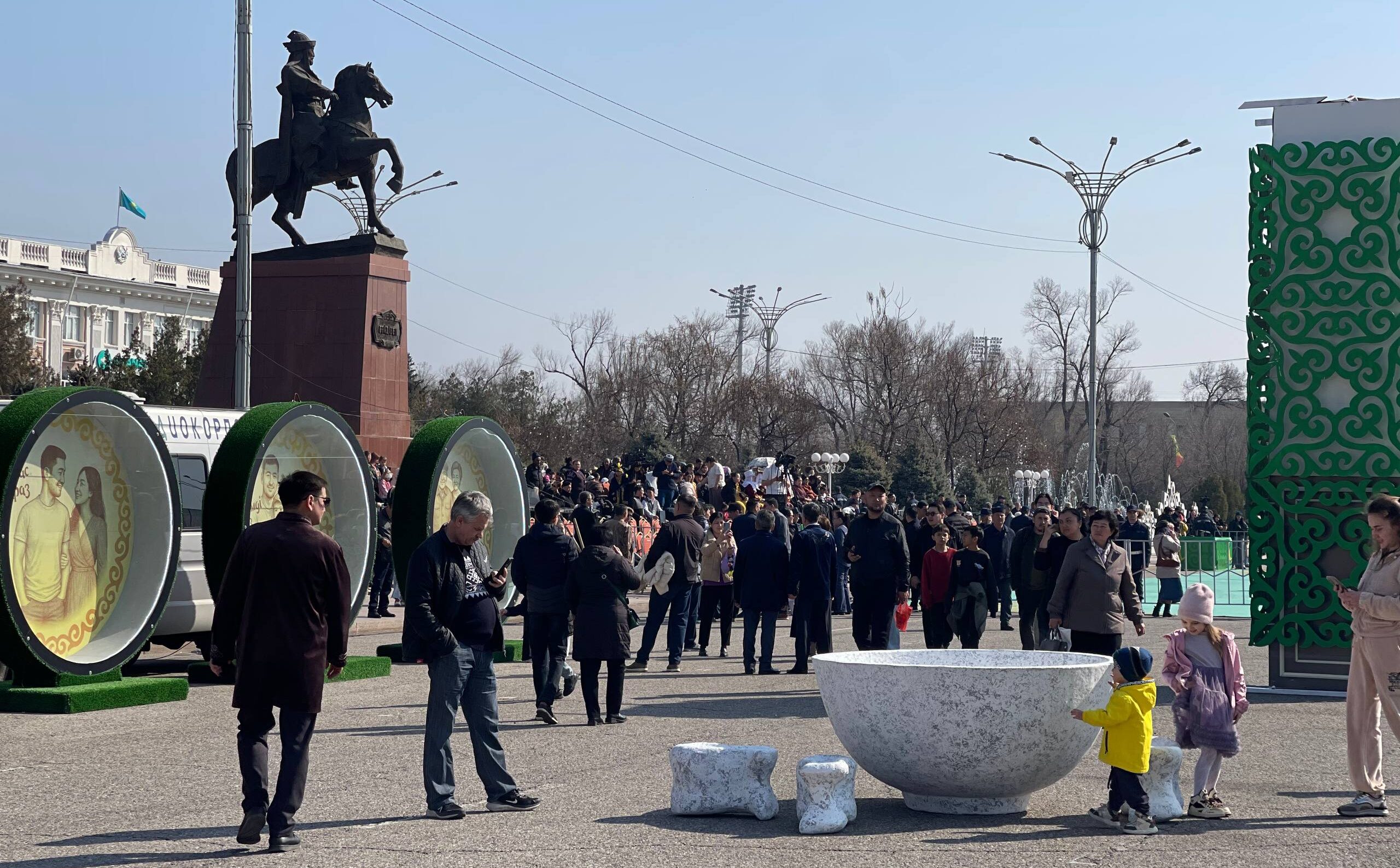
Kazakhstan’s biggest city is one of the main venues for celebrating Nauryz. In 2026, the city marked the spring holiday on a particularly large scale, hosting more than 200 events across various locations.

The main festivities unfolded in central squares, where concerts, exhibitions, craft fairs, and interactive cultural zones were organized.

One distinctive feature of the celebrations was the concept of blending traditional rituals with modern technologies. Themed yurts were installed in public spaces, each dedicated to different aspects of Great Steppe culture, from musical heritage and archaeological reconstructions to contemporary ethno-design.

Image: TCA

Pedestrian streets were decorated with light installations, LED displays, and interactive digital projects. In the evening, there were concerts by Kazakhstani performers and light shows.

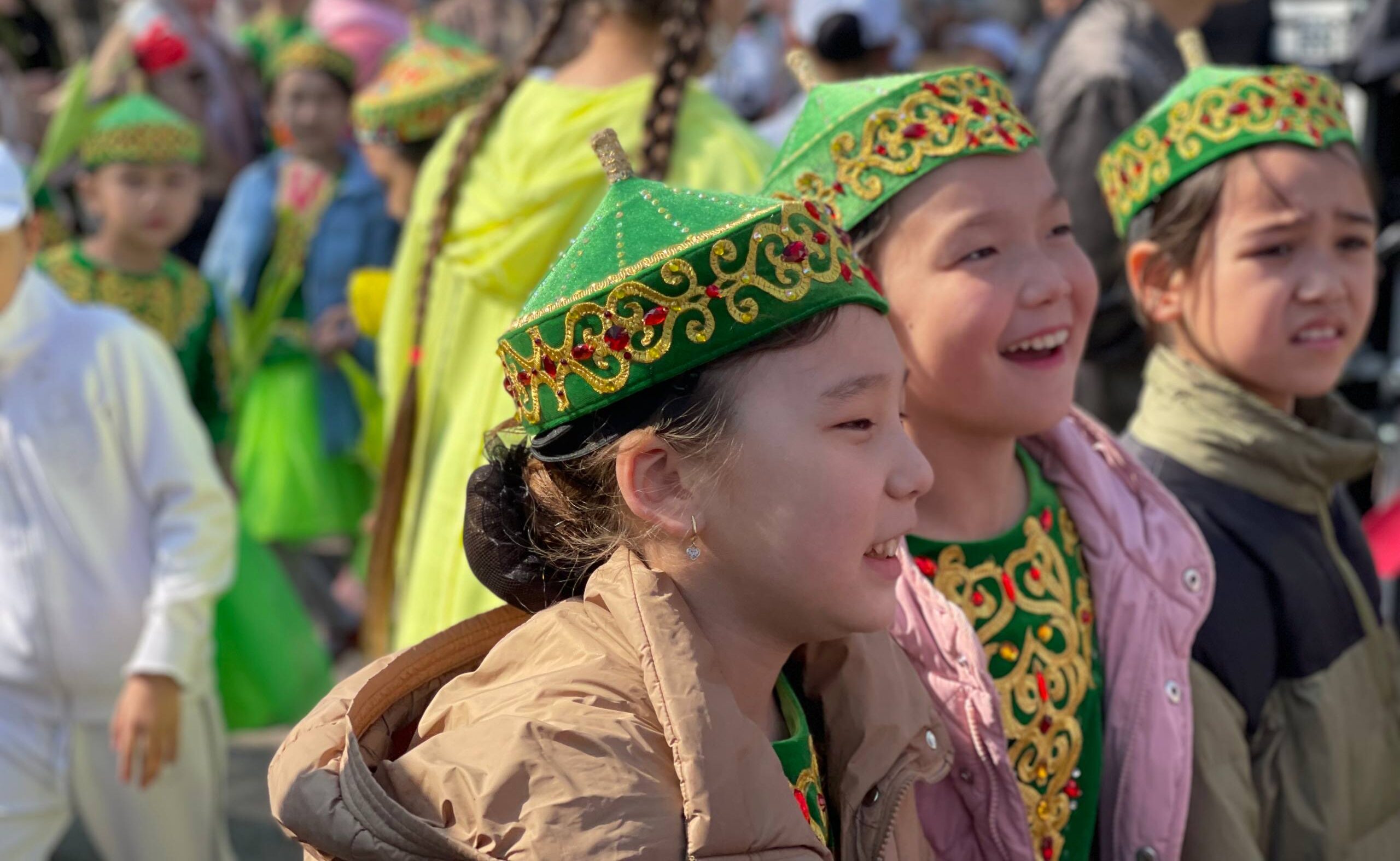
Residents attended the celebrations with their families, many wearing national costumes. Ethno-villages were also set up in several districts of Almaty, where sports competitions and children’s programs took place.

Shymkent

Nauryz was also celebrated on a large scale in Shymkent. Ethno-villages were organized throughout the city, allowing visitors to learn about Kazakh traditions, sample national dishes, and watch performances by local artists.

A distinctive feature of the celebrations in Shymkent was the balanced combination of traditional festivities with modern cultural initiatives. Alongside folk performances, guests could explore digital exhibitions, interactive spaces, and educational programs dedicated to Kazakhstan’s history and heritage.

Image: TCA

Concerts and theatrical performances featuring well-known national performers became a central part of the program, blending traditional motifs with modern stage production.

Craft fairs, entertainment areas, playgrounds, and creative workshops were organized for children and families in the city’s main public spaces.

Taraz

In Taraz, Nauryz was celebrated with lively public festivities reflecting both tradition and contemporary creativity.

Central squares were transformed into festive ethno-villages, with yurts installed, folk craft exhibitions arranged, and traditional dishes offered to guests.

Residents and visitors watched theatrical performances dedicated to the history of the Kazakh people and the arrival of spring. Folklore groups, dance ensembles, musicians, and young performers took to the stage throughout the day.

Image: TCA

The celebrations also incorporated modern elements. Visitors could see robots dressed in national costumes, an unusual symbol of the connection between cultural heritage and technological progress.

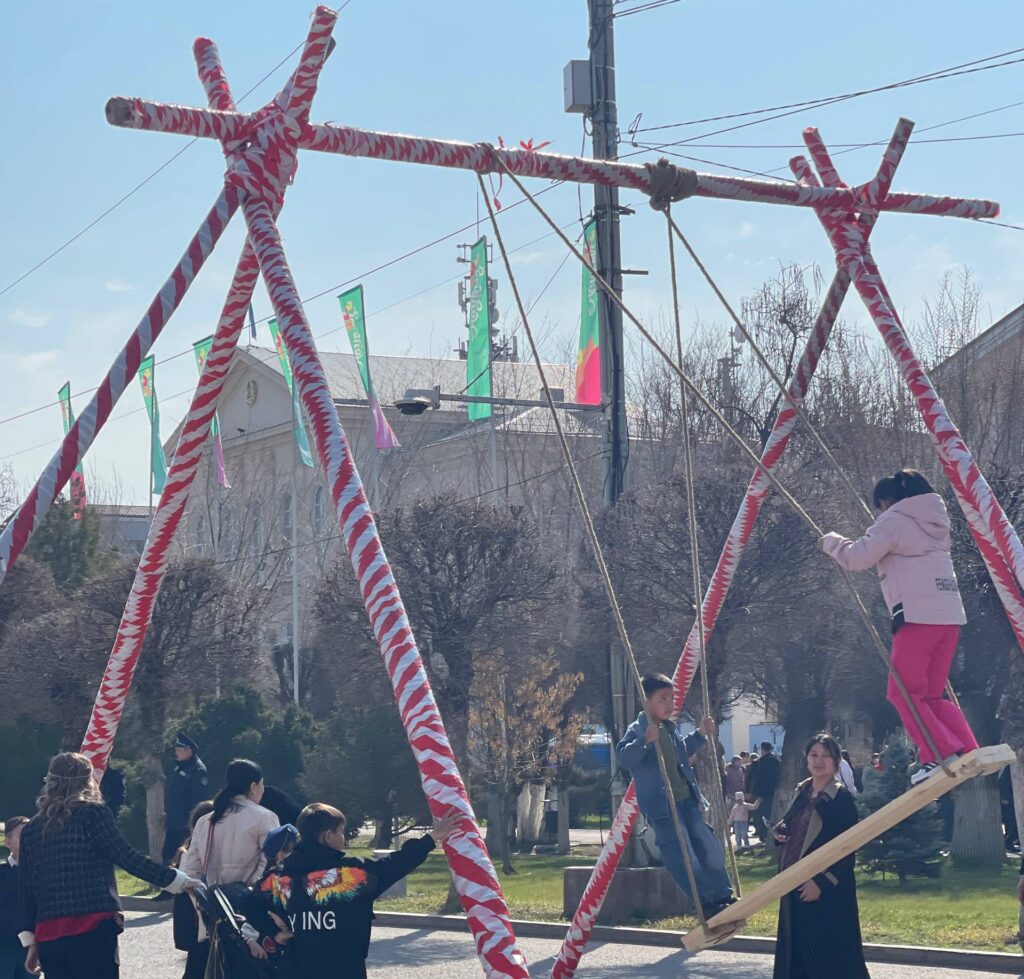
Playgrounds, swings, and various entertainment activities were organized, while many residents took photographs against the backdrop of yurts, traditional decorations, and spring floral displays.

The holiday concluded with a large open-air concert and mass public celebrations, reinforcing the sense of unity, joy, and renewal that accompanies Nauryz each year in Kazakhstan.

How Nauryz Was Celebrated in Astana: Traditions, Sports, and the Spirit of Spring

Spring in Astana traditionally begins with one of the country’s most beloved holidays, Nauryz. In 2026, citywide celebrations once again brought together thousands of residents and visitors to open-air venues, where ancient traditions, national games, crafts, and family activities combined to create a vibrant festive atmosphere.

In recent years, Nauryz has also taken on a broader role in Kazakhstan’s public life, reflecting efforts to reinforce national identity and cultural continuity in a rapidly modernizing society. In Astana, where public space and national imagery are carefully curated, the holiday takes on a particularly structured and representative form.

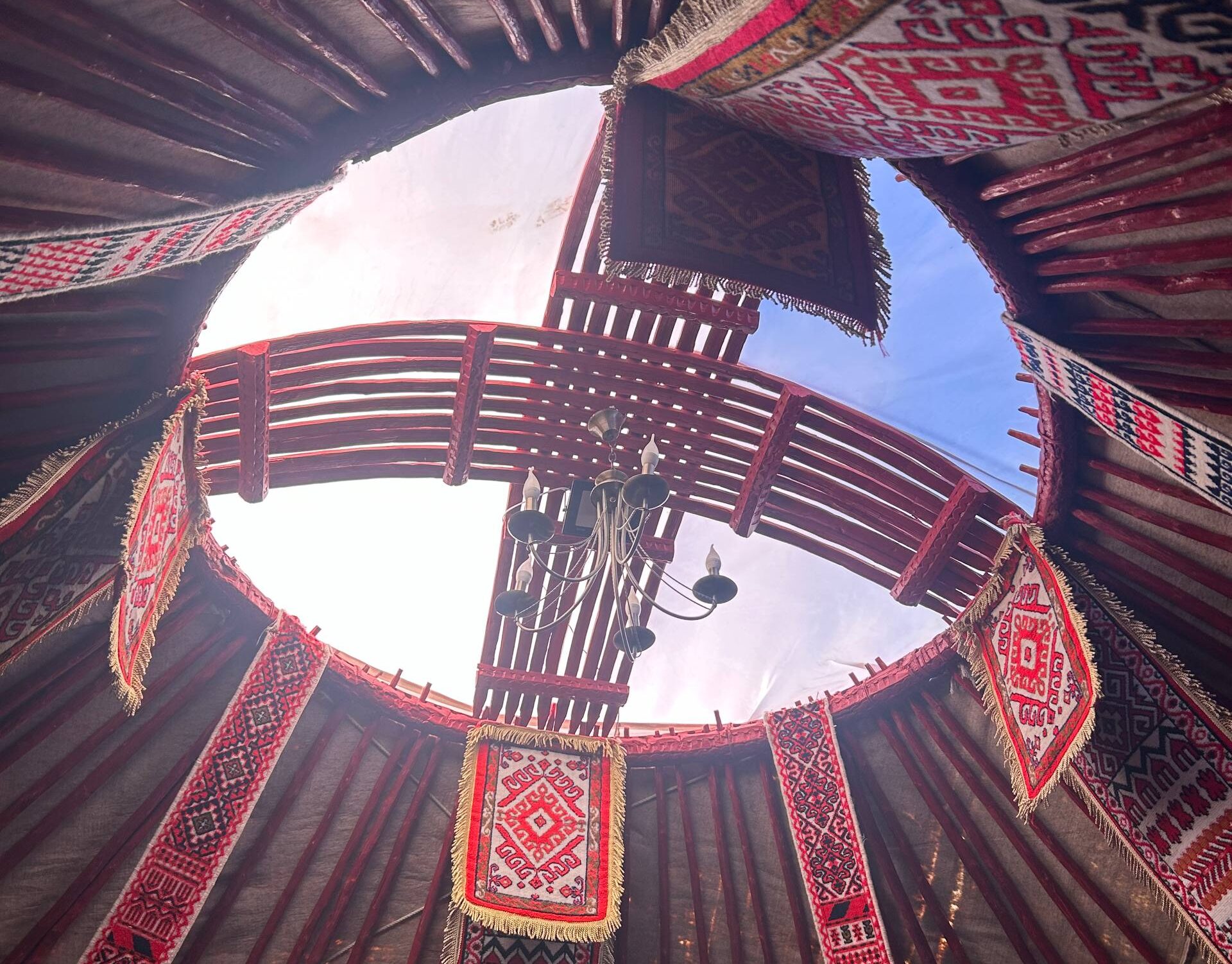
This year, the city’s central squares were transformed into a large ethno-village. Traditional yurts were set up throughout the area, decorated with national carpets, ornaments, and objects reflecting nomadic culture. Inside, visitors could explore elements of the traditional Kazakh way of life. Wooden tableware, textiles with ornamental patterns, fur decorations, and historical weapons created a strong sense of cultural heritage. The air carried the sounds of traditional music and the smell of freshly prepared dishes, adding to the immersive atmosphere.

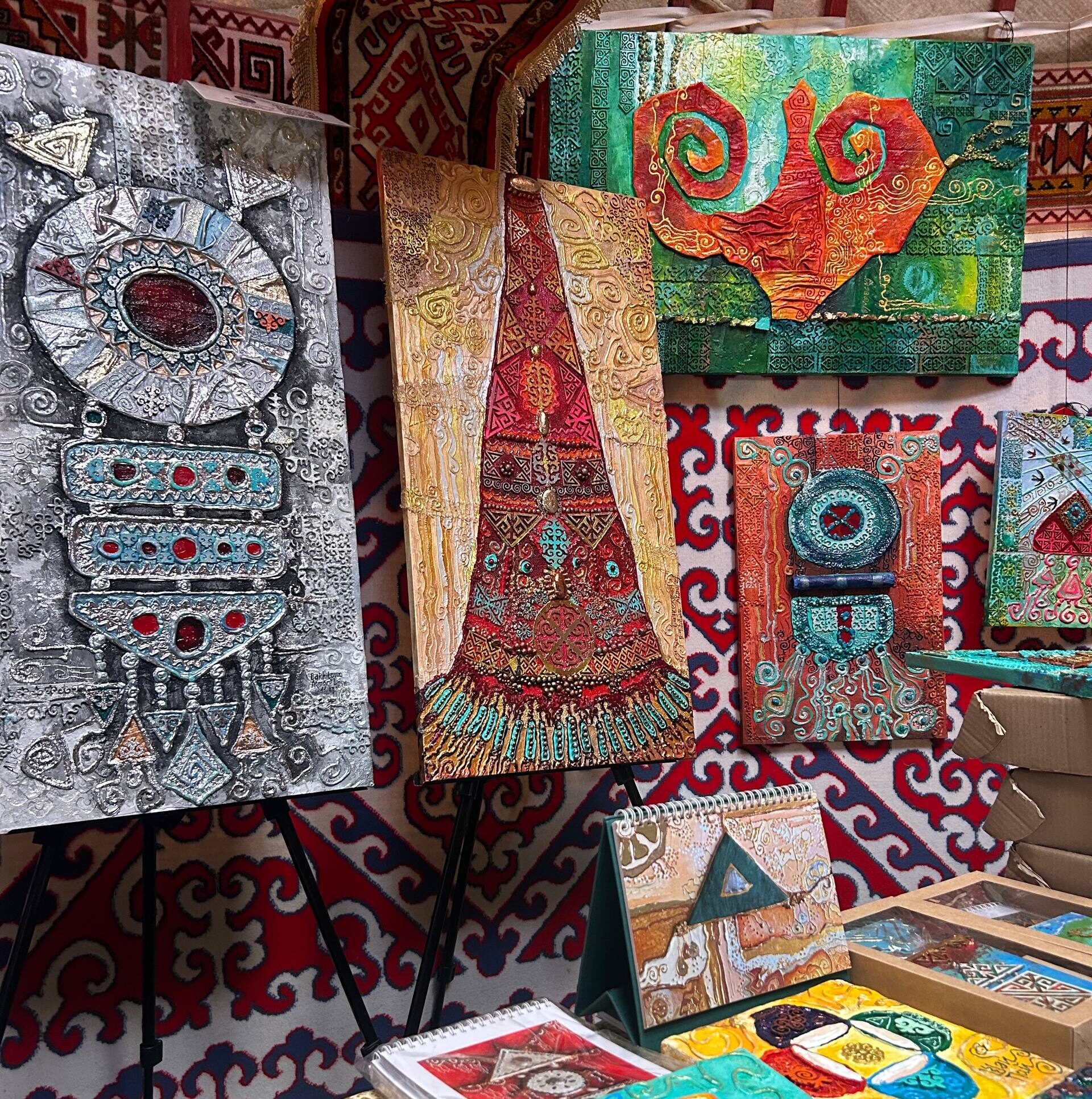
Craft exhibitions attracted particular attention. Artists and artisans presented paintings and decorative panels inspired by Kazakh ornaments and steppe symbolism. Bright compositions, created using techniques ranging from textured painting to decorative ceramics, showed how these patterns continue to find expression in contemporary art.

Image: TCA

Image: TCA

Traditional games are an integral part of Nauryz.

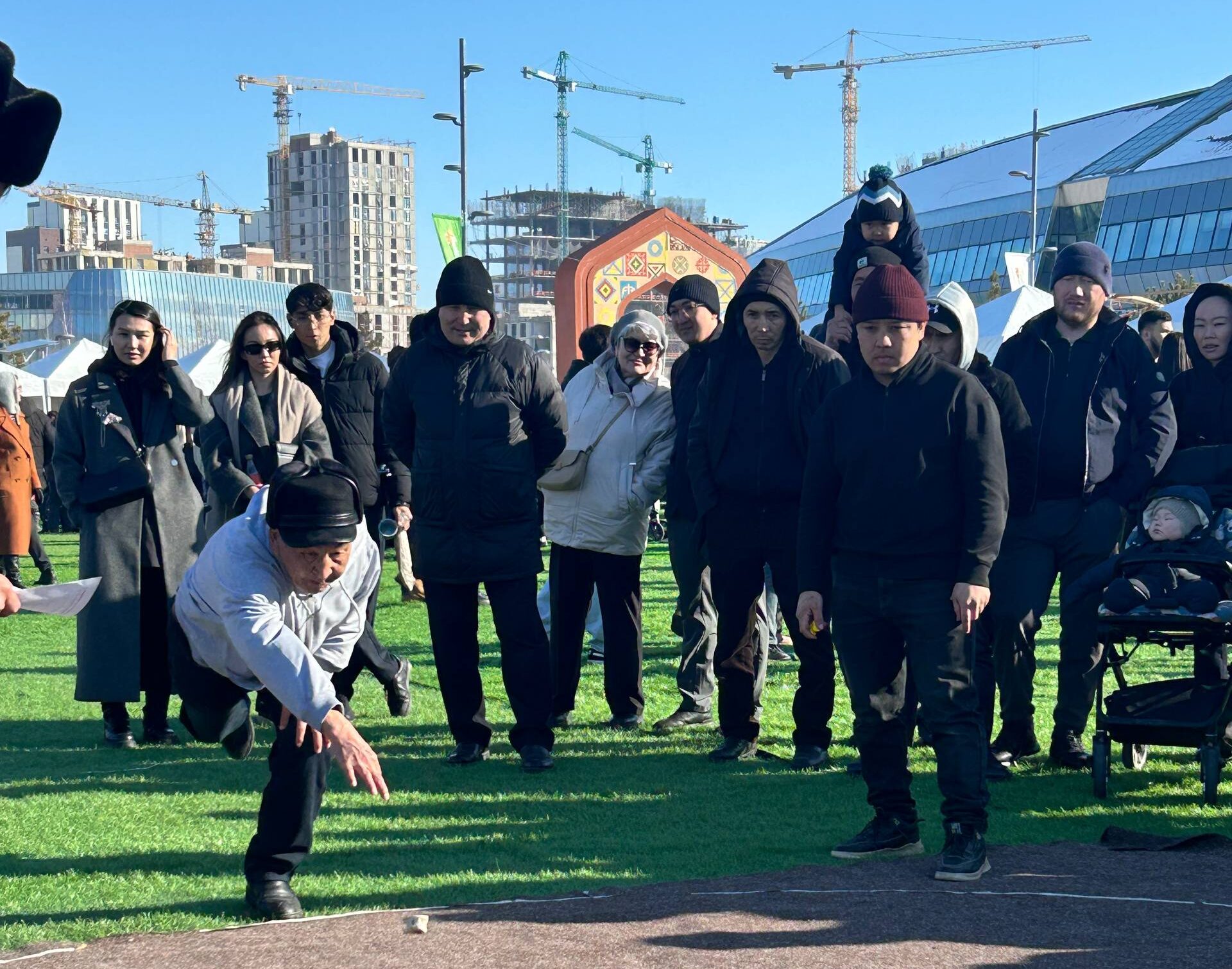
One of the most notable competitions was asyk atu, an ancient Kazakh game in which players use skill and precision to knock down asyks (sheep knucklebones) from a distance. Spectators gathered around the playing area, watching the precise throws of experienced participants.

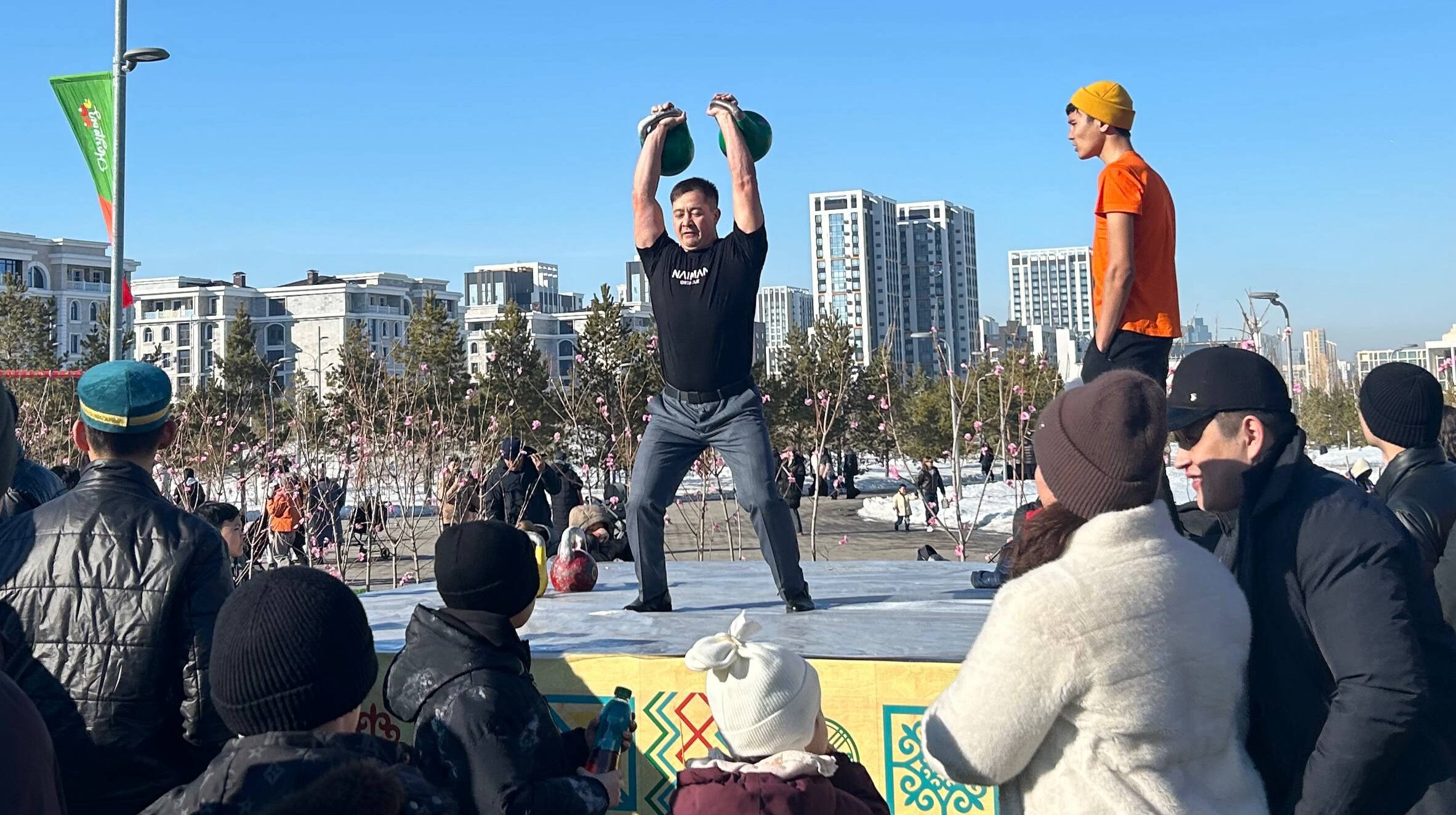
Strength contests were also a major draw. On stages and sports grounds, athletes demonstrated their power and endurance in kettlebell lifting, attracting large crowds. Such competitions have long symbolized the resilience and physical strength associated with steppe traditions.

As Nauryz is a family-centered holiday, special attention was given to activities for children. In designated play zones, young visitors could learn about folk customs, take part in workshops, and try on national costumes, alongside more modern раstimes, including digital games and interactive exhibits.

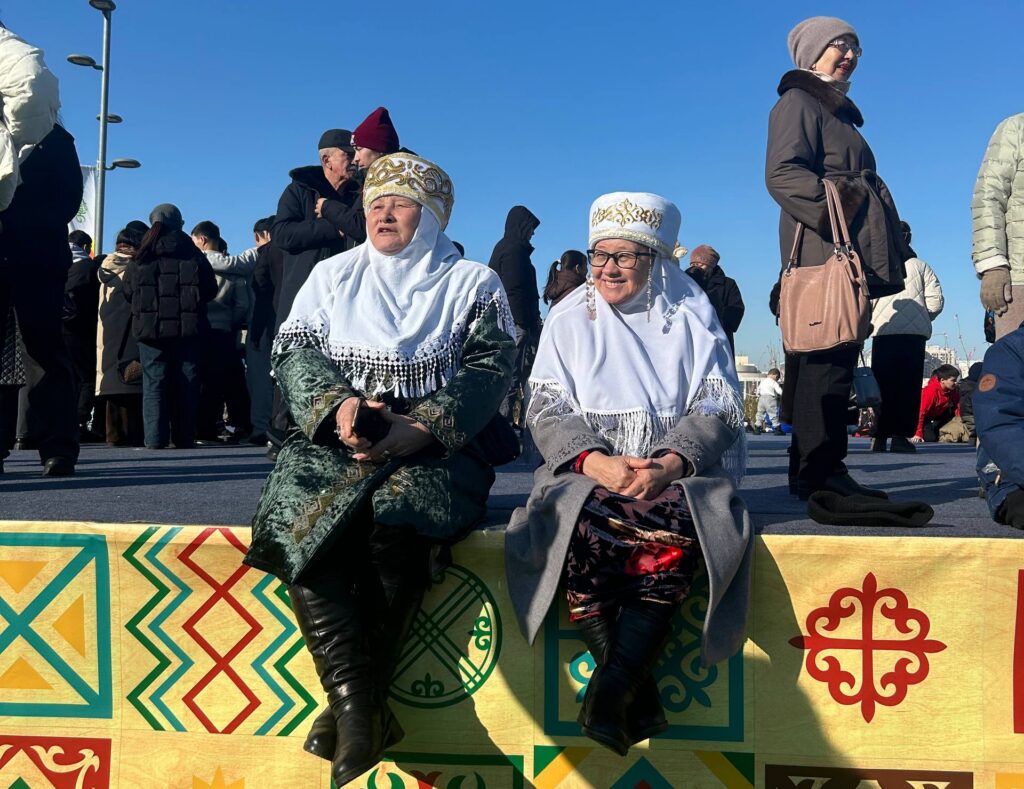
Many residents attended with their extended families. Across the festival grounds, elderly people in traditional headwear, parents with children, and groups of young people gathered together, creating a sense of unity tied to the arrival of spring.

Image: TCA

Image: TCA

Nauryz celebrations in Astana in 2026 showed that the holiday is more than a date on the calendar. It remains a marker of renewal and continuity, with traditions passed down through generations still visible in the modern capital, where people of different ages and backgrounds come together to celebrate.

In Astana, Nauryz continues to evolve without losing its core meaning, balancing carefully staged tradition with everyday participation. In a city defined by its future-facing architecture, the holiday offers a reminder that renewal is rooted as much in continuity as in change.

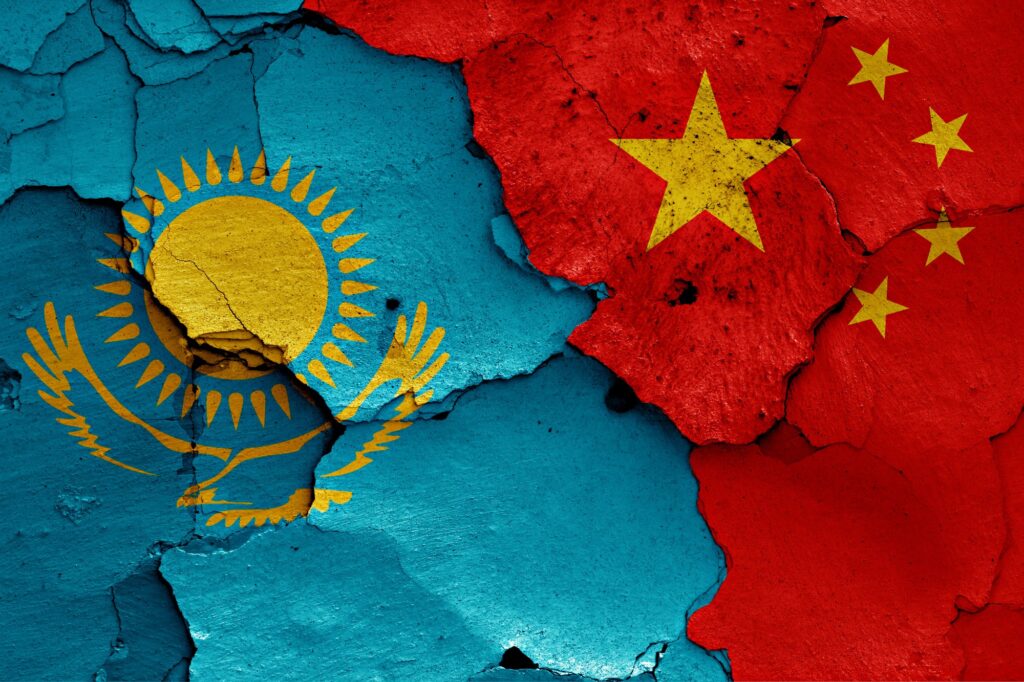
Kazakhstan’s Trade with China Is Growing, but the Deficit Is Widening

Kazakhstan’s trade and economic ties with China continue to deepen, yet the expansion in bilateral trade is accompanied by a widening imbalance. By the end of 2025, China had consolidated its position as one of the country’s key trading partners, accounting for nearly a quarter of total foreign trade turnover.

According to data from the analytical centre of the Association of Financiers of Kazakhstan (AFK), bilateral trade reached $34.1 billion, an increase of 13.2% compared with the previous year.

China’s share in Kazakhstan’s foreign trade rose to 23.7% from 21.2% a year earlier. Growth in trade was driven primarily by an increase in imports of Chinese goods. In 2025, imports from China reached $18.9 billion, 23.6% higher than the previous year. China accounted for 29.2% of all imports into the country. The structure of imports indicates growth in shipments of both consumer goods and industrial products. The largest increases were recorded in vehicles (+$3.4 billion), metals (+$645 million), and chemical products (+$412 million).

According to analysts, this reflects expanding investment activity, infrastructure projects, and domestic demand.

In contrast to imports, Kazakhstan’s exports to China showed only moderate growth, rising by 2.1% to $15.2 billion. At the same time, the export structure changed. Shipments of agricultural and chemical products increased, while exports of traditional raw materials declined.

Experts attribute this to cooling industrial demand in China, lower global commodity prices, and growth in domestic production within China itself.

Faster growth in imports led to a sharp deterioration in the trade balance. According to AFK data, the bilateral trade deficit with China increased tenfold, from $370 million to $3.7 billion.

At the same time, price trends for goods imported from China remained largely downward. Declining prices for a number of items are linked to low inflation in China and increased competition from Chinese manufacturers in foreign markets.

This, in turn, is exerting a restraining effect on inflation in Kazakhstan, partially offsetting price increases driven by domestic factors such as tariffs, demand, and budget spending.

In the short term, analysts expect imports from China to remain the main driver of bilateral trade. Kazakhstan’s exports, meanwhile, will depend on commodity prices and the level of industrial demand in China.

High oil prices (above $100 per barrel) could temporarily reduce the deficit by boosting export revenues. However, this effect would be largely price-driven and is unlikely to change the overall structure of trade.