• KGS/USD = 0.01144 0%
  • KZT/USD = 0.00193 -0%
  • TJS/USD = 0.10876 0.55%
  • UZS/USD = 0.00008 0%
  • TMT/USD = 0.28490 0%
  • KGS/USD = 0.01144 0%
  • KZT/USD = 0.00193 -0%
  • TJS/USD = 0.10876 0.55%
  • UZS/USD = 0.00008 0%
  • TMT/USD = 0.28490 0%
  • KGS/USD = 0.01144 0%
  • KZT/USD = 0.00193 -0%
  • TJS/USD = 0.10876 0.55%
  • UZS/USD = 0.00008 0%
  • TMT/USD = 0.28490 0%
  • KGS/USD = 0.01144 0%
  • KZT/USD = 0.00193 -0%
  • TJS/USD = 0.10876 0.55%
  • UZS/USD = 0.00008 0%
  • TMT/USD = 0.28490 0%
  • KGS/USD = 0.01144 0%
  • KZT/USD = 0.00193 -0%
  • TJS/USD = 0.10876 0.55%
  • UZS/USD = 0.00008 0%
  • TMT/USD = 0.28490 0%
  • KGS/USD = 0.01144 0%
  • KZT/USD = 0.00193 -0%
  • TJS/USD = 0.10876 0.55%
  • UZS/USD = 0.00008 0%
  • TMT/USD = 0.28490 0%
  • KGS/USD = 0.01144 0%
  • KZT/USD = 0.00193 -0%
  • TJS/USD = 0.10876 0.55%
  • UZS/USD = 0.00008 0%
  • TMT/USD = 0.28490 0%
  • KGS/USD = 0.01144 0%
  • KZT/USD = 0.00193 -0%
  • TJS/USD = 0.10876 0.55%
  • UZS/USD = 0.00008 0%
  • TMT/USD = 0.28490 0%
11 December 2025

Tajik Book on Cultural Ties Gains International Recognition, but Remains Overlooked at Home

Orientalist and art historian Munira Shahidi, daughter of the renowned Tajik composer Ziedullo Shahidi, has brought international attention to her book “Cultural Ties Between East and West in the 21st Century.”  The work explores cultural parallels and literary connections between civilizations, highlighting the Tajik people’s role as guardians of the intellectual legacy of great thinkers. While presented at events in Cambridge and Berlin, the book has yet to be showcased in Tajikistan.

From Oslo to Amazon

“I showed that in Tajikistan people speak the language of great classics such as Khayyam, Hafiz, Ferdowsi, and Mawlavi, who are also recognized in the Western world. This demonstrates a new dignity of the Tajik people to the world,” Shahidi explained.

Publishing the book, however, was not straightforward. With no funding available, unexpected assistance came from two Iranian visitors to the Ziedullo Shahidi Museum of Music Culture, who offered to publish it free of charge. The book was released in Oslo at the end of 2024 in both Tajik and English.

The publication soon entered Amazon’s global network and spread through major universities worldwide. Yet, this platform does not cover Tajikistan. Only ten copies of the book reached the country, purchased by the Tajik Embassy in Uzbekistan.

European Presentations

The book’s first public presentation was held in Baku at a conference supported by the Tajik Ministry of Culture. Shahidi was subsequently invited to the Azerbaijan Center for Cultural Studies.

Later, during a four-month stay in Cambridge, England, she presented her work three times at university colleges.

“Students realized that British Orientalists were among the first translators of Khayyam, Hafiz, Ferdowsi, and Mawlavi into English,” she noted.

The book was also introduced in Berlin, Prague, London, and Samarkand. No official presentation has yet been organized in Tajikistan.

An Undervalued Heritage

Shahidi laments that classical Tajik and Persian literature is insufficiently studied in her homeland.

“If their works were included in school and university programs, conversations would become more pleasant, and people’s behavior would improve. The philosophy of Mawlavi, for example, is a whole world of treasures,” she said.

She also expressed concern over declining interest in reading, suggesting that television and radio could play a larger role in promoting literature and the arts through live programs and discussions on poets, philosophers, and composers.

Another source of disappointment for Shahidi is the neglect of her father’s creative legacy.

“The songs of my father, Ziedullo Shahidi, are no longer heard on radio or television. Yet songs like ‘Vatan, Vatan,’ ‘My Star,’ ‘Our Home,’ and ‘Your Village’ were once very popular,” she said.

To address these challenges, the Ziedullo Shahidi International Foundation was established and now operates under the Public Council of the President of Tajikistan. According to Munira, the foundation regularly raises issues of art and international cooperation.

“The art of the Tajik people is great, but the world does not know it. We need to establish more ties with Iran and Afghanistan and present our potential to the world,” she concluded.

Kazakhstan Wins Team Gold at World Boxing Championships in Liverpool

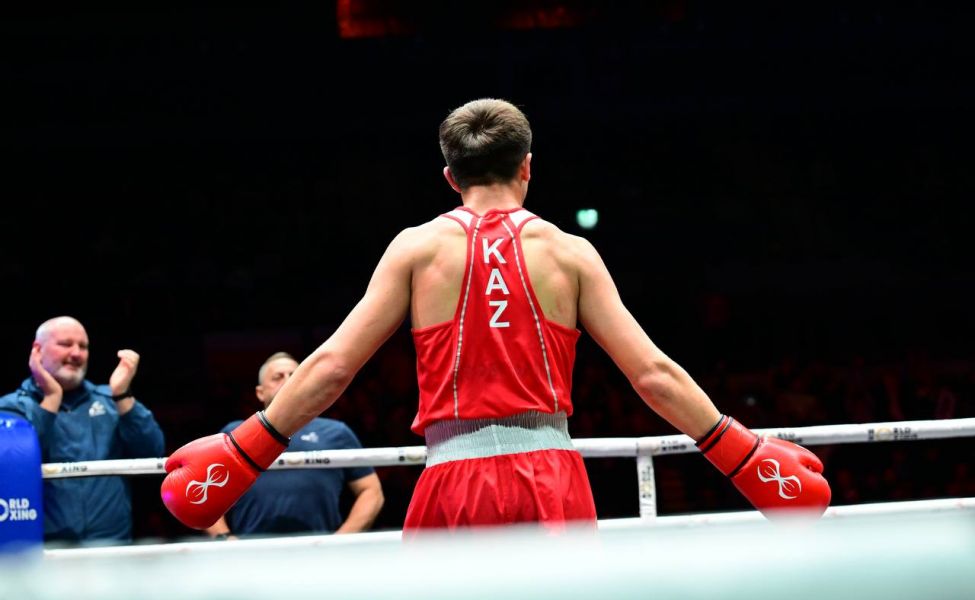
Kazakhstan’s national boxing team has clinched the team gold medal at the inaugural World Boxing Championships held in Liverpool, England, edging out Uzbekistan by securing more gold medals.

A total of 554 athletes from 68 countries participated in the competition, including 20 boxers from Kazakhstan, 10 male and 10 female. On September 14, eight Kazakhstani and eight Uzbekistani boxers advanced to the finals.

Heading into the decisive final bout, both Kazakhstan and Uzbekistan had secured six gold medals each. The tie-breaker unfolded in the super heavyweight category (over 90 kg), where Kazakhstan’s Aibek Oralbay faced Uzbekistan’s Jahongir Zokirov. Zokirov had the upper hand after the first round, but Oralbay mounted a comeback and ultimately won by a 3:2 split decision.

With this victory, Kazakhstan topped the overall medal table with seven gold medals. Uzbekistan followed with six, while India claimed third place with two.

President Kassym-Jomart Tokayev congratulated the national team, praising gold medalists Sanzhar Tashkenbay, Mahmud Sabyrkhan, Alua Balkibekova, Aida Abikeeva, Torehan Sabyrkhan, Natalia Bogdanova, and Aibek Oralbay, as well as silver medalist Nazym Kyzaibay and bronze winners Victoria Grafeeva and Eldana Talipova. He wished success to those still competing in Liverpool and emphasized that while Kazakhstan’s performance at the championships was a major success, intensive preparation must continue ahead of the upcoming Olympic Games in the United States.

This tournament marked a significant milestone as the first world championship organized by World Boxing, a breakaway international federation established in 2023 in response to ongoing governance and financial issues within the International Boxing Association (IBA). Following the IBA’s failure to implement required reforms, the International Olympic Committee (IOC) revoked its accreditation, placing boxing’s Olympic status in jeopardy.

World Boxing, now recognized by the IOC as of spring 2025, brought together more than 100 national federations and was granted the authority to organize Olympic qualifying events. Liverpool thus became the historic venue for the first world championship under the new structure.

Athletes from Brazil (4), India and Poland (3 each), Turkey, Australia, and England (2 each), as well as France, Mongolia, Spain, Japan, Bulgaria, the USA, Taiwan, and Ireland (1 each) also reached the finals.

As previously reported by The Times of Central Asia, Olympic champion Lazizbek Mullojanov, who won gold at the 2024 Games, was not included in Uzbekistan’s lineup. Mullojanov was suspended in mid-2025 amid an ongoing anti-doping investigation.

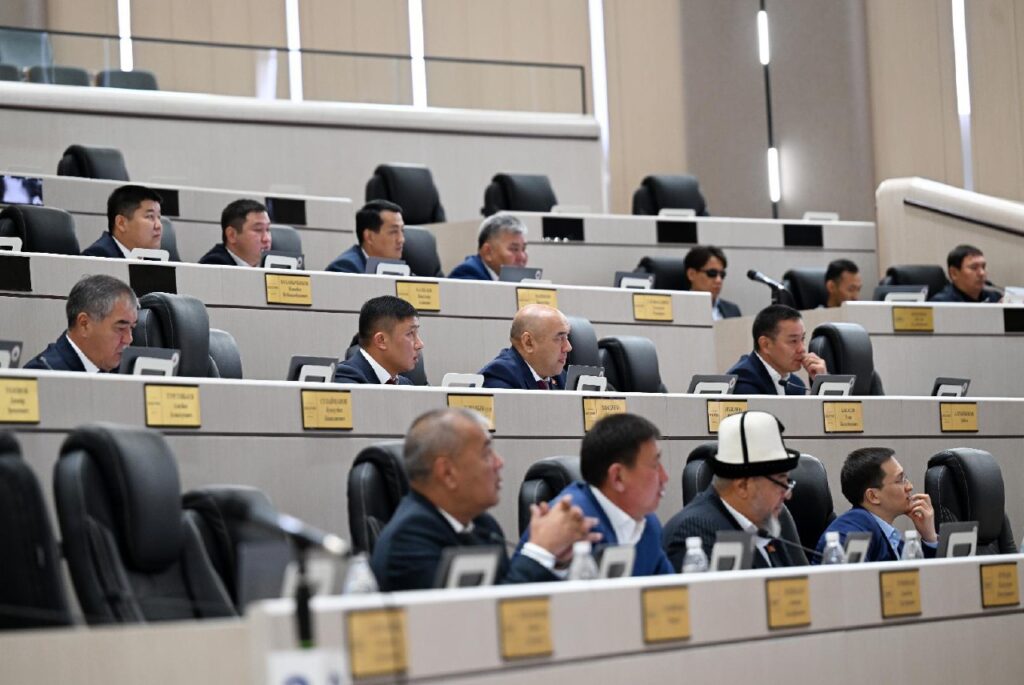
Kyrgyz Deputies Launch Initiative to Dissolve Parliament

A group of deputies in Kyrgyzstan’s parliament, the Jogorku Kenesh, have launched an initiative to dissolve parliament. The MPs have begun collecting signatures in support of the measure and plan to revisit the issue at the end of September, when a vote could be held.

Under Kyrgyzstan’s Constitution, such an initiative can be formally submitted with the backing of at least 30 deputies. For it to pass, however, a two-thirds majority, 60 votes, is required. If successful, parliament would be dissolved and new elections scheduled within two months.

Political analysts in Bishkek note that there are currently no signs of a parliamentary crisis that would warrant early elections. They argue that self-dissolution could instead burden the state budget and fuel political instability, potentially discouraging investors.

Supporters of the initiative, however, insist their motives are pragmatic. According to the Constitution, the next parliamentary elections are scheduled for November 2026, followed by presidential elections in January 2027. The short interval between the two campaigns, deputies say, could create logistical challenges and additional costs, making an earlier parliamentary vote preferable.

Any future elections will be held under Kyrgyzstan’s updated electoral system. Single-member constituencies have been abolished, replaced by 30 multi-member districts that will each elect three deputies, making up the Jogorku Kenesh’s 90 seats in total.

The last parliamentary elections, held in November 2021, came after widespread protests in October 2020 over disputed results. Those demonstrations forced a rerun and triggered major political upheaval, including the resignation of then-President Sooronbay Jeenbekov.

Since independence, the Jogorku Kenesh has voted to dissolve itself three times, each instance occurring amid political crises and disputes with the presidential administration.

So far, officials have not commented on the latest initiative, and the public remains uncertain about the real motivations driving it.

Kazakhstan Trade Deficit with China Quadruples in 2025

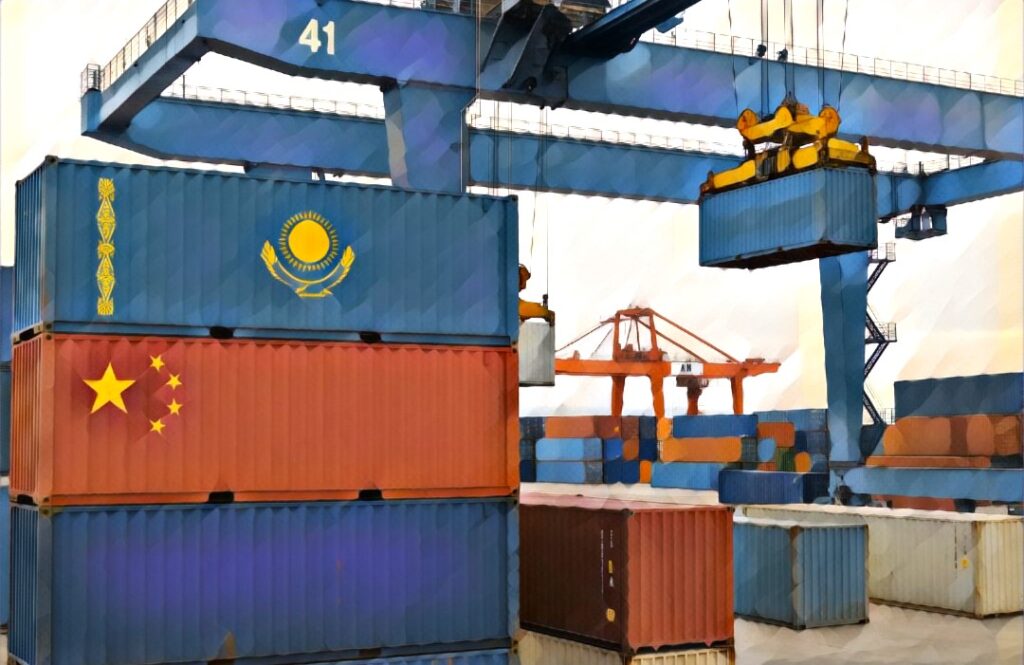
Kazakhstan’s trade deficit with China reached $1.8 billion in the first half of 2025, a sharp increase compared to $400 million for the whole of 2024. According to the Association of Financiers of Kazakhstan (AFK), the growth in trade turnover was driven almost entirely by rising imports of Chinese goods.

A review published by AFK noted that Kazakhstan’s trade balance with China has remained in deficit since 2023, with the gap continuing to widen. Despite this, China remains Kazakhstan’s largest trading partner, accounting for more than 20% of the country’s total foreign trade.

From January to June 2025, mutual trade between the two countries increased by 5.9% to $14.9 billion. However, Kazakhstan’s exports fell nearly 10%, while imports surged by 22.8%.

“The decline in export revenues is mainly due to falling oil and metal prices and weaker demand from China, which increases the vulnerability of Kazakhstan’s export-oriented raw materials model,” AFK experts stated.

Imports are expanding in line with rising domestic consumption and the rollout of large-scale infrastructure projects. China’s share of Kazakhstan’s trade turnover rose to 22.6% in the first half of 2025, up from 20.7% a year earlier. The growth was fueled by imports, which increased their share to 28.6% from 23.9%, while exports fell to 17.8% from 18.4%.

Kazakhstan did record modest export gains in certain categories, including animal and plant products (+$164 million) and vehicles (+$160 million). These, however, were outweighed by sharp declines in mineral product exports (-$599 million) and metals (-$408 million).

Imports from China grew most significantly in vehicles (+$1.2 billion), metals (+$279 million), and chemical products (+$231 million). The increase in vehicle imports was aided by a 14% drop in average car prices from China. Imports of food, furniture, construction materials, and consumer goods also rose.

Trade settlements are also shifting. While the dollar remains the dominant contract currency, the yuan is gaining ground in import transactions, with the euro ranking third due to Kazakhstan’s ongoing trade ties with Europe.

As a result, Kazakhstan’s trade deficit with China widened to $1.8 billion in January-June 2025, compared to $0.4 billion in the whole of 2024.

“Imports are likely to continue to grow amid high consumer and investment demand, while exports will remain dependent on commodity prices and industrial dynamics in China. China is becoming an increasingly pronounced ‘economic magnet’ for Kazakhstan,” the AFK report concluded.

As The Times of Central Asia previously reported, Kazakhstan is experiencing a slowdown in manufacturing activity in 2025 following record growth at the end of last year.

Blast at Scrap Metal Site in Kazakhstan Kills Three Uzbek Citizens

The bodies of three Uzbek citizens who died in an explosion at a scrap metal plant in Kazakhstan’s Almaty region are being repatriated, according to Uzbek officials.   

The deaths occurred on September 11 at the LGN Metal business in Baiserke village and local police have opened a criminal case for “violation of labor protection laws leading to death,” Uzbekistan’s Migration Agency said on Telegram on Saturday. It expressed condolences and said migration officers were helping the relatives of the dead.

“Constant cooperation has been established with the Kazakh side during the investigation process,” the agency said. 

Officials have not yet announced the cause of the blast. Plant owner Amirbek Sherbaev said a Chinese company rents the site and that it was possible that military ordnance was mixed in with scrap metal that had been received there, according to KTK, a television channel in Kazakhstan. KTK said defense ministry officials had joined the inquiry.

Kyrgyz Parliament Considers Tighter Climbing Rules After Mountain Deaths

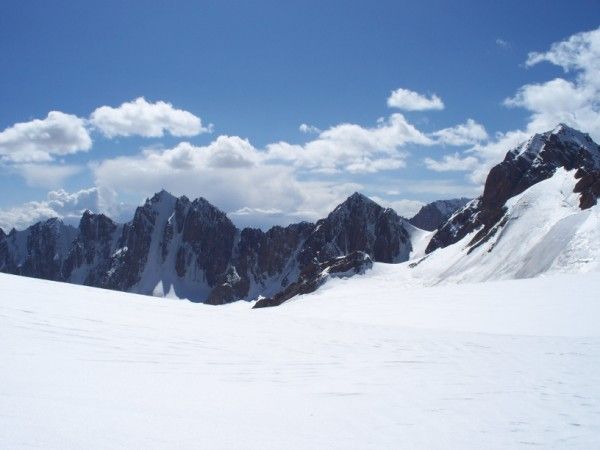
Kyrgyzstan’s parliament is looking at ways to make mountaineering safer after the deaths and presumed deaths of several climbers this year, including a Russian woman who was stranded for days on the highest mountain in the country. The debate comes as authorities promote Kyrgyzstan’s spectacular mountain landscapes in an effort to attract more tourists. 

A draft law that was introduced on September 4 in the country’s parliament, the Jogorku Kenesh, would require mountaineers who plan to climb above 6,000 meters to get a permit and have insurance that covers medical assistance and evacuation. The bill, put forward by lawmaker Emil Toktoshev, also proposes the development of more infrastructure for mountaineering routes and bases and better communication about emergencies. 

“In recent years, active development of mountaineering and mountain tourism has been observed in Kyrgyzstan, which requires legal regulation of this sphere,” says a note posted with the draft law on the parliament’s website.

“Despite the growing number of ascents to mountain peaks, legislation in the field of mountaineering remains insufficient, creating legal gaps in matters of safety, environmental responsibility, and the issuance of permits,” the note says. 

While high-altitude mountain climbing can be inherently risky, the drama surrounding the plight of Russian Natalya Nagovitsyna on Pobeda Peak, which is 7,439 meters above sea level, attracted international attention and prompted a push for more regulation to help to prevent such disasters.

Nagovitsyna, whose husband, Sergey Nagovitsyn, died while climbing in Kyrgyzstan in 2021, broke a leg on Pobeda on August 12. Following risky attempts to rescue her, searchers conducted a high-altitude drone inspection of the mountain ridge where she had been left in early September and said there was no sign of life. There is widespread consensus that Nagovitsyna did not survive on the upper reaches of Pobeda, with minimal supplies and shelter in the brutal climate. Her body has not been recovered. 

An Italian friend who had tried to help Nagovitsyna died, and another Russian climber died after climbing Pobeda and falling ill in a separate incident in August. Additionally, two Iranian climbers on Pobeda were reported missing and are presumed dead.  

Anna Piunova, editor of Mountain.RU, a Russian website that covers climbing news, said that Nagovitsyna possibly should have climbed Pobeda with an experienced guide and that climbers in general should be aware of their limitations. 

“And maybe, when you go into the mountains without a guide, without proper insurance covering PSR (search and rescue operations), in the company of strangers, with only a minimal kit, you need to clearly understand that you’ll have to rely only on yourself,” Piunova said on Instagram. “And choose routes according to your abilities, not your ambitions.”

Rescue services and mountaineering infrastructure in Kyrgyzstan are less developed than in the Alps and parts of the Himalayas in Nepal. 

The draft bill submitted by lawmaker Toktoshev says a permit system for mountaineers would allow state agencies to monitor climbing routes and react more quickly to emergencies such as avalanche risks and oxygen deficiency, using funds from those permits for their safety work. The bill does not say how much such permits should cost. The system would also play an environmental role, requiring climbers to clean up their own waste. 

“High-mountain regions are characterized by particularly fragile ecosystems,” the bill explains. “Mass and uncontrolled access has led to pollution and degradation of natural landscapes. The permit system will make it possible to limit anthropogenic pressure, control the flow of mountaineers, and implement the principles of ecologically sustainable mountaineering.”

Permits are currently required to climb in some areas of Kyrgyzstan, but the proposed system would introduce a higher level of regulation. 

Kyrgyzstan has three peaks over 7,000 meters – Pobeda, which is considered one of the most challenging climbs in the world, as well as Lenin Peak and Khan-Tengri Peak.