• KGS/USD = 0.01144 0%
  • KZT/USD = 0.00192 -0%
  • TJS/USD = 0.10849 0.37%
  • UZS/USD = 0.00008 0%
  • TMT/USD = 0.28490 0%
  • KGS/USD = 0.01144 0%
  • KZT/USD = 0.00192 -0%
  • TJS/USD = 0.10849 0.37%
  • UZS/USD = 0.00008 0%
  • TMT/USD = 0.28490 0%
  • KGS/USD = 0.01144 0%
  • KZT/USD = 0.00192 -0%
  • TJS/USD = 0.10849 0.37%
  • UZS/USD = 0.00008 0%
  • TMT/USD = 0.28490 0%
  • KGS/USD = 0.01144 0%
  • KZT/USD = 0.00192 -0%
  • TJS/USD = 0.10849 0.37%
  • UZS/USD = 0.00008 0%
  • TMT/USD = 0.28490 0%
  • KGS/USD = 0.01144 0%
  • KZT/USD = 0.00192 -0%
  • TJS/USD = 0.10849 0.37%
  • UZS/USD = 0.00008 0%
  • TMT/USD = 0.28490 0%
  • KGS/USD = 0.01144 0%
  • KZT/USD = 0.00192 -0%
  • TJS/USD = 0.10849 0.37%
  • UZS/USD = 0.00008 0%
  • TMT/USD = 0.28490 0%
  • KGS/USD = 0.01144 0%
  • KZT/USD = 0.00192 -0%
  • TJS/USD = 0.10849 0.37%
  • UZS/USD = 0.00008 0%
  • TMT/USD = 0.28490 0%
  • KGS/USD = 0.01144 0%
  • KZT/USD = 0.00192 -0%
  • TJS/USD = 0.10849 0.37%
  • UZS/USD = 0.00008 0%
  • TMT/USD = 0.28490 0%
11 December 2025

Opinion: Why Russia May Stop Oil Supplies via the CPC

The global confrontation between the West and East could, quite literally, devastate the economies of Central Asian countries in the near future. Some experts argue that the position Kazakhstan and its regional neighbors now occupy, four years into the war between Russia and Ukraine, has spiraled beyond anyone’s control.

The disruption began with Ukrainian drone strikes on Russian infrastructure used by the Caspian Pipeline Consortium (CPC), which indirectly impacted oil flows from Kazakhstan to Europe.

On August 2, several media outlets, citing sources within the Ukrainian military, reported an attack on the Central Asia-Center (SAC) gas pipeline running through Kazakhstan. The attack allegedly caused an indefinite halt in gas deliveries that Russia had been sending in reverse flow to Uzbekistan. Kazakhstan also uses this gas domestically. Shortly after, the energy ministries of both Uzbekistan and Kazakhstan denied reports of any damage to the pipeline. Nonetheless, Ukraine’s classification of the SAC pipeline as a legitimate target remains on record.

Notably, although Kazakhstan’s Foreign Ministry has issued a formal protest to Kyiv over the CPC attacks, it has yet to reveal any official response from the Ukrainian side.

Kazakhstan thus finds itself in an extremely vulnerable position: its national budget is heavily dependent on oil exports, while its southern infrastructure increasingly relies on imported gas. For example, the planned conversion of Almaty’s TPP-2 to gas is unfeasible without stable fuel supplies. In other words, Kazakhstan has become fully dependent on developments in the Russian-Ukrainian war.

Compounding the geopolitical tension, U.S. President Donald Trump has pursued an aggressive and often unpredictable foreign policy approach. He has threatened sanctions against Russia’s economic partners if they continue buying oil from President Vladimir Putin. This pressure is primarily directed at China and India, both of which have already signaled they do not intend to comply with Trump’s ultimatum.

In response, Russia may adopt symmetrical countermeasures targeting American companies, specifically, by halting oil flows via the CPC. That’s the view of JPMorgan analysts, who suggest that such a move could drive global oil prices up to $80 per barrel. This would benefit Russia but would deal a serious blow to Kazakhstan, which relies on CPC to export up to a million barrels of oil per day.

Unfortunately, Kazakhstan lacks viable alternatives. The Baku-Tbilisi-Ceyhan (BTC) pipeline, often cited as a backup route, depends heavily on Caspian Sea shipping, which is increasingly hindered by shallow waters. Heavier oil barges dispatched from Aktau to Baku risk running aground. As a result, Kazakhstan’s oil volume transported via BTC is expected to increase by only 300,000 tons this year, from 1.4 to 1.7 million tons.

It’s worth noting that CPC exports oil produced by American firms Exxon and Chevron, the British company Shell, Italy’s ENI, and France’s TotalEnergies. These are the very firms Russia could target in retaliation. As Trump’s statements deepen the appearance of a Russia-versus-West conflict, energy infrastructure could increasingly become a battlefield.

Hints of Moscow’s readiness to act have already emerged. In mid-July, President Putin signed a decree mandating that vessels arriving from foreign ports obtain permission from the FSB before entering Russian seaports. The order gives port captains, in consultation with FSB representatives, the authority to grant or deny entry. The FSB will determine the list of officials responsible for these decisions. One affected port is Novorossiysk, which handles Kazakh oil exports shipped via the CPC. Although rumors spread that Kazakh ships were being denied entry, these were later refuted. Still, alarm bells are ringing.

Will Kazakhstan act to prevent its strategic partner from taking such a drastic step?

Doubts persist as to whether Astana will intervene at all. Official circles in Kazakhstan remain focused on revising profit-sharing agreements with Western oil majors. A decline in the negotiating position of those companies might even work in Akorda’s favor, particularly after the premature celebrations in Western capitals over their court win against Kazakhstan’s Ministry of Ecology.

In early August, Bloomberg reported that shareholders in the Kashagan project had prevailed in a lawsuit over a potential $4 billion environmental fine. The dispute stemmed from Kazakhstan’s attempt to impose a penalty of 2.3 trillion tenge, then equivalent to $5.1 billion, now $4.2 billion at current exchange rates.

“We welcome the Court of Appeal’s decision confirming the correctness of NCOC’s sulfur management operations, which are conducted responsibly and in accordance with the laws of the Republic of Kazakhstan, as well as applicable standards and best practices,” Bloomberg quoted the shareholders as saying.

However, that sense of triumph was short-lived. According to court documents, the ruling to overturn the order “does not mean automatic recognition of the absence of violations of environmental legislation.” The court did not assess the merits of the claims from the Department of Ecology, nor did it rule out renewed action once procedural errors are addressed.

For officials in Astana, the eagerness with which Western firms assumed they were off the hook may have exposed what they view as a lingering colonial attitude among American and European stakeholders. In this context, it would be entirely logical, though unofficial, for Kazakhstan to support Moscow’s economic pressure campaign while publicly voicing “concern” and refraining from diplomatic intervention.

That would leave Western partners with a sobering realization: if they want continued access to Kazakhstan’s natural resources, they may need to start offering a price that reflects the real value and the political risks involved. How high that price goes may ultimately depend on how deep their economic desperation becomes.


NCOC Wins Temporary Reprieve in Environmental Case in Kazakhstan

An Astana court has overturned a multi-billion-dollar environmental fine imposed on the North Caspian Operating Company (NCOC), the consortium developing the Kashagan oil field in Kazakhstan’s sector of the Caspian Sea. The ruling was based on procedural violations by Kazakhstan’s environmental authorities. However, the court made clear that the decision does not prevent the re-filing of claims once the procedural flaws are addressed.

The NCOC consortium comprises KMG Kashagan B.V. (16.877%), Shell Kazakhstan Development B.V. (16.807%), Total EP Kazakhstan (16.807%), Agip Caspian Sea B.V. (16.807%), ExxonMobil Kazakhstan Inc. (16.807%), CNPC Kazakhstan B.V. (8.333%), and Inpex North Caspian Sea Ltd. (7.563%).

In March 2023, the Ministry of Ecology and Natural Resources filed a $4.2 billion lawsuit against NCOC, based on a complaint from the Atyrau Region Department of Ecology. The agency alleged that more than 1.7 million tons of sulfur were being stored at the Kashagan site, far exceeding the 2022 legal limit of 730,000 tons.

NCOC denied the allegations, stating that its sulfur production and storage practices fully complied with Kazakh legislation and international standards.

In March 2025, an arbitration court ruled in favor of NCOC. The case then proceeded to the appellate level, where the Administrative Chamber of the Astana Court annulled the initial enforcement order due to violations of the Administrative Procedure Code by the environmental authorities.

“It has been established that the authorized body committed violations of the Administrative Procedure Code of the Republic of Kazakhstan when issuing the order, which was the basis for overturning the contested order,” the court’s press service stated.

The court emphasized that its ruling was procedural and did not address the substance of the environmental claims. “The court did not assess the validity of the conclusions of the Department of Ecology on the merits. Thus, the decision does not affect the substance of the violations identified and does not prevent the authorized body from taking further action after the procedural errors have been corrected,” the statement continued.

As previously reported by The Times of Central Asia, this is not Kazakhstan’s only legal dispute with NCOC. An international arbitration case remains ongoing, in which the government is seeking $150 billion in lost profits, citing delays in the Kashagan field’s launch and the failure to meet oil delivery commitments.

Kazakhstan’s Youth Struggle with Access to Sexual Health Information

One in five young people in Kazakhstan lacks access to information about reproductive and sexual health, according to an analysis by Ranking.kz based on a survey conducted by the Youth Research Center.

Where Young People Seek Information

The study reveals a significant gender disparity: 34.2% of female respondents seek information from medical specialists, compared to only 19.4% of male respondents. Alarmingly, 24.4% of young men report having no information on reproductive health at all, versus 14.9% of young women.

The most commonly cited sources of reproductive health information are gynecologists, urologists, and reproductive specialists (26.6%), followed by online resources and articles (17.9%). Family discussions (16.6%), conversations with peers (15.4%), consultations with family doctors (15.3%), social media (14.4%), and printed materials from medical institutions (11.3%) also play a role.

Despite these resources, 9.3% of respondents admitted they feel uncomfortable discussing such topics, while 19.8% reported receiving no information at all, underscoring the persistent knowledge gap.

Infections and Awareness

Sexually transmitted infections (STIs) remain a pressing concern. Only 16.8% of respondents said they are well informed about STIs. A further 36.7% reported partial awareness, 26.9% had only heard vague references, 15.4% were entirely uninformed, and 4.4% found the question difficult to answer.

According to the Ministry of Health, Kazakhstan recorded 89.1 cases of STIs per 100,000 population in 2024, down from 96.4 in 2023, but still considered high. The most common infections included chlamydia (13.9 cases per 100,000), trichomoniasis (13.8), syphilis (8.5), and gonorrhea (6).

The highest infection rates were recorded in Shymkent (247.7 per 100,000), Almaty (139.3), and Astana (127.1), followed by the Abai (125.9) and North Kazakhstan (118.6) regions. The lowest rates were reported in Zhambyl (24.6), Ulytau (30.7), and West Kazakhstan (31.4).

Debate Over Sex Education in Schools

When asked about the introduction of sex education in schools, 58.9% of survey respondents supported the idea, citing benefits such as improved understanding of physiology and anatomy, and a reduced risk of unwanted pregnancies and STIs.

However, 35.6% opposed such initiatives. Among them, 15% found the topic too “embarrassing,” while 20.6% feared that sex education might encourage early sexual activity among teenagers.

Kyrgyzstan Sees Continued Growth in Foreign Direct Investment

Kyrgyzstan continues to show steady growth in attracting foreign direct investment (FDI), with figures exceeding pre-pandemic levels. According to the National Statistical Committee, FDI reached over $1 billion in 2024, and the positive momentum has continued into 2025.

In the first quarter of 2025, Kyrgyzstan attracted $288.3 million in direct investment, up 44% compared to the same period in 2024. The National Statistical Committee categorizes investments as coming from either Commonwealth of Independent States (CIS) countries or non-CIS countries, with volumes from both sources remaining roughly comparable.

Among non-CIS nations, China maintained its position as Kyrgyzstan’s largest investor, contributing $66.3 million during the first quarter. Among CIS countries, Russia led with $56 million, while Kazakhstan remained a key regional partner with nearly $50 million invested from January to March 2025. Other CIS countries contributed considerably smaller amounts.

Turkey also continues to play a significant role, investing $62 million in Kyrgyzstan’s production sector. Other notable contributors include the Netherlands, with $23.8 million.

Uzbekistan demonstrated marked growth, following the signing of a bilateral agreement on the demarcation of certain border areas and water resources. Uzbek investments reached more than $5 million in the first quarter of 2025, up sharply from $237,000 in all of 2024.

India likewise recorded a surge in investment, increasing from $91,000 in 2024 to $1.9 million in the first three months of 2025, an almost 2,000% rise.

Bishkek remains the country’s most attractive destination for foreign investment, drawing more than $525 million in 2024. The Chui region ranks second, driven by the expansion of factories and processing enterprises with foreign participation.

The manufacturing sector continues to be the primary target for foreign investment, followed by financial intermediation and insurance. Additional capital is flowing into mineral extraction, trade, and equipment repair.

Kyrgyz Car Owners Receive $200,000 in Insurance Payouts Since Start of 2025

Since the beginning of 2025, car owners in Kyrgyzstan have received approximately $200,000 in insurance payouts under the country’s compulsory motor insurance (CMI) program, according to the State Insurance Organization (SIO).

The rise in payouts has been matched by growing coverage of motor insurance, particularly after fines were introduced for individuals without insurance policies on July 1, 2025. The fine is set at $35, while the cost of an annual policy ranges from $20 to $50, depending on engine size and the number of insured persons.

For legal entities and foreign nationals, the cost of an annual policy is $150. Compulsory insurance for these groups has been in effect since April 1, 2023. Additionally, insurance is now mandatory when re-registering or purchasing a vehicle, as part of the phased implementation of universal motor insurance in Kyrgyzstan.

According to the SIO, 38,345 individuals purchased policies in the first month following the introduction of penalties. Between January 1 and July 28, 2025, a total of 266,465 vehicles were insured through the SIO.

The organization told The Times of Central Asia that many citizens had voluntarily obtained insurance before the penalties were introduced, reflecting a growing culture of legal compliance and personal responsibility among car owners.

During the reporting period, the SIO registered 190 insurance claims. The largest payout in 2025 was $3,500, which was divided between two parties involved in a traffic accident.

Insurers report that the sector is prepared to handle further growth in claims.

The SIO was initially capitalized with $12 million from the state budget. Its authorized capital has since been increased at least twice. Additionally, all state institutions are required to insure their assets through the SIO.

Alongside the state-run insurer, 14 private insurance companies operate in the Kyrgyz market, contributing to a competitive environment.

As previously reported by The Times of Central Asia, the SIO’s financial model includes a fund reservation mechanism for insurance payouts, ensuring the organization’s ability to meet its obligations even amid a rise in accident claims.

While some experts caution that the market could face saturation in the coming years, the short-term outlook for the industry remains one of steady growth.

Kazakhstan to Launch Agricultural Marketplace for Businesses

Kazakhstan’s Ministry of Trade and Integration is developing a domestic digital platform aimed at streamlining the purchase of agricultural products, reducing their cost, and enhancing government oversight of the agricultural sector.

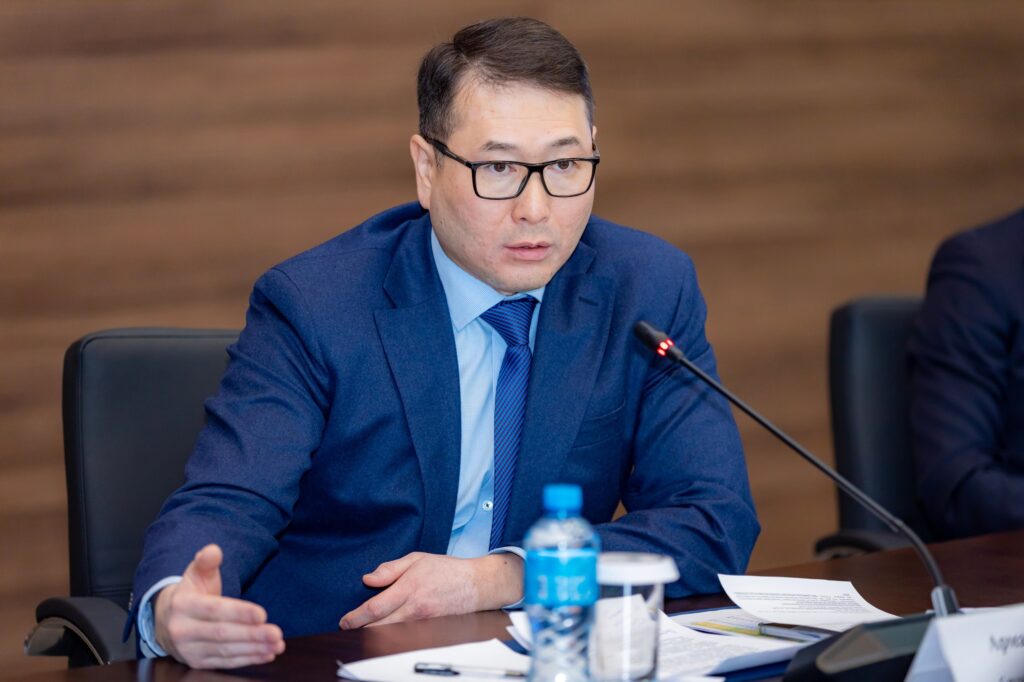
Speaking at a government meeting on August 5, Minister of Trade and Integration Arman Shakkaliev said a pilot project is currently underway to introduce a nationwide information system for tracking goods, implemented in partnership with the national telecom operator, Kazakhtelecom JSC. The goal is to ensure a transparent and accessible supply of socially important food products to the population.

“This project aggregates real-time data on the stock and volume of such goods, based on invoices across the supply chain,” Shakkaliev stated. “Using this system, we are creating an innovative agri-marketplace that will provide digital connectivity between producers, retail chains, and government agencies, eliminating intermediaries and opaque schemes.”

The ministry is also preparing to launch a domestic B2B platform to facilitate wholesale imports, primarily from China, and support small and medium-sized enterprises. Plans include the introduction of digital tools, streamlined procedures, and integration with suppliers via direct channels, including JD.com and Alibaba. Full implementation will require removing technical certification barriers with the Chinese side.

According to Shakkaliev, over 25 million fiscal receipts are generated daily in Kazakhstan. In response, the ministry will launch a dedicated module to monitor trade markups by analyzing electronic invoices and cash register receipts. “The system will enable monitoring of purchase and retail prices, identifying price anomalies, assessing markup levels by category, region, and supplier, and detecting potential shortages in a timely manner,” he explained.

Further digital initiatives include expanding Kazakhstan’s product labeling system. By the end of 2025, motor oils will be subject to digital labeling, followed by beer in February 2026, light industry goods in March, and jewelry by December. From 2027, biologically active supplements (BAS) will also be included.

Shakkaliev said these reforms are expected to boost trade volumes, reduce the shadow economy, and increase labor productivity in the retail sector.

As previously reported by The Times of Central Asia, Kazakhstan launched a domestic online marketplace, Teez, in December 2024, offering next-day delivery and opening pick-up points in 24 cities across the country.