• KGS/USD = 0.01144 0%
  • KZT/USD = 0.00210 0%
  • TJS/USD = 0.10617 1.05%
  • UZS/USD = 0.00008 0%
  • TMT/USD = 0.28490 0%
  • KGS/USD = 0.01144 0%
  • KZT/USD = 0.00210 0%
  • TJS/USD = 0.10617 1.05%
  • UZS/USD = 0.00008 0%
  • TMT/USD = 0.28490 0%
  • KGS/USD = 0.01144 0%
  • KZT/USD = 0.00210 0%
  • TJS/USD = 0.10617 1.05%
  • UZS/USD = 0.00008 0%
  • TMT/USD = 0.28490 0%
  • KGS/USD = 0.01144 0%
  • KZT/USD = 0.00210 0%
  • TJS/USD = 0.10617 1.05%
  • UZS/USD = 0.00008 0%
  • TMT/USD = 0.28490 0%
  • KGS/USD = 0.01144 0%
  • KZT/USD = 0.00210 0%
  • TJS/USD = 0.10617 1.05%
  • UZS/USD = 0.00008 0%
  • TMT/USD = 0.28490 0%
  • KGS/USD = 0.01144 0%
  • KZT/USD = 0.00210 0%
  • TJS/USD = 0.10617 1.05%
  • UZS/USD = 0.00008 0%
  • TMT/USD = 0.28490 0%
  • KGS/USD = 0.01144 0%
  • KZT/USD = 0.00210 0%
  • TJS/USD = 0.10617 1.05%
  • UZS/USD = 0.00008 0%
  • TMT/USD = 0.28490 0%
  • KGS/USD = 0.01144 0%
  • KZT/USD = 0.00210 0%
  • TJS/USD = 0.10617 1.05%
  • UZS/USD = 0.00008 0%
  • TMT/USD = 0.28490 0%

Uzbekistan Officials Intervene Over Wage Delays for Migrant Workers in Russia

Uzbek diplomats and migration officials have intervened to resolve wage disputes affecting dozens of Uzbek citizens working in Russia’s Tyumen region, according to a report by Dunyo Information Agency.

Representatives of Uzbekistan’s Consulate General in Yekaterinburg, together with officials from the Migration Agency, traveled to the city of Tobolsk, where they met with more than 100 Uzbek citizens working temporarily for local companies. The delegation organized an on-site reception, providing legal and consular assistance and clarifying issues related to passport processing and compliance with migration laws.

During the meetings, officials also warned workers about the risks of engaging with illegal or extremist groups and reminded them that joining private military companies could lead to criminal liability.

A key issue raised during the visit was delayed wage payments. Authorities found that a subcontractor had failed to pay salaries for February and March to 26 Uzbek workers. Following negotiations involving the main contractor and the employer, the companies acknowledged the debt and agreed to settle it.

As a result, approximately 2 million rubles (about $24,945) in wages have been accrued and are expected to be transferred to the workers’ bank accounts in the coming days. In addition, the employers committed to repaying outstanding wages to around 80 other Uzbek citizens who had previously left the company without receiving full payment.

Officials also inspected living and working conditions and held discussions with employers aimed at preventing similar cases in the future. According to Dunyo, Uzbekistan’s government considers the protection of its citizens abroad and ensuring fair pay for their work a priority.

Such outreach visits and rapid interventions are seen as an important tool for strengthening legal protections for Uzbek migrant workers in Russia and addressing their concerns directly on the ground.

As previously reported by The Times of Central Asia, Russia expressed its readiness to facilitate the transfer of more than 3,000 Uzbek prisoners to serve their sentences in Uzbekistan, although the process remains constrained by legal limitations.
Convicted Crocus City Hall attack Defendant Found Dead in Moscow Detention Center

A man sentenced to life imprisonment in connection with the deadly attack at the Crocus City Hall concert venue near Moscow has died in pretrial detention. Russian authorities said the death is being treated as a suicide. The development was reported by RBC, citing the Federal Penitentiary Service.

In a statement reported by RBC, officials said the incident occurred at the Matrosskaya Tishina detention center in Moscow. Medical staff attempted resuscitation, but the efforts were unsuccessful. Authorities added that an internal review has been launched, with results expected in due course.

Due to personal data protection laws, officials initially withheld the identity of the deceased. However, RBC later reported, citing a lawyer representing victims, that the individual was Yakubjoni Davlatkhon Yusufzoda, a citizen of Tajikistan who had been convicted and sentenced to life imprisonment earlier in March.

The case is linked to the high-profile Crocus City Hall attack in March 2024, which resulted in multiple casualties and drew widespread international attention. According to Russia’s Investigative Committee, Yusufzoda was accused of assisting those involved in the attack, including facilitating financial transfers before and after the incident. He was detained in late March 2024 during a law enforcement operation and later charged under terrorism-related provisions of the Russian Criminal Code.

RBC also reported that another defendant in the same case, Jabrail Aushev, had previously attempted self-harm but was prevented by detention center staff. Authorities said reports of a new incident involving Aushev on the same day were inaccurate.

Earlier in March, the Western District Military Court sentenced several individuals identified as direct perpetrators of the attack to life imprisonment, along with others described by investigators as accomplices. Both the defense and victims’ representatives have since appealed the verdict, arguing that the sentences were, respectively, too severe and too lenient.

Saryagash Bypass Road to Improve Kazakhstan–Uzbekistan Transport Links

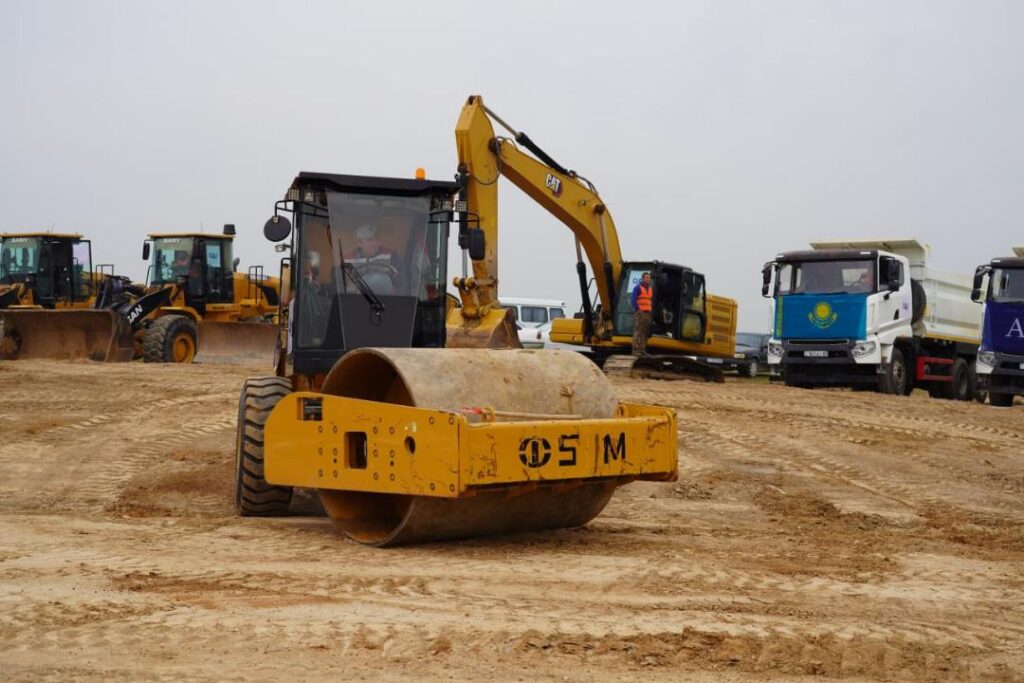
Kazakhstan has begun construction of a new highway bypassing the city of Saryagash in the Turkistan region. The project is expected to improve transport links in southern Kazakhstan and support transit along international routes.

Saryagash is located in southern Kazakhstan near the Kazakh-Uzbek border, approximately 20 km from Tashkent, the capital of Uzbekistan.

The Saryagash Bypass Road is designed to redirect transit traffic away from urban areas, reduce congestion within the city, shorten travel times, and facilitate faster passenger and cargo movement toward Uzbekistan.

The project involves the construction of a 102.6 km modern four-lane highway, aimed at supporting cross-border trade and reinforcing the Turkistan region’s role as a key transport hub on international corridors.

In September 2025, the Asian Development Bank (ADB) approved a sovereign-guaranteed loan of $400 million to KazAvtoZhol National Company for the construction of the bypass road.

“The Saryagash Bypass Road will strengthen Kazakhstan’s trade and transport links within the region and with external markets in East Asia and Western Europe, helping unlock the country’s potential as a key transit hub,” said Utsav Kumar, ADB Country Director for Kazakhstan. “The project will contribute to the economic development of the Turkistan region by improving access to larger markets, reducing congestion, creating jobs, and promoting tourism.”

The highway will improve links between Central Asia Regional Economic Cooperation (CAREC) Corridors 3 and 6, key trade routes connecting Kazakhstan with neighboring countries. The CAREC Program, supported by the Asian Development Bank, brings together regional countries and development partners to promote economic growth and sustainable development.

In addition to the bypass project, road network modernization is ongoing in the Turkistan region, according to the Ministry of Transport. Five road repair projects with a combined length of 99.2 km are currently underway, including the reconstruction of interchanges and bridges on key routes connecting Kazakhstan with neighboring states.

These initiatives are expected to increase transit capacity and improve cross-border transport flows.

Kyrgyzstan Faces Elite Realignment as Tashiyev Network Comes Under Pressure

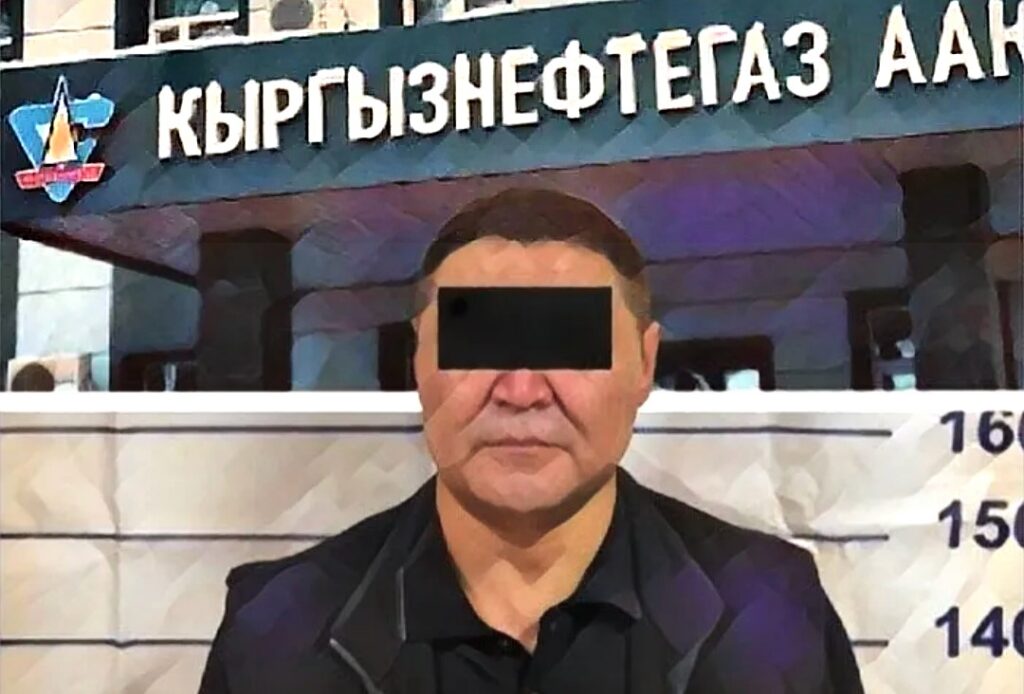
In the last week, political tensions in Kyrgyzstan have risen following the arrest of Shairbek Tashiyev, the brother of Kamchybek Tashiyev, the former head of the State Committee for National Security (GKNB). Shairbek, a former member of the Jogorku Kenesh, Kyrgyzstan’s parliament, was detained on April 1 following questioning at the Ministry of Internal Affairs.

The case unfolds against the backdrop of a widening rift between President Sadyr Japarov and his once long-time ally Tashiyev, who played a key role in helping Japarov consolidate power following the political upheaval of October 2020. After coming to power, President Japarov and Tashiyev built one of the most consolidated political tandems in Kyrgyzstan’s post-Soviet history, concentrating authority across the presidency, parliament, and security structures.

In February, Tashiyev was removed from his position, followed by what observers described as a broader sidelining of his allies within security structures and parliament. This fueled speculation about a breakdown in the political partnership that had underpinned relative stability in recent years.

Shairbek Tashiyev is now a central suspect in a corruption investigation involving the state-owned company Kyrgyzneftegaz. The Ministry of Internal Affairs announced the criminal case on March 17, following materials released by the State Tax Service alleging financial misconduct within the company.

According to investigators, former executives of Kyrgyzneftegaz and affiliated private entities were detained shortly after the case was opened. A criminal case was initiated under Article 336 of the Criminal Code, alleging “Corruption.”

Among those detained was former National Bank head Melis Turgunbayev, whose pretrial detention was later changed to house arrest by a court in Bishkek.

It later emerged that another of those initially detained was Baigazy Matisakov, identified as a nephew of Kamchybek Tashiyev. He was subsequently released after reportedly reaching an agreement with investigators.

On April 2, a court ordered Shairbek Tashiyev to remain in custody until May 16, 2026. His lawyer stated that he denies the charges and considers them unfounded.

The investigation, led by the State Tax Service and the Ministry of Internal Affairs, covers Kyrgyzneftegaz’s operations from 2021 to 2025. Authorities allege total financial violations amounting to 4.1 billion soms (approximately $46.5 million), including lost profits and unpaid taxes.

Investigators have outlined three main alleged schemes that they are continuing to investigate. The first involved intermediary companies allegedly linked to individuals close to the Tashiyev family, which resold oil to the Kyrgyz Petroleum Company refinery. The second involved the write-off of raw materials, with around 20,000 tons of oil reportedly classified as “technological losses” beyond established norms. The third concerned preferential sales, with diesel and fuel oil allegedly sold at below-market prices to favored companies.

The case is being watched closely in Kyrgyzstan, where elite reshuffles have historically signaled broader political realignments rather than isolated legal actions.

It remains unclear whether the investigation will expand further and implicate additional individuals connected to Tashiyev or what the potential impact could be on the broader political environment within the country. 

Central Asian Startups See Investment Surge

The fifth Central Eurasian Venture Forum (CEVF 2026) opened in Uzbekistan for the first time, drawing around 800 investors, startups, and technology companies from Central Asia, Europe, the U.S., Southeast Asia, and the Middle East and North Africa.

Minister of Digital Technologies Sherzod Shermatov attended the opening ceremony.

The event was organized by MOST Holding and IT Park Uzbekistan with government support. Partners included Astana Hub, the European Bank for Reconstruction and Development, the International Finance Corporation, Visa, and others.

During the forum, the report Startups and Venture Capital in Central Asia 2026, prepared by RISE Research, was presented. According to the study, total venture capital investment in the region reached $320 million in 2025. The two largest deals, $130 million for Higgsfield and $65.5 million for Uzum, accounted for 61% of the total.

Excluding these deals, the market reached $124.5 million, marking a 31% increase compared to 2024 and indicating steady organic growth.

At the forum, the analytical agency RISE Research presented a study of the Central Asian venture capital market for 2025. According to the study, the volume of venture capital investments in Kazakhstan nearly tripled, reaching $209 million, with artificial intelligence being the main driver, accounting for approximately half of the total investment. 

In Uzbekistan, funding reached $33.8 million, an increase of more than eleven times compared to 2022. Including major deals, the Uzbek market is estimated at $99.3 million, with 85% of investment coming from domestic investors.

The forum also hosted the CEVF Awards ceremony, recognizing key players in the regional venture ecosystem.

In addition, the European Bank for Reconstruction and Development announced 13 finalists for its Star Venture program for Central Asia, aimed at supporting high-tech startups.

During the forum, cooperation agreements were signed with international partners, including companies from South Korea and the Middle East, to support the development of the startup ecosystem and attract investment. The second cohort of the Investment Readiness Accelerator (IRA) Tashkent program, focused on early-stage startups, was also launched.

Kazakhstan Plans Diesel Fuel Production from Coal

Two projects to produce diesel fuel from coal are underway in Kazakhstan, Energy Minister Yerlan Akkenzhenov said at a government meeting.

According to the minister, the projects, each with a capacity of 100,000 tons of diesel fuel per year, are being implemented in the Pavlodar and Karaganda regions. Their costs are estimated at $63 million and $65 million, respectively.

As part of efforts to develop the coal chemical industry, a $132 million project is also underway in the Karaganda region to produce metallurgical coke, with a capacity of 1 million tons per year.

The minister said the three projects will create about 3,000 jobs. Currently, around 32,000 people are employed in the coal industry. Three additional projects are in the planning stage. These include a coke-chemical production facility in the Karaganda region with coal tar processing capacity of up to 200,000 tons per year, benzene production of up to 35,000 tons, and coke oven gas purification.

Authorities are also considering the construction of a plant in the Abai region to produce ammonia and urea from coal (300,000 tons per year of each product), as well as a project to produce up to 2 billion cubic meters of gas from coal.

The minister noted that the development of the coal chemical industry faces several challenges, including high capital intensity, technological complexity, and the need to establish an appropriate regulatory framework.

He added that developing this sector would reduce dependence on imported petroleum products and increase exports of higher value-added products.

The coal industry remains strategically important to the country’s economy. In 2025, coal production reached 115.9 million tons, an increase of 7% compared to the previous year. Domestic consumption totaled 85.9 million tons, while exports stood at 30 million tons.

In 2026, coal production is projected to reach 128.9 million tons. Investment in the sector amounted to approximately $655 million in 2025 and is expected to rise to $1.1 billion in 2026.

The Times of Central Asia previously reported that Kazakhstan’s coal reserves could meet the country’s energy needs for 200-300 years. The authorities have also approved a coal-fired power generation development program that involves the construction of eight new power plants and the modernization of 11 existing ones.