• KGS/USD = 0.01144 0%
  • KZT/USD = 0.00196 -0%
  • TJS/USD = 0.10899 0%
  • UZS/USD = 0.00008 0%
  • TMT/USD = 0.28490 0%
  • KGS/USD = 0.01144 0%
  • KZT/USD = 0.00196 -0%
  • TJS/USD = 0.10899 0%
  • UZS/USD = 0.00008 0%
  • TMT/USD = 0.28490 0%
  • KGS/USD = 0.01144 0%
  • KZT/USD = 0.00196 -0%
  • TJS/USD = 0.10899 0%
  • UZS/USD = 0.00008 0%
  • TMT/USD = 0.28490 0%
  • KGS/USD = 0.01144 0%
  • KZT/USD = 0.00196 -0%
  • TJS/USD = 0.10899 0%
  • UZS/USD = 0.00008 0%
  • TMT/USD = 0.28490 0%
  • KGS/USD = 0.01144 0%
  • KZT/USD = 0.00196 -0%
  • TJS/USD = 0.10899 0%
  • UZS/USD = 0.00008 0%
  • TMT/USD = 0.28490 0%
  • KGS/USD = 0.01144 0%
  • KZT/USD = 0.00196 -0%
  • TJS/USD = 0.10899 0%
  • UZS/USD = 0.00008 0%
  • TMT/USD = 0.28490 0%
  • KGS/USD = 0.01144 0%
  • KZT/USD = 0.00196 -0%
  • TJS/USD = 0.10899 0%
  • UZS/USD = 0.00008 0%
  • TMT/USD = 0.28490 0%
  • KGS/USD = 0.01144 0%
  • KZT/USD = 0.00196 -0%
  • TJS/USD = 0.10899 0%
  • UZS/USD = 0.00008 0%
  • TMT/USD = 0.28490 0%
08 December 2025

Kazakhstan’s Nuclear Fuel Plant Achieves Full Production Capacity

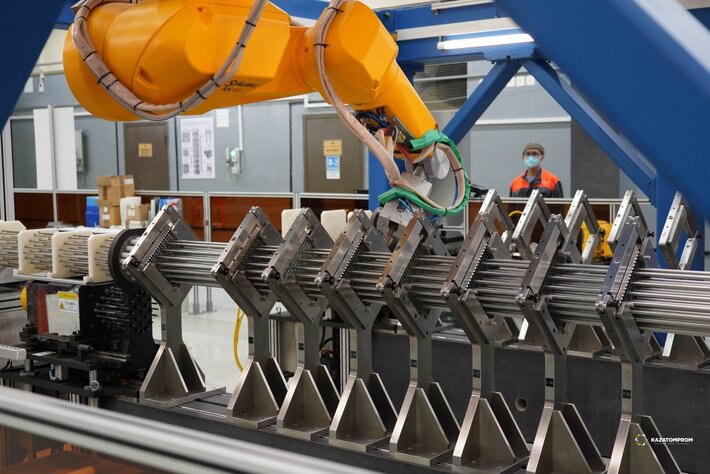
Kazakhstan’s national uranium company, Kazatomprom, announced on January 6 that its Kazakh-Chinese joint venture, Ulba-FA LLP, achieved its design capacity of producing 200 tons of low-enriched uranium in the form of fuel assemblies by the end of 2024.

Ulba-FA is the only fuel production facility for nuclear power plants in Central Asia. The joint venture is a collaboration between Kazatomprom, represented by its subsidiary Ulba Metallurgical Plant, and China General Nuclear Power Corporation.

Since commencing operations in November 2021, Ulba-FA has gradually ramped up production, reaching its design capacity within three years. The 200 tons of nuclear fuel produced in 2024 are sufficient to reload six nuclear reactors.

Supplying China’s Nuclear Power Plants

All fuel assemblies produced at the Ulba-FA plant are currently supplied to nuclear power plants in China, underscoring the strategic partnership between the two nations in the nuclear energy sector.

China and Russia remain the largest importers of Kazakh uranium. Between January and October 2023, Kazakhstan exported $2.46 billion worth of uranium, with $922.7 million directed to China and $1.2 billion to Russia.

Kazatomprom solidified its position as the world’s largest uranium producer in 2023, accounting for approximately 20% of global primary uranium production.

Kazakhstan’s New Harvest Grain Exports Surge by 54%

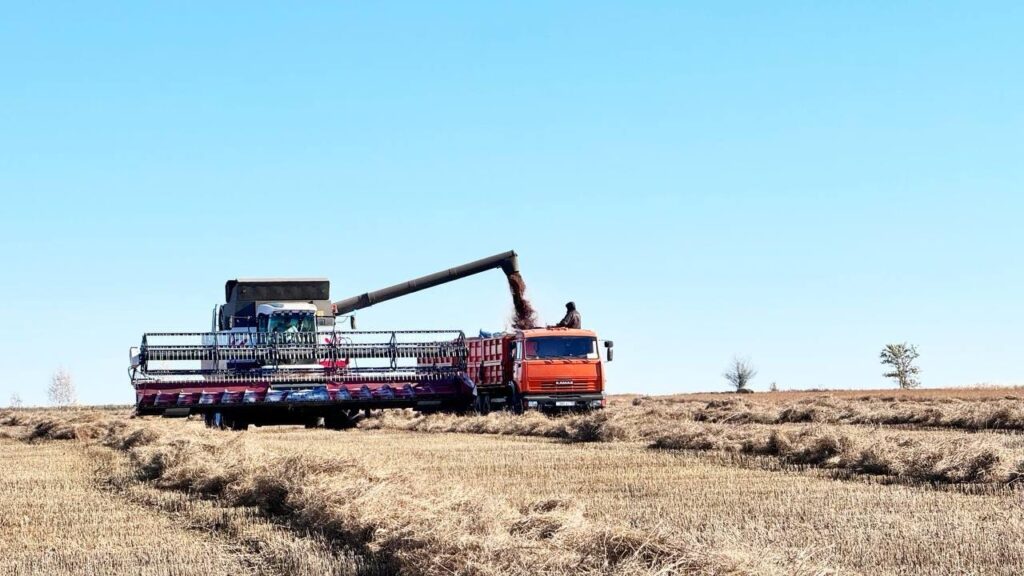
Between September and December 25, 2024, Kazakhstan exported 3.7 million tons of grain from its new harvest – a dramatic 54% increase compared to the same period in 2023, when 2.4 million tons were exported. The announcement was made by Kazakhstan’s Ministry of Agriculture, citing data from Kazakhstan Temir Zholy (KTZ), the national railways company responsible for grain transportation.

Significant increases were reported across the traditional markets for Kazakh grain:

  • Uzbekistan: Exports grew by 44%, rising from 994,000 tons to 1.427 million tons.
  • Tajikistan: Exports increased by 53%, from 385,000 tons to 589,000 tons.
  • Afghanistan: Exports surged by 52%, from 120,000 tons to 182,000 tons.
  • Kyrgyzstan: Exports rose by 22%, from 59,000 tons to 72,000 tons.

Iran has emerged as a highly promising new market. Exports to Iran (via the Caspian port of Aktau) soared by a staggering 30.2 times, from just 14,000 tons to 435,000 tons.

Kazakhstan harvested over 26.5 million tons of grain from 16.7 million hectares in 2024, as previously reported by The Times of Central Asia. The country plans to export approximately 12 million tons of the new harvest to both traditional markets – Central Asia and Afghanistan – and new ones, including Iran, Pakistan, Indonesia, Brazil, and Malaysia.

China is also seen as a key growth market. In 2023, Kazakhstan exported 1.43 million tons of cereals to China – a 5.5-fold increase from the previous year.

Kazakhstan’s grain export surge underscores the country’s growing role as a major supplier to both regional and global markets, bolstered by strong demand and strategic diversification efforts.

Kazakhstan to Build Religious Memorial on Site of Stalin-Era Executions

Kazakh President Kassym-Jomart Tokayev has approved the construction of a mosque and an Orthodox chapel at the historic Lisya Balka site in Shymkent, a location associated with mass executions during the years of political repression.

Metropolitan Alexander, head of the Orthodox Church of Kazakhstan, announced at a press conference that the initiative was proposed by Patriarch Kirill of Moscow and All Russia. He highlighted that Lisya Balka is the final resting place for victims of repression, including representatives of Kazakhstan’s two major religious communities – Islam and Orthodoxy.

“The initiative of His Holiness was considered and approved by President Kassym-Jomart Tokayev,” Metropolitan Alexander stated, adding that the chapel project has already received official approval.

Lisya Balka was a site of mass shootings during 1937–1938, one of the darkest periods of Stalinist repression. Victims included individuals from various religious backgrounds, notably around 60 exiled Orthodox priests and ministers of the Russian Orthodox Church. After the Soviet Union’s collapse, the Kasiret (“Sorrow”) memorial complex was established at the site to honor those who perished.

The Orthodox Church canonized several of those executed at Lisya Balka, referring to them as “innocent sufferers for Orthodoxy.” However, historians emphasize that the victims included adherents of diverse religions, such as Islam, Catholicism, Judaism, and Buddhism.

The construction of the mosque and chapel seeks to preserve the memory of these tragic events while fostering interfaith harmony in Kazakhstan. By commemorating the innocent victims of various faiths, the project aligns with the country’s broader efforts to promote unity among its multi-religious population.

Tajikistan Files New Charges in Konibodom ‘Night Killings’ Case

Three suspects in Tajikistan’s Konibodom ‘night killings’ case now face additional charges of hooliganism and rape. Solekhdjon Khudojberdiyev, Ahadjon Tukhtaev, and Manuchehr Odilov, initially charged with murder. Authorities have offered little public information on the case. A brief statement from the Prosecutor General’s Office acknowledged the new indictments but refrained from providing further details, leaving key questions unanswered.


Suspect Profiles

  • Solekhdjon Khudojberdiyev (b. 1998): Hailing from the village of Gulbog, Khudojberdiyev had a prior conviction for rape. A sports enthusiast, he was known locally for his boxing, weightlifting, and power juggling performances.
  • Ahadjon Tukhtaev (b. 1997): A butcher by trade from the same village as Khudojberdiyev, Tukhtaev also had a criminal record for sex crimes.
  • Manuchehr Odilov (b. 1996): From Khamroboev Jamoat, Odilov shared a similar criminal background. Reports suggest he became acquainted with Khudojberdiyev and Tukhtaev while in prison.
  • Bakhtiyor Ravshanov (b. 1988): A shoemaker and builder from the village of Sanjidzor, Ravshanov is Khudojberdiyev’s cousin. He faces murder charges for one of the killings in May.

Case Background

The Konibodom region in Sughd Oblast has endured a series of brutal killings. Between late March and May 2024, 13 individuals – ranging from children to the elderly – were murdered in their homes. The victims, ethnic Tajiks and Kyrgyz, lived near the border with Kyrgyzstan. These crimes, committed in different parts of the city, terrorized residents before the suspects were apprehended and the killings temporarily ceased.

However, the violence resurfaced in December. On December 9, six people were killed, followed by four more murders on December 16. The crimes prompted swift action, and on December 22, the Prosecutor General’s Office announced the detention of four suspects.

The investigation remains under the close scrutiny of Tajikistan’s top leadership. The Prosecutor General is expected to provide a comprehensive update during the final press conference, shedding light on the motives and details of these tragic events.


This story ws last updated on 8 January, 2025

Turanian Tigers From the Netherlands Survive First Winter in Kazakhstan

Two Turanian tigers brought from the Netherlands last year have successfully completed their first winter in Kazakhstan’s Ile-Balkhash State Nature Reserve.

The tigers are housed in spacious enclosures, each exceeding 0.5 hectares. Their adaptation is progressing well, with the predators actively hunting small game, including birds such as magpies and crows that venture into their feeding areas.

Historically, Turanian tigers thrived in the reed beds and forests at the mouth of the Ili River near Lake Balkhash. However, the species was last sighted in the region in 1948, and subsequently declared extinct.

Revival Program for Turanian Tigers

Kazakhstan is undertaking an ambitious program to restore the Turanian tiger population. In addition to the two Amur tigers brought to the Ile-Balkhash Reserve for captive breeding, three or four more wild tigers are expected to arrive from Russia in 2025.

Efforts to establish a sustainable ecosystem for these predators have been ongoing since 2018. To create a natural prey base, the reserve has introduced 205 riparian deer and over 100 kulans. Additionally, populations of roe deer and wild boars have been bolstered to support the tigers’ dietary needs.

This marks a significant step in Kazakhstan’s conservation journey, reviving an iconic species that once roamed its landscapes.

Kazakhstan to Slash Imports with $2.6 Billion Domestic Output Plan

Kazakhstan’s Ministry of Industry and Construction (MIC) has announced plans to reduce the country’s reliance on foreign imports by replacing goods worth KZT1.4 trillion ($2.6 billion) with domestically produced alternatives by 2025. This ambitious goal is intended to be achieved through the launch of new production facilities in the automotive and household appliances sectors.

According to the MIC’s Industry Committee, 190 investment projects are slated for implementation in 2025, creating over 20,000 permanent jobs for Kazakhstani workers. Once fully operational, these projects are expected to generate an output of KZT2.2 trillion ($4.1 billion), with KZT0.8 trillion ($1.5 billion) designated for export. The import substitution effort is forecasted to account for KZT1.4 trillion ($2.6 billion) of this total output.

“This initiative will bolster domestic production, reduce dependence on imports, and enhance the competitiveness of Kazakhstan’s national economy,” stated the committee.

Trade Trends and Key Import Partners

Kazakhstan’s import volume for January – October 2024 was $48.4 billion, as reported by the Bureau of National Statistics. During this period, imports declined by 3.3% compared to the same timeframe in 2023. The country’s key import partners include:

  • Russia: 29.7% of total imports
  • China: 25.5%
  • Germany: 4.9%
  • USA: 3.9%
  • France: 3.2%
  • Republic of Korea: 3.1%

The largest import categories in 2024 were cars (4.1%), aircraft (3%), medicines (2.9%), cell phones (2.7%), and motor vehicle bodies (2.1%).

Significant Projects on the Horizon

To address these import trends, major projects in the automotive, household appliances, and metallurgy sectors are planned for 2025. These include:

  • Almaty: Construction of a multi-brand plant by Astana Motors to produce Chinese passenger cars. The facility will have an annual production capacity of 90,000 vehicles.
  • Kostanay Region: Establishment of the KIA Qazaqstan plant, which will produce 70,000 vehicles annually of the Korean brand.

Combined, these automotive projects will create 3,700 jobs.

As previously reported by The Times of Central Asia, Kazakhstan is expected to record high sales of passenger cars by the end of 2024, with approximately 70% of vehicles purchased being domestically produced.

Regional Investment Distribution

The Turkestan region and Almaty City lead in the number of new investment projects, with 15 and 14 initiatives, respectively. The Kostanay and Karaganda regions also stand out, particularly Karaganda, which is set to receive KZT256 billion ($486 million) for ferrous and non-ferrous metallurgy projects.

Overall, Kazakhstan’s manufacturing sector is projected to attract KZT1.2 trillion (nearly $2.3 billion) in investments in 2025, further solidifying the country’s industrial base and economic resilience.