• KGS/USD = 0.01144 0%
  • KZT/USD = 0.00214 0%
  • TJS/USD = 0.10508 0.48%
  • UZS/USD = 0.00008 0%
  • TMT/USD = 0.28571 0%
  • KGS/USD = 0.01144 0%
  • KZT/USD = 0.00214 0%
  • TJS/USD = 0.10508 0.48%
  • UZS/USD = 0.00008 0%
  • TMT/USD = 0.28571 0%
  • KGS/USD = 0.01144 0%
  • KZT/USD = 0.00214 0%
  • TJS/USD = 0.10508 0.48%
  • UZS/USD = 0.00008 0%
  • TMT/USD = 0.28571 0%
  • KGS/USD = 0.01144 0%
  • KZT/USD = 0.00214 0%
  • TJS/USD = 0.10508 0.48%
  • UZS/USD = 0.00008 0%
  • TMT/USD = 0.28571 0%
  • KGS/USD = 0.01144 0%
  • KZT/USD = 0.00214 0%
  • TJS/USD = 0.10508 0.48%
  • UZS/USD = 0.00008 0%
  • TMT/USD = 0.28571 0%
  • KGS/USD = 0.01144 0%
  • KZT/USD = 0.00214 0%
  • TJS/USD = 0.10508 0.48%
  • UZS/USD = 0.00008 0%
  • TMT/USD = 0.28571 0%
  • KGS/USD = 0.01144 0%
  • KZT/USD = 0.00214 0%
  • TJS/USD = 0.10508 0.48%
  • UZS/USD = 0.00008 0%
  • TMT/USD = 0.28571 0%
  • KGS/USD = 0.01144 0%
  • KZT/USD = 0.00214 0%
  • TJS/USD = 0.10508 0.48%
  • UZS/USD = 0.00008 0%
  • TMT/USD = 0.28571 0%

Belgium Transfers $108 Million in Seized Assets to State Treasury Following Uzbek Corruption Probe

On March 28, 2025, the Brussels Public Prosecutor instructed Belgium’s Central Office for Seizure and Confiscation (COSC) to transfer $108 million in confiscated assets to the Belgian state treasury. The funds, now officially the property of the Belgian government, were seized in connection with an international corruption investigation linked to Uzbekistan.

The case stems from a years-long probe into illicit payments and bribes tied to telecom contracts in Uzbekistan. The funds were allegedly laundered and routed through various jurisdictions before being frozen in Belgium at the request of Uzbek authorities. The investigation, based on international legal cooperation and the UN Convention Against Corruption, initially led to the freezing of approximately $200 million.

A Dutch-language court in Brussels later ruled that the full amount, including accrued interest, should be permanently confiscated. The court also ordered the funds to be split between Belgium and Uzbekistan, applying a restitution model similar to those used among European Union member states. As a result, another $108 million is expected to be transferred to Uzbekistan in the near future.

In 2022, Uzbekistan’s Deputy Minister of Justice Muzraf Ikramov publicly stated that assets worth $240 million, linked to a criminal group associated with Gulnara Karimova, had been located in Belgium. He noted that cooperation between Uzbek and Belgian law enforcement agencies had been established to facilitate their return.

When contacted by Kun.uz for comment, Uzbekistan’s Ministry of Justice said that details of the investigation remain classified. “Since the investigation process in Belgium is not over, and due to the confidentiality rules, it is not possible to disclose much information about these assets,” a ministry official said.

Polpharma Group to Boost Pharmaceutical Production and Exports in Kazakhstan

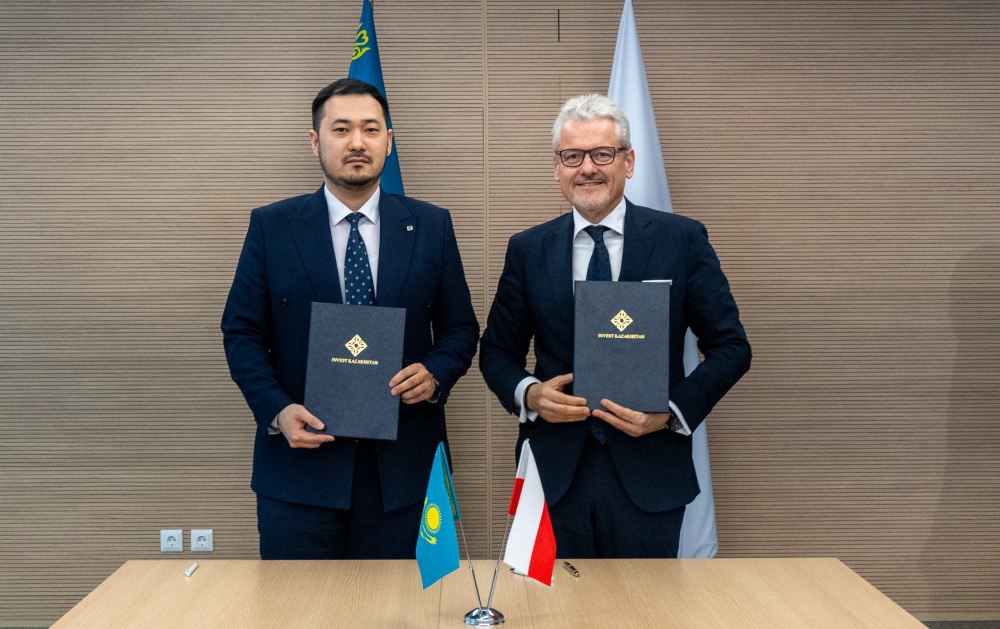
Kazakhstan’s national investment promotion agency, Kazakh Invest, has signed a Memorandum of Cooperation with Polpharma Group, a leading pharmaceutical manufacturer in Central and Eastern Europe, the Caucasus, and Central Asia. The agreement marks the launch of a €55 million investment project in Kazakhstan by SANTO, a member of the Polpharma Group.

The memorandum was signed by Azamat Kozhanov, Deputy Chairman of Kazakh Invest’s Management Board, and Markus Sieger, CEO of Polpharma Group.

Over the next decade, the project is expected to create approximately 300 jobs and significantly increase domestic pharmaceutical production, particularly for medications targeting socially significant diseases such as cancer, diabetes, and cardiovascular conditions.

The initiative includes the introduction of new manufacturing lines, expanded R&D investment, and the development of training programs in line with international standards.

This strategic partnership supports Kazakhstan’s national goal of increasing local pharmaceutical production to 50% of domestic demand. It also aims to position the country as a regional hub for pharmaceutical manufacturing and exports.

“We are aware that President Kassym-Jomart Tokayev has set a clear objective to boost local pharmaceutical output to 50%, and we fully support this vision,” said Markus Sieger. “The COVID-19 pandemic revealed the vital importance of resilient, domestic supply chains. Our goal is not only to strengthen production in Kazakhstan but to transform the country into an export hub for large regional markets.”

SANTO currently holds six Good Manufacturing Practice (GMP) certificates and has successfully passed inspections by the European Union. The company is now anticipating certification under EU GMP standards, which would provide access to EU markets for both the company and Kazakhstan’s broader pharmaceutical sector.

Polpharma Group continues to expand its footprint in Central Asia. In 2024, 12% of the company’s global sales came from the region, a figure that is expected to grow further.

The development of a pharmaceutical hub in Kazakhstan will enhance the country’s position in both domestic and international markets. These new investments, along with the expected GMP EU certification, are set to strengthen Kazakhstan’s global pharmaceutical competitiveness, reduce reliance on imports, and improve national pharmaceutical security.

U.S. Company John Deere Launches Agricultural Machinery Production in Kazakhstan

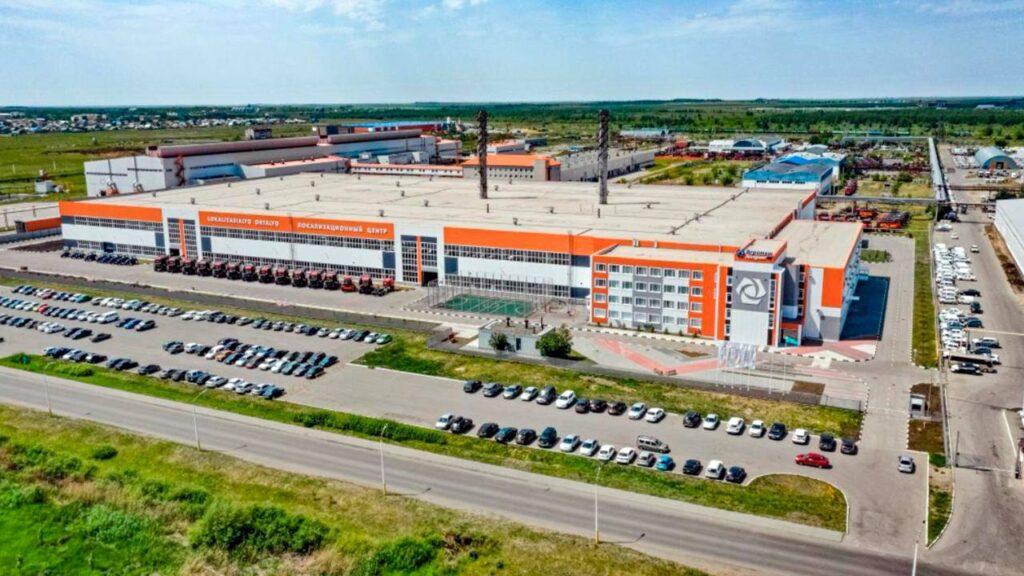
American agricultural machinery giant John Deere has officially launched production in Kostanay, Kazakhstan, marking a milestone in the country’s strategy to localize industrial output and reduce reliance on imports.

The new manufacturing line is based at the Agromash plant’s localization center and reflects the Kazakh government’s broader policy to support domestic manufacturing and develop the machine-building sector.

A key driver behind this initiative was the government’s recent decision to end subsidies for imported tractors and combines, creating momentum for localized production. The agreement with John Deere, widely recognized as a global leader in agricultural equipment, emerged as a flagship example of this new direction.

By partnering with Agromash, Kazakhstan’s largest machinery manufacturer, the venture will produce self-propelled, trailed, and mounted equipment adapted to local agricultural conditions.

Local production is expected to help farmers modernize their equipment more affordably. Through a government-backed preferential leasing program with an annual rate of just 5%, supported by 120 billion tenge in allocated funds, over 3,200 farmers will be able to purchase new domestically produced machinery this year.

“Kazakhstan’s agricultural producers now have access to machinery on favorable terms. This not only simplifies modernization efforts but also boosts the development of the agricultural sector,” the government noted.

Agromash President Dinara Shukizhanova credited the country’s economic reforms for making the collaboration with John Deere possible. The initiative is expected to generate jobs, introduce advanced technologies, and prioritize the training of a new generation of engineers and technical specialists.

John Deere’s official representative in Kazakhstan, Eurasia Group, will handle sales, service, and implementation of digital agricultural solutions. Over the next five years, three modern service centers will be established across the country to support digitalization in agriculture. These hubs will offer technical support and training for agronomists, mechanics, engineers, and IT professionals, reinforcing the efficient use of modern equipment.

In addition to John Deere, the Agromash plant currently produces agricultural machinery under the ESSIL, LOVOL, and DEUTZ-FAHR brands. With an annual production capacity of up to 5,000 units, Agromash supplies machinery nationwide, supported by a regional network that spans major agricultural areas from Almaty to Ust-Kamenogorsk.

Deere & Company, the parent corporation behind the John Deere brand, is a U.S.-based multinational manufacturer of agricultural, construction, and forestry equipment, as well as diesel engines and heavy-duty transmissions.

The localization of John Deere production not only reinforces Kostanay’s position as Kazakhstan’s leading hub for agricultural machinery but also represents a strategic move toward technological sovereignty, innovation, and a strengthened domestic agro-industrial sector.

Unvaccinated Children Barred from First Grade in Kyrgyzstan

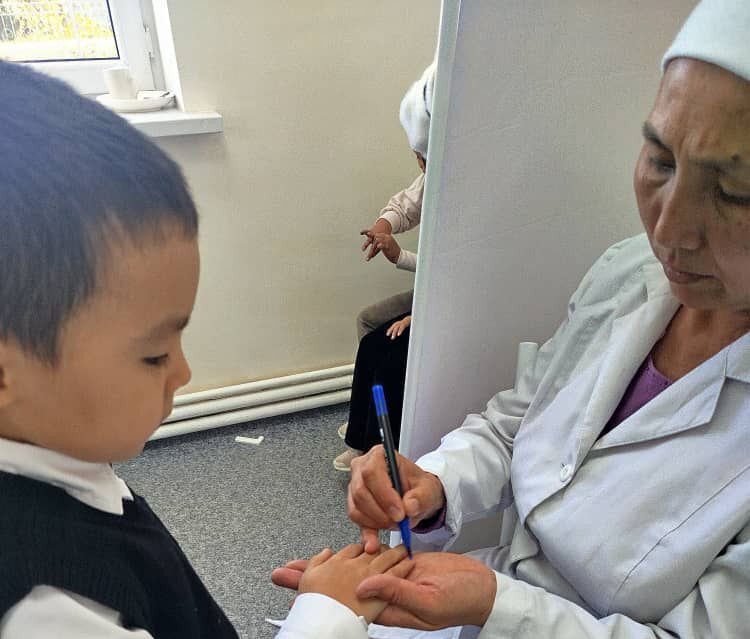
Kyrgyzstan’s Ministry of Education has announced that children who are not vaccinated will not be admitted to first grade, amid a worsening measles outbreak in the country.

Deputy Education Minister Lira Samykbayeva stated during a live national radio broadcast that the process of registering children for school has been significantly simplified. Parents no longer need to submit numerous documents such as passports, marriage or birth certificates, and proof of family composition.

“This year, the Ministry of Education integrated its database with other government agencies, so there is no longer a need to collect certificates manually,” Samykbayeva explained.

However, she emphasized that two medical certificates will remain mandatory: one confirming a general health examination, and another verifying that the child has received preventive vaccinations, including the measles vaccine.

“The only thing that must be provided to the school is two medical certificates,” she said. “Including vaccination against measles.”

A government decree enforcing the new requirement was adopted just a day earlier. In the future, the Ministries of Education and Health plan to fully integrate their systems, allowing medical records to be accessed automatically by schools.

The stricter policy comes as Kyrgyzstan battles a growing measles outbreak. Since the beginning of the year, over 4,000 children have contracted the disease, and eight people have died. According to health officials, 95 percent of those infected were unvaccinated.

Speaking to The Times of Central Asia, Gulbara Ishenapysova, Director of the Republican Center for Immunoprophylaxis, said the Ministry of Health is stepping up vaccination efforts.

“By decision of the Kyrgyz Cabinet of Ministers, the ministry has revised the national vaccination calendar,” she noted.

In an effort to improve public trust, Kyrgyz health authorities have also engaged religious leaders. Clergy across the country are being encouraged to speak with parents about the importance of vaccinating their children.

Future of Radio Free Europe Uncertain as U.S. Agency Weighs Support

The agreement between Radio Free Europe/Radio Liberty (RFE/RL) and the U.S. Agency for Global Media (USAGM) may be renewed, following recent developments that could secure the broadcaster’s future.

On March 26, USAGM officials indicated that the agency would continue disbursing funds allocated by Congress for fiscal year 2025. This follows a ruling by Judge Royce Lamberth of the U.S. District Court for the District of Columbia, who granted RFE/RL’s request for a temporary restraining order against the termination of its federal grant.

At stake is $77 million in funding designated for RFE/RL, which operates under a grant to a nonprofit organization. The court order was issued to prevent the broadcaster’s potential shutdown, which Judge Lamberth described as unlawful under current terms.

“This is an encouraging sign for the media corporation’s operations,” said RFE/RL President Steven Capus. “RFE/RL’s operations will be able to continue as Congress intended. We await official confirmation from USAGM that grant funding will be promptly resumed.”

In parallel, ten European Union countries issued a joint statement backing a Czech-led initiative to support RFE/RL. The statement expressed readiness to cover the broadcaster’s operating costs should U.S. funding not be reinstated.

Despite the apparent reprieve, USAGM abruptly cut off satellite broadcasts of Radio Liberty on April 3. The move affected Russian-language programming of the “Present Time” TV channel, which targets audiences in Russia, Ukraine, Central Asia, and Eastern Europe.

The Times of Central Asia spoke with Asem Tokayeva, a veteran journalist formerly based in RFE/RL’s Central Asia bureau. In the interview, Tokayeva shed light on internal challenges within the organization and the broader implications for freedom of the press in the region.

From Malnutrition to Water Scarcity: UN Identifies Key Threats to Food Security in Tajikistan

A new United Nations report titled Food Security and Nutrition Outlook for Europe and Central Asia 2024 has outlined the major challenges facing Tajikistan in nutrition, public health, and sustainable agriculture. The report identifies chronic malnutrition, rising childhood obesity, and vulnerability to climate change as the principal threats to the country’s food system.

According to the findings, Tajikistan continues to face a dual burden: while undernutrition remains a persistent issue, obesity is on the rise, particularly among children.

In 2022, nearly one in seven Tajik children under five (13.1%) suffered from stunting due to chronic malnutrition, while 9.9% were affected by wasting, well above the global target of 3%. At the same time, childhood obesity has seen a dramatic increase, with the proportion of overweight children rising from 4.6% in 2000 to 21% in 2022.

Efforts to address these issues are further complicated by Tajikistan’s climate vulnerability and water management challenges. Agriculture, a cornerstone of the national economy and food supply, is particularly susceptible to shifting weather patterns. Although the government is implementing reforms, including the adoption of a new Water Code in 2020 and a watershed management system planned for completion by 2026, water scarcity remains a critical concern. Water user associations are playing a growing role in this transformation.

The report also highlights gender disparities in the agricultural workforce. Women represent a significant share of those employed in agriculture, yet many work informally, without pay or legal protections. The UN urges action to ensure women have equitable access to land, resources, and decision-making processes.

Beyond Tajikistan, the wider Europe and Central Asia region is not immune to food insecurity. As of 2023, 107 million people, 11.5% of the population, faced moderate or severe food insecurity, with 24.5 million in acute need. In Central Asia, 2.3 million people, around 3% of the region’s population, do not meet minimum daily energy requirements. The crisis is exacerbated by economic instability, climate change, and geopolitical tensions, including the war in Ukraine.

While child malnutrition and anemia in women have declined across the region, adult obesity is increasing and now exceeds 20%. Meanwhile, 7.1% of children under five are overweight, and nearly 64.3 million people (6.9%) cannot afford a nutritious diet, an enduring challenge despite comparatively better regional indicators than global averages.

The UN emphasizes the vital role of water in securing the region’s food future. Rising demand for meat and dairy products is straining already scarce water resources. Outdated infrastructure, pollution, data gaps, and insufficient regional cooperation are all significant barriers to water security.

To address these challenges, the report calls for investment in water-saving technologies, reuse strategies, and reduced agricultural water footprints. Achieving long-term sustainability, the UN argues, requires an integrated approach, one that links nutrition, climate adaptation, gender equality, and modern water governance.

The report was developed with the input of seven UN agencies, including FAO, UNICEF, UNDP, WHO, and WMO. International partners have expressed readiness to support Tajikistan in identifying and implementing durable, systemic solutions.