• KGS/USD = 0.01144 0%
  • KZT/USD = 0.00197 -0%
  • TJS/USD = 0.10904 0%
  • UZS/USD = 0.00008 0%
  • TMT/USD = 0.28490 0%
  • KGS/USD = 0.01144 0%
  • KZT/USD = 0.00197 -0%
  • TJS/USD = 0.10904 0%
  • UZS/USD = 0.00008 0%
  • TMT/USD = 0.28490 0%
  • KGS/USD = 0.01144 0%
  • KZT/USD = 0.00197 -0%
  • TJS/USD = 0.10904 0%
  • UZS/USD = 0.00008 0%
  • TMT/USD = 0.28490 0%
  • KGS/USD = 0.01144 0%
  • KZT/USD = 0.00197 -0%
  • TJS/USD = 0.10904 0%
  • UZS/USD = 0.00008 0%
  • TMT/USD = 0.28490 0%
  • KGS/USD = 0.01144 0%
  • KZT/USD = 0.00197 -0%
  • TJS/USD = 0.10904 0%
  • UZS/USD = 0.00008 0%
  • TMT/USD = 0.28490 0%
  • KGS/USD = 0.01144 0%
  • KZT/USD = 0.00197 -0%
  • TJS/USD = 0.10904 0%
  • UZS/USD = 0.00008 0%
  • TMT/USD = 0.28490 0%
  • KGS/USD = 0.01144 0%
  • KZT/USD = 0.00197 -0%
  • TJS/USD = 0.10904 0%
  • UZS/USD = 0.00008 0%
  • TMT/USD = 0.28490 0%
  • KGS/USD = 0.01144 0%
  • KZT/USD = 0.00197 -0%
  • TJS/USD = 0.10904 0%
  • UZS/USD = 0.00008 0%
  • TMT/USD = 0.28490 0%
08 December 2025

Rosatom Considering Constructing Nuclear Power Plant in Northern Kyrgyzstan

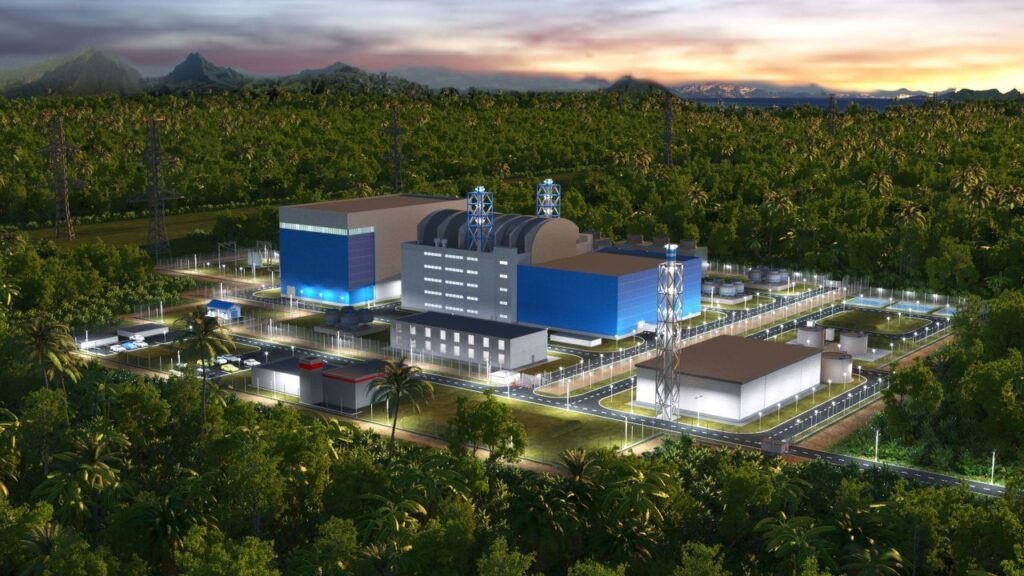
Representatives of the Russian company Rosatom announced at a briefing that a low-capacity nuclear power plant may be built in Kyrgyzstan’s northern Chui region. According to them, a preliminary feasibility study has already been developed.

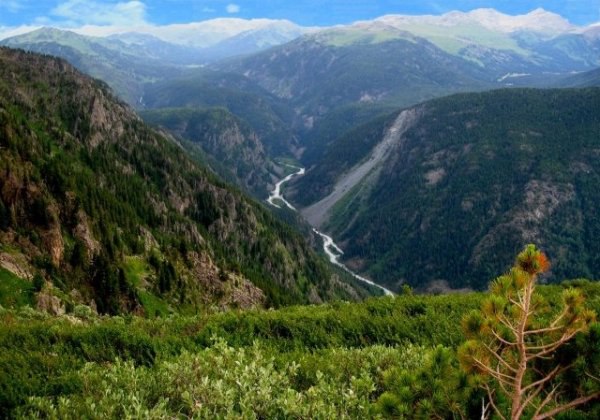
According to Rosatom, the company’s specialists have studied the seismic potential of southern Kyrgyzstan and concluded that there are many faults in the earth’s crust. This fact is reason enough not to build the plant in the south of the country. In contrast, Kyrgyzstan’s north is less prone to seismic fluctuations.

“The most suitable location for this project is the northern Chui oblast [region], where seismicity is the lowest. But we have not been able to name a specific site so far. A detailed study is needed. There are places in Kyrgyzstan where a nuclear power plant can be built, but not many,” said Dmitry Konstantinov, general director of Rosatom’s Russian representative office in Kyrgyzstan.

He said many parameters must be considered when choosing a construction site. These include seismic activity, remoteness from population centers, power lines, and a water source needed to cool the plant.

Rosatom stated that the design for the small nuclear power plant potentially being built in Kyrgyzstan was developed by adapting shipboard small-power technology currently used in ships. Each unit at the plant would have a capacity of 55 MW, with the possibility of installing up to six units, allowing the plant’s total capacity to reach 300 MW. For comparison, by 2025, Kyrgyz authorities aim to achieve a capacity of 400 MW (excluding the nuclear plant) through the completion of large hydroelectric power projects.

Two years ago, a memorandum on constructing a low-capacity nuclear power plant was signed between Bishkek and Moscow. Since then, the Russian company has been working on a feasibility study and studying land plots for the plant’s construction. According to the head of the representative office, serious discussions are continuing with the republic’s authorities.

“The decision to build a nuclear power plant in Kyrgyzstan will be made by the people together with the government. And we, for our part, will provide all the necessary information and technology to make it objective. We will inform the population about our technologies and decisions so that they feel safe,” emphasized Konstantinov.

Rosatom signed a memorandum with Uzbek authorities on constructing a small nuclear power plant earlier this year. According to the Russian company, construction has already begun, and the first power unit may operate in 2029.

On October 6, Kazakhstan will hold a popular referendum on constructing a nuclear power plant in Kazakhstan. Among the most likely candidates for construction are companies from Russia, China, South Korea, and France.

The Future of Transit in Kazakhstan

Increasing the volume of transit cargo through Kazakhstan is a strategic priority for the nation as it aims to become a transportation and logistics hub in Central Asia and the Caspian region, with its railways at the forefront of this effort. TCA spoke with Asem Mukhamedieva, Managing Director for New Projects at KTZ Express JSC, about the company’s current capabilities, prospects, and new projects in this direction.


Kazakhstan’s Role in Transit Cargo

TCA: Kazakhstan, has become a vital land transportation corridor between Asia and Europe. How does Kazakhstan Temir Zholy (KTZ) contribute to further increasing transit cargo, and what trends have you observed?

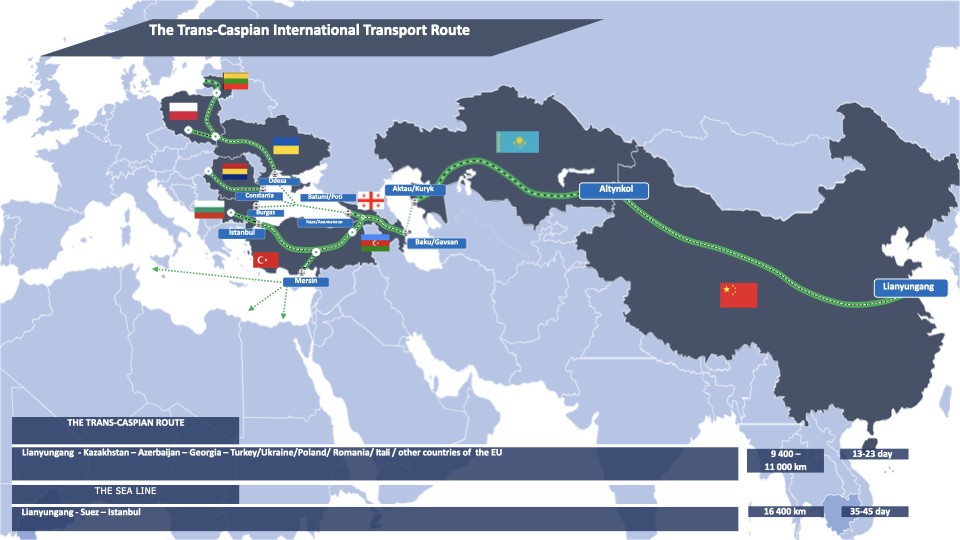
Mukhamedieva-  The volume of transit handled by KTZ Express in the first eight months of this year reached approximately 350,000 twenty-foot equivalent units (TEU). The China-Europe-China route saw a 36% increase, while the China to Central Asia route grew by 17%. Notably, the Trans-Caspian International Transport Route (TITR) dispatched 220 container trains, a twenty-fold increase from last year.

TCA: What new routes have been launched, and what is KTZ doing to increase them?

– KTZ is continuously expanding its transportation network and logistics services. One significant development is the Trans-Afghan route, which was launched this May. Under a pilot project, containers with aluminosilicate hollow microspheres were shipped from Pavlodar to Jebel Ali Port via Uzbekistan, Afghanistan, Pakistan, and the UAE. Offering competitive terms and tariffs has encouraged more cargo traffic along this route.

In July, we cut delivery times in half — down to just five days — on the Xi’an-Altynkol-Tashkent route, compared to the previous 10-12 days. This success is largely due to the new terminal in Xi’an, built by KTZ and its Chinese partners. The terminal consolidates cargo from various Chinese provinces, streamlining logistics processes and significantly improving efficiency.

We also launched several new logistics services to boost cargo traffic and strengthen international links. For example, in June, we introduced a regular South Korea-China-Kazakhstan-Central Asia route. We also reopened a previously unprofitable route from China to Iran and back, reducing costs by collaborating with Chinese partners.


The Growing Importance of the Trans-Caspian Route

TCA: You mentioned the growth of the TITR. Could you elaborate on the regions of China involved, the types of cargo, and what steps are being taken to attract more shipments?

–  The Trans-Caspian International Transport Route (TITR) has become a critical link in Eurasian logistics. This year, the route achieved remarkable growth. In September, we welcomed the 200th train dispatched via TITR at the Port of Aktau. Transit volumes for the first eight months of this year surpassed annual totals from previous years. Xi’an province leads in shipments, accounting for 57% of the total volume on this route. Other key provinces include Yiwu, Chongqing, Sanping, and Henan.

Major markets for these shipments are Azerbaijan (62%), Georgia (23%), Turkey (7%), and EU countries (9%). Over 200 different commodity items were transported, with automobiles, components, textiles, and electronics making up 56% of the total.

To maintain this momentum, we are working with all participating countries to reduce delivery times and establish competitive tariffs.
Reducing Delivery Times

TCA: What steps are being taken to further reduce delivery times along these routes?

–  The current transit times have been reduced by 2-3 times. For example, cargo dispatched from the Xi’an terminal passes through China in 3-4 days and through Kazakhstan, including trans-shipment at the Port of Aktau, in another four days. Containers arrive in Azerbaijan within 11-12 days and at Georgian ports in 14-15 days.

These impressive results were made possible through the launch of the Xi’an terminal and close cooperation between Kazakhstan Temir Zholy, Chinese railways, and port authorities in Azerbaijan, Georgia, and other TITR participants. To further increase capacity, the governments of Kazakhstan, Azerbaijan, Georgia, and Turkey signed a Roadmap to synchronize problem-solving along the route. Additionally, unified pricing principles and digitization efforts are underway.

We also launched container shuttle trains on fixed schedules from Altynkol to Poti/Batumi, and from Batumi port to Turkey and Europe. In Aktau, we are developing a container hub to streamline cargo delivery from road and rail to maritime transport.


The North-South International Transport Corridor

TCA: The International Transport Corridor North-South (ITC North-South) is a promising initiative. Can you provide more details on Kazakhstan’s involvement in this project?

–  We’re actively working to attract cargo to the eastern branch of the North-South ITC, which opens a direct rail link for goods between Kazakhstan, Turkmenistan, India, and Persian Gulf countries. We are establishing a unified logistics operator for this route with Russia and Turkmenistan.

A technical audit was conducted to identify bottlenecks and technological barriers at key rail junctions, leading to a joint action plan for improvements. Kazakhstan, Russia, Turkmenistan, and Iran have also developed competitive tariffs for container and rail car shipments along this corridor.


The Single Digital Window Initiative

TCA: KTZ recently introduced the Single Digital Window (SDW) for customers. Could you explain how it works and what the results are so far?

– The SDW aims to consolidate the services of all KTZ subsidiaries into a single platform, allowing customers to manage logistics more efficiently. Previously, customers had to coordinate separately with each participant in the transportation process, but now everything can be done through the SDW portal or its mobile app, EGOV Business portal, or Single Contact Center.

The project is currently in test mode, and we plan to expand its services to include road, air, and sea transport partners. This integrated system will save customers time and simplify the logistics process.


Challenges and Solutions for Kazakhstan’s Transit Development

TCA: What barriers are hindering Kazakhstan’s transit development, and what measures could enhance it?

–  Kazakhstan is already a key transit hub, but as trade volumes grow, we need to strengthen supply chain integration through the development of logistics hubs. Expanding railway infrastructure is crucial, and KTZ has approved a program to enhance existing infrastructure by 2030. This includes repair, modernization, and the construction of new tracks.

Four major projects are underway: the construction of the Dostyk-Moyinty railway line, the third railway border crossing at Bakhty-Ayagoz on the Chinese border, a bypass around Almaty, and the Darbaza-Maktaaral railway line toward Uzbekistan. These projects are expected to significantly increase transit capacity and efficiency.

Kazakhstan’s strategic position and ongoing infrastructure developments position the country as a key player in Eurasian logistics. With ambitious projects and international collaboration, the future of trans-Kazakhstan transit looks bright.

Kazakhstan to Build Airports in Katon-Karagay and Zaysan Resort Areas

Kazakhstan’s Ministry of Transport has chosen sites to construct new airports in the resort areas of Katon-Karagay and Zaysan in the country’s east.

Katon-Karagay is Kazakhstan’s largest national park, located in the picturesque region of Southern Altai, near the borders with Russia and China.

One new airport will be built in the Katon-Karagay National Park near the village of Soldatovo, 38 kilometers from the village of Katon-Karagay. Another airport will be constructed at a former military airfield 25 kilometers from the town of Zaysan.

One of the most beautiful lakes in Kazakhstan, Zaysan is a vast freshwater lake with lots of aquatic diversity. It is about 100 kilometers long, 30 kilometers wide, and 8 meters deep. Lake Zaysan is 239 kilometers from Ust-Kamenogorsk, the largest city in eastern Kazakhstan, which is currently home to the closest airport for both resort areas.

The new airports will have 2,200-meter-long runways for short-haul planes, providing air service from the capital, Astana, and Almaty.

Plans are in place to extend the runways in the future, which will allow the reception of large aircraft such as Airbus A320 and Boeing 737.

According to Transport Minister Marat Karabayev, construction of the airports will begin in 2025.

Kazakhstan Establishes Coordination Council of Partners for Water Sector Development

Kazakhstan has established a Coordination Council of Partners for the Development of the Water Sector. It includes the Kazakh Ministry of Water Resources and Irrigation representatives, the United Nations Development Programme (UNDP), and other international organizations and financial institutions.

According to the ministry, the Coordination Council will coordinate the actions of government agencies, UNDP, international financial organizations, and donor communities according to national priorities in the water sector. The Council will mobilize and effectively distribute financial and technical resources to achieve the goals.

The Council will support developing and implementing strategic documents, such as the Water Code, the Concept for the Development of the Water Resources Management System, and the Comprehensive Water Sector Development Plan, as well as strengthening the legislative framework and institutional mechanisms for sustainable water management.

By implementing best international practices and innovative solutions in water resources management, the Council will organize the exchange of knowledge and experience, increase the capacity of specialists, and inform citizens about sustainable water resources management principles.

Another key task for the Council is strengthening regional cooperation in water resources management and increasing resilience to climate change and natural disasters such as droughts and floods.

Minister of Water Resources and Irrigation Nurzhan Nurzhigitov commented: “The establishment of the Coordination Council is an important step for the water sector in Kazakhstan. By coordinating the efforts of the Ministry, international organizations, and donor communities, the Council will play an important role in promoting the country’s long-term environmental stability and economic development. The Coordination Council will help mobilize resources, strengthen governance, expand regional cooperation, and promote sustainable water resource management practices. These collective efforts will address growing climate challenges and ensure a stable future for Kazakhstan and Central Asia.”

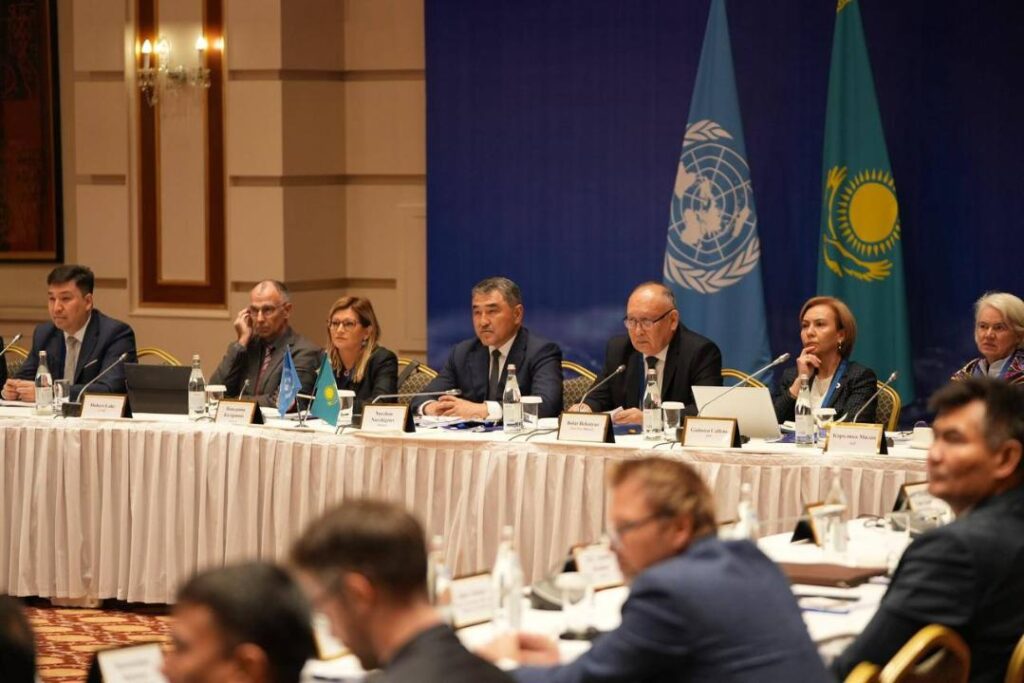
On September 30, the Coordination Council held its first meeting in Astana. The meeting discussed partnerships in managing Kazakhstan’s water resources and presented a Water Partnership Initiative for 2024-2030, a joint proposal between the Ministry of Water Resources and Irrigation and UNDP. The document outlines specific activities, such as developing an information system for water resources, the modernization of water infrastructure to respond to climate challenges, implementing modern irrigation systems, and transboundary water cooperation.

Katarzyna Wawiernia, UNDP Resident Representative in Kazakhstan, stated at the meeting: “Given the complexity of the water agenda, it is clear that no single government or organization can tackle these issues alone. Therefore, addressing these challenges requires combining resources, investments, technical expertise, and innovations. I hope that the Partnership Initiative proposed today by UNDP and the Ministry of Water Resources and Irrigation will be an important catalyst in this process.”

For decades, Kazakhstan has faced a host of water-related challenges, such as the shrinking Aral Sea, largely caused by decreasing water flows in transboundary rivers, devastating spring floods, and irrigation water shortages in the country’s southern regions.

Kyrgyzstan Complicates Re-Export of Goods to Russia

Re-exporting goods to Russia from third countries through Kyrgyzstan are to become more expensive due to a new rule implemented by the National Bank of the Kyrgyz Republic (NBKR). The new protocol prohibits banks from making payments for goods intended for foreign countries without actual delivery to the territory of Kyrgyzstan.

The rule came into force on September 25 and effectively closed the channel of transit payments for goods from third countries to Russia through Kyrgyzstan.

The move is seen as a response to requests from international financial institutions. It might be instrumental in putting an end to Russia’s practice of avoiding Western sanctions imposed due to Russia’s war in Ukraine.

The new NBKR rule would also benefit the Kyrgyz economy, as re-exported goods must now be delivered to Kyrgyzstan and subject to Kyrgyz customs duties and taxes.

According to Russian media reports, Russian importers have already encountered difficulties associated with the new requirement to transport goods through Kyrgyzstan, and the corresponding customs and tax costs, which makes re-export less profitable.

The NBKR requirement does not extend to the Trading Company, established by the Cabinet of Ministers of the Kyrgyz Republic on August 23. Wholly state-owned, the company oversees trade flows involving Kyrgyz firms that re-export goods without physically delivering them to Kyrgyzstan.

The Trading Company has the exclusive right to carry out trade operations without actual delivery to Kyrgyzstan. Companies that previously carried out trade without delivery to the Kyrgyz territory must carry out operations through the Trading Company.

Also, the NBKR rule does not apply to deliveries made through e-commerce marketplaces for personal use.

Karaganda: The Black Heart of Kazakhstan

On October 28, 2023, an explosion at Kostenko Mine in Karaganda killed 46 workers. As the largest industrial accident since Kazakhstan independence, this deeply shook Kazakhstan to its core and resulted in the nationalization of ArcelorMittal Temirtau, who owned the mine. The effects of this accident were most deeply felt in Karaganda, a region and city, which has long stood as the center of coal mining in the country.


Coal and Repression: The History of Karaganda

Located in the center of Kazakhstan, the city of Karaganda from which Karaganda region gets its name, is deeply intertwined with the coal and metallurgical industries. According to legends, coal was first discovered in the area in 1833 by a local shepherd boy named Appak Baizhanov. In the following decades, a mining settlement would appear in the region owned by the Russian merchant, Nikon Ushakov. The mines would then be sold to British investors in 1905, who controlled them until the Red Army entered the region in 1920.

Due to the destruction caused by the Russian Civil War, the early Soviet Government left the coal reserves of the Karaganda Basin untouched for nearly a decade. In 1929, a directive from Moscow about the creation of trust to exploit the coal reserves of Kazakhstan would bring renewed interest to the region. A subsequent decree in 1931 established a separated trust for Karaganda which was to become the “third coal base” of the Soviet Union. The previous coal bases were located in Donets in the Ukrainian SSR, and Kuznetsk in the Russian SFSR. Finally, in February of 1934, Karaganda was given the status of a city and would serve as the administrative center for mining in the region.

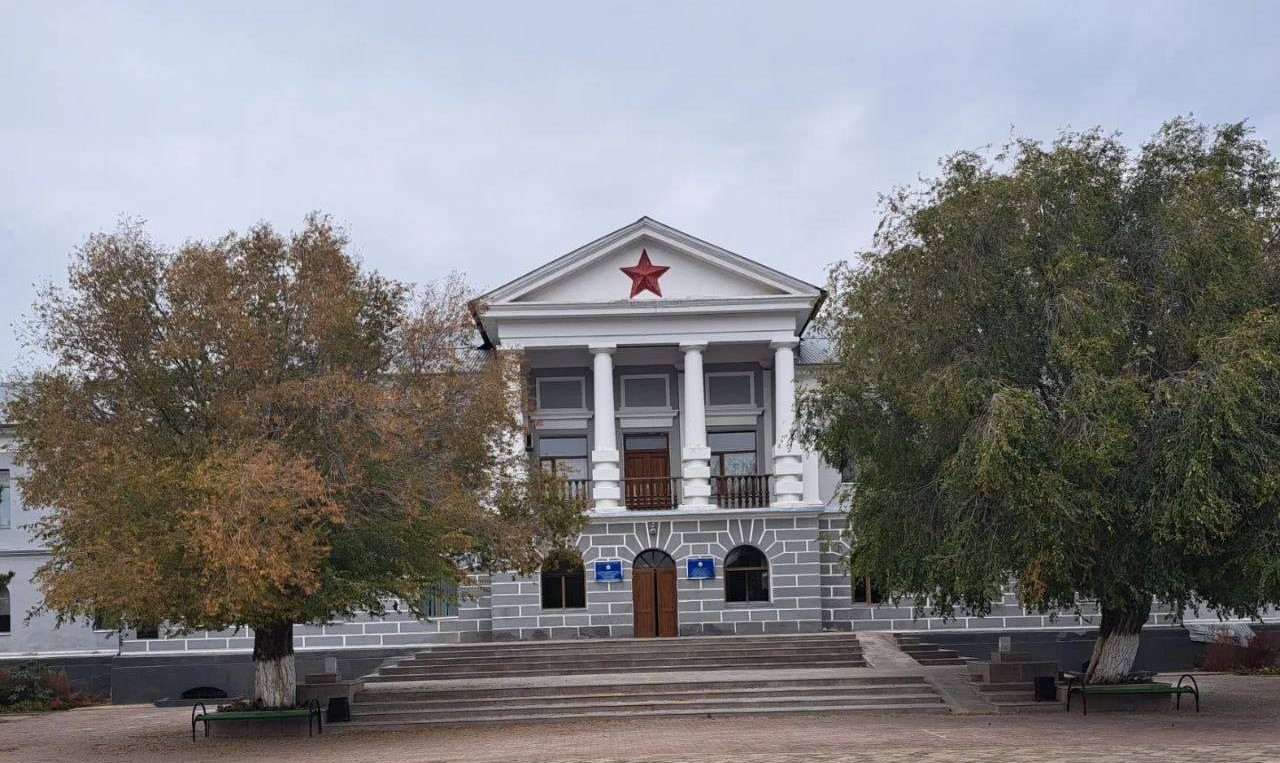
Administrative building of Karlag; image: TCA, Joseph Anderson

The establishment of Karaganda enticed many workers and specialists from all over the Soviet Union to move to the region. However, not everyone sent to the region came voluntarily, since during the same period the coal trust was being established for Karaganda, the infamous Karlag was being set up by the NKVD. The Karaganda Corrective Labor Camp better known as Karlag was one of the largest GULAG camps; the famous author and dissident, Aleksandr Solzhenitsyn, was sent to Karlag for a brief period. Besides GULAG prisoners, whole ethnic groups, such as Volga Germans, Chechens, and Ingush were forcibly deported to the region during World War II. These deportations as well as imprisoned intellectuals at Karlag would have a lasting impact on the city, making it one of the most cosmopolitan cities in the Kazakh SSR in addition to having very well staffed universities.

Before the collapse of the Soviet Union, Karaganda stood as the second most populated city in the Kazakh SSR, only behind the capital of Alma-Ata. In 1960, the first and only blast furnace operating in Central Asia was constructed in Temirtau. It would be at this metallurgical plant that the First President of Kazakhstan Nursultan Nazarbayev would begin his career. By 1978, miners in Karaganda had produced one billion tons of coal, which secured its place as the industrial center of the Kazakh SSR and the third coal base of the Soviet Union. However, with the collapse of the USSR, economic conditions in the region went down drastically and contributed to the mass migration away from the region and city. This period also saw the closure of many mines which left many miners, the lifeblood of the city, with fewer and fewer opportunities each year.

The Akim of Karaganda; image: TCA, Joseph Anderson


ArcelorMittal: Saving Grace?

ArcelorMittal Temirtau (AMT) was the Kazakhstani branch of ArcelorMittal, a mining and steel company based in Luxembourg and owned by Indian businessman Lakshmi Mittal. The poor economic conditions in Kazakhstan after the collapse of the Soviet Union made the 1995 purchase of the metallurgical plant in Temirtau by Ispat international, which would later become ArcelorMittal, seem like a saving grace. However, the purchase of these facilities by Mittal did not come without scrutiny. Mittal initially did not want to purchase the facilities but was personally urged by then President Nazarbayev to purchase the plant. AMT would continue its expansion into Kazakhstan by buying mines in the Karaganda region throughout the 90s and 2000s. While the purchase of these facilities did save the facilities from closures, such as the metallurgical plant which was in nearly $700 million in debt at the time of its purchase, safety violations and anger from miners over poor compensation plagued the company for a large period of its operation. A series of fatal accidents at three AMT mines killed over 100 workers in a 30-year period.

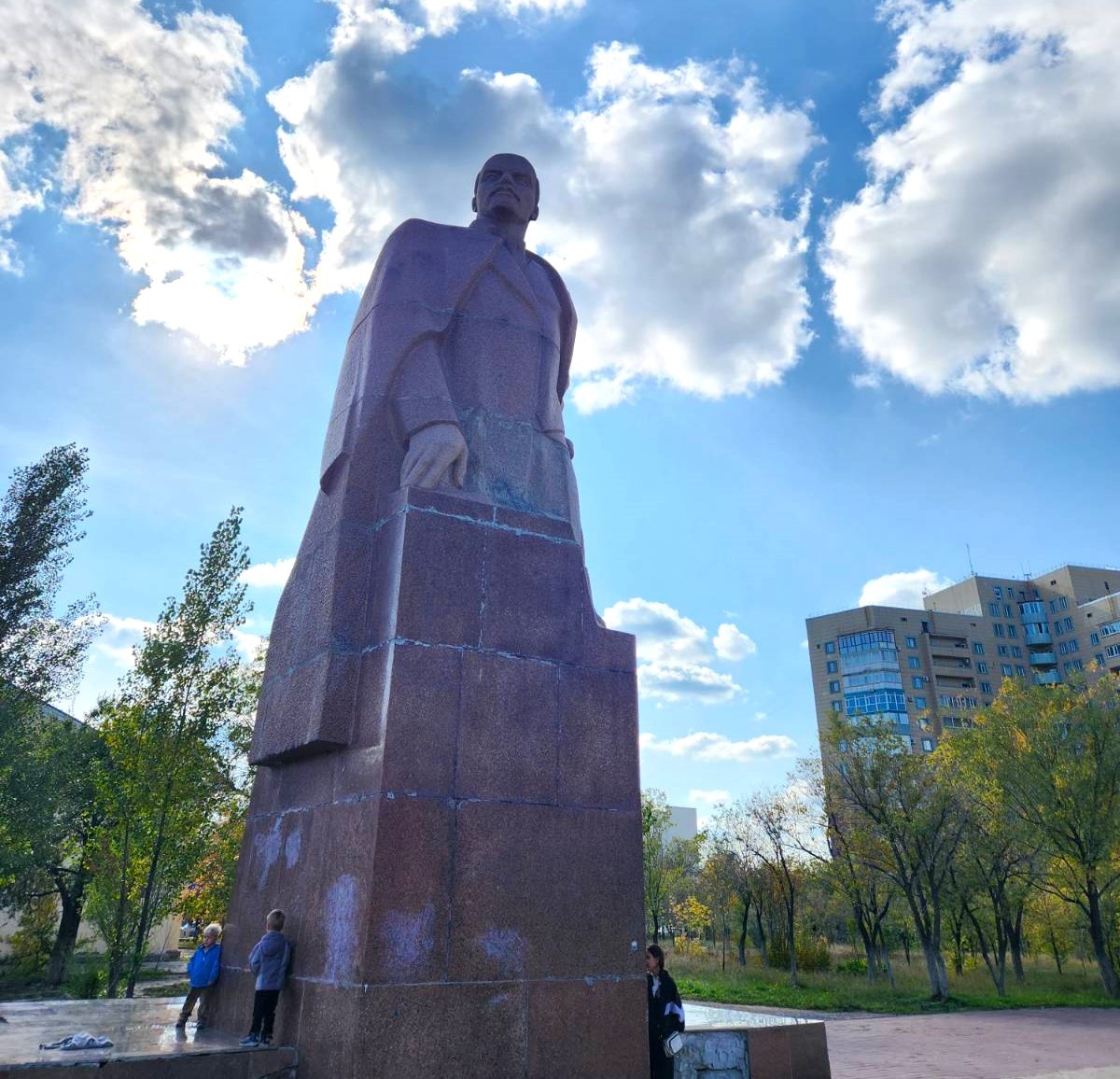
Cracked Lenin monument; image: TCA, Joseph Anderson

The first large incident which called into question the safety of mines operated by AMT occurred on September 20, 2006. On this day, the Lenin mine located in Shakhtinsk, a city in the Karaganda region, experienced an explosion that killed 41 miners. A government commission after the incident, found the cause of the explosion to be human error due to failure by the management to comply with safety standards and properly operate electrical equipment. Following the incident, miners went on strike to demand better working conditions as well as pay raises. The striking miners were joined by metallurgists in Temirtau who also worked for AMT. Personnel changes occurred at AMT following the incident with the General Director of AMT, and the Executive Director of AMT’s coal department being replaced. The miners also voted to remove Vyacheslav Sidorov, the then head of the miner’s union, from his position due to perceptions that he was too close to the management. The new director’s first move was to increase the salary of miners by 29%; however, the exact terms of the increase got rid of previous bonus and resulted in miner’s actually receiving a lower salary.

Two years later, another industrial accident occurred at the AMT owned Abay mine, killing 30 miners. This accident caused the Prosecutor General’s office to open an investigation into safety violations at all AMT owned mines. Speaking about the conditions in AMT mines, Ainur Kurmanov, a former trade unionist said “Firstly, the equipment in many mines is dilapidated and has not been changed since Soviet times. In fact, Mittal is pursuing a policy of saving money on updating equipment and ensuring labor safety. Plus, degassing is not carried out in the mines. This is a fairly expensive process; special equipment is required and, accordingly, the cost of mined coal increases. In this regard, Mittal has taken the path of reducing financial costs and degassing is not carried out.”

Others blamed local corruption rather than lack of funds invested by AMT as the cause for such incidents, with Natalya Tomilova, head of the Committee for Miners’ Families, telling EurasiaNet that “Lakshmi Mittal is fulfilling his commitments to us; he allocates huge sums but it’s being stolen here. Now we’ll see how the commitments are fulfilled at Abay mine.”

In the following decade, small accidents would continue to occur at AMT mines. The poor pay and unsafe conditions at these mines led to a sit in strike by miners on December 11, 2017. According to the Minister of Labor, more than 600 workers at various mines in Karaganda stayed unground rather than returning to the surface after their shifts. The miners demanded a 100% pay increase and improved working conditions. While these demands might seem unreasonable, financial reports from 2014 showed that even though profits for AMT decreased in 2013, top managers were still receiving almost 50 times the pay of miners. AMT would pursue legal means to disrupt the strike, and the courts later declared the strike illegal and urged the workers to return to the surface. In an interview with the BBC, Tomilova mentioned that other methods were being used to the break the strikes, “One [miner] was told: ‘if you don’t come out, we will put a debt on you for 2-3 million tenge, (at the time worth $6,000-$9,000) and you will pay.”[1] The miners eventually resurfaced and received a 30% increase in pay. Despite continued accidents and strikes, the Ministry of Emergency Situations of Kazakhstan reported in 2022 that over 2,000 safety violations were detected at AMT facilities that year.

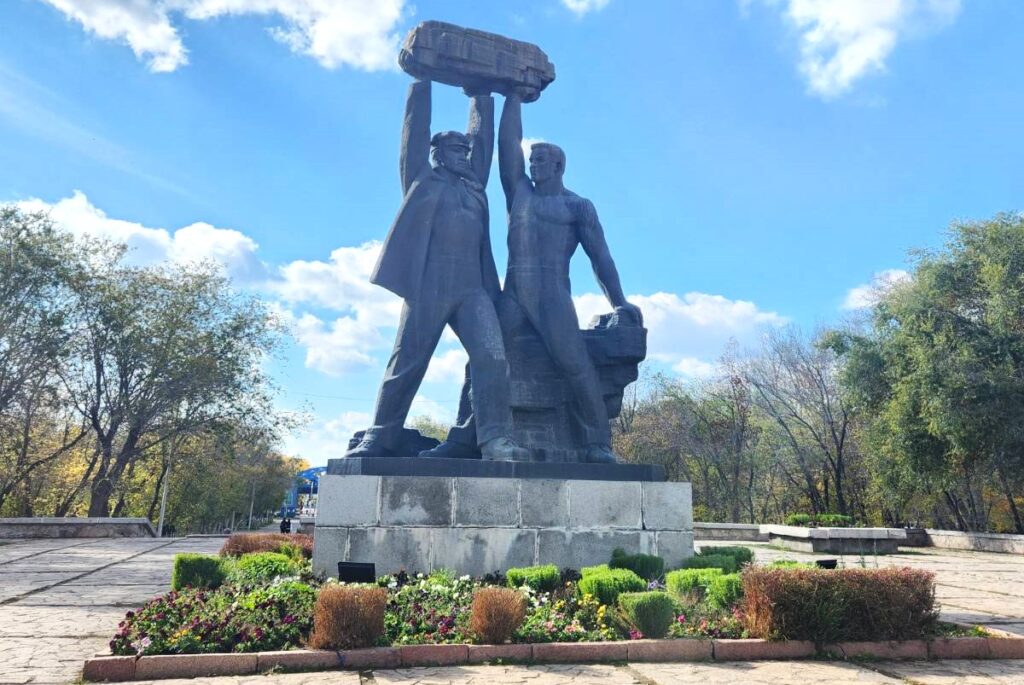
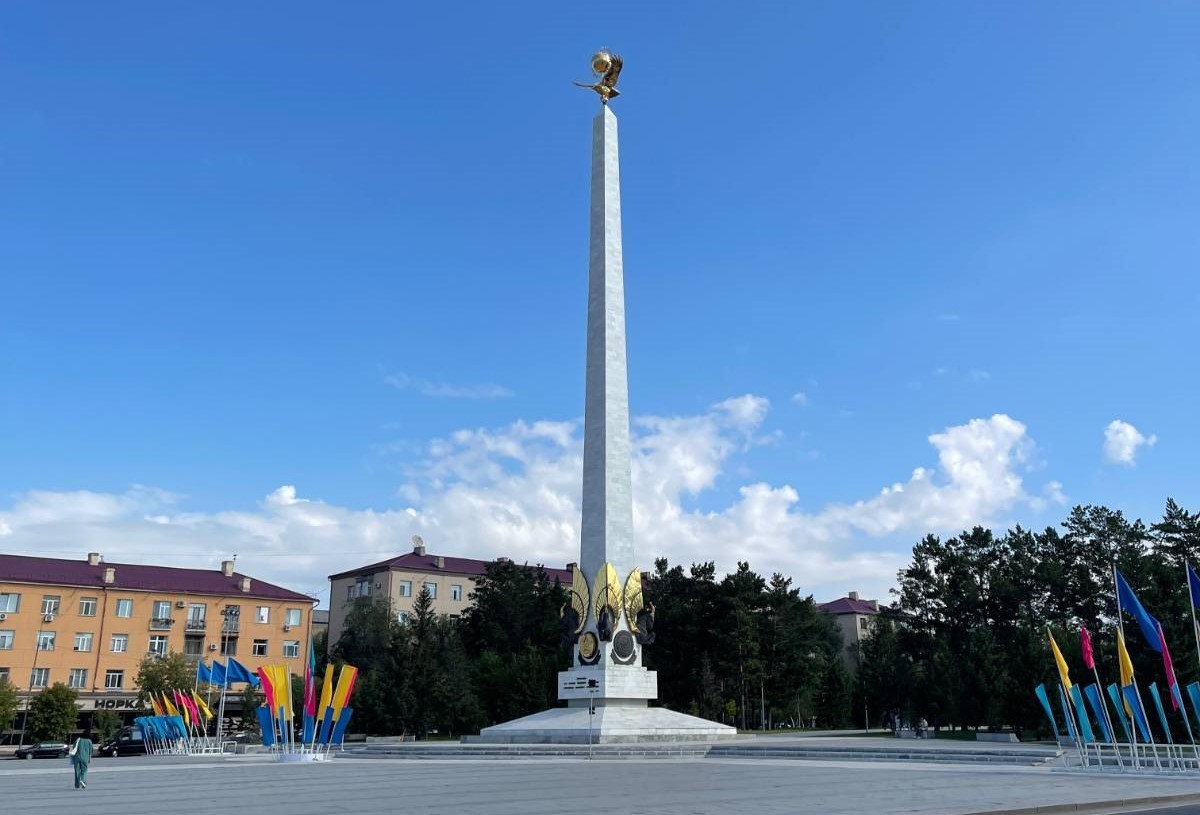
Karaganda Independence Monument; image: TCA, Joseph Anderson


The beginning of the end of AMT

While the explosion at the Kostenko mine on October 28, 2023, was the straw that broke the camel’s back, the question of nationalizing AMT was brought up before this incident. An accident on August 17, of the same year at Kazakhstanskaya mine which killed five workers seems to have been when officials first brought up the question. Finally, after the explosion at the Kostenko mine, President Kassym-Jomart Tokayev spoke to the public at a meeting saying, “I have ordered to stop investment cooperation with AMT. The company turned out to be the worst in our history in terms of collaboration between the government and the enterprise.” The nationalization of AMT – which was renamed Qarmet – did little to quell the majority of the public, especially those most deeply affected by the tragedy.

During the same meeting in which Tokayev called AMT the worst company in the country’s history, he was heckled by the crowd over the role of corruption in such incidents. On the day following the accident, the Ministry of Culture and Information recommended closing comments on press releases about the tragedy. Eventually, in January 2024, the General Prosecutor’s Office of Kazakhstan said that, “The investigation into the explosions at the Kostenko mine, which killed 46 miners, is being completed. Nine mine officials have been recognized as suspects and arrested.” Qarmet said it would stop production in the mine until risks were completely eliminated. Despite this, on May 2, 2024, another disastrous accident almost happened at the Kostenko mine when a conveyor belt caught fire; however, luckily, due to the quick actions of a worker, the fire was able to be contained.

A monument to the victims of this tragedy was erected on the territory of the mine on August 20. The opening was attended by families and colleagues of the victims, as well as the management of Qarmet.

It is hard to tell what the future of coal mining in Karaganda will be, especially if local corruption was the true reason behind such a history of mining incidents. The change in management may do little to stop their frequent occurrences. However, something must be done to either improve the working conditions for miners or quickly transition the country away from coal. Earlier this year, TCA reported that coal accounts for 70% of energy generated in Kazakhstan. Perhaps the upcoming nuclear referendum will help to shift the dangerous burden of powering the country away from coal miners. Until then, Karaganda, the heartland of Kazakhstan, will continue to be a place where workers descend into the bowels of the Earth, risking life and limb to keep Kazakhstan alive with electricity.