• KGS/USD = 0.01143 -0%
  • KZT/USD = 0.00192 -0%
  • TJS/USD = 0.10820 0.19%
  • UZS/USD = 0.00008 0%
  • TMT/USD = 0.28575 0%
  • KGS/USD = 0.01143 -0%
  • KZT/USD = 0.00192 -0%
  • TJS/USD = 0.10820 0.19%
  • UZS/USD = 0.00008 0%
  • TMT/USD = 0.28575 0%
  • KGS/USD = 0.01143 -0%
  • KZT/USD = 0.00192 -0%
  • TJS/USD = 0.10820 0.19%
  • UZS/USD = 0.00008 0%
  • TMT/USD = 0.28575 0%
  • KGS/USD = 0.01143 -0%
  • KZT/USD = 0.00192 -0%
  • TJS/USD = 0.10820 0.19%
  • UZS/USD = 0.00008 0%
  • TMT/USD = 0.28575 0%
  • KGS/USD = 0.01143 -0%
  • KZT/USD = 0.00192 -0%
  • TJS/USD = 0.10820 0.19%
  • UZS/USD = 0.00008 0%
  • TMT/USD = 0.28575 0%
  • KGS/USD = 0.01143 -0%
  • KZT/USD = 0.00192 -0%
  • TJS/USD = 0.10820 0.19%
  • UZS/USD = 0.00008 0%
  • TMT/USD = 0.28575 0%
  • KGS/USD = 0.01143 -0%
  • KZT/USD = 0.00192 -0%
  • TJS/USD = 0.10820 0.19%
  • UZS/USD = 0.00008 0%
  • TMT/USD = 0.28575 0%
  • KGS/USD = 0.01143 -0%
  • KZT/USD = 0.00192 -0%
  • TJS/USD = 0.10820 0.19%
  • UZS/USD = 0.00008 0%
  • TMT/USD = 0.28575 0%
14 December 2025

Uzbekistan and UAE to Build Modern Wastewater Facility

The United Arab Emirates company “Sustainable Water Solutions” (SWS) is to cooperate with Uzbekistan on the construction of a modern wastewater facility in Tashkent.

The project includes building a facility with a daily capacity of 1.0 million cubic meters of water and a 42-kilometer wastewater collector in the territory of the Surum mahalla, an administrative centre in Tashkent’s  Lower Chirchik district.

Regarding the scheme, Ahmed Al-Shamsi, head of the SWS company announced: “Our next initiative will prevent water wastage in Uzbekistan. The capacity of the joint facility will be 1,000,000 cubic meters per day at the first stage and 1.5 million cubic meters later. The estimated project cost is one billion dollars.”

According to reports, the quality of wastewater service provided to 1.5 million people will increase, and more than 500,000 residents and over a hundred enterprises and organizations will be provided with centralized wastewater service. The construction of a 42-kilometer collector allows efficient collection and transportation of wastewater for further treatment.

SCADA, a data management and collection system, and GIS,a geographic information system, will be introduced, ensuring effective monitoring and management of cleaning and transportation processes. As a result of this large-scale project, 10 million kilowatts of electricity will be saved, and the sanitary-epidemiological and ecological situation in the Sergeli, Bektemir, and Yangi Hayot districts of Tashkent city will be improved.

Kazakhstan Delivers Oil to Europe via Russia

Kazakhstan has begun supplying oil to Europe via the Druzhba oil pipeline system through Russia.

The first oil shipments have already arrived in Germany, where amid current geopolitical challenges, it has become an important part of the country’s energy security .

Acting through its Kazakh subsidiary Agip Caspian Sea, the Italian company Eni, has shipped the first 20,000 tons of oil as part of a test delivery via the Atyrau-Samara route, with further transportation via the Druzhba pipeline.

Kazakhstan now plans to deliver up to 1.2 million tons of oil to Germany via this system this year, following an agreement with the Russian side, to ensure uninterrupted supplies to Europe despite the sanctions restrictions on Russian oil.

Historically, the pipeline has been one of the largest routes for Russian oil supplies to Europe, but its use has undergone significant changes in recent years due to sanctions.

Faced with these changes, Kazakhstan’s proposals to increase oil supplies through this route, could not only play a key role in ensuring energy stability in the region but also demonstrate the country’s strategic importance as a major player in the global oil market and its ability to adapt to changes in global energy policy.

U.S. Ambassador to Kazakhstan: We Never Make Kazakhstan Choose Between “Us Or Them”

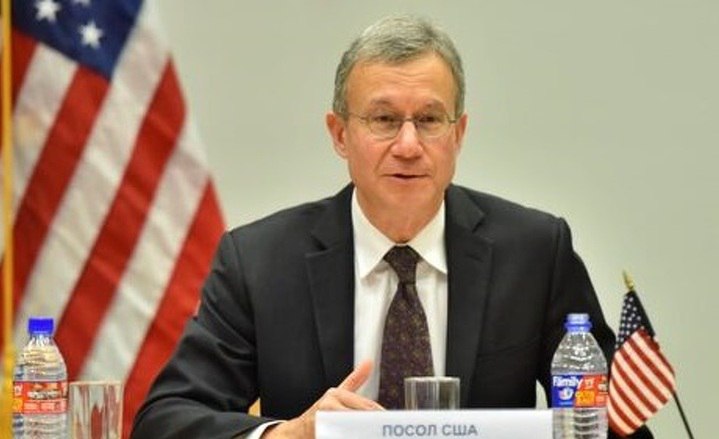
In an interview with the KazTAG agency, U.S. Ambassador to Kazakhstan Daniel Rosenblum discussed relations between the U.S. and Kazakhstan.

In the two years since his appointment, Rosenblum noted significant progress in developing diplomatic and economic ties between the countries. In particular, he emphasized the importance of Kazakhstani President Kassym-Jomart Tokayev’s visit to New York for the C5+1 platform summit, as well as the visits of the U.S. Secretary of State to Kazakhstan and the Kazakhstani Foreign Minister to the United States.

Rosenblum also highlighted key support programs initiated by the U.S. in Kazakhstan, including USAID projects to resolve commercial disputes and decentralize public administration. These initiatives help strengthen the business environment and increase foreign investors’ confidence in Kazakhstan, which, he said, helps attract more investment.

Economic relations between the U.S. and Kazakhstan have shown steady growth, with trade exceeding $4 billion in 2023, a 30% increase over the previous year. The U.S. remains one of the largest investors in Kazakhstan, second only to the Netherlands. In recent years, U.S. companies have shown interest in new sectors, including transportation and critical minerals. For example, Wabtec has invested in locomotive production in Kazakhstan, and Pepsi Co. has invested $160 million to build a plant to produce potato chips and other snacks in Almaty region.

The ambassador also discussed democratization and human rights, noting positive developments in Kazakhstan, such as the establishment of the Constitutional Court, and the expanded role of the ombudsman institution. He emphasized that Kazakhstan has worked to improve freedom of speech, assembly, and fair elections.

On security issues, the ambassador reiterated the U.S.’ commitment to protecting Kazakhstan’s independence and sovereignty. He emphasized the importance of joint exercises and programs to strengthen defense and law and order in Kazakhstan.

Regarding sanctions against Russia, Rosenblum said that the U.S. respects President Tokayev’s position of adhering to international sanctions but does not apply its sanctions against Russia. The U.S. is engaging with the Kazakh government to minimize the impact of these sanctions on the country’s economy and to find alternative markets for Kazakh goods.

“We know that Kazakhstan needs to maintain good relations with its neighbors. It is natural to have positive trade relations and other types of relations to ensure peace and stability. We recognize and respect that it is not only the right but probably the duty of Kazakhstan to maintain such relations. We never put Kazakhstan before “either us or them” situations; we do not have such an approach to relations. Kazakhstan pursues a multi-vector policy, and we count on being one of the right vectors,” the ambassador said.

U.S. policy toward Kazakhstan is unlikely to change significantly, even if a Republican president wins the next U.S. election, Rosenblum said. The basic principles of supporting sovereignty and stability in Central Asia will remain unchanged, regardless of the political administration in Washington.

U.S. Refurbishment of Pilatus PC-12 Aircraft for Uzbekistan

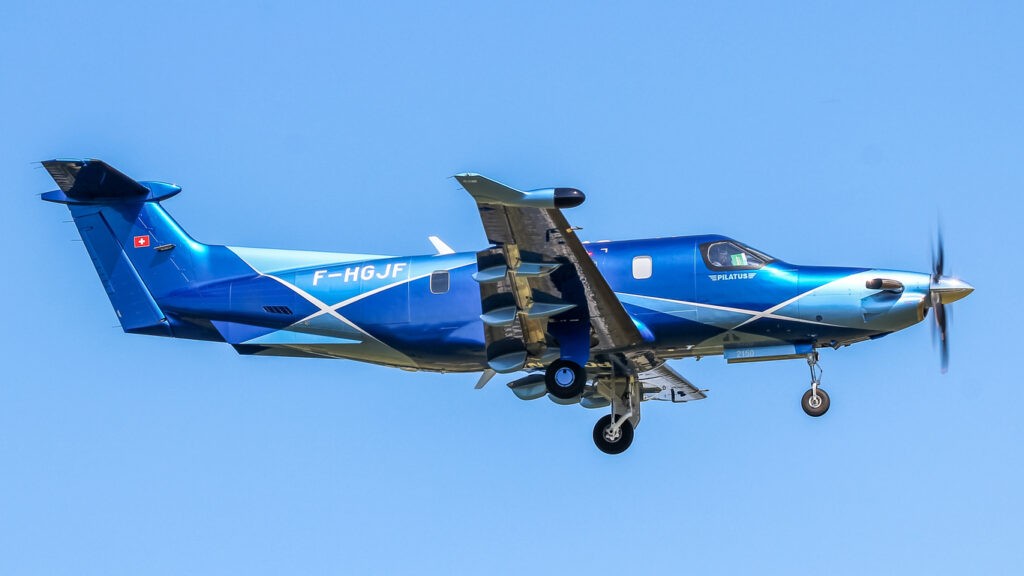
US company Sierra Nevada Corporation (SNC) has been awarded a $64.2 million contract to refurbish six Pilatus PC-12 aircraft for Uzbekistan. The work will be performed in Uzbekistan and completed by August 2027.

According to the U.S. Defense Department’s website, the contract which was awarded under the U.S. Department of Defense’s Foreign Military Sales (FMS) program, includes not only the restoration of the aircraft but also logistical support and on-site maintenance.

The Pilatus PC-12 is a single-engine turboprop aircraft widely used for various missions, including surveillance and transportation.

Since the aircrafts’ proven reliability lends itself to civilian and military applications, their rehabilitation will have a significant impact on the expansion of Uzbekistan’s aviation capabilities, including long-range monitoring and transportation missions.

It is worth noting that the Pilatus PC-12 aircraft is often used in difficult conditions due to its ability to take off and land on short runways, making it indispensable for operations in Uzbekistan’s remote and hard-to-reach regions.

Middle Corridor Container Transit Through Kazakhstan Showing Dramatic Growth

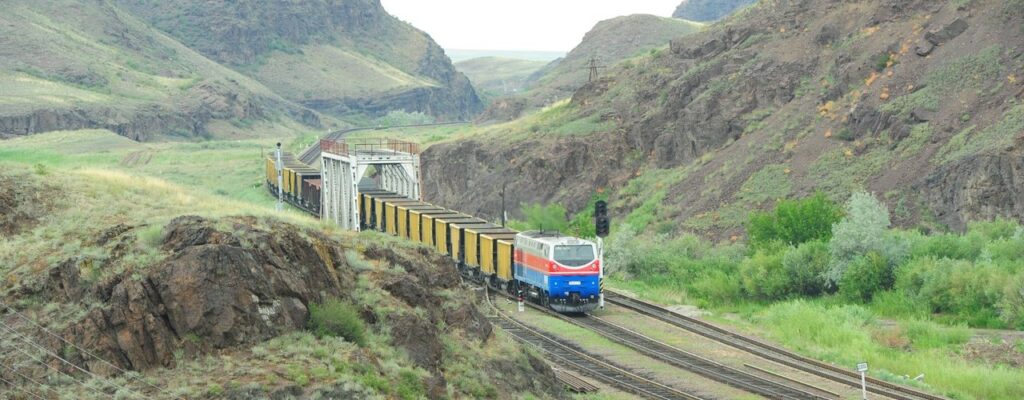
Kazakhstan’s national railways company Kazakhstan Temir Zholy (KTZ) has announced that the volume of container transportation through the country is growing rapidly. In the first seven months of this year, rail container transportation from China to Europe through Kazakhstan along the Trans-Caspian International Transport Route (TITR) grew 14-fold compared to the same period last year,

The TITR is a multimodal transport corridor connecting China and Europe by bypassing Russia, also known as the Middle Corridor. To develop it, Kazakhstan Temir Zholy, together with other stakeholders, is working to increase transportation volumes, improve services, and speed up cargo delivery.

To date, the transportation time from Altynkol railway station on the Kazakh-Chinese border to Absheron (Azerbaijan) has been reduced to 9 days, to Poti/Batumi (Georgia) to 12 days, and to Constanta (Romania) via Poti/Batumi to 20–22 days.

In 2023, KTZ and the railway administrations of Azerbaijan and Georgia established the Middle Corridor Multimodal Ltd. Joint Venture to improve multimodal services along the route. The joint venture provides a ‘one-stop shop’ service and guarantees delivery times and costs.

KTZ is developing Kazakh port infrastructure in the Caspian Sea with the involvement of large international logistics companies.

Blast off to Baikonur: A Space Tourist’s Odyssey

Space tourism is a growing industry, with visitors to Baikonur attending launches, especially missions to the International Space Station. The town is a leased Russian enclave ensconced within Kazakhstan, including the cosmodrome which is controlled by Roscosmos, the Russian space agency. After NASA ended its Space Shuttle program in 2011, Baikonur became the only launch site to the International Space Station (ISS) until 2020. Now, 60 years after space travel began, it still remains an important gateway to the stars.

As described by Megan Eaves, “Baikonur is in many ways a perfect relic of the Soviet 1960s. Stoic mosaics depicting muscular comrades heralding a new era of space still decorate entrance gates and the walls of the town’s functional, Brutalist apartment blocks, which once housed construction workers, aerospace engineers and space families. Inside the cosmodrome, crumbling hangars stand side-by-side next to the original, minimalist cottages where Yuri Gagarin and the early cosmonauts slept.”
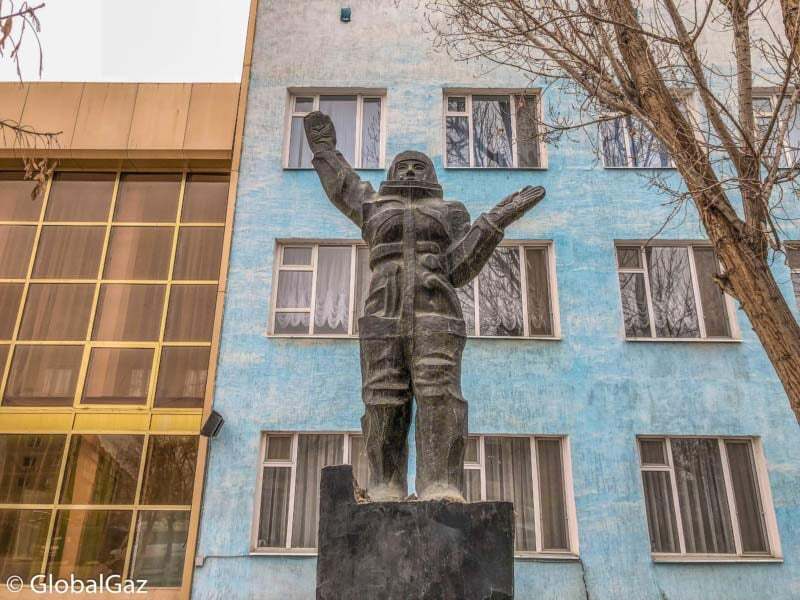
Statue of Yuri Gagarin in the town of Baikonur, Kazakhstan; image: Ric Gazarian


Near a hotel where visitors stay is Cosmonaut’s Alley, a path in a wooded area surrounded by trees planted by all those who launched into space from Baikonur. The first tree that greets visitors is Yuri Gagarin’s from 1961.

Continuing our coverage of Baikonur, TCA spoke to renowned travel blogger, Ric Gazarian, who in 2018 witnessed the MS-08 launch which sent three men on the 55th expedition to the ISS.

TCA: Your blogs about your experience at Baikonur contain a lot of history on the Russian space program; where and when did you find out about Baikonur and the space program? Was there anything in particular that piqued your interest?

Gazarian: There wasn’t a specific moment, but I’ve been intrigued by space travel since I was a kid. NASA is exceedingly cool and fascinating, and so is Roscosmos, but with the addition of the exoticness from a Western perspective. The history and rivalry between the U.S. and the Soviet Union’s space program is so rich. So, when I found out about the opportunity to visit Baikonur and witness a space launch, it was immediately added to my bucketlist.

It was this unique opportunity to witness firsthand Soviet/Russian space traditions. The added bonus is so few people make the effort to visit.
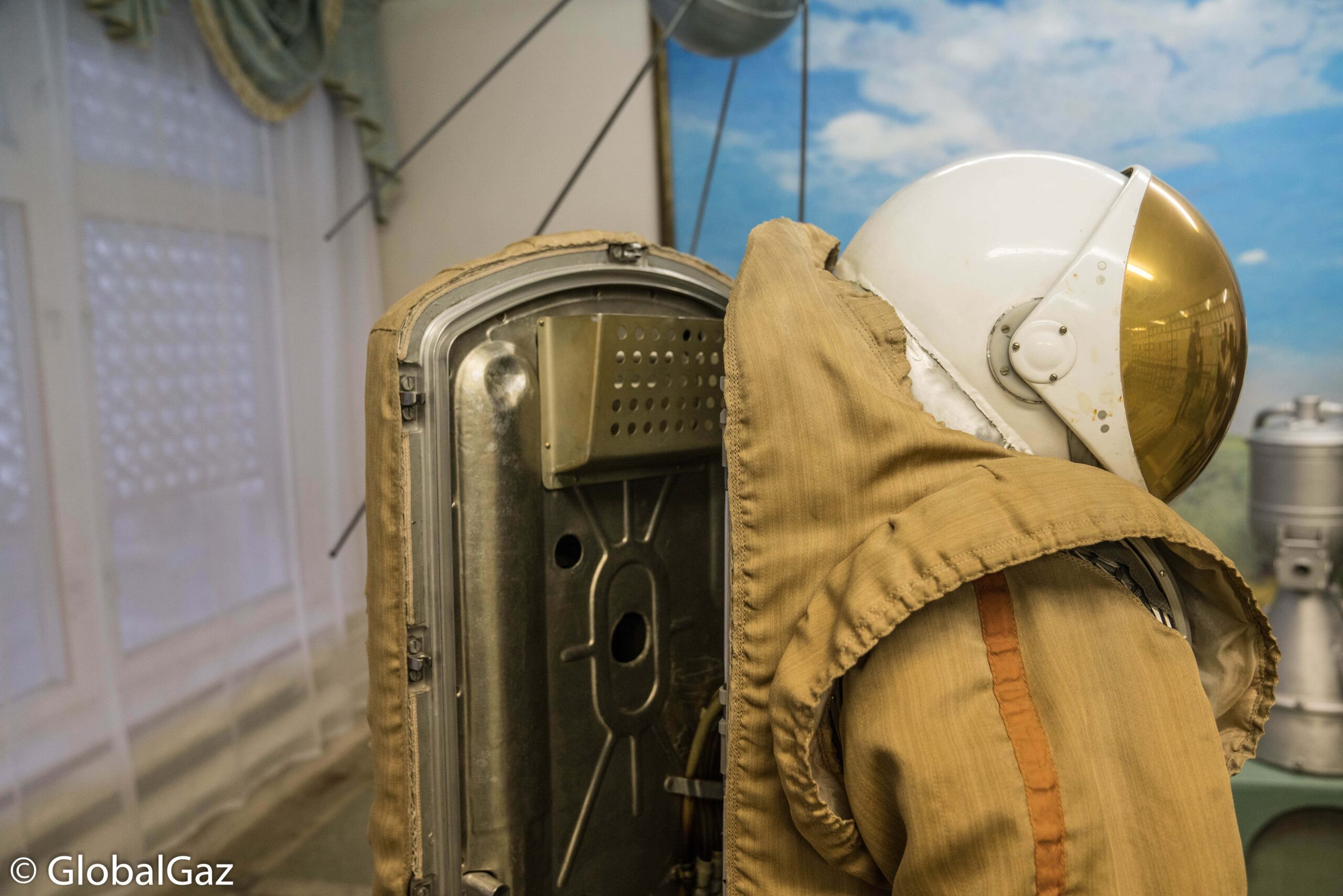
Museum in the Chelomey International Space School, Baikonur, Kazakhstan; image: Ric Gazarian


TCA: You stated that “This was not your typical tourist trip to Paris…This was a group of space geeks and Soviet fan boys.” Which one are you?

Gazarian: A little bit of both. One experience we had was watching the cosmonauts leave their quarantine hotel and board the bus to take them for their final preparations before the launch. A crowd of a couple of hundred people had circled their bus; it was a rock star moment. To know these guys were soon to be launched into space touches you emotionally.

And yes, this is a dream come true for Soviet fan boys. The history, culture, images and the monuments date back to the inception of the space program, and you can relive it here.

TCA: How easy was it to arrange and how affordable was it? Could independent travelers cut some corners to make it happen, or do they need to do it strictly through a tour company?

Gazarian: It was straightforward. I contacted a company that specialized in these tours. I sent my money and a scan of the passport, and they took care of my visit to Baikonur. The reality is that Baikonur isn’t centrally located for many Western travelers. It does take a bit of extra effort to make your way there.

When I went it was approximately €2,000 for a four-night/five-day trip. In my opinion, it was truly great value. The days were incredibly full, and the access was fantastic. I felt like we were VIPs.

I believe you can visit Baikonur with the proper permission, but I’m not sure how feasible it is to see and do what we did independently in the actual space base and launch area.

TCA: What were the highlights of your trip?

Gazarian: We saw the cosmonauts a second time for a brief ceremony in the evening. As they departed, spectators rushed the bus. I recall a small boy on someone’s shoulders pushed up against the bus window and one of the cosmonauts placing his hand on the other side of the window, and I imagined that this was his son. I got a chill thinking of the magnitude of this situation and the magic that mankind has reached the stars.

TCA: You have some interesting images on your blog of the experience – like the one you describe of the boy pressed up against the bus window. Are there any other favorite ones and why?

Gazarian: My favorite photo was of the sun creeping up behind Gagarin’s Start (the most historic launch pad at Baikonur Cosmodrome from which Sputnik 1 and Vostok 1 were launched. Due to a lack of funding to modernize the pad, it is currently a museum). It was an epic, beautiful moment which made you think of the tradition, of all the years, every space launch where the rocket exits the hanger and makes its way down the tracks on its journey to the stars.
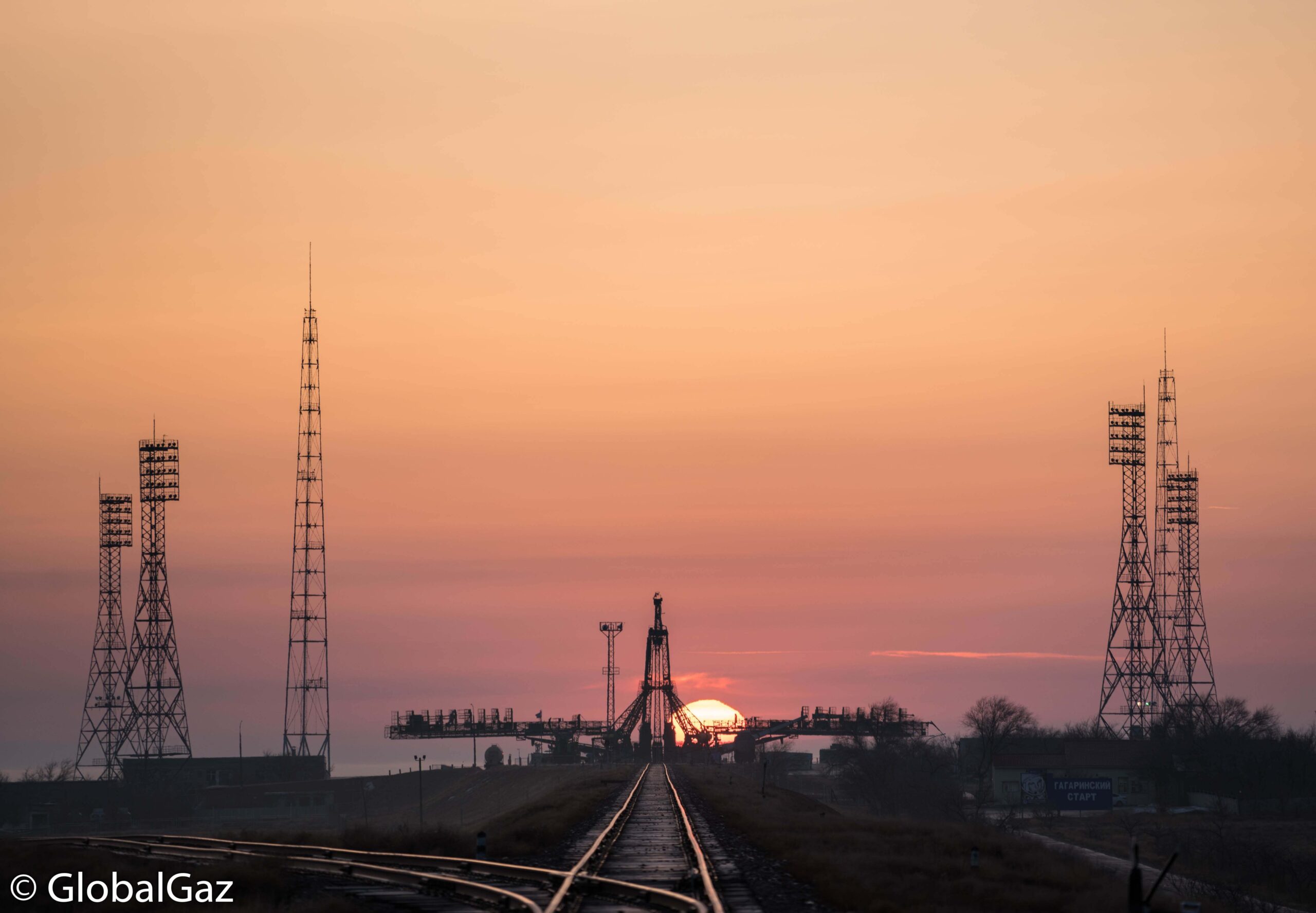
Soyuz rocket MS-08 at Gagarin’s Start, Baikonur, Kazakhstan; image: Ric Gazarian


TCA: Space embodies cooperation beyond geopolitics and national boundaries; with very strained relations between the West and Russia today, does what you viewed at Baikonur inspire hope that we can still work together here on Earth?

Gazarian: Well, that has been the beauty of these competing and sometimes cooperating programs. There has been common ground to combine efforts and collaborate. It will be extremely difficult for this previous extensive cooperation to continue into the future; but let us hope.

TCA: For considerably more money, Baikonur offers the next generation of space tourism in flights into space and living like a cosmonaut for ten days – is that on your bucketlist?

Gazarian: Of course, these opportunities would be amazing, but a bit beyond my budget. On my bucketlist now is to visit Russia’s newer space base, the Vostochny Cosmodrome.


This is part two of a three-part special on Baikonur. To read part one, click here. Join us soon for part three.

To read more about Ric Gazarian’s experience: “Five Days at the Russian Cosmodrome in Baikonur,” click here.